What Is Day of the Dead?
The Day of the Dead, or Día de los Muertos, is a traditional Mexican holiday that honours deceased loved ones through remembrance, celebration, and ritual. Observed annually on 1 and 2 November, it blends Indigenous beliefs with Catholic traditions.
Rather than being a time for mourning, the holiday is a time for celebrating life, memory, and the ongoing connection between the living and the dead.
The Day of the Dead is a cultural celebration that welcomes the spirits of deceased family members back to the world of the living. Families prepare altars, share food, and come together to honour their deceased loved ones.
The holiday has pre-Hispanic origins, particularly among the Aztecs and other indigenous civilisations of central Mexico. Following the Spanish conquest, these traditions merged with Catholic celebrations such as All Saints' Day and All Souls' Day to form the modern Día de los Muertos.
When Is Day of the Dead Celebrated?
November 1: Día de los Angelitos (Spirits of the Children)
The celebration begins at 12:00 a.m. on November 1, known as Día de los Angelitos, or the Day of the Little Angels. This day is dedicated to honoring deceased children and infants.
Families believe that the spirits of children return first. Ofrendas prepared for this day often include:
- Toys and small figurines
- Sweets and favorite snacks
- Candles and flowers
- Photographs of the child
Altars tend to be lighter and more playful in tone, reflecting the innocence associated with young spirits. Families spend the day remembering children through stories, prayers, and quiet gatherings.
November 2 (Midnight): Día de los Difuntos (Spirits of the Adults)
At midnight, transitioning into November 2, the focus shifts to Día de los Difuntos, when the spirits of deceased adults are believed to return.
Ofrendas for adults typically include:
- Traditional foods such as pan de muerto
- Beverages like water, coffee, or tequila
- Personal items linked to the deceased
- Candles and incense
This stage of the celebration is often more social. Families gather at home or in cemeteries, sharing meals, music, and memories. The atmosphere is reflective but warm, centered on celebrating lives lived rather than mourning loss.
November 2 (Daytime): Día de los Muertos
By midday on November 2, Día de los Muertos reaches its most public and communal phase. Many cities and towns hold parades, performances, and cultural events.
Common daytime traditions include:
- Cemetery visits to clean and decorate graves
- Processions and public celebrations
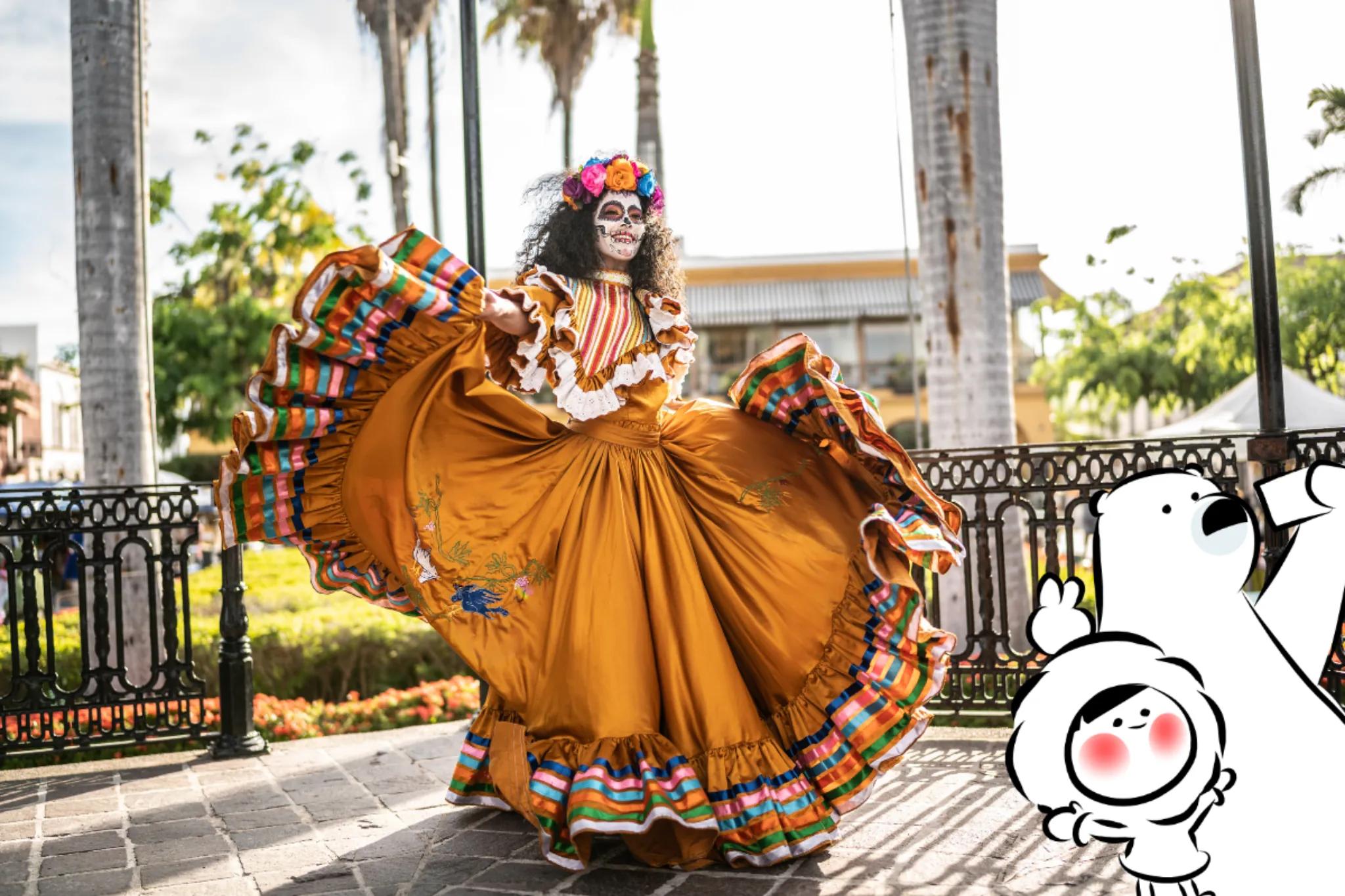
- Face painting inspired by calaveras (skulls)
- Offerings of marigolds, sugar skulls, and gifts
This final day honors all the dead collectively and is the most widely recognized part of the holiday.
Why Is Day of the Dead Celebrated?
Day of the Dead exists because remembering the dead is considered part of living well.
Rather than seeing death as something distant or frightening, the holiday treats it as a continuation of family ties. People who have died are still part of the household story. This mindset allows grief and joy to coexist without contradiction.
For many families, the holiday is also a way to pass stories down. Children learn who came before them, not from history books, but from the people who loved them.
Get Eskimo eSIM to stay connected globally
Need internet while travelling? Here's what we recommend:

Fixed data plans
- No speed reduction
- No expiry, keep your data forever
- Transfer data to anyone
- Personal hotspot


How Is Day of the Dead Celebrated?
There is no single way to celebrate Day of the Dead, but some traditions appear across Mexico.
Families usually:
- Build altars at home or at gravesites
- Cook foods that held meaning for the deceased
- Light candles and burn incense
- Spend time telling stories and remembering together
In cities and towns, public celebrations may include music, parades, and community gatherings. The tone can range from quiet and personal to lively and social, depending on the place.
Day of the Dead Traditions and Symbols
What Is an Ofrenda?
An ofrenda is an altar created to welcome the spirits of the dead.
It is not decorative for decoration’s sake. Each item has a purpose. Water for thirst. Comfort food. Candles to guide the way. Photos to make it clear who the altar is for.
Ofrendas are usually temporary, built just for the holiday, then taken down once the celebration ends.
Sugar Skulls and Día de los Muertos Skulls
Sugar skulls are one of the most recognizable symbols of Day of the Dead. They are colorful, playful, and often personalized with names.
Rather than representing danger or fear, skulls symbolize acceptance. They are a reminder that death is part of life and that remembering someone does not have to be heavy or dark.
Why Marigolds Are Used on Day of the Dead
Marigolds, known as cempasúchil, are believed to help guide spirits home.
Their bright orange color and strong scent are thought to create a path between worlds. Petals are often scattered from doorways to altars or graves, marking the way for returning loved ones.
Where is Día de los Muertos celebrated?
Day of the Dead is most strongly associated with Mexico, where it is a national holiday.
Some regions are especially known for their celebrations, including Oaxaca, Michoacán, and Mexico City. The holiday is also observed in parts of Central America and in Mexican communities abroad, particularly in the United States.
Who Celebrates Day of the Dead?
Day of the Dead is primarily celebrated by people of Mexican heritage, but participation has grown over time.
Families, schools, and communities take part, and while outsiders may attend public events, the most meaningful parts of the holiday usually happen at home or in cemeteries, away from crowds.
Day of the Dead vs Halloween
Day of the Dead and Halloween are often confused, but they come from different traditions.
Halloween centers on costumes, fantasy, and entertainment. Day of the Dead centers on real people, real memories, and family connections. While both occur around the same time, their meaning and purpose are not the same.
Where Memory Meets the Living World
Day of the Dead is a powerful expression of cultural identity, memory, and respect for those who came before us. Through traditions like ofrendas, sugar skulls, and marigolds, families honor the past while celebrating life in the present, turning remembrance into something shared rather than somber.
For travelers visiting Mexico during Día de los Muertos, staying connected makes it easier to navigate cities, find local celebrations, and share moments as they unfold. With Eskimo eSIM, first-time users can get a free 500MB global eSIM trial that works in 100+ countries, helping you stay online without relying on local SIM cards or public Wi-Fi.
FAQs
What is Day of the Dead?
Day of the Dead is a Mexican holiday on November 2 that honors the dead through remembrance, altars, and family gatherings.
What day is Day of the Dead?
Day of the Dead is celebrated on November 1 and November 2 each year. November 2 is the most commonly referenced date, but the holiday spans multiple days.
When does Day of the Dead start?
Day of the Dead officially begins at midnight on November 1, starting with Día de los Angelitos.
Is November 2 Day of the Dead?
Yes. November 2 is considered the main day of Día de los Muertos and is dedicated to honoring deceased adults and ancestors.
When is Día de los Muertos celebrated in Mexico?
In Mexico, Día de los Muertos is observed annually on November 1 and 2 and is recognized as a national holiday.
Why does Day of the Dead last more than one day?
The multi-day structure allows families to honor different groups of the deceased separately, beginning with children and ending with adults and ancestors.
Is Day of the Dead always on the same date?
Yes. Day of the Dead is celebrated on the same dates every year, regardless of the day of the week.