
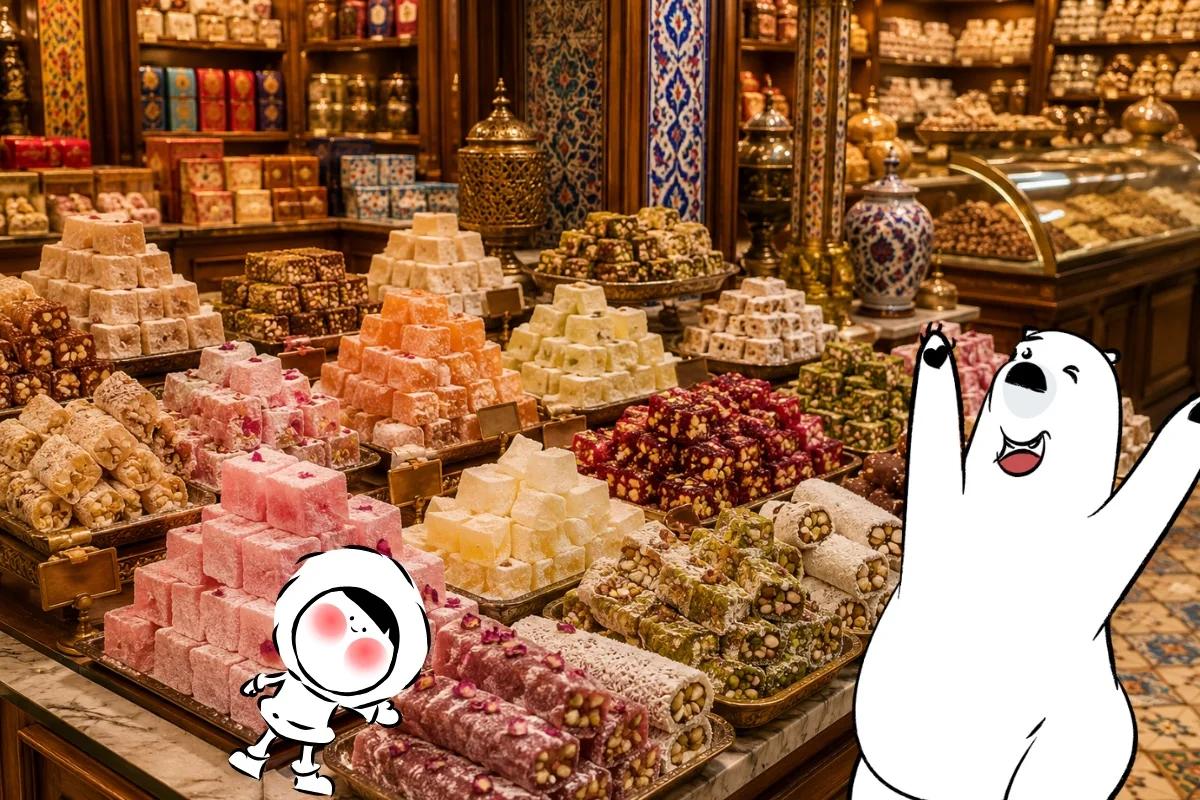
Turkish delight, also called lokum, is a soft, chewy sweet from Turkey. It is usually made with sugar, starch, water, and flavorings, then cut into pieces and coated with powdered sugar, coconut, or nuts.
You’ll find it in flavors like rose, lemon, orange, pomegranate, pistachio, hazelnut, mint, and chocolate. In Turkey, it is often served with tea or Turkish coffee and bought as a popular souvenir.
What Is Turkish Delight?
Turkish delight is a traditional Turkish confection with a soft, jelly-like texture. It is chewy, sweet, and usually served in small cubes or slices.
In Turkey, it is called lokum. The word covers many styles, from simple fruit-flavored cubes to premium nut-filled, coated, rolled, or creamy versions.
Traditional Turkish delight is usually:
- Soft and chewy
- Sweet but not hard
- Flavored with fruit, flowers, nuts, or spices
- Cut into cubes, slices, or rolls
- Coated with powdered sugar, coconut, or crushed nuts
What Is Turkish Delight Made Of?
The basic Turkish delight ingredients are simple:
- Sugar
- Cornstarch or another starch
- Water
- Flavoring
- Powdered sugar, coconut, or nuts for coating
Many varieties also include pistachios, hazelnuts, walnuts, dried fruit, chocolate, or kaymak, which is a rich Turkish clotted cream.
Classic flavorings include rosewater, lemon, orange, pomegranate, mint, mastic, and pistachio. The chewy texture comes from slowly cooking sugar and starch together until the mixture becomes thick and elastic.
What Does Turkish Delight Taste Like?
Turkish delight tastes sweet, soft, fragrant, and chewy. The flavor depends on the variety.
Rose Turkish delight tastes floral and classic. Lemon and orange Turkish delight taste lighter and fruitier. Pistachio, hazelnut, or walnut Turkish delight tastes richer because of the nuts. Chocolate-coated Turkish delight is heavier and sweeter.
Good Turkish delight should taste fresh and balanced, not stale, dry, or overly sugary.
Types of Turkish Delight
There are many types of Turkish delight, and the main differences come from the flavor, filling, coating, and texture.
Nut-filled and coated Turkish delight
This is one of the most popular styles. It usually includes pistachios, walnuts, or hazelnuts inside the lokum or rolled around the outside.
Common examples include pistachio Turkish delight, hazelnut Turkish delight, and walnut Turkish delight. These varieties taste richer and less plain than classic fruit-flavored lokum.
Fruit-flavored Turkish delight
Fruit-flavored lokum is one of the most traditional types. It is often made with light fruit or floral flavors such as rose, lemon, orange, pomegranate, and mint.
Rose Turkish delight is the most classic version, while lemon and orange are good choices if you prefer something fresher.
Creamy kaymak Turkish delight
Some Turkish delight is made with kaymak, a rich clotted cream used in Turkish desserts. This style is softer, creamier, and usually more indulgent than plain lokum.
It is often associated with premium or regional sweet shops, especially in places known for dairy-rich desserts.
Rolled Turkish delight
Rolled Turkish delight is shaped into long logs and sliced into round pieces. It is often filled or coated with nuts, coconut, chocolate, or cream.
This type is common in modern sweet shops and gift boxes because it looks attractive and comes in many flavors.
Chocolate Turkish delight
Chocolate Turkish delight may be coated in chocolate or filled with chocolate cream. It is sweeter and heavier than classic lokum.
This is a good option if you prefer richer sweets, but it is less traditional than rose, lemon, or pistachio varieties.
Get Eskimo eSIM to stay connected globally
Need internet? Here's what we recommend:

Fixed data plans
- No speed reduction
- No expiry, keep your data forever
- Transfer data to anyone
- Personal hotspot


Boutique and layered Turkish delight
Modern Turkish delight shops often sell premium versions with ingredients like saffron, dried fruit, shredded wheat, chocolate, coconut, or layered fillings.
These are usually more decorative and gift-friendly. They are also more likely to vary by shop, so tasting before buying is helpful.
How Is Turkish Delight Made?
Traditional Turkish delight is made by slowly cooking sugar syrup and starch until the mixture thickens.
Flavorings and nuts are added near the end. The mixture is poured into trays, left to set, cut into pieces, and coated so it does not stick.
The process is simple in theory, but texture matters. If lokum is undercooked, it can be too soft. If it is overcooked, it can become tough or rubbery.
A Short History of Turkish Delight
Turkish delight has been made in the Ottoman world for centuries. It became especially associated with Istanbul, where confectioners developed many types of lokum.
Over time, it became a symbol of hospitality. It was served to guests, paired with Turkish coffee, and given as a gift during visits and celebrations.
Today, it remains one of the most famous Turkish sweets and a popular souvenir for travelers visiting Turkey.
How to Store Turkish Delight
Store Turkish delight in a cool, dry place. Keep it in an airtight container so it stays soft and does not dry out.
Avoid direct sunlight, heat, and humidity. Refrigeration is usually not needed unless the packaging says so. The fridge can sometimes make Turkish delight harder and affect the texture.
For the best taste, eat it while it is fresh.
Where to Try Turkish Delight in Turkey
You can find Turkish delight in sweet shops, markets, airport stores, and tourist areas across Turkey.
For the best experience, visit a specialist lokum shop where you can try different flavors before buying. In Istanbul, travelers often look around the Grand Bazaar, Spice Bazaar, local confectionery shops, and traditional sweet stores.
If you are buying it as a gift, choose sealed boxes and check the production date. Freshness makes a big difference.
Travel Tips for Buying Turkish Delight
When buying Turkish delight in Turkey, keep these tips in mind:
- Taste before buying when possible.
- Choose pieces that look soft and fresh, not dry.
- Pick sealed boxes for travel.
- Check the production date.
- Buy nut-filled types from shops with good turnover.
- Ask about gelatin, dairy, or honey if you have dietary needs.
- Choose mixed boxes if you want several flavors in one gift.
For souvenirs, a mix of rose, pistachio, lemon, pomegranate, and hazelnut is usually a safe choice.
Stay Connected While Exploring Turkey
Trying Turkish delight is easier when you can search for nearby sweet shops, navigate markets, and translate ingredient labels while you travel.
With Eskimo’s Turkey eSIM, you can get connected without swapping physical SIM cards. Eskimo offers instant delivery, hotspot support, and prepaid travel data for Turkey. New users can also get free 500MB of Global Data, valid for 2 years.
FAQs About Turkish Delight
What is Turkish delight called in Turkey?
Turkish delight is called lokum in Turkey.
What is Turkish delight made of?
Turkish delight is usually made from sugar, starch, water, and flavorings. Some versions include nuts, fruit, chocolate, cream, or coconut.
What does Turkish delight taste like?
Turkish delight tastes sweet, soft, chewy, and lightly flavored. Rose, lemon, orange, pistachio, hazelnut, and pomegranate are common flavors.
What are the most popular types of Turkish delight?
Popular types include rose Turkish delight, pistachio Turkish delight, hazelnut Turkish delight, pomegranate Turkish delight, rolled Turkish delight, and chocolate Turkish delight.
Does Turkish delight need to be refrigerated?
Usually, no. Store it in a cool, dry place in an airtight container unless the package says otherwise.
What is the best Turkish delight flavor?
The most classic flavor is rose, while pistachio is one of the most popular premium choices. Lemon, orange, and pomegranate are good options if you prefer fruitier flavors.