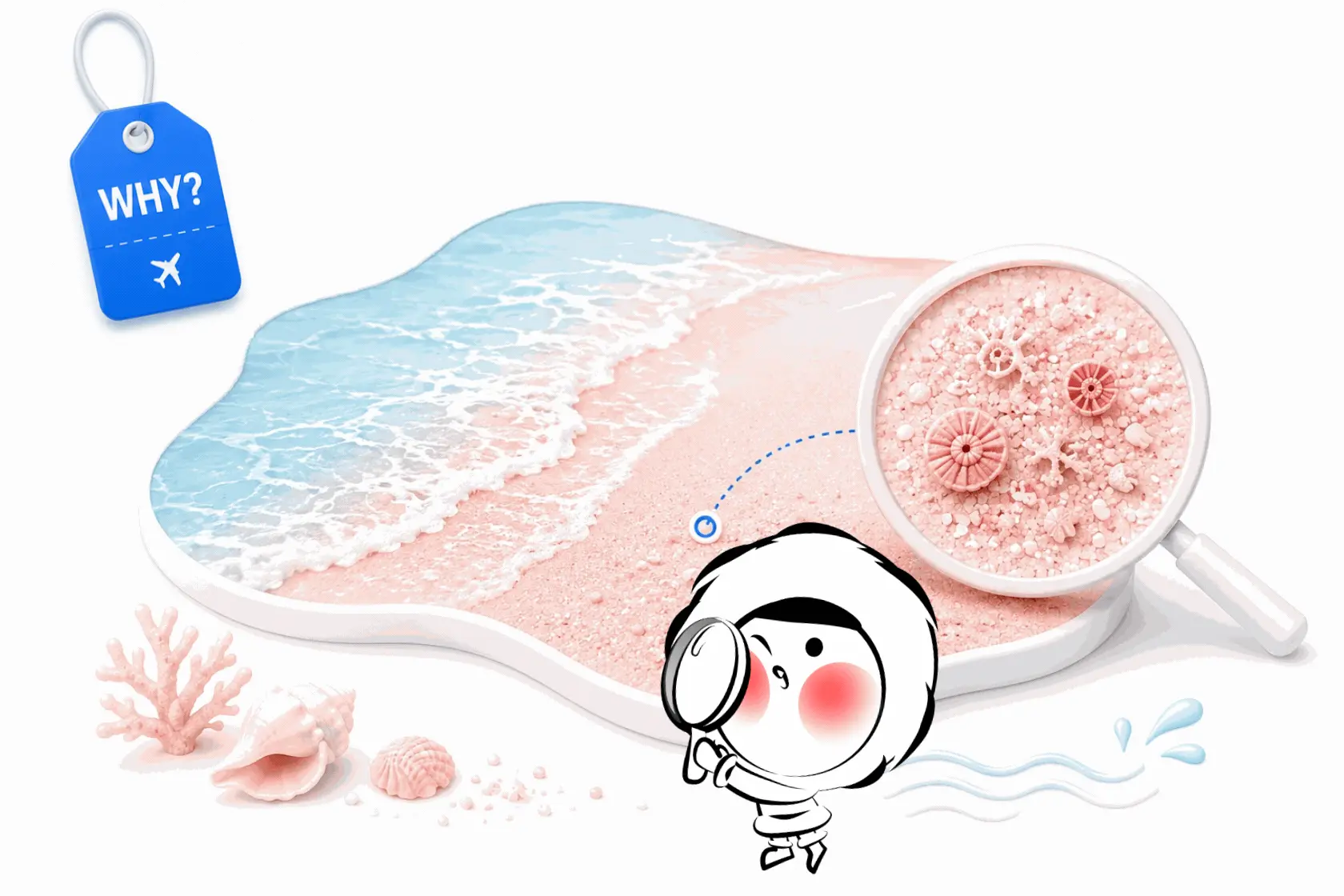
Pink sand is pink because tiny red and pink shell fragments mix with pale beach sand. On many famous pink beaches, the color comes from foraminifera, microscopic marine organisms with reddish calcium carbonate shells.
Why Some Sand Turns Pink
Beach sand is often made from broken-down shells, coral, rock, and marine material. Pink sand forms when reddish particles blend with lighter grains.
In many places, the pink color comes from foraminifera shell fragments. These tiny marine organisms live in reef environments. When they die, waves break their shells into small pieces and wash them onto the shore.
Those reddish fragments mix with pale coral, shells, and calcium carbonate sand, creating a soft pink shade.
Why Not Every Pink Beach Looks the Same
Pink beaches do not all have the same color. Some look bright pink, while others have only a light blush.
The shade can change depending on:
- how much red shell material is in the sand
- how the waves move and spread the fragments
- whether the sand is wet or dry
- sunlight and time of day
- the mix of coral, shells, minerals, and local sediment
This is why some pink beaches look stronger in person than in photos, or pinker at certain times of the day.
Get Eskimo eSIM to stay connected globally
Need internet? Here's what we recommend:

Fixed data plans
- No speed reduction
- 2-year validity, unlimited data rollover
- Transfer data to anyone
- Personal hotspot


Pink Sand Beaches Around the World
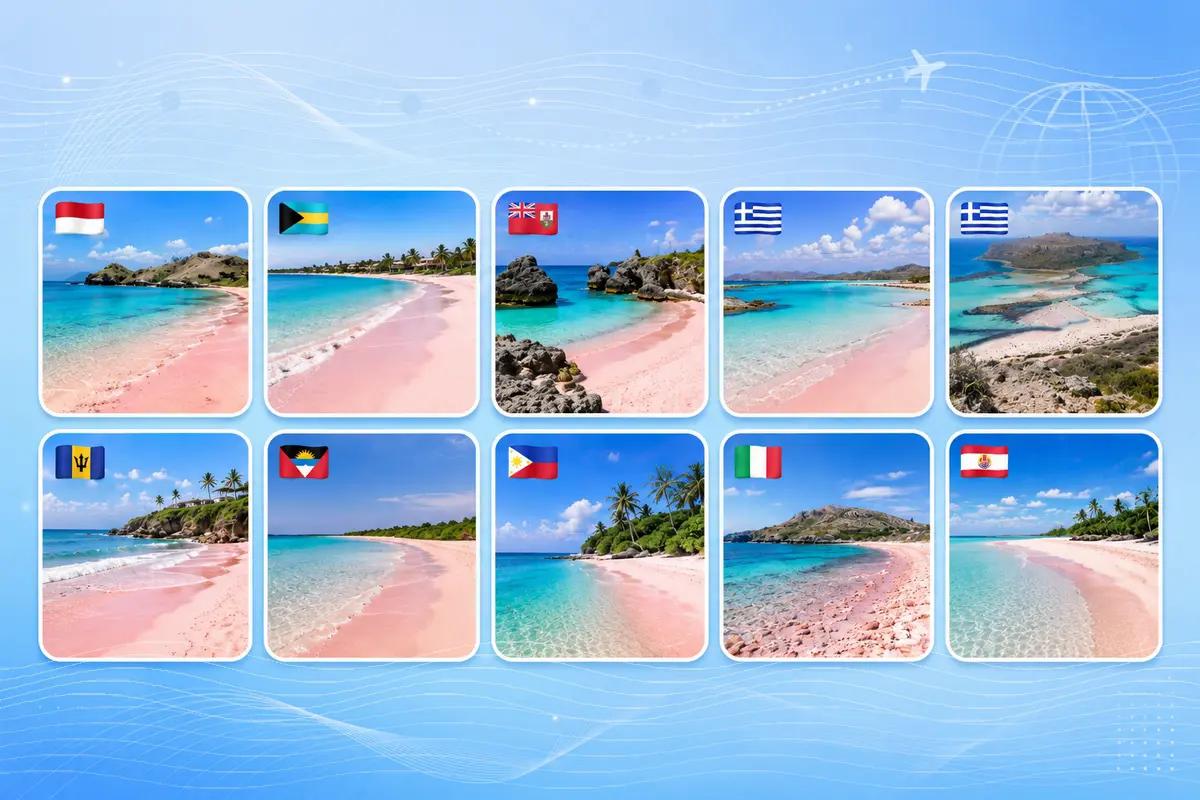
Some of the best-known pink sand beaches include:
- Pink Sands Beach, Bahamas
- Horseshoe Bay Beach, Bermuda
- Elafonissi Beach, Greece
- Balos Lagoon, Greece
- Komodo Pink Beach, Indonesia
- Tikehau, French Polynesia
- Barbuda’s Pink Sand Beach, Caribbean
- Great Santa Cruz Island, Philippines
- Spiaggia Rosa, Italy
- Crane Beach, Barbados
Komodo is one of Indonesia’s best-known pink beach destinations, often visited from Labuan Bajo. For more Indonesia trip ideas, see The Best and Must-Visit Cities in Indonesia.
Can You Take Pink Sand Home?
No. Taking sand from beaches is often illegal or discouraged, especially in protected coastal areas.
Pink sand beaches are fragile. Removing even a small amount can damage the shoreline over time, especially when many visitors do the same. Take photos, not sand.
Beach Trips Feel Better With Simple Data
Pink beaches are often found on islands and remote coastlines, where finding mobile data after arrival can be inconvenient.
Eskimo offers a Global Plan for travelers visiting multiple destinations. Its 2-year data validity is useful for island-hopping trips, future holidays, and unused data from earlier travels. New Eskimo users also get free 500MB of Global Data valid for 2 years.
FAQ
What Makes a Beach Pink?
A beach turns pink when reddish foraminifera shell fragments, coral pieces, shells, or local minerals mix with lighter sand.
Are Pink Sand Beaches Natural?
Yes. Real pink sand beaches are natural. Their color comes from marine life, coral, shells, minerals, and coastal conditions.
Where Is the Most Famous Pink Sand Beach?
Pink Sands Beach on Harbour Island in the Bahamas and Horseshoe Bay Beach in Bermuda are among the most famous pink sand beaches.
Why Do Pink Beaches Look Less Pink in Photos?
Light, tide, weather, wet sand, and camera settings can affect how pink the sand looks. Some beaches also have only a subtle pink tint.
Can You Take Pink Sand From the Beach?
It is best not to take pink sand. Many beaches are protected, and removing sand can harm the natural shoreline.