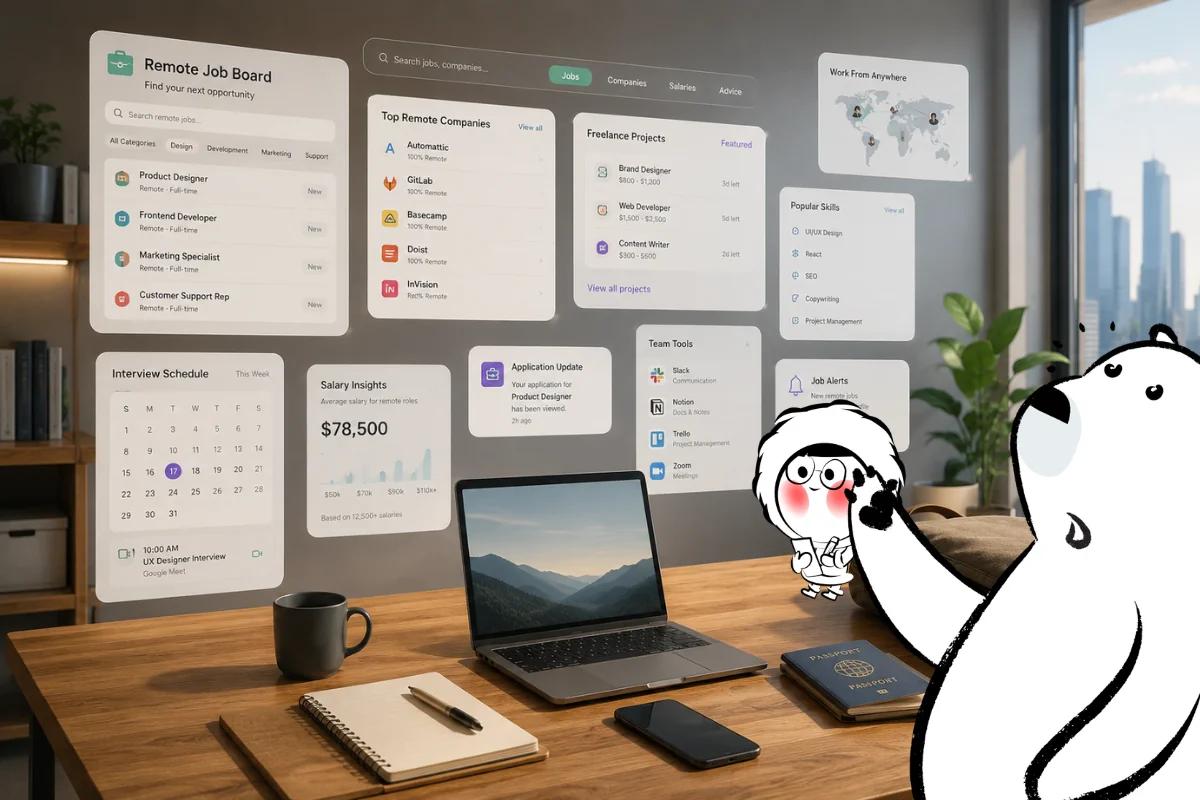
The best way to find remote jobs for digital nomads is to use platforms built for flexible and location-independent work. Some websites focus on full-time remote careers, while others work better for freelance projects, short-term contracts, or creative work. A reliable setup usually combines job platforms, strong work samples, communication tools, and stable internet.
Best Websites For Remote Jobs
LinkedIn is useful for professional remote roles in marketing, operations, product, customer success, design, and tech. It works best when your profile clearly reflects the type of remote work you want.
Use LinkedIn for:
- full-time remote jobs
- recruiter outreach
- company research
- networking with remote-first teams
It is especially useful for people looking for long-term remote careers instead of short freelance projects.
Remote OK
Remote OK is strong for remote tech jobs, startup roles, and remote-first listings. Listings often include developer, designer, customer support, sales, and project management roles.
Best for:
- tech and startup roles
- remote-first companies
- flexible remote work
Check each listing carefully, since some remote jobs still include country or time zone restrictions.
We Work Remotely
We Work Remotely is one of the larger remote job boards, with categories including programming, marketing, customer support, design, and sales.
Best for:
- international remote opportunities
- full-time remote work
- marketing, design, support, and tech roles
Once you begin working remotely while traveling, a reliable workspace becomes just as important as the job itself.
Working Nomads
Working Nomads focuses on remote jobs designed for digital nomads and remote workers, including full-time, part-time, and contract roles.
Best for:
- curated remote opportunities
- contract work
- location-independent jobs
The browsing experience is simpler than many larger job platforms, which makes filtering easier.
FlexJobs
FlexJobs focuses on screened remote, hybrid, freelance, part-time, and flexible jobs.
Best for:
- verified remote jobs
- flexible work arrangements
- avoiding low-quality listings
The subscription model may not suit everyone, but the extra filtering helps reduce scam risks and repetitive listings.
Upwork
Upwork works best for freelancers looking for project-based remote work.
Best for:
- remote freelance jobs
- flexible client work
- building a freelance portfolio
Popular categories include writing, development, design, marketing, admin support, and consulting.
Competition can be high, so a focused profile and clear work samples matter.
Contra
Contra is built around portfolio-led freelance work and independent professionals.
Best for:
- creative freelancers
- consultants
- designers and marketers
- portfolio-based remote work
It is especially useful for freelancers who want a cleaner professional profile without a traditional resume format.
Toptal
Toptal is designed for experienced freelancers in software development, design, finance, product, project management, and consulting.
Best for:
- experienced freelancers
- specialized remote work
- higher-skill freelance opportunities
The screening process is stricter than open freelance marketplaces, so it may not suit beginners.
Best Apps For Remote Work
Finding remote work is only part of the process. Reliable tools help keep work organized while moving between countries and time zones.
Get Eskimo eSIM to stay connected globally
Need internet while travelling? Here's what we recommend:

Fixed data plans
- No speed reduction
- No expiry, keep your data forever
- Transfer data to anyone
- Personal hotspot


Slack
Slack is useful for:
- team communication
- async updates
- client collaboration
- organized project channels
Google Workspace
Google Workspace works well for:
- shared documents
- cloud storage
- calendars
- collaborative remote work
Zoom
Zoom is widely used for:
- client calls
- interviews
- remote meetings
- team communication
Trello Or Notion
Trello works well for lightweight task management. Notion is more flexible for organizing projects, notes, documentation, and remote workflows.
Wise
Wise is useful for:
- international payments
- freelancer transfers
- multi-currency spending
Fees, availability, and transfer speeds can vary by country.
How To Choose The Right Platform
The right platform depends on how you want to work.
Choose remote job boards if you want:
- stable income
- long-term employment
- company benefits
- structured career growth
Choose freelance platforms if you want:
- flexible schedules
- multiple clients
- project-based work
- location flexibility
Choose curated platforms if you want:
- fewer low-quality listings
- stronger filtering
- less time sorting through irrelevant roles
Beginners often do better with LinkedIn, FlexJobs, or Upwork. Experienced freelancers and remote professionals may prefer Remote OK, Contra, Toptal, or We Work Remotely.
Common Mistakes When Looking For Remote Jobs
Avoid:
- applying without a clear remote-work profile
- ignoring time zone expectations
- relying on one platform only
- accepting vague contracts
- underpricing freelance work
- skipping scam checks
Some remote roles are global. Others are remote only within one country or region. Always check location requirements carefully before applying.
Build A Setup That Supports Remote Work
A remote job works best when the rest of your setup is reliable too. Before working across countries full time, think about where you will work, how stable your internet is, and whether your accommodation supports focused work and meetings.
Useful planning areas include coworking, accommodation, budgeting, and backup internet.
Working Across Countries With Fewer Connection Problems
Reliable communication matters when your team, clients, and deadlines are spread across time zones.
Eskimo can make moving between countries simpler by reducing the need to switch SIM cards during every trip. The Global Plan works across multiple destinations, and the two-year data validity is useful for long-term travel, slower trips, and unused data between journeys. New users also receive free 500MB of Global Data.
FAQ
What are the best websites for remote jobs?
Some of the best websites for remote jobs include LinkedIn, Remote OK, We Work Remotely, Working Nomads, FlexJobs, Upwork, Contra, and Toptal. The best choice depends on whether you want full-time employment, freelance projects, or curated remote listings.
Which platform is best for freelance remote work?
Upwork works well for general freelance work, Contra is strong for creative professionals, and Toptal is better suited to experienced freelancers with specialized skills.
Can beginners find remote jobs online?
Yes. Beginners can start with LinkedIn, FlexJobs, Upwork, and Working Nomads. A clear profile and relevant work samples help significantly.
What jobs are best for digital nomads?
Common digital nomad jobs include writing, design, marketing, software development, customer support, consulting, virtual assistance, and project management.
Are remote job websites legitimate?
Many are legitimate, but scams still exist. Verified platforms, careful company research, and clear contracts help reduce risk.
Do digital nomads need backup internet?
Yes. Backup mobile data is useful for meetings, deadlines, airport days, accommodation issues, and unreliable public Wi-Fi.