
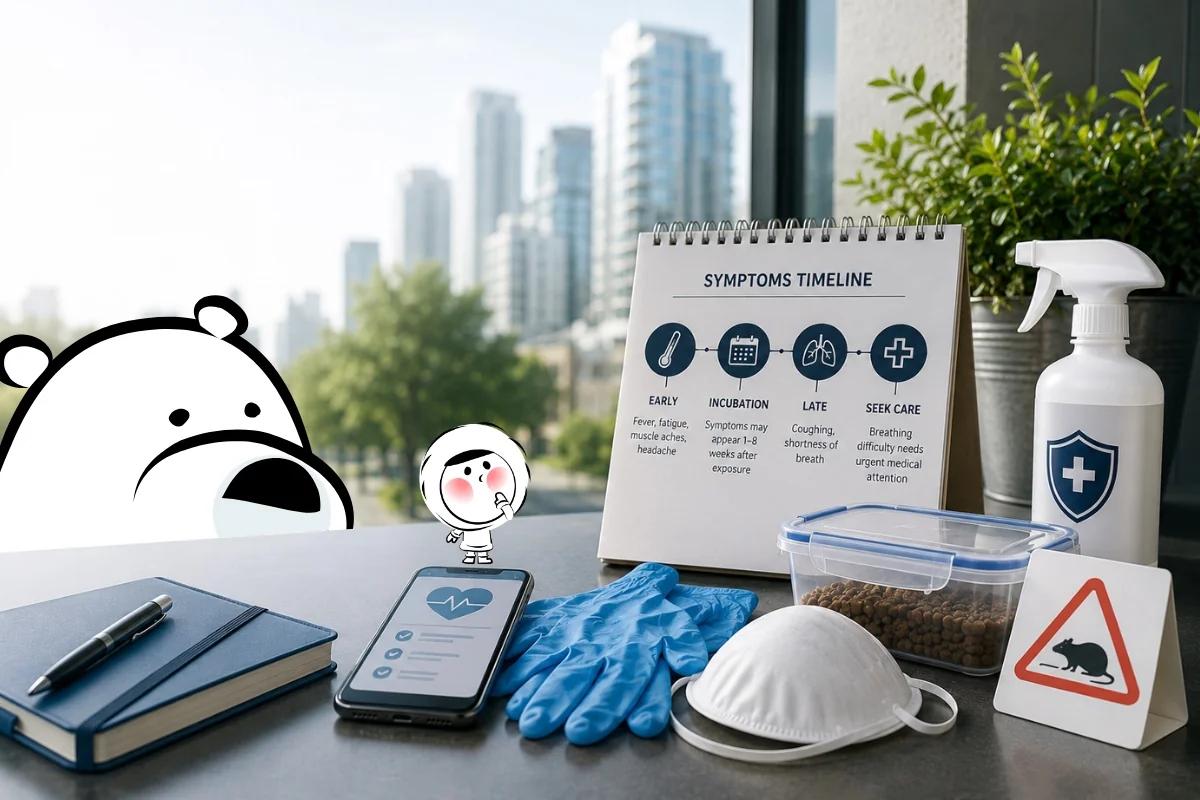
Hantavirus symptoms often begin with fever, fatigue, and muscle aches, then may progress to coughing and shortness of breath. The infection is usually linked to exposure to infected rodents, especially their urine, droppings, saliva, or contaminated dust. Anyone who feels unwell after possible rodent exposure should contact a healthcare provider and mention the exposure clearly. CDC advises testing when a person has symptoms compatible with hantavirus pulmonary syndrome and a history of rodent contact.
This information is for general awareness only and does not replace medical advice.
Quick signs to watch for:
- Fever
- Fatigue
- Muscle aches
- Headache
- Dizziness or chills
- Nausea, vomiting, diarrhea, or abdominal pain
- Coughing
- Shortness of breath
For a broader overview of hantavirus infection, symptoms, treatment, and prevention, see hantavirus.
What Are Hantavirus Symptoms?
Hantavirus symptoms in humans can look like many other viral illnesses at first. Early illness may feel flu-like, which can make it hard to recognize without a clear exposure history. CDC notes that early symptoms of hantavirus pulmonary syndrome can resemble other respiratory illnesses, making diagnosis difficult at the start.
Common symptoms may include:
- Fever and fatigue
- Muscle aches, especially in large muscle groups
- Headache
- Dizziness
- Chills
- Nausea
- Vomiting
- Diarrhea
- Abdominal pain
Later symptoms can involve the lungs. Coughing and shortness of breath need urgent attention, especially after possible exposure to rodents or contaminated spaces.
Early Symptoms of Hantavirus
Early symptoms of hantavirus can appear mild at first. They may include fever, tiredness, body aches, and stomach symptoms. Muscle aches are often reported in larger muscle groups such as the thighs, hips, back, and shoulders.
These hantavirus early signs are easy to mistake for flu, food poisoning, or a common viral infection. The difference is the exposure history. A recent stay in a cabin, campsite, rural home, storage room, shed, or other place with rodent droppings should be mentioned to a doctor.
Do not wait for breathing symptoms before asking for medical advice if you are worried about possible exposure.
Hantavirus Incubation Period
The hantavirus incubation period can be long. CDC says symptoms of hantavirus pulmonary syndrome usually start 1 to 8 weeks after contact with an infected rodent.
So, how long does hantavirus take to show symptoms? It may take several days to several weeks, and timing can vary by person and virus type. This delay can make it harder to connect new symptoms with an earlier exposure.
After possible rodent exposure, monitor for fever, fatigue, muscle aches, stomach symptoms, coughing, or shortness of breath. If symptoms appear, seek medical advice and explain when and where the exposure may have happened.
Get Eskimo eSIM to stay connected globally
Need internet? Here's what we recommend:

Fixed data plans
- No speed reduction
- No expiry, keep your data forever
- Transfer data to anyone
- Personal hotspot


Hantavirus Symptoms Timeline
A typical hantavirus symptoms timeline may move from early flu-like illness to more serious breathing symptoms.
- After exposure: symptoms may not appear right away
- Early illness: fever, fatigue, muscle aches, headache, chills, or stomach symptoms may begin
- Progression: symptoms may worsen instead of improving
- Later illness: coughing and shortness of breath may appear
- Urgent stage: breathing difficulty needs immediate medical care
CDC says late symptoms of hantavirus pulmonary syndrome can appear 4 to 10 days after the initial phase of illness and include coughing and shortness of breath.
Late Symptoms and Breathing Problems
Hantavirus late symptoms are more serious because they can affect breathing. Mayo Clinic describes hantavirus pulmonary syndrome as a rare infectious disease that starts with flu-like symptoms and can progress rapidly to severe lung and heart problems.
Possible hantavirus pulmonary syndrome symptoms include:
- Coughing
- Shortness of breath
- Chest tightness
- Severe tiredness
- Rapidly worsening breathing
Breathing symptoms after rodent exposure should be treated as urgent. Call local emergency services or seek immediate medical care.
When to Seek Medical Help
Seek medical help if hantavirus symptoms appear after possible contact with rodents, rodent droppings, nesting material, or contaminated dust. This is especially important if fever, muscle aches, coughing, or shortness of breath develop.
Tell the healthcare provider about:
- Recent rodent exposure
- Cleaning of enclosed or dusty spaces
- Cabin, campsite, shed, barn, or rural accommodation stays
- Contact with droppings, urine, nesting material, or dead rodents
- Travel to areas where hantavirus is known to occur
Clear exposure details can help with hantavirus diagnosis and reduce delays in care.
How Doctors May Check for Hantavirus
Hantavirus diagnosis is based on symptoms, exposure history, and laboratory testing. CDC says healthcare providers should test for hantavirus when someone has compatible symptoms and contact with rodents.
A doctor may ask about recent travel, cleaning activities, outdoor stays, work environments, and any contact with rodent-contaminated spaces. Lab tests can help confirm hantavirus infection, but clinical judgment matters because early symptoms can resemble other illnesses.
Treatment and Recovery Context
There is no simple at-home cure for hantavirus treatment. Care is supportive and depends on how serious the illness becomes. Mayo Clinic says treatment options for hantavirus pulmonary syndrome are limited, but the prognosis improves with early recognition, immediate hospitalization, and breathing support.
Severe hantavirus pulmonary syndrome symptoms may require hospital care, oxygen, or intensive monitoring. Early care gives doctors the best chance to support breathing and manage complications.
Keeping Health Information Within Reach While Traveling
Symptoms that appear during a trip can be stressful, especially when they involve possible exposure in a cabin, campsite, rural stay, or remote accommodation. Mobile data helps travelers check official health advice, contact local medical services, message accommodation hosts, and update family without depending on public Wi-Fi.
Eskimo offers flexible eSIM data through its Global Plan, which is useful when travel plans cross borders or change unexpectedly. For broader travel connectivity basics, see eSIM for international travel.
Eskimo’s one-eSIM setup can help frequent travelers avoid repeated installations across supported destinations. New Eskimo users can get free 500MB of Global Data.
FAQs About Hantavirus Symptoms
What are the first symptoms of hantavirus?
The first symptoms often include fever, fatigue, and muscle aches. Some people may also have headache, dizziness, chills, nausea, vomiting, diarrhea, or abdominal pain. These early symptoms can look like other viral illnesses, so possible rodent exposure is important to mention.
How long does the hantavirus incubation period last?
The hantavirus incubation period for hantavirus pulmonary syndrome is usually described as 1 to 8 weeks after contact with an infected rodent. Symptoms may not appear right away, so monitoring after possible exposure matters.
What are late symptoms of hantavirus?
Late symptoms can include coughing and shortness of breath. These may appear after the early phase of illness and can worsen quickly. Breathing problems after possible rodent exposure need urgent medical care.
When should you see a doctor for hantavirus symptoms?
See a doctor promptly if symptoms appear after possible rodent exposure. Seek urgent care for coughing, shortness of breath, chest tightness, or rapidly worsening fatigue. Tell the doctor about any contact with rodent droppings, urine, nesting material, or contaminated dust.