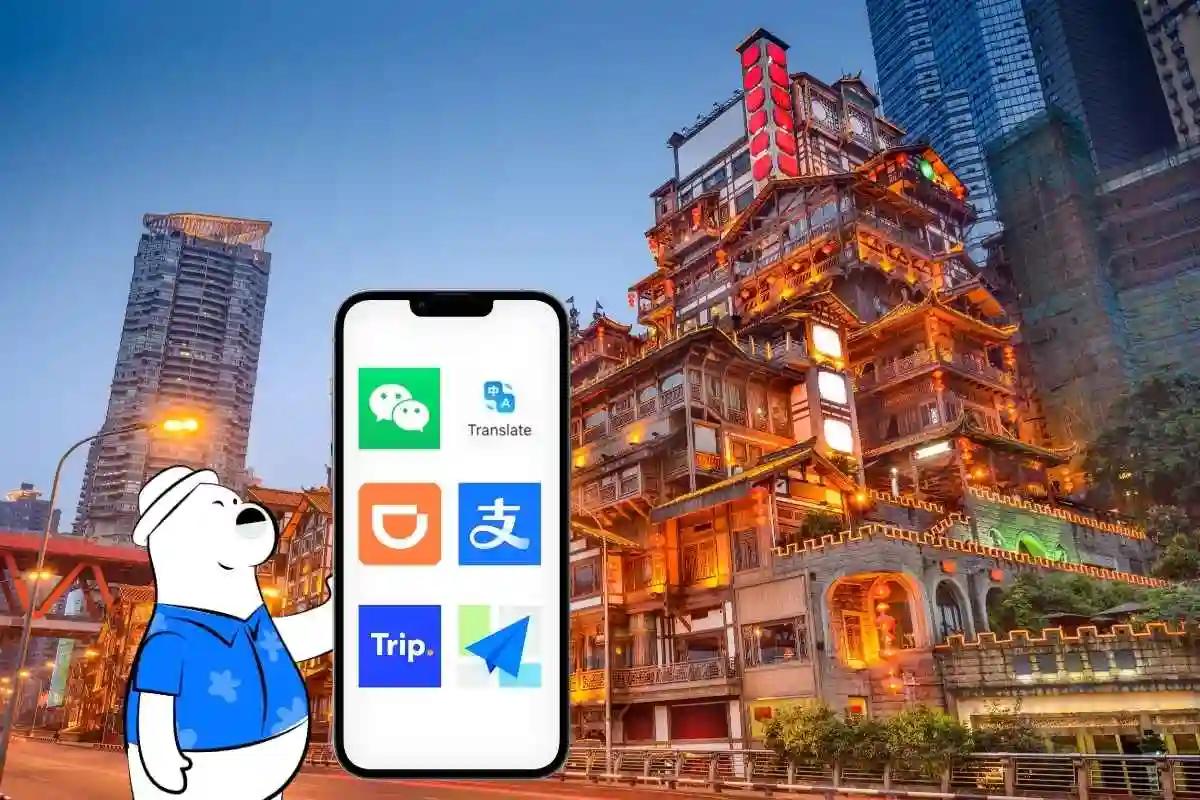
Traveling to China can be an unforgettable experience, but it’s also very different from many other destinations. Many international apps don’t work properly, cash is rarely used, and language barriers can be challenging. To make your trip smoother, downloading the right apps before you arrive in China is essential.
1. Amap (Gaode Map) – The Best Map App in China
Google Maps does not work well in China, so Amap (also known as Gaode Map) is the best alternative. It provides accurate real-time navigation for walking, driving, public transportation, and even cycling.
Amap is extremely detailed and shows metro exits, bus routes, traffic conditions, and estimated travel times. It’s widely used by locals, making it far more reliable than foreign map apps. While the interface is mostly in Chinese, the accuracy makes it worth using, especially when navigating big cities like Beijing, Shanghai, or Guangzhou.
2. Trip.com – Booking Flights, Trains, and Hotels
Trip.com is one of the most traveler-friendly booking platforms for China. You can book hotels, domestic flights, and high-speed trains using a foreign passport and international payment methods.
One of the biggest advantages of Trip.com is its English interface and customer support. It’s especially useful for booking bullet trains, which are the most efficient way to travel between cities. Hotel listings on Trip.com also tend to be more foreigner-friendly, helping you avoid accommodations that don’t accept international guests.
3. Alipay – Essential E-Wallet for Daily Payments
China is almost entirely cashless, and Alipay is one of the two most widely used e-wallets. From restaurants and cafés to convenience stores, taxis, and even street vendors, Alipay is accepted nearly everywhere.
The good news for travelers is that Alipay now allows foreign users to link international bank cards. Once set up, you can pay by scanning QR codes just like locals.
4. DiDi – China’s Version of Uber
DiDi is the most popular ride-hailing app in China and works similarly to Uber or Grab. You can order cars, taxis, and even premium rides directly through the app.
DiDi has an English interface, making it easy for international travelers to use. Payment can be linked to Alipay or an international card. This app is especially helpful late at night, when public transportation is limited, or if you’re traveling with luggage.
5. AliTranslate – Translation Made Easy
Language can be one of the biggest challenges in China, as English is not widely spoken outside major tourist areas. AliTranslate helps bridge that gap with text, voice, and image translation.
You can translate menus, signs, or conversations in real time, which is incredibly useful when ordering food or asking for directions. Offline translation features are also helpful in areas with weak internet connection.
6. WeChat – Chatting, Payments, and More
WeChat is a super app used for chatting, social media, payments, and even booking services. Many hotels, tour operators, and local businesses communicate via WeChat instead of email or WhatsApp.
WeChat Pay is another popular payment method in China. While Alipay is usually easier for tourists, having WeChat is still important for communication and everyday interactions with locals.
7. VPN – Access Blocked Apps and Websites
Many international apps and websites like Google, Instagram, WhatsApp, YouTube, and Gmail are blocked in China. A reliable VPN is necessary if you want to access these services.
Make sure to install and test your VPN before arriving in China, as VPN websites are often blocked once you’re inside the country. A stable VPN will help you stay connected to your usual apps and services throughout your trip.
Culture Shock You May Experience in China
• Cashless society
Cash is rarely used, even for small purchases like street food or public toilets. QR-code payments via Alipay or WeChat Pay are the norm.
• Limited English usage
English is not widely spoken, especially outside major tourist areas. Menus, signs, and announcements are often only in Chinese.
• Heavy reliance on apps
Almost everything is done through apps: payments, navigation, ride-hailing, food ordering, hotel communication, and even government services.
• Power bank restrictions (CCC certification required)
Power banks brought into China must have a visible CCC (China Compulsory Certification) logo. Power banks without this certification may be confiscated at airport security, especially on domestic flights and high-speed train checks.
Get Eskimo eSIM to stay connected in China
Need internet in China? Here's what we recommend:

Fixed data plans
- No speed reduction
- No expiry, keep your data forever
- Transfer data to anyone
- Personal hotspot



Unlimited data plans
- Unlimited day pass
- Daily 3GB high-speed + 1Mbps unlimited after
- Personal hotspot



• Crowded public spaces
Train stations, subways, tourist attractions, and shopping malls can be extremely crowded, especially during holidays and rush hours.
• Different dining culture
Meals are usually shared, restaurants can be noisy, and personal space is limited. Some dishes may look or taste unfamiliar to international travelers.
• Direct communication style
People may seem blunt or straightforward. This is cultural and not considered rude in China.
• Spitting & smoking in public areas
Although improving in big cities, spitting and smoking can still be seen in some public spaces.
• Strict rules & security checks
Bag checks and ID inspections are common at metro stations, train stations, and tourist attractions.
• Long queues but fast service
Lines can be long, but services like food delivery, transport, and train boarding are usually very efficient once it’s your turn.
Things to Prepare & Bring to China
• Install all essential apps before arrival, including VPNs and payment apps. Many app stores and websites are restricted in China, so downloading and setting everything up in advance will save you a lot of trouble once you arrive.
• International bank card linked to Alipay or WeChat Pay. China is almost completely cashless, and having a working digital payment method is essential for transportation, food, shopping, and daily expenses.
• Passport copies (digital and printed) for hotel check-ins and registrations. Hotels are required to register foreign guests, and having copies makes the process faster and safer in case your passport is misplaced.
• Portable power bank since navigation, ride-hailing, translation, and payment apps are used constantly. Long sightseeing days can drain your battery quickly, especially in large cities.
• Basic Mandarin phrases saved offline for emergencies. Simple phrases like asking for directions, prices, or help can be extremely useful when internet access is unstable or translation apps fail.
• Travel eSIM to ensure stable internet access from day one. Reliable mobile data is crucial in China because almost every service depends on online apps and QR-code systems. Use Eskimo eSIM and get a free 500MB global data trial that you can use in 109 countries including China.
FAQs
Is China suitable for first-time international travelers?
Yes, China is safe and well-organized, but it requires more preparation than many other destinations due to different systems, language barriers, and digital habits.
Can foreigners easily use public transportation in China?
Public transportation is modern, affordable, and efficient, but ticket machines and announcements may not always be in English, so planning routes in advance is important.
Is it easy to travel between cities in China?
Yes, China’s high-speed rail network connects major cities efficiently, making intercity travel fast, comfortable, and reliable.
Do I need to carry cash as a backup?
While digital payments dominate, carrying a small amount of cash can be useful in rare situations such as rural areas or emergencies.
Are public toilets easy to find in China?
Public toilets are widely available in cities and tourist areas, but cleanliness and facilities can vary, so carrying tissues and hand sanitizer is recommended.
Can I drink tap water in China?
Tap water is generally not safe to drink. Most locals boil water or buy bottled water, which is cheap and easy to find everywhere.