It Started as a Fortress
Built in 1190 by King Philip II, the Louvre was originally a stone fortress protecting Paris. Centuries later, it transformed into a royal residence, then a museum in 1793. Visitors can still see parts of the original moat and towers preserved beneath the building, a tangible piece of medieval France.
The World’s Largest Museum
With over 72,000 square meters of exhibition space, the Louvre showcases more than 35,000 works across eight departments. If you spent just 30 seconds on each piece, it would take over 100 days to see everything. It’s truly a world within walls, a journey from Mesopotamian art to Renaissance genius.
The Mona Lisa’s Modest Fame
The Mona Lisa might be the most recognizable painting in the world, but she’s surprisingly small, only 77 × 53 cm. Leonardo da Vinci’s masterpiece sits behind bulletproof glass, drawing millions every year. Her expression has inspired debates, songs, and even film scenes.
The Pyramid with Secrets
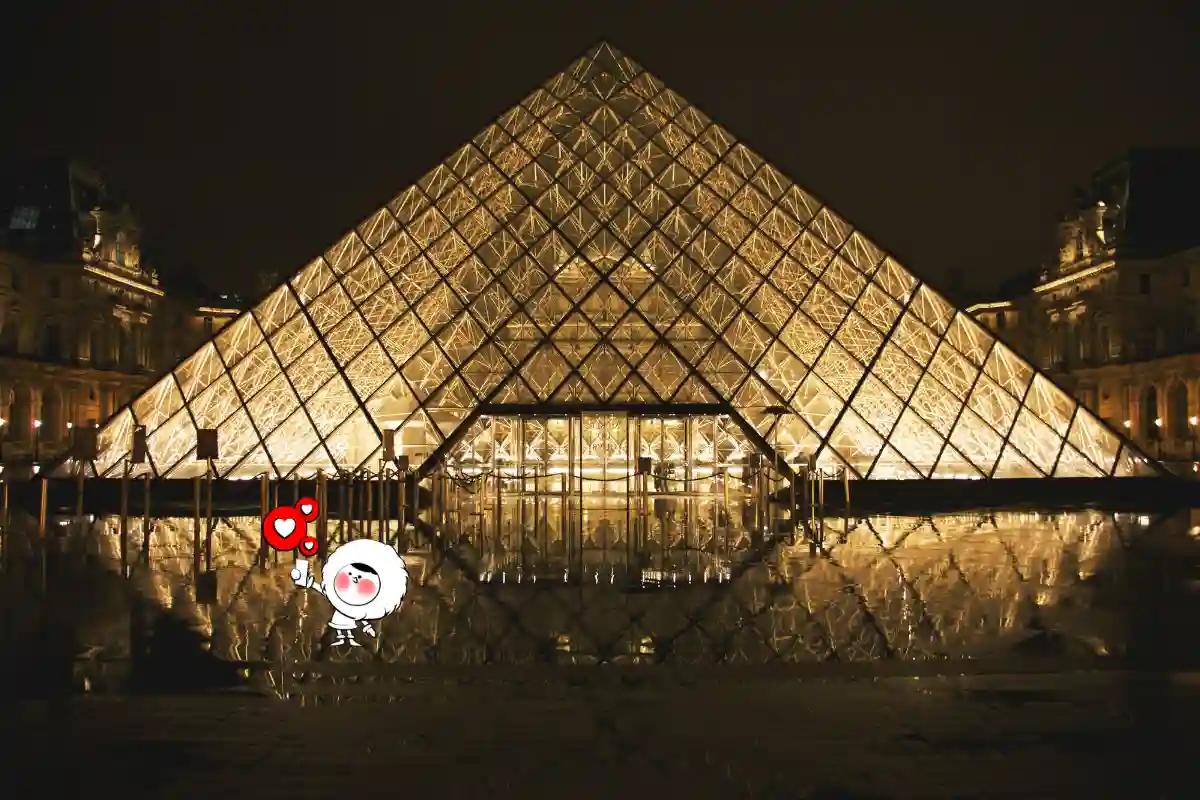
The Louvre Pyramid, designed by I.M. Pei and inaugurated in 1989, symbolizes harmony between modern and historic Paris. Contrary to myth, it has 673 glass panes, not 666. There are five pyramids in total, including an inverted one underground at the Carrousel du Louvre, each representing balance and light.
Napoleon’s Influence
During his reign, Napoleon Bonaparte renamed the museum the Musée Napoléon and filled it with art from his conquests. Though many works were returned, his mark remains in the Napoleon Apartments, where opulent décor meets imperial history.
Home to 9,000-Year-Old Art
Among the Louvre’s oldest pieces is the Ain Ghazal Statue from 7000 BCE, discovered in Jordan. It stands as one of the earliest known human sculptures, proof that creativity has long defined civilization.
Get Eskimo eSIM to stay connected globally
Need internet? Here's what we recommend:

Fixed data plans
- No speed reduction
- No expiry, keep your data forever
- Transfer data to anyone
- Personal hotspot


Legends and Myths
The museum’s history comes with eerie tales, like the ghostly “Red Man of the Tuileries”, said to appear before royal tragedy. Some visitors swear the halls still echo with his presence, proof that even art has its mysteries.
The Louvre in Pop Culture
From The Da Vinci Code to Lupin, the Louvre has starred in global hits. Directors love its blend of classical elegance and modern light, making it a cinematic icon as recognizable as the Eiffel Tower.
More Museums to Explore in Europe
If you’re traveling beyond Paris, Europe is full of legendary museums. In London, The British Museum rivals the Louvre with artifacts from every corner of the globe from ancient Egypt to the Roman Empire. Pair both visits for a true journey through world history and art.
To stay connected as you hop across borders, try Eskimo’s Europe eSIM Plan offering data coverage in 40+ countries, from France to Italy, Spain, and beyond. It’s the easiest way to travel smart, without swapping SIM cards.
FAQs
Where is the Louvre located?
In the 1st arrondissement of Paris, along the Seine River, near the Tuileries Garden.
What’s the oldest artifact in the Louvre?
The Ain Ghazal Statue, from around 7000 BCE, is the oldest known work in the museum’s collection.
How many artworks are in the Louvre?
Over 35,000 pieces are on display, with more than 380,000 held in its archives.
What other museums in Europe should I visit?
Try The British Museum in London, The Prado in Madrid, or The Rijksmuseum in Amsterdam, all masterpieces of European heritage.