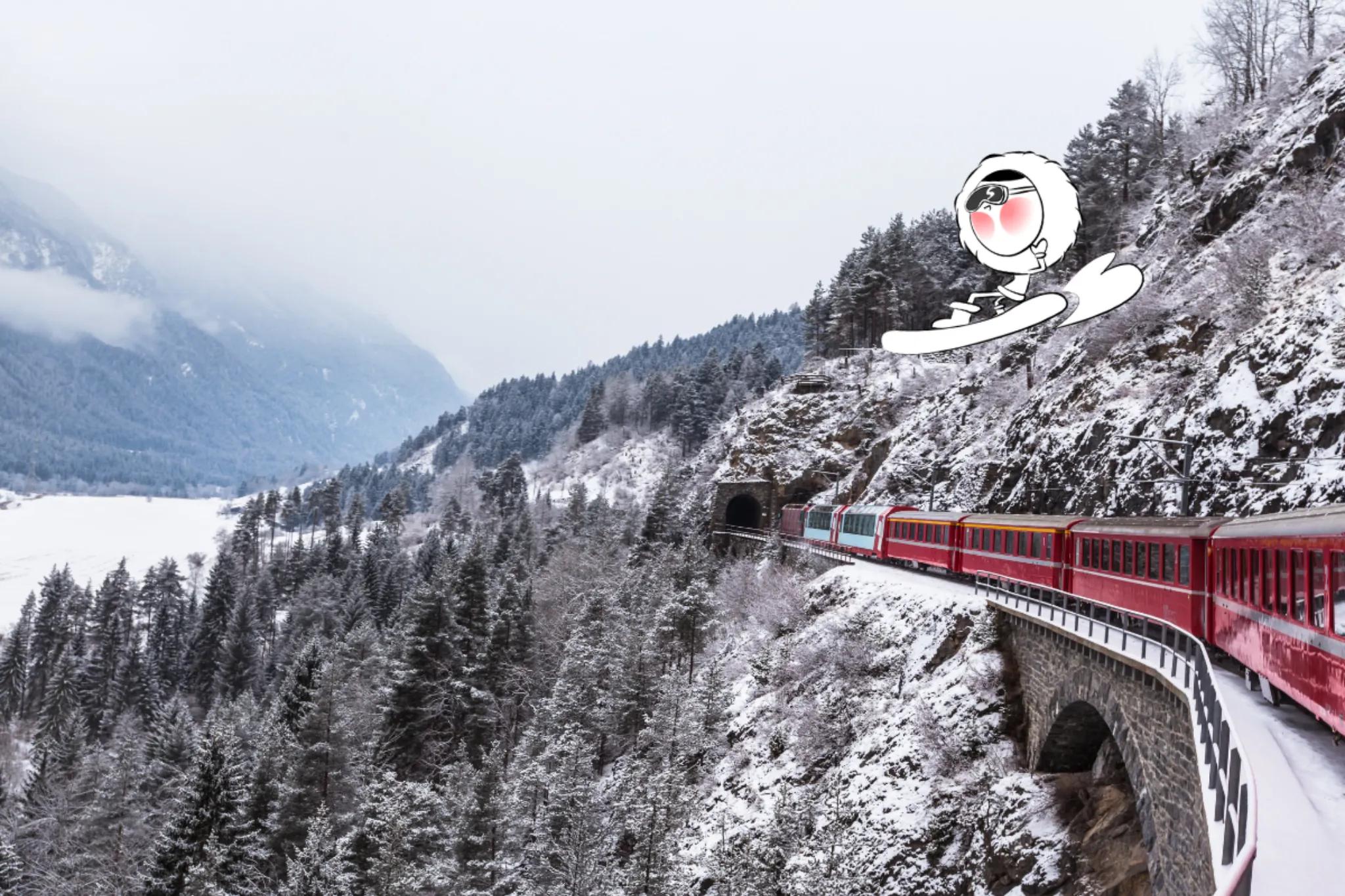
The Glacier Express presents a unique paradox: it is famously known as the slowest express train in the world. In a world obsessed with speed, this journey encourages passengers to linger. Spanning approximately eight hours, the train connects the mountain resorts of Zermatt and St. Moritz, cutting through the very heart of the Swiss Alps. The goal here is not to arrive, but to experience the transition of the landscape. From the first glimpse of the Matterhorn in Zermatt to the high-alpine lakes of the Engadin, this is the ultimate Swiss bucket-list item.
What Is the Glacier Express?
The Glacier Express is a dedicated sightseeing train that has operated since 1930. Unlike standard commuter trains, it is a luxury panoramic service designed specifically for observation. It moves at an average speed of 38 kilometers per hour to ensure passengers can fully appreciate the 291 bridges and 91 tunnels along the way.
This Swiss Alps train is more than just transportation; it is an engineering marvel. It bridges the gap between the western and eastern Alps, providing a direct link between two of the most prestigious resorts in the world. For travelers looking for more inspiration, it is often listed among the best luxury train trips globally.
The Route: Zermatt to St. Moritz
The journey is best visualized as a geographic play-by-play in three acts:
Act 1: The Valais Ascent.
Leaving Zermatt, the train passes through the Mattertal valley toward Brig. You will feel the train engage its rack-and-pinion system as it climbs toward the entrance of the Furka Base Tunnel.
Act 2: The Roof of Europe.
The train reaches its highest point at the Oberalp Pass, standing at 2,033 meters above sea level. Here, the green valleys give way to a rugged, high-altitude desert of rock and snow.
Act 3: The Rhine Gorge and Landwasser.
This act features the "Swiss Grand Canyon" with its white limestone cliffs. The climax is the crossing of the Landwasser Viaduct, a 65-meter-high curved stone bridge that is a UNESCO World Heritage site.
Insider Tip: Sit on the right side of the train when traveling from Zermatt for the best view of the viaduct.
What the Train Is Like Inside
The interior is designed for quiet luxury and quiet relaxation. The panoramic windows express a sense of immersion, making the jagged peaks feel within reach. Passengers choose between three distinct experiences:
- Second Class: Features comfortable 2+2 seating.
- First Class: Offers a 2+1 seating configuration for more personal space.
- Excellence Class: The most premium option with a guaranteed window seat, a private bar, a concierge service, and a five-course meal included.
Each seat includes a power outlet, which is essential for keeping your phone charged.
The Food Experience Onboard
Dining at 2,000 meters is a central part of the experience on the Glacier Express, which is a highlight of the trip. Freshly prepared multi-course meals are served directly to your seat while the world tilts outside. The menu features regional Swiss specialties and local wines from the cantons of Valais and Graubünden.
A signature part of the experience is the slanted wine glass. These were cleverly designed so that the wine would not spill while the train navigates steep mountain gradients. Today, they remain a fun and practical reminder of the unique terrain.
Get Eskimo eSIM to stay connected in Switzerland
Need internet in Switzerland? Here's what we recommend:
Fixed data plans
- No speed reduction
- No expiry, keep your data forever
- Transfer data to anyone
- Personal hotspot



Unlimited data plans
- Unlimited day pass
- Daily 3GB high-speed + 1Mbps unlimited after
- Personal hotspot

The Most Beautiful Views Along the Route
The Switzerland scenic train route offers a landscape that shifts significantly with the seasons:
- Winter (January–March): A "Narnia-like" wonderland of snow-capped peaks.
- Spring and Summer (June–August): Melting glaciers lead to rushing waterfalls and meadows filled with wildflowers.
- Autumn (October): Larch forests turn a bright golden orange against the granite peaks.
Beyond the famous viaducts, the descent through the Rhine Gorge offers some of the most dramatic views, where the turquoise waters of the Rhine run alongside the tracks.
Is the Glacier Express Worth It?
Determining if the journey is worth the cost depends on your budget and how you value the experience. The Glacier Express ticket price is split into two mandatory costs: the base fare and the reservation fee.
Glacier Express costs
For a full journey between Zermatt and St. Moritz, a second-class ticket typically costs around 152 CHF, while a first-class ticket is approximately 268 CHF. If you hold a Swiss Travel Pass or a Day Pass, the base fare is covered, and you do not need to pay this amount.
However, the mandatory reservation fee applies to everyone. This fee changes based on the season:
- Long Stays (Full Route): Usually range from 29 CHF in the low season to 49 CHF in the peak summer and winter months.
- Excellence Class: This requires a first-class ticket plus a much higher supplement, typically around 470 CHF.
Glacier Express booking and logistics
Glacier Express booking typically opens 90 to 93 days in advance. Due to extreme demand, it is essential to book as soon as the window opens. If eight hours is too long, the "halfway" option allows you to hop off at intermediate stops like Andermatt or Chur. When compared to other options like the Bernina Express, the Glacier Express provides a more comprehensive tour, making it a worthwhile investment for the ultimate Alpine experience.
Is Wi-Fi available on board the Glacier Express?
While the Glacier Express offers an onboard infotainment system, Wi-Fi can be notoriously spotty as the train passes through 91 tunnels. To ensure you can livestream the Landwasser Viaduct without interruption, a Switzerland eSIM is the most reliable choice.
New users can get started with a free 500MB global data upon sign-up. Eskimo stands out for modern travelers with these unique features:
- Longest Validity: All fixed data plans remain valid for 2 years at no extra cost.
- Data Rollover: Buy any new plan and extend your leftover data for an additional 2 years.
- Universal eSIM: Install once and stay connected across 140+ countries with no SIM swaps.
- Instant Data Transfer: Traveling as a couple? You can send or receive paid data to other Eskimo members instantly using just a mobile number.
FAQs
How much does it cost to ride the Glacier Express in Switzerland?
The total cost is the sum of the ticket (approx. 152 CHF for 2nd class) and the reservation fee (29–49 CHF). If you have a rail pass, you only pay the reservation fee.
Is glacier express really worth it?
Yes, it is worth it for travelers who want to see the best of the Swiss Alps in maximum comfort within a single day without the stress of navigating mountain roads.
Where does the glacier express start and finish?
The train runs between Zermatt in the west and St. Moritz in the east, with major stops in Brig, Andermatt, and Chur.
Can I use the Swiss Travel Pass on the Glacier Express?
Yes, the Swiss Travel Pass is fully valid for the travel ticket. You only need to purchase the mandatory seat reservation separately.