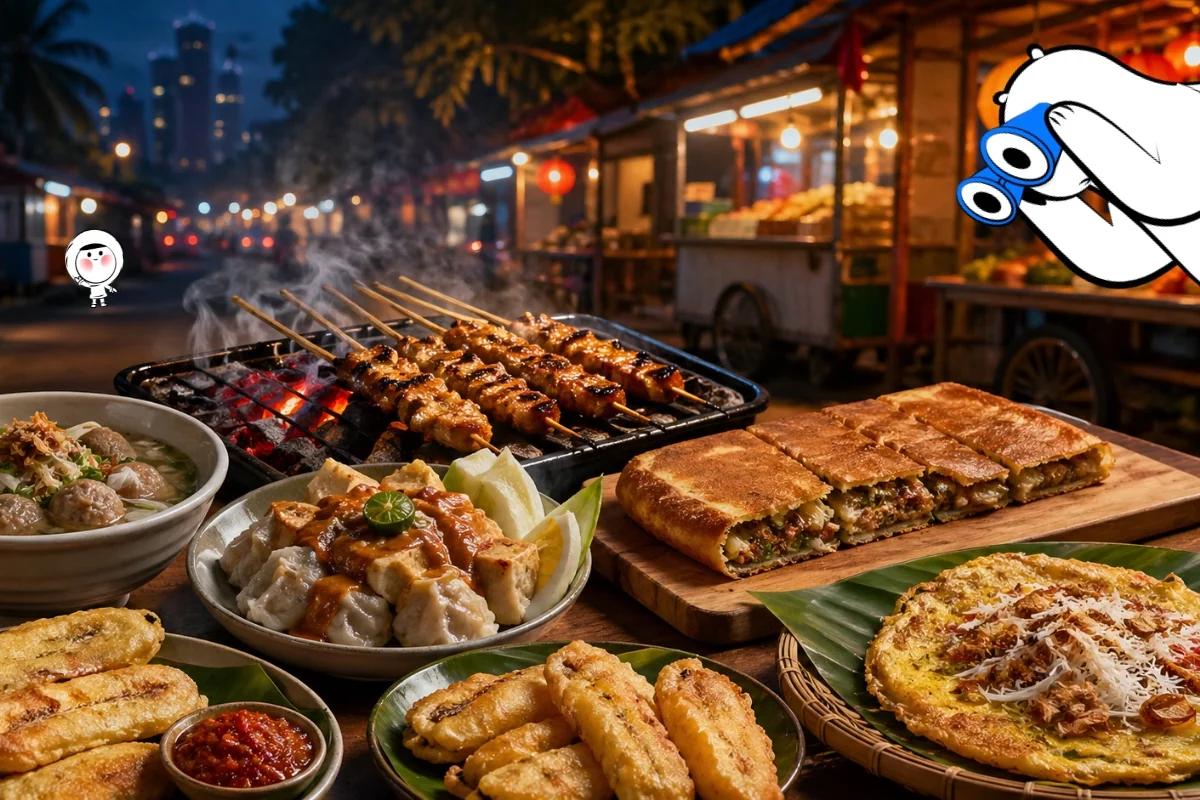
Indonesian street food is one of the easiest and most enjoyable ways to understand the country’s everyday food culture. The best place to start is with the dishes you actually see at carts, roadside stalls, market edges, and night snack spots: siomay, kerak telor, telur gulung, batagor, cilok, martabak, pisang goreng, bakso, and sate. Street food in Indonesia is fast, affordable, varied, and deeply tied to daily life in cities like Jakarta, Bandung, and Yogyakarta.
What Counts As Street Food In Indonesia
In Indonesia, street food usually means food sold by street vendors, carts, roadside stalls, market-side sellers, or evening tents rather than full-service restaurants. It often includes quick snacks, skewered bites, fried foods, dumplings, soups, and grilled dishes that are easy to eat on the go or at a simple plastic table. Indonesia Travel’s Jakarta street food pages describe this style clearly, noting how heavily local food culture relies on street vendors throughout the day.
Best Indonesian Street Food To Try
Siomay
Siomay is one of Indonesia’s most popular street snacks, especially in Bandung. Indonesia Travel describes it as a steamed fish dumpling dish served with extras like potato, bitter melon, cabbage, and tofu, all finished with peanut sauce.
Kerak telor
Kerak telor is one of Jakarta’s most iconic street foods. Indonesia Travel describes it as a traditional Betawi omelette made with glutinous rice, egg, fried shallots, dried shrimp, and roasted coconut, and notes its close association with the Jakarta Fair and the city’s culinary heritage.
Telur gulung
Telur gulung is a snack many Indonesians instantly recognize from school areas and street carts. It is a thin fried egg rolled around a skewer and is commonly sold as a quick, inexpensive snack. I am using a secondary source here because I did not find an official tourism source for it.
Batagor
Batagor is another Bandung favorite closely linked to the city’s street food scene. Indonesia Travel describes it as a fried fish-and-tofu snack served with peanut sauce, and its Bandung food coverage calls batagor and siomay the city’s most identifiable street foods.
Cilok
Cilok is a chewy tapioca snack from West Java that is commonly sold from carts and often served on skewers with sauce. I did not find a strong official tourism source for this one either, so this is based on a secondary culinary reference.
Martabak
Martabak is one of the most familiar street-side evening foods in Indonesia. Indonesia Travel highlights Martabak Aceh as a savory, spice-rich snack and also points to Martabak Pecenongan as one of Jakarta’s best-known martabak stops.
Pisang goreng
Pisang goreng, or fried banana, is one of the easiest Indonesian snacks to find and one of the easiest to like. It works well as an afternoon bite and shows up everywhere from casual stalls to market corners. Indonesia Travel includes it among Indonesia’s favorite local foods.
Bakso
Bakso is one of the most common everyday foods in Indonesia and is easy to find from carts and modest stalls across the country. Indonesia Travel describes it as meatballs usually served in broth with noodles, tofu, fried shallots, and celery, and notes how widely it is found from major cities to smaller towns.
Sate
Sate belongs on any Indonesian street food shortlist. Indonesia Travel describes sate ayam as one of the most common forms sold across Indonesia and says it can be bought from street hawkers as well as restaurants. For a more regional variation, sate lilit in Bali is also sold as street food.
Get Eskimo eSIM to stay connected in Indonesia
Need internet in Indonesia? Here's what we recommend:

Fixed data plans
- No speed reduction
- No expiry, keep your data forever
- Transfer data to anyone
- Personal hotspot



Unlimited data plans
- Unlimited day pass
- Daily 3GB high-speed + 1Mbps unlimited after
- Personal hotspot

Where To Try Street Food In Indonesia
If you want the strongest start, focus on a few cities rather than trying to eat everything everywhere.
- Jakarta is especially good for kerak telor and a variety of street food.
- Bandung is one of the best places for siomay and batagor.
- Yogyakarta is good for snack-heavy evenings and casual food culture around the city center.
- Bali is worth adding for sate lilit in local casual settings.
How To Eat Street Food More Confidently In Indonesia
A few small habits make a big difference:
- Choose busy stalls with steady turnover.
- Look for food that is cooked fresh in front of you.
- Carry cash, especially for smaller vendors.
- Ask about the spice level before ordering.
- Check for peanuts, seafood, egg, or pork if you have dietary restrictions.
- Start with the most popular dishes first if it is your first time.
That same approach also makes it easier to enjoy more local places without overthinking every stop. See the Indonesia Travel Guide to get more information about Indonesia.
Staying Flexible While You Eat Your Way Across Indonesia
Street food trips rarely stay neat. You end up moving between markets, side streets, food stalls, and last-minute recommendations, often with maps and ride-hailing open the whole time.
Eskimo is useful for that kind of travel because the Indonesian eSIM comes with 2-year validity. New users can also get free 500MB of Global Data.
FAQ
What is the most popular street food in Indonesia?
There is no single answer, but sate, bakso, siomay, and martabak are among the most widely recognized and easiest to find.
Is Indonesian street food spicy?
Some of it is, but not all of it. Batagor, siomay, and martabak can be fairly mild, while sauces and sambal often add the heat.
What street food should I try first in Indonesia?
For an easy start, try siomay, martabak, or bakso. They are widely known, easy to find, and approachable for many travelers.
Where is the best city for street food in Indonesia?
Jakarta and Bandung are two of the strongest starting points. Jakarta gives you variety, while Bandung is especially well known for siomay and batagor.
Is it safe to eat street food in Indonesia?
It usually is when you choose stalls with high turnover, fresh cooking, and clean handling. Busy vendors are often the safest bet because the food moves quickly. This is practical advice rather than a formal official rule.