
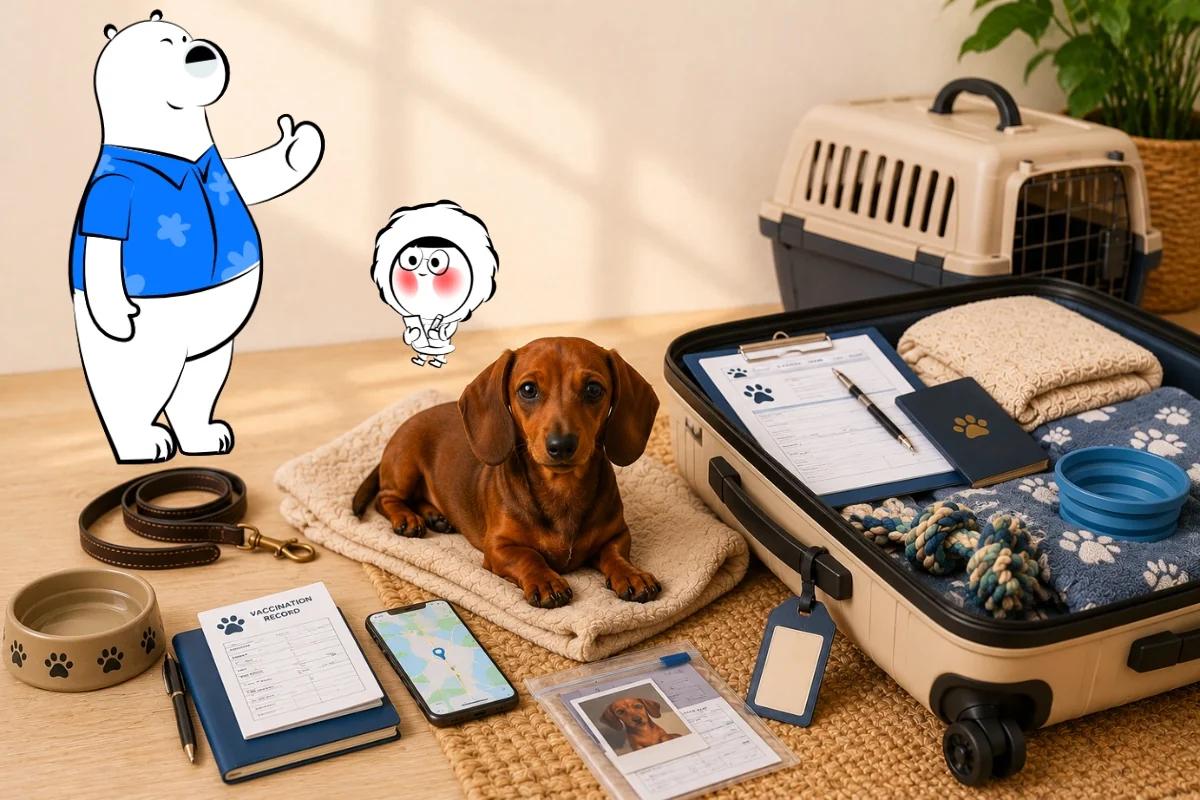
The best way to travel with pets is to plan early, confirm the rules for your route, prepare the right documents, pack familiar essentials, and keep your pet’s comfort ahead of convenience. Before booking, check your destination’s pet entry rules, your transport provider’s policy, and your accommodation’s pet conditions. Rules can vary by country, airline, train operator, ferry company, hotel, and even route.
| Pet Travel Step | What To Check |
| Health | Vet advice, age, anxiety, medication needs |
| Documents | Vaccination records, health certificate, microchip details |
| Transport | Carrier size, cabin or cargo rules, car safety, train or ferry policy |
| Stay | Pet fees, weight limits, room rules, nearby outdoor space |
| Packing | Food, water, documents, leash, ID tag, comfort items |
Can You Travel With Pets?
Most healthy pets can travel, but not every trip is right for every animal. Age, breed, temperament, health conditions, heat sensitivity, and anxiety all matter.
Speak to a vet before booking if your pet is very young, elderly, pregnant, recovering from illness, has breathing problems, or becomes highly stressed away from home. Some flat-faced dog and cat breeds may be more vulnerable during air travel because of breathing difficulties, especially in warm or stressful conditions.
A good pet trip starts with one honest question: will your pet be safer and calmer coming with you, or staying with a trusted sitter, friend, or boarding service?
Check Pet Travel Rules Before You Book
Pet rules are easiest to handle before flights, hotels, and transfers are paid for. Check every part of the journey, including the return trip.
Before booking, confirm:
- Whether your destination allows your pet type or breed
- Whether vaccinations, microchips, permits, or quarantine apply
- Whether your airline, train, ferry, or bus accepts pets
- Whether the carrier must fit specific size limits
- Whether your pet can travel in the cabin, hold, or a separate pet area
- Whether your accommodation allows pets in the room
- Whether there are pet fees, cleaning fees, or weight limits
For flights, cabin rules are often strict. Airlines may limit pet type, weight, carrier dimensions, route availability, and the number of pets accepted per flight.
Prepare The Right Pet Travel Documents
For domestic travel, you may only need vaccination records and a health certificate, depending on the destination and transport provider. For international travel, the paperwork can be more detailed and should be checked early.
Common pet travel documents include:
- Vaccination records
- Rabies certificate
- Veterinary health certificate
- Microchip number and registration details
- Pet passport, where accepted
- Import permit, where required
- Airline or transport pet confirmation
- Accommodation pet approval
- A recent photo of your pet
International rules depend on the country of entry. Some countries require specific health certificates, rabies timelines, microchip standards, parasite treatment, quarantine, or government endorsement. EU rules for dogs, cats, and ferrets include identification and rabies requirements, with pet passport or animal health certificate rules depending on where the pet is traveling from.
Always check official government sources, your transport provider, and your vet before travel. Pet rules can change, and private travel sites may not reflect the latest requirements.
Choose Pet-Friendly Transport
Traveling by car with pets
Car travel usually gives you the most control. Use a secured crate, carrier, harness, or pet seat belt. Keep your pet in the back seat when possible, and avoid letting them roam freely inside the car.
Plan rest stops for water, bathroom breaks, and short walks. Never leave pets alone in a parked car, even for a few minutes. Heat can rise quickly and become dangerous.
Pack food and water where you can reach them easily. A familiar blanket or toy can also help your pet settle.
Flying with pets
Air travel needs the most preparation. Some pets can travel in the cabin, while others may need to travel as checked pets or cargo, depending on size, breed, destination, and airline policy.
Book early, because airlines often limit the number of pets allowed on each flight. Confirm the carrier dimensions directly with the airline, not just with a general travel checklist. Airport routines can also be smoother when you prepare documents, security checks, and layover needs in advance, just check The Ultimate Airport Survival Guide: Smart Hacks and Essentials.
Traveling by train, ferry, or bus
Rules for trains, ferries, and buses vary widely. Some operators allow small pets in carriers, some require muzzles or leashes, and some only allow service animals. International routes may require border documents even when the trip feels short.
Check the operator’s pet policy before buying tickets. For longer routes, ask whether pets can stay with you or must remain in a specific area.
Get Eskimo eSIM to stay connected globally
Need internet while travelling? Here's what we recommend:

Fixed data plans
- No speed reduction
- No expiry, keep your data forever
- Transfer data to anyone
- Personal hotspot


Book Pet-Friendly Accommodation Early
A hotel or rental described as pet-friendly may still have limits. Always confirm the details directly before arrival.
Ask about:
- Pet fees or cleaning fees
- Weight or breed restrictions
- Number of pets allowed per room
- Whether pets can be left alone
- Approved room types or floors
- Nearby grass, parks, or walking areas
- Rules for lobbies, restaurants, pools, and shared spaces
Keep a written confirmation of the pet policy. It can help if reception staff are unsure at check-in.
Pet Travel Packing Checklist
A simple pet travel packing checklist keeps the trip calmer for both of you.
Bring:
- Carrier, crate, harness, or pet seat belt
- Leash and collar with ID tag
- Food for the full trip, plus extra
- Treats
- Water bottle and travel bowl
- Medication and prescriptions
- Vaccination records and travel documents
- Waste bags or litter supplies
- Absorbent pads
- Blanket, toy, or familiar bedding
- Grooming wipes
- Towel
- Pet-safe cleaning supplies
- Pet first-aid kit
- Emergency vet contact
- Recent photo of your pet
Keep documents, medication, food, and water in your hand luggage or day bag. Checked bags can be delayed.
Keep Your Pet Safe And Comfortable
Pets handle travel better when their routine stays as familiar as possible. Feed them at normal times if the journey allows, but avoid a large meal right before travel. Offer water regularly, especially during car trips, warm weather, or long waits.
Watch for stress signs such as heavy panting, trembling, drooling, whining, hiding, restlessness, or refusing food. A familiar blanket, soft voice, and quiet space can help.
Do not give sedatives unless your vet recommends them. Some medications can affect breathing, balance, or temperature control during travel.
Tips For International Pet Travel
International pet travel usually takes more time than domestic travel. Start planning weeks or months ahead, especially if rabies vaccination timing, blood tests, government endorsement, or quarantine may apply.
Check:
- Entry rules for the destination country
- Transit rules for countries you pass through
- Return rules for your home country
- Airline or ferry pet documentation
- Microchip and rabies requirements
- Vet appointment timelines
- Whether original documents are required
Save digital copies of every document, but carry printed copies too. Border, airline, and hotel staff may ask for paperwork when your phone battery is low or the internet is unreliable.
Mobile Data Makes Pet Travel Easier
When traveling with a pet, mobile data helps with vet searches, map routes, hotel messages, airline updates, translation, ride-hailing, and quick access to saved documents.
Eskimo is useful for multi-country trips because its Global Plan covers 110 countries and comes with 2-year data validity, which helps when one trip turns into several smaller ones.
For setup before departure, see international travel data basics (link: eSIM for International Travel: How It Works and How to Get One). New Eskimo users can also get free 500MB of Global Data valid for 2 years, which is useful for testing mobile data before a bigger trip.
FAQs
What documents do I need to travel with pets?
You may need vaccination records, a rabies certificate, a veterinary health certificate, microchip details, airline confirmation, and accommodation approval. International trips may also require an import permit, pet passport, animal health certificate, parasite treatment, or government endorsement, depending on the destination.
How early should I prepare for pet travel?
For domestic travel, start at least a few weeks ahead. For international or interstate travel, start as early as possible. Some preparations may need to begin several months ahead.
Is it better to travel with pets by car or plane?
Car travel is usually easier for short and flexible trips because you can control breaks, temperature, and timing. Flying may be better for long distances, but it requires stricter planning around airline rules, carrier size, health documents, and your pet’s comfort.
Can pets stay in hotels?
Many hotels allow pets, but rules vary. Always confirm pet fees, weight limits, breed restrictions, number of pets allowed, and whether pets can be left alone in the room before booking.
How can I keep my pet calm while traveling?
Keep their routine as familiar as possible. Bring their usual food, water bowl, blanket, toy, and bedding. Plan breaks, avoid loud or crowded spaces when possible, and ask your vet before using any calming product or medication.
What should I pack when traveling with pets?
Pack a secure carrier or harness, leash, ID tag, food, water, travel bowl, medication, documents, waste bags or litter supplies, absorbent pads, wipes, a towel, a familiar blanket or toy, a pet first-aid kit, and emergency vet details.