
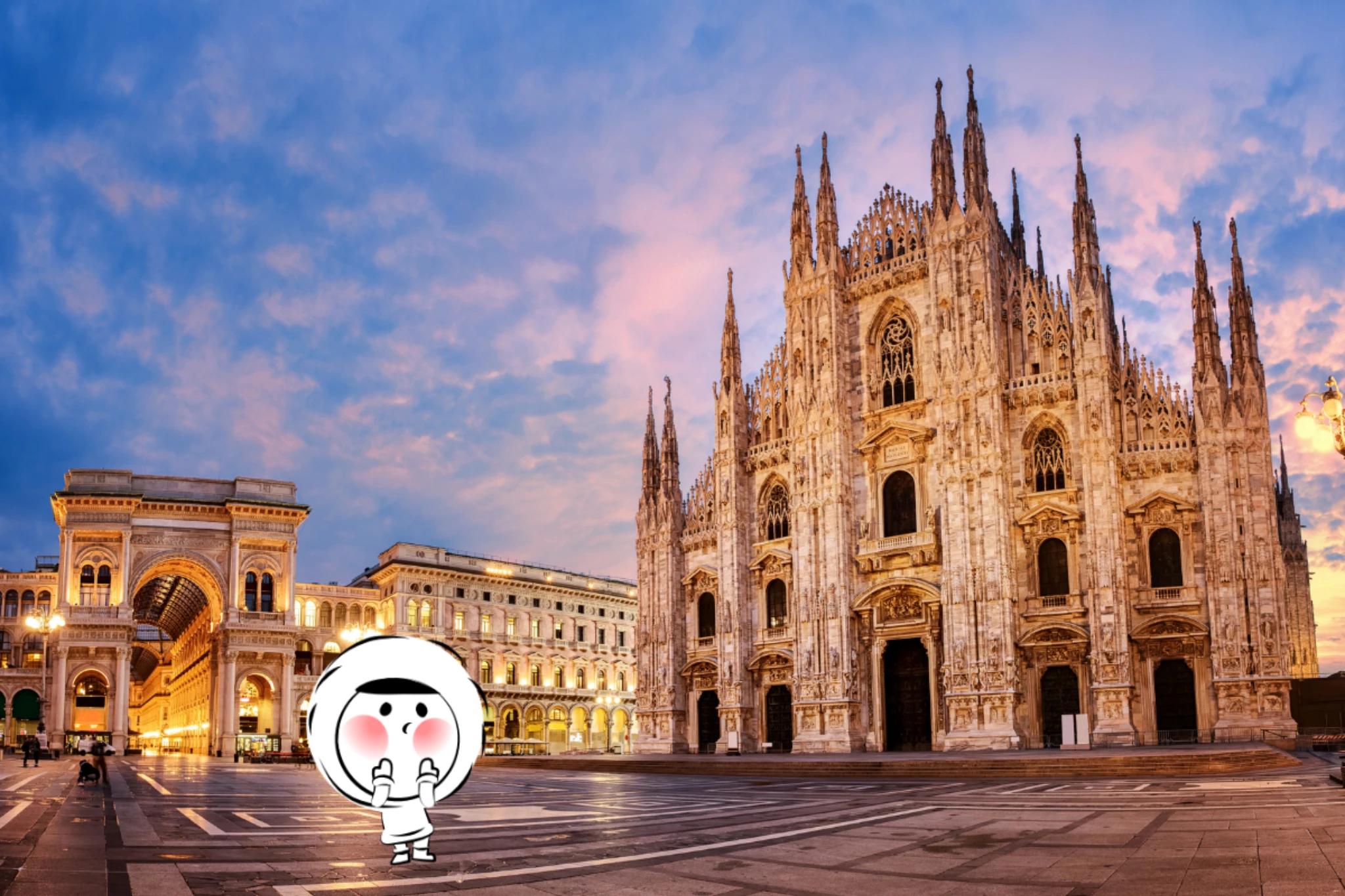
Europe’s cathedrals were never meant to be glanced at. They were designed to slow you down, to pull your gaze upward, and to make scale feel personal. Their majesty is not accidental. It is the result of centuries of ambition, belief, and craftsmanship, shaped in stone, glass, and light.
Some dominate skylines. Others reveal their power only once you step inside. The cathedrals below are among Europe’s most majestic, not because they compete for beauty, but because each creates a moment that stays with you long after you leave.
What Makes a Cathedral Feel Majestic
Majesty is not just “beautiful.” It is a specific set of design choices that shape how your body moves and how your eyes behave.
- Scale and proportion: A long nave, a high ceiling, a wide transept. The building tells you to look up.
- Structural bravado: Rib vaults, flying buttresses, domes. Engineering becomes emotion.
- Light as architecture: Stained glass, clerestory windows, bright stone, candlelit side chapels.
- Materials and craft: Marble cladding, carved stone, gilded altars, ironwork, mosaics.
- Symbolic weight: Coronations, relics, revolutions, restorations. The building carries collective memory.
1. Cologne Cathedral, Germany
Gothic architecture pushed to its vertical extreme
Cologne Cathedral rises abruptly from the city, dark and uncompromising. Its twin spires do not ease into view; they assert themselves. From the outside, the structure feels almost severe. Inside, it becomes quietly overwhelming.
Construction began in 1248, inspired by French Gothic ideals, but the cathedral was left unfinished for centuries. Work resumed in the 19th century, and completion came in 1880, more than 600 years after the first stone was laid.
The moment not to miss
Stand beneath the nave and let your eyes follow the columns upward. The height feels intentional, almost instructional.
Behind the high altar rests the Shrine of the Three Kings, a focal point that combines spiritual significance with extraordinary medieval craftsmanship.
How to enter
- Main interior access is free
- Tower climb requires a ticket and stamina
- Early morning offers the clearest sense of scale and quiet
2. Notre-Dame Cathedral, Paris
Majesty through balance, proportion, and light
Notre-Dame does not overwhelm at first sight. Its power unfolds slowly, through symmetry and rhythm. The façade is composed, the structure calm, the presence authoritative without force.
Construction began in 1163 and continued for nearly 200 years, resulting in a cathedral that feels unified despite its long creation. History here is layered: coronations, revolutions, destruction, and restoration all leave their trace.
The moment not to miss
Pause at the center of the nave and look toward the clerestory windows. Light defines the space as much as stone.
When accessible, the rose windows are among the most emotionally resonant features, balancing scale with delicacy.
How to enter
- Main entry is free
- Towers and crypts require tickets
- Visit early to avoid long security lines
3. Milan Cathedral (Duomo di Milano), Italy
Marble, magnitude, and unapologetic ambition
Milan Cathedral feels theatrical by design. Clad almost entirely in pale marble, it expands outward and upward with confidence. Where other Gothic cathedrals rely on shadow, this one thrives on light.
Construction began in 1386 and continued into the 19th century, making it one of Europe’s longest-running cathedral projects.
The moment not to miss
The rooftop. Walking among the spires transforms the cathedral from a single monument into an architectural landscape.
Inside, the vast interior is softened by marble surfaces that diffuse light rather than absorb it.
How to enter
- Cathedral access is ticketed
- The rooftop can be reached by stairs or elevator
- Late afternoon light enhances the exterior
4. Chartres Cathedral, France
Where stained glass becomes atmosphere
Chartres Cathedral does not demand attention. It draws it inward. Built largely between 1194 and 1220, it remains one of the most cohesive expressions of High Gothic design in Europe.
The moment not to miss
The stained glass is not decorative; it is immersive. Deep blues and reds shape the interior mood throughout the day.
On the floor, the labyrinth offers a grounding counterpoint to the vertical drama above.
How to enter
- Entry is free
- Mid-morning or late afternoon offers the best light
5. Sagrada Família, Barcelona
A cathedral still becoming itself
Unlike most European cathedrals, Sagrada Família is unfinished. Construction began in 1882, guided by Antoni Gaudí’s vision, blending Gothic structure with organic forms inspired by nature.
Get Eskimo eSIM to stay connected globally
Need internet? Here's what we recommend:

Fixed data plans
- No speed reduction
- No expiry, keep your data forever
- Transfer data to anyone
- Personal hotspot


The moment not to miss
Inside, the columns branch like stone trees, creating a space that feels both monumental and alive.
How to enter
- Timed tickets are essential
- Interior access often sells out days in advance
6. St. Vitus Cathedral, Czech Republic
Majesty revealed through approach and ascent
St. Vitus Cathedral presides over Prague from within the castle complex, revealing itself gradually through courtyards and gates.
Construction began in 1344 and continued intermittently until 1929, a timeline that reflects shifting artistic and political eras.
The moment not to miss
The St. Wenceslas Chapel, richly decorated and intimate, feels like the cathedral’s inner sanctum.
The stained glass, including a window associated with Alphonse Mucha, adds unexpected color and modernity.
How to enter
- Access via Prague Castle security checkpoints
- Some interior areas require tickets
7. Burgos Cathedral, Spain
Gothic detail elevated to art
Burgos Cathedral impresses not through mass, but through intricacy. Its façade and spires reward close attention, revealing layers of craftsmanship.
Construction began in 1221, with additions over several centuries, yet the cathedral feels remarkably cohesive.
The moment not to miss
Seek out the chapels where stone, gold, and shadow converge. Burgos excels at intimacy within grandeur.
How to enter
- Entry is ticketed
- Slow exploration reveals its full character
8. Seville Cathedral, Spain
Scale as a physical experience
Seville Cathedral alters your sense of distance. Built beginning in 1401 on the site of a former mosque and largely completed by 1506, it is often described as the largest Gothic cathedral by volume.
The moment not to miss
Stop where the nave fully opens. The sheer interior volume is the point.
The monumental altarpiece (retablo mayor) dominates the visual field, even from afar.
How to enter
- Entry is ticketed
- Early visits preserve the sense of space
9. St. Paul’s Cathedral, England
Measured grandeur and civic identity
St. Paul’s Cathedral defines London’s skyline through its dome, a symbol as much as a structure.
The current building was constructed between 1675 and 1710 under Sir Christopher Wren, resulting in a unified architectural vision.
The moment not to miss
Stand beneath the dome and let the scale settle. The experience is gradual, not immediate.
Those who climb are rewarded with a shifting sequence of height, echo, and city views.
How to enter
- Entry is ticketed
- Dome access is optional but transformative
Getting Around Europe’s Cathedrals Smoothly
The world’s most majestic cathedrals are not majestic in the same way. Cologne is overwhelmed with vertical Gothic force. Milan dazzles through the intensity of ornament and marble. Chartres and Notre-Dame show how proportion and light can feel just as powerful as size.
If you are cathedral-hopping across Europe, reliable mobile data makes travel logistics easier, especially for tickets, transit apps, and mapping photo spots. Your first mention of Eskimo can fit naturally in a practical travel note, and you can add country pages as relevant, like France or Italy. Get your free eSIM here.
FAQs
What makes a cathedral feel majestic?
Majesty comes from scale, proportion, light, and intent. A majestic cathedral shapes how you move, where you look, and how long you stay.
Which European cathedral is best for Gothic architecture?
Cologne Cathedral and Chartres Cathedral are among the strongest expressions of Gothic design, emphasizing verticality and light.
Which cathedral has the most memorable interior?
Chartres is known for stained glass, Milan for material richness, and Sagrada Família for spatial innovation.
Are these the largest cathedrals in Europe?
Not all. Seville Cathedral is among the largest by volume, while others earn majesty through proportion or symbolism rather than size.
Is entry to European cathedrals free?
Many allow free access to the main interior, with tickets required for towers, rooftops, or special areas.