Residents of Alabama saw the aurora during a period of unusually strong geomagnetic activity. That is not a mistake.
For several nights, soft green and red light appeared in parts of the United States that rarely come up in conversations about the Northern Lights. Kansas. Iowa. Northern California. Places are more associated with highways and farmland than skies shaped by solar activity.
Aurora has long been framed as something distant. You travel north, often very far north, and hope the sky cooperates. When Aurora shows up well outside those familiar regions, it feels wrong, almost mislabeled. But these sightings are not errors. They are part of how Aurora actually works.
To understand why aurora can appear so far south, it helps to step back from the event itself and look at where aurora usually appears, how it is named, and how different types of aurora behave.
Where Aurora Is Usually Seen
Most people associate aurora with the far north, and for good reason. Aurora activity is most common in high-latitude regions close to Earth’s magnetic poles.
In the Northern Hemisphere, this includes areas such as northern Norway, Iceland, northern Canada, and Alaska. These regions sit beneath what scientists call the auroral oval, a band around the pole where aurora appears more frequently.
In the Southern Hemisphere, aurora activity mirrors this pattern. Known as Aurora Australis, it most often appears around Antarctica and the surrounding Southern Ocean. When it becomes visible from land, sightings are usually reported from places like Tasmania, southern New Zealand, or occasionally the southern tip of South America.
These regions do not guarantee aurora sightings. They are simply where aurora is most commonly observed.
Why Aurora Appeared Farther South Than Usual
Aurora does not stay perfectly confined to those regions. Its visibility depends on activity from the Sun.
During periods of heightened solar activity, energy interacts more strongly with Earth’s magnetic field. When this happens, the zone where aurora can appear expands. The familiar auroral oval stretches outward, sometimes far enough to include regions that rarely experience aurora at all.
That is what happened during the recent displays over the United States. The aurora did not move south because geography changed. It moved because conditions allowed it to.
Events like this are uncommon, but they are not unprecedented. They do not happen every year, and they often surprise people precisely because they fall outside everyday experience.
The Different Types of Aurora and Where They Usually Appear
Aurora is not one visual experience. There are several types, shaped by altitude, atmospheric composition, and solar conditions. Understanding these differences helps explain why some auroras travel farther than others.
The Classic Aurora Oval
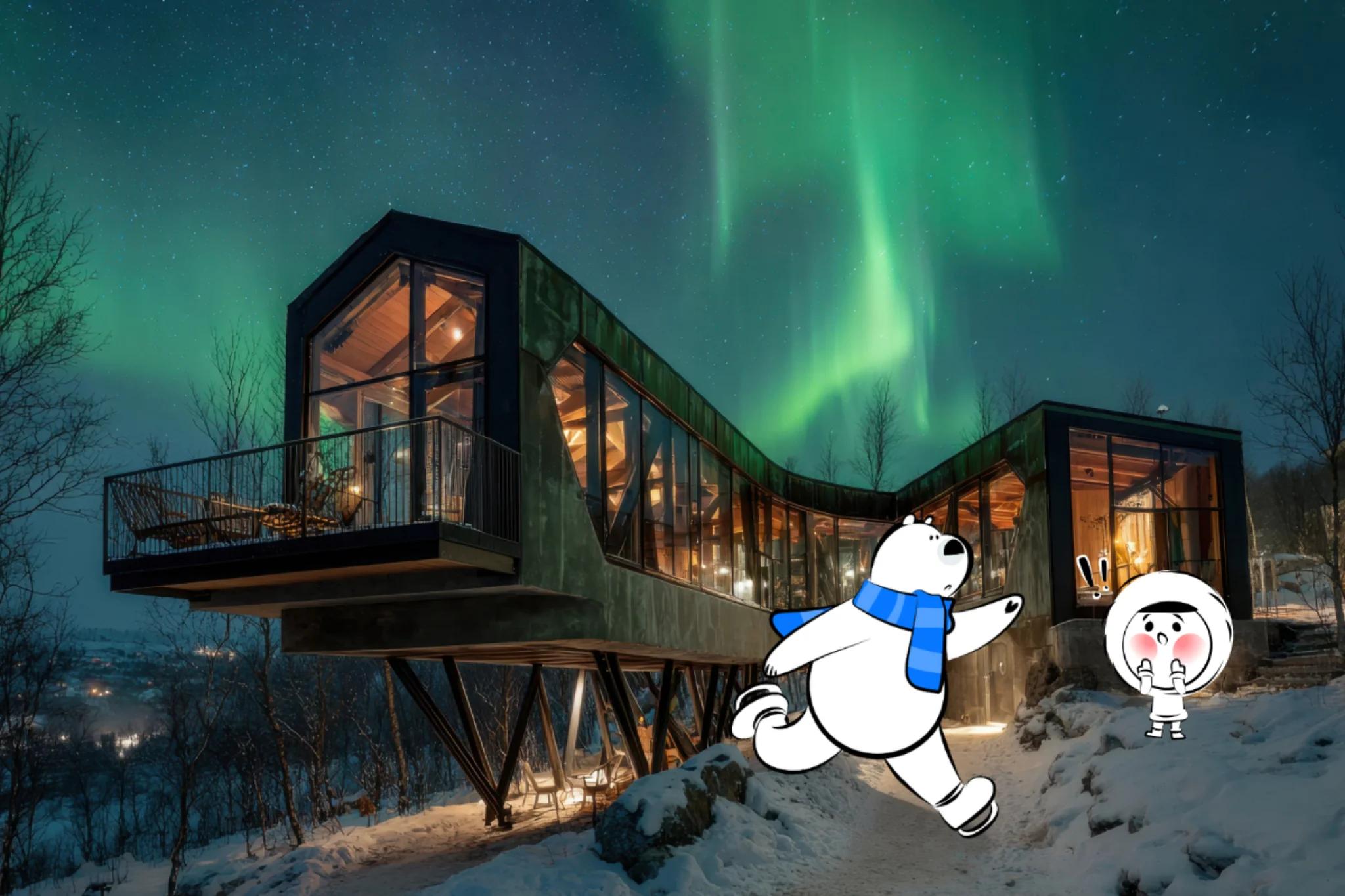
This is the aurora most people recognize. Green light forms curtains, arcs, or rippling bands across the sky. It typically appears within the auroral oval and is most common in high-latitude regions.
This type of aurora occurs frequently during moderate solar activity and accounts for most iconic aurora imagery.
Get Eskimo eSIM to stay connected globally
Need internet while travelling? Here's what we recommend:

Fixed data plans
- No speed reduction
- No expiry, keep your data forever
- Transfer data to anyone
- Personal hotspot


Red Aurora and Stable Auroral Red
Red auroras are rarer and usually associated with stronger geomagnetic storms. The red color comes from oxygen atoms at higher altitudes than those producing green aurora.
Because they form higher in the atmosphere, red auroras can be visible much farther from the poles. Some of these displays are known as Stable Auroral Red (SAR) arcs, which are especially common during strong geomagnetic storms.
Diffuse Aurora
Diffuse aurora does not form sharp curtains or distinct arcs. Instead, it appears as a faint, widespread glow that can cover large portions of the sky. It is subtle and often overlooked, particularly in areas with light pollution.
This type of aurora can span broader geographic areas and may appear during periods of elevated solar activity.
Extreme Aurora Events
During rare and powerful geomagnetic storms, aurora can display unusual colors, rapid movement, and wide coverage. These events often combine multiple aurora types and are remembered as once-in-a-generation experiences.
They are not a separate phenomenon, but the result of familiar aurora behavior pushed beyond its usual limits.
What This Means for Skywatchers and Travelers
Aurora sightings are often described as a matter of location. In reality, they are shaped by timing, solar activity, and chance.
Many people travel thousands of miles to see the Northern Lights and see nothing. At other times, aurora drifts closer to populated regions, appearing where no one planned to look for it.
Aurora cannot be scheduled. It can only occur.
Staying Connected While Observing Rare Sky Events
Unexpected aurora sightings often draw people outdoors, away from cities and reliable networks. For travelers observing the phenomenon while abroad, connectivity remains a practical concern.
Eskimo offers eSIM options that allow travelers to stay connected without physical SIM cards. New users can also test a free Global eSIM with 500MB of data, enough to check updates or share a moment when the sky behaves out of character.
FAQs
What is the difference between Aurora Borealis and Aurora Australis?
They are the same phenomenon occurring in different hemispheres. Aurora Borealis appears in the Northern Hemisphere, while Aurora Australis appears in the Southern Hemisphere. Both are caused by the same interaction between solar particles and Earth’s magnetic field and often occur at the same time.
Are there different types of aurora?
Yes. Aurora can appear in several forms, including classic green auroras, red auroras that form higher in the atmosphere, and diffuse auroras that appear as faint glows. Different types behave differently and can affect how far the aurora extends from the poles.
Where is Aurora usually seen?
Aurora is most commonly observed in high-latitude regions near Earth’s magnetic poles. In the Northern Hemisphere, this includes areas such as northern Norway, Iceland, northern Canada, and Alaska. In the Southern Hemisphere, sightings are more common near Antarctica and occasionally from places like Tasmania or southern New Zealand.
Can aurora be predicted or scheduled?
Aurora activity can be forecast to some extent based on solar conditions, but it cannot be guaranteed. Even in regions where aurora is common, visibility depends on timing, weather, and the strength of solar activity.