Why People Pay to Sleep in a Building Designed to Disappear
Every winter, travelers deliberately book rooms in hotels that are guaranteed to vanish. Ice hotels are constructed entirely from snow and ice, rebuilt year after year, only to melt back into rivers and landscapes when temperatures rise. From a practical perspective, it makes little sense. From an experiential one, it makes perfect sense.
Ice hotels attract people who are not looking for permanence or convenience. They appeal to travelers who value rarity, craftsmanship, and memory over comfort. Spending a night in a structure designed to disappear turns accommodation into a story rather than a utility.
What is an Ice Hotel and How It works
Ice hotels are seasonal structures built using ice blocks cut from frozen rivers or lakes and reinforced with compacted snow. Construction usually begins in early winter, once temperatures remain consistently below freezing. Interior temperatures stay stable, often between minus 5 and minus 8 degrees Celsius.
Rooms are designed for short stays. Guests sleep on ice beds layered with insulating materials and Arctic-rated sleeping bags. Warm bathrooms, saunas, and changing areas are typically housed in nearby heated buildings. The experience is intentional and controlled, focusing on immersion rather than endurance.
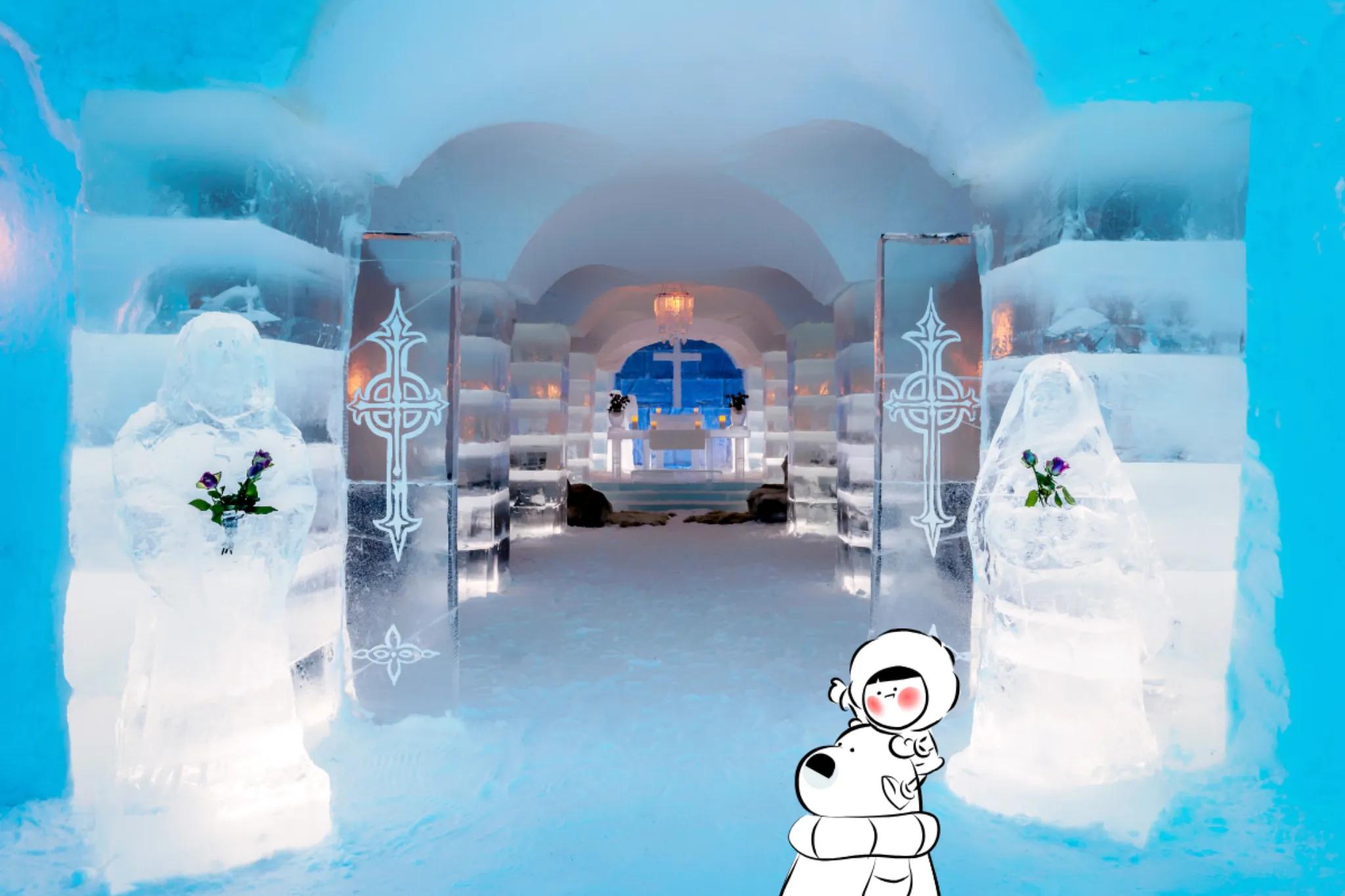
Each winter brings a new design. Artists and architects from around the world create themed rooms, sculptural corridors, chapels, and bars. When spring arrives, the hotel melts away, often returning directly to the environment it came from.
Why Ice Hotels Continue to Attract Travelers
The appeal of ice hotels lies in their impermanence. No two seasons are identical, and no room can ever be revisited in the same form. That sense of finality adds emotional weight to the experience.
Ice hotels are also deeply tied to place. They are built in remote northern regions, surrounded by Arctic landscapes, silence, and darkness. Many travelers choose them as bases for Northern Lights viewing, dog sledding, snowmobiling, and cultural experiences that cannot be replicated elsewhere.
Most guests stay for only one night. That single night becomes a highlight, not because of luxury, but because of contrast. Cold against warmth. Silence against movement. Stillness against time.
The World’s Most Remarkable Ice Hotels
Icehotel, Jukkasjärvi, Sweden
Icehotel in Swedish Lapland is where the concept began. First opened in 1990, it is rebuilt each winter using ice harvested from the Torne River, one of Europe’s last free-flowing rivers. Every suite is designed by a different artist, transforming the hotel into a temporary exhibition where guests sleep inside large-scale ice sculptures.
What distinguishes Icehotel is its ability to evolve without losing its identity. Alongside the seasonal structure, Icehotel 365 remains frozen year-round using solar-powered cooling. This allows visitors to experience ice architecture outside the traditional winter window while preserving the ritual of rebuilding the main hotel each year.
Hôtel de Glace, Québec, Canada
Located near Quebec City, Hôtel de Glace is the only true ice hotel in North America. Its design leans toward immersion and theatrical scale, with dramatic corridors, themed suites, and carefully planned lighting that gives the ice a glowing, almost architectural presence at night.
The experience extends beyond the frozen rooms. Guests move between cold interiors and outdoor hot tubs, creating a deliberate contrast that defines the stay. An ice chapel within the hotel has also made it a popular winter wedding destination. Its accessibility and visual impact make it a common entry point for first-time ice hotel travelers.
Sorrisniva Igloo Hotel, Alta, Norway
Sorrisniva Igloo Hotel offers a more restrained and intimate experience. Rebuilt each winter along the Alta River, the hotel uses locally sourced ice and snow, with designs inspired by Nordic mythology, Arctic wildlife, and regional history.
The setting plays a central role. Surrounded by open landscapes and minimal light pollution, evenings are quiet and unhurried. Northern Lights sightings are common, and the overall atmosphere favors stillness over spectacle. It attracts travelers who value isolation, narrative design, and a strong sense of place.
Kakslauttanen Arctic Resort, Finland
Kakslauttanen approaches the ice hotel concept from a different angle. Instead of sleeping entirely within ice walls, guests stay in glass igloos designed to provide uninterrupted views of the night sky. Thermal glass keeps interiors warm while allowing guests to watch snowfall and, on clear nights, the Northern Lights.
The resort blends cold and comfort deliberately. Snow structures, glass igloos, log cabins, and traditional Finnish saunas coexist in the same landscape. This flexibility allows travelers to experience Arctic conditions without fully committing to subzero interiors.
SnowVillage, Kittilä, Finland
SnowVillage is rebuilt every winter as an expansive frozen environment rather than a single hotel building. Each season introduces a new theme, shaping everything from the layout of corridors to the design of suites, restaurants, and sculptural spaces.
Staying overnight is only one part of the experience. Guests walk through ice halls, dine in frozen restaurants, and explore installations designed for slow discovery. The scale of SnowVillage makes it feel closer to a temporary snow city than traditional accommodation.
Get Eskimo eSIM to stay connected globally
Need internet? Here's what we recommend:

Fixed data plans
- No speed reduction
- No expiry, keep your data forever
- Transfer data to anyone
- Personal hotspot


Ice Village Tomamu, Hokkaido, Japan
Ice Village Tomamu offers a quieter, more minimalist interpretation of ice architecture. Smooth ice domes, softly lit pathways, and open-air ice baths create an atmosphere that feels calm rather than monumental.
Design here focuses on balance and restraint. Lantern light reflects gently off ice walls, and the layout encourages wandering rather than guided spectacle. It demonstrates how ice hotels adapt to local aesthetics, emphasizing mood and subtlety over visual excess.
Is Sleeping in an Ice Hotel Comfortable
Most guests are surprised by how manageable the experience feels. The air inside ice hotels is dry and still, and insulated sleeping systems are designed specifically for Arctic conditions. Preparation matters more than tolerance, and hotel staff provide clear guidance before guests settle in.
For this reason, many travelers choose to stay one night before moving to a warm room nearby. This approach keeps the experience memorable rather than physically demanding.
Why Impermanence Feels Like Luxury
Ice hotels challenge conventional ideas of value. They are not built to last, and that is precisely what gives them meaning. Guests are paying for presence, for a night inside something that will never exist again in the same form.
In a world built around permanence and repetition, ice hotels offer the opposite. They offer a fleeting experience shaped by weather, art, and time, one that disappears quietly, leaving only memory behind.
Ice hotels are often located far from major cities, where connectivity can be inconsistent and roaming costs high. Reliable mobile data is especially useful for checking weather conditions, navigating remote regions, booking excursions, and coordinating transfers.
Eskimo eSIM allows travelers to stay connected across multiple countries without changing SIM cards. Coverage across Europe, Canada, and Japan makes it practical for trips that include remote Arctic destinations, where dependable access can make travel smoother and safer.
FAQs
Are ice hotels safe to sleep in
Yes. Ice hotels are carefully engineered and monitored throughout the season. Structures are reinforced with compacted snow, temperatures are stable, and guests are provided with Arctic-rated sleeping bags and insulation. Safety briefings are standard before overnight stays.
How cold does it get inside an ice hotel?
Most ice hotel rooms stay between minus 5 and minus 8 degrees Celsius. The temperature remains relatively constant, even if it is colder outside.
Do ice hotels melt while guests are staying inside
No. Ice hotels are built only when temperatures remain consistently below freezing. Once seasonal warming begins, hotels close before structural integrity is affected.
How long are ice hotels open each year?
Most ice hotels operate from December to March, depending on location and weather conditions. Some destinations offer limited ice experiences outside this window using cooling technology.
Is one night enough at an ice hotel
For most travelers, one night is ideal. It allows guests to fully experience the novelty without physical fatigue. Many ice hotels are designed with this in mind and offer warm accommodation nearby.
What should you wear to an ice hotel?
Guests should wear thermal base layers, insulated outerwear, wool socks, and hats. Hotels usually provide sleeping equipment, but proper clothing is essential when moving between buildings.
Are ice hotels environmentally sustainable?
Many ice hotels prioritize sustainability by using local materials, renewable energy, and designs that melt back into the environment without permanent impact.
Can you see the Northern Lights from an ice hotel?
Many ice hotels are located in Arctic regions with low light pollution, making them excellent bases for Northern Lights viewing, especially in Sweden, Finland, and Norway.