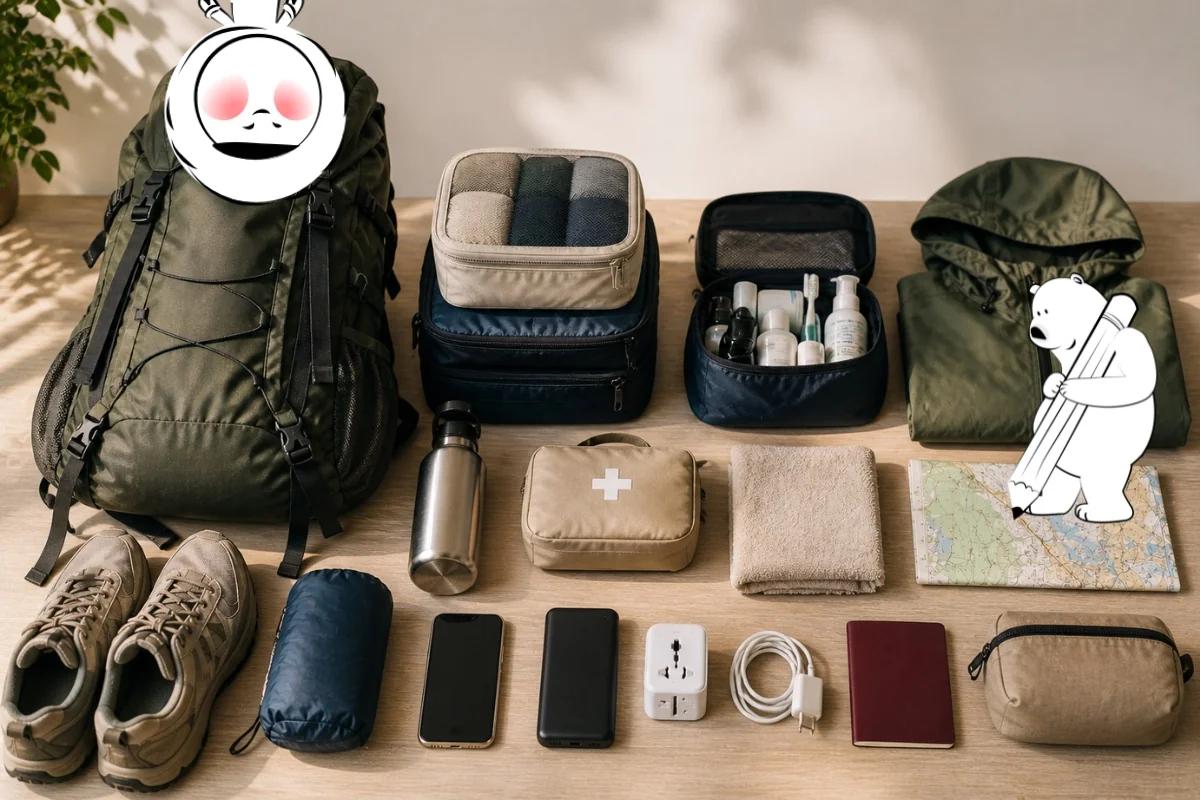
The best backpacking essentials are the items that keep your bag light, your route flexible, and your travel days easier. For a first backpacking trip, pack a comfortable backpack, versatile clothing, reliable shoes, basic toiletries, first aid items, travel documents, charging gear, and mobile data for maps, bookings, and communication.
A smart backpacking packing list should cover what you use often, what protects you from common travel problems, and what helps you move easily between hostels, airports, buses, trains, and day trips.
Quick essentials:
- Main backpack: comfortable, supportive, and suitable for your trip length
- Daypack: useful for sightseeing, hikes, beach days, and transit
- Clothing: lightweight layers you can mix, rewear, and wash easily
- Shoes: one reliable walking pair, plus sandals or flip-flops
- Toiletries: travel-size basics and a quick-dry towel
- Safety kit: first aid items, padlock, document copies, and insurance details
- Tech: phone, charger, power bank, adapter, and eSIM
- Documents: passport, visa details, cards, bookings, and emergency contacts
Choose a Backpack That Fits Your Trip
A good backpack should feel comfortable when full, not just neat when empty. For most first-time backpackers, a 40L to 50L backpack is enough for hostel stays, city travel, and multi-country routes. It keeps your packing disciplined and may work for cabin-only travel, depending on the airline’s size and weight rules.
Look for:
- Padded shoulder straps
- A supportive hip belt
- Front-loading access
- Lockable zippers
- Weather-resistant fabric
- A rain cover or built-in rain protection
- A separate pocket for documents or electronics
A small daypack is also worth bringing. Use it for valuables, snacks, water, a light jacket, and anything you need during the day. It is especially useful when your main backpack is stored at the accommodation or in a luggage room.
If you are still deciding between a backpack and a suitcase, think about stairs, cobblestones, ferries, buses, and how often you will move between places.
Pack Clothing You Can Rewear
The best backpacking clothes are easy to layer, quick to dry, and simple to mix. You do not need a separate outfit for every day. You need clothes that work across different settings without taking up too much space.
For a one to two-week trip, pack:
- 4 to 6 tops
- 2 to 3 bottoms
- 5 to 7 pairs of underwear
- 4 to 6 pairs of socks
- 1 light jacket or fleece
- 1 rain jacket
- 1 sleep outfit
- 1 swimsuit, if needed
- 1 nicer outfit for dinners or city nights
Choose lightweight fabrics where possible. Cotton can be comfortable for city travel, but it dries slowly. Quick-dry fabrics are more practical for humid weather, hikes, and sink washing.
A few packing cubes can help separate clean clothes, worn clothes, and small items without overcomplicating your bag.
Bring Shoes That Can Handle Long Days
Shoes matter more than extra outfits. A backpacking trip often means long walks, uneven streets, train stations, hostel stairs, and full transit days. Wear shoes you have already broken in before you leave.
A practical footwear setup:
- Comfortable walking shoes for sightseeing, airports, and light hikes
- Sandals or flip-flops for hostel showers, beaches, and short walks
- Hiking shoes only if your route includes trails, mountains, or wet terrain
Avoid packing several bulky pairs. Shoes take up space quickly and add weight, which you will feel every time you carry your bag.
Keep Toiletries Small and Useful
Toiletries should cover daily hygiene without filling half your backpack. Travel-size bottles are usually enough, especially if you can refill or buy basics along the way.
Pack:
- Toothbrush and toothpaste
- Deodorant
- Sunscreen
- Lip balm
- Shampoo or solid shampoo bar
- Soap or body wash
- Razor, if needed
- Period products, if needed
- Hairbrush or comb
- Nail clippers
- Quick-dry towel
- Small laundry soap or detergent sheets
A hanging toiletry bag is useful in hostels and shared bathrooms. Keep liquids in a sealed pouch to avoid leaks inside your backpack.
Build a Small First Aid and Safety Kit
You do not need to carry a full medicine cabinet, but a small first aid kit can save time and stress. It is useful for blisters, minor cuts, stomach issues, headaches, allergies, and travel delays.
Pack:
- Plasters or bandages
- Blister pads
- Pain relief medicine
- Motion sickness tablets, if needed
- Antihistamines
- Anti-diarrhea medicine
- Oral rehydration salts
- Prescription medication
- Hand sanitizer
- Insect repellent
- Copies of key documents
Bring enough prescription medication for the full trip, plus a little extra in case of delays. Keep it in its original packaging where possible, especially for border checks.
For basic security, bring:
- A small padlock for hostel lockers
- A hidden backup bank card
- A digital copy of your passport
- A paper copy of emergency contacts
- Travel insurance details
- A secure pouch for important documents
First-time solo travelers should also share their rough itinerary with someone they trust and keep emergency contacts easy to access.
Prepare Your Travel Documents
Your documents should be easy to access but hard to lose. Some countries require at least six months of passport validity, while others have different entry rules. Check official government or immigration sources before departure.
Save digital and offline copies of:
- Passport
- Visa or entry approval
- Travel insurance
- Flight bookings
- Bus, train, or ferry bookings
- Accommodation confirmations
- Emergency contacts
- Driver’s license or international driving permit, if relevant
Keep copies in a secure cloud folder and offline on your phone. A printed copy can help if your phone is lost, damaged, or out of battery.
Pack Tech That Solves Real Problems
Backpacking tech should be light and practical. Your phone will likely handle maps, translation, bookings, payments, photos, ride-hailing, and messages, so keep it charged and connected.
Pack:
- Phone
- Phone charger
- Backup charging cable
- Power bank
- Universal travel adapter
- Earphones
- eSIM or mobile data plan
- Offline maps
- Password manager access
- Waterproof pouch for beaches, boats, or rain
Download key apps before you leave. Offline maps, booking apps, transport apps, banking apps, and translation tools are especially helpful when arriving late or moving between countries.
Get Eskimo eSIM to stay connected globally
Need internet while travelling? Here's what we recommend:
Fixed data plans
- No speed reduction
- No expiry, keep your data forever
- Transfer data to anyone
- Personal hotspot


Think Carefully About Food and Cooking Gear
Food gear depends on your trip style. A hostel or city backpacker needs much less than someone camping or hiking through remote areas.
For hostel and city travel, pack:
- Reusable water bottle
- Small cutlery set or spork
- Foldable food container
- Snacks for long travel days
- Electrolyte sachets, if useful
- Tea, coffee, or instant oats, if you like having basics on hand
For camping or trail travel, you may need:
- Lightweight stove
- Cookware
- Fuel
- Water filter
- Compact meals
- Eating utensils
- Food storage bag
Check local rules before carrying stove fuel, especially if you are flying. Many airlines restrict or prohibit fuel canisters.
Easy backpacking food ideas include:
- Oats
- Instant noodles
- Wraps
- Trail mix
- Dried fruit
- Tuna packets
- Soup sachets
- Energy bars
- Peanut butter sachets
For most trips, buying food locally is easier than carrying too much from home.
Do Not Overpack “Just in Case” Items
A heavy backpack makes every travel day harder. Leave out items that are bulky, fragile, duplicated, or easy to buy at your destination.
Usually skip:
- Multiple jeans
- Too many shoes
- Full-size toiletries
- Heavy books
- Expensive jewelry
- Large towels
- Extra gadgets with separate chargers
- Too many dressy outfits
- Large camera gear, unless photography is a priority
A lighter backpack gives you more freedom. It is easier to lift onto buses, carry up hostel stairs, store in lockers, and manage on long walking days.
Pack Lighter for Cabin-Only Travel
Cabin-only backpacking can save time at airports and help avoid checked baggage fees. Before flying, check your airline’s exact size and weight limits. Cabin rules vary, and some budget airlines are strict.
For a lighter cabin-only setup:
- Choose a lightweight backpack
- Wear your bulkiest shoes and jacket on travel days
- Pack smaller toiletries
- Limit yourself to one spare pair of shoes
- Use packing cubes or compression bags carefully
- Keep valuables and documents in your personal item
- Weigh your bag before leaving for the airport
A 7kg limit requires firm choices, especially for shoes, toiletries, electronics, and warm layers.
Use This Backpacking Packing List
Bag and organization:
- Main backpack
- Daypack
- Packing cubes
- Laundry bag or dry bag
- Rain cover
- Padlock
Clothing:
- Tops
- Bottoms
- Underwear
- Socks
- Sleepwear
- Light jacket or fleece
- Rain jacket
- Swimwear
- Walking shoes
- Sandals or flip-flops
Toiletries:
- Toothbrush and toothpaste
- Deodorant
- Sunscreen
- Lip balm
- Soap or body wash
- Shampoo or solid shampoo bar
- Quick-dry towel
- Razor, if needed
- Period products, if needed
- Laundry soap or detergent sheets
Health and safety:
- First aid kit
- Blister pads
- Pain relief medicine
- Prescription medication
- Hand sanitizer
- Insect repellent
- Travel insurance details
- Passport copy
- Emergency contacts
Tech and documents:
- Phone
- Charger
- Backup cable
- Power bank
- Travel adapter
- eSIM or mobile data plan
- Passport
- Visa documents
- Bank cards
- Booking confirmations
Keep Your Route Flexible With Data That Lasts
Backpacking often changes day by day. A hostel recommendation can shift your route. A delayed bus can change your arrival time. A rainy forecast can move a hike to another morning. Reliable mobile data helps with maps, transport updates, translation, ride-hailing, accommodation changes, and staying reachable.
Eskimo is useful for flexible and multi-country trips because its Global Plan can cover travel across many destinations without a separate setup for every stop. Its 2-year data validity suits backpackers who travel in bursts or want leftover data to stay usable after one trip.
New Eskimo users can also get free 500MB of Global Data, which is enough to test the service, check maps, message someone after landing, or handle quick travel tasks before choosing a larger plan.
FAQ
What are the most important backpacking essentials?
The most important backpacking essentials are a comfortable backpack, versatile clothing, reliable walking shoes, toiletries, first aid basics, travel documents, a phone charger, a power bank, and mobile data for navigation and communication.
How big should my backpack be for a first backpacking trip?
A 40L to 50L backpack is usually enough for first-time backpackers on hostel, city, and multi-country trips. Choose a smaller bag if you want to travel cabin-only, but always check airline size and weight limits before flying.
What should I not pack for backpacking?
Avoid packing too many shoes, full-size toiletries, heavy books, expensive jewelry, bulky towels, and clothing you can only wear once. Anything heavy, fragile, or rarely used should earn its place.
Do I need a first aid kit for backpacking?
Yes. A small first aid kit is useful for blisters, minor cuts, headaches, stomach issues, allergies, and travel delays. Keep prescription medicine with you and pack enough for the full trip.
Should I bring cooking gear when backpacking?
Bring cooking gear only if you will camp, hike remotely, or stay somewhere without kitchen access. For hostel and city backpacking, a reusable bottle, snacks, and small cutlery are usually enough.
Is an eSIM useful for backpacking?
Yes. An eSIM is useful for maps, bookings, translation, transport updates, ride-hailing, and staying in touch. It is especially practical for backpackers visiting more than one country because it reduces the need to buy a physical SIM at each stop.