
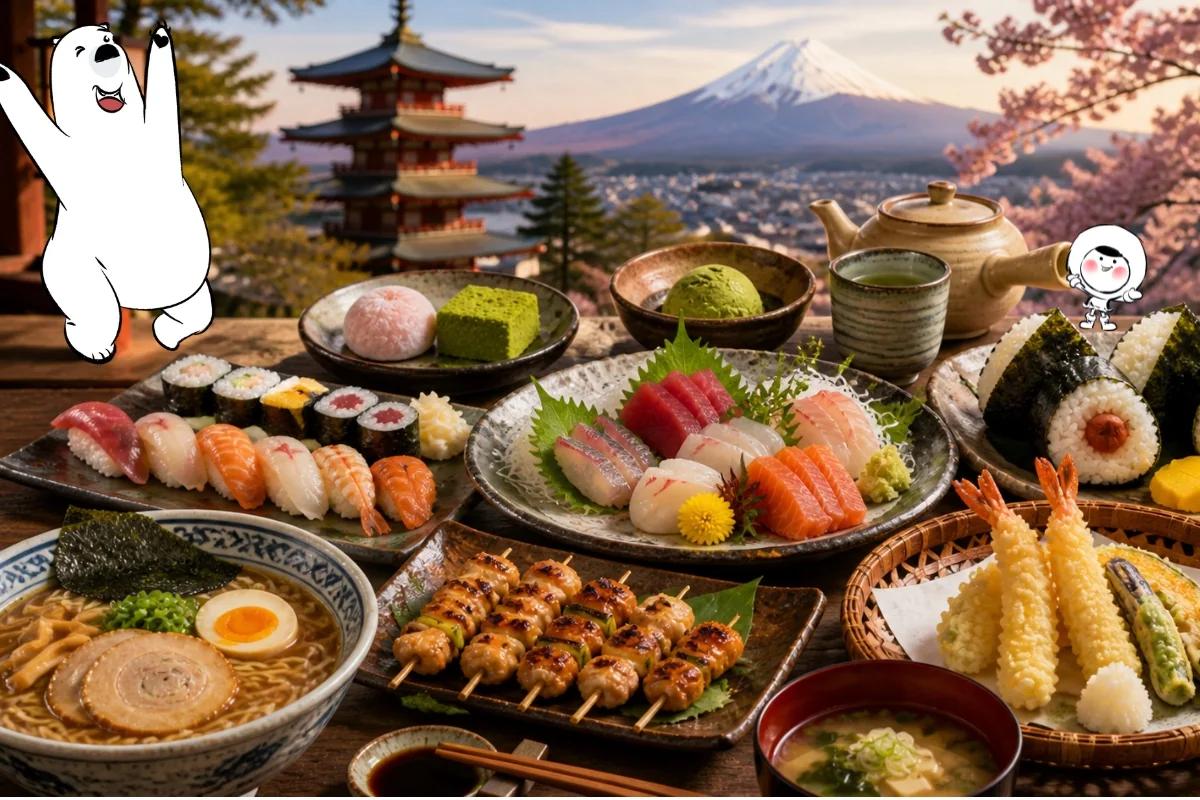
Japanese food is known for balance, seasonality, and careful preparation, but the best dishes are often simple to enjoy. A good traditional Japanese food list includes fresh seafood, comforting noodles, rice bowls, crisp tempura, grilled skewers, delicate sweets, and special meals like kaiseki. From sushi and ramen to miso soup, mochi, and wagyu beef, these are the classic foods worth trying when you visit Japan.
What Makes Japanese Cuisine Unique?
Japanese cuisine is built around balance, seasonality, and careful preparation. Rice, noodles, seafood, vegetables, soy products, and broth appear in many everyday meals. Dashi, miso, soy sauce, and fermented ingredients add deep flavor without making dishes feel heavy.
Traditional Japanese food also changes by region. Osaka is famous for casual favorites like okonomiyaki and takoyaki. Kyoto is known for elegant kaiseki dining and tea culture. Coastal areas often have excellent seafood, while mountain regions may highlight soba, vegetables and hot spring dishes.
Food is also closely tied to travel in Japan. Train stations, department store food halls, markets, convenience stores, ryokan inns and small neighborhood restaurants can all lead to memorable meals. First-time visitors planning a wider Japan trip may also find practical travel advice useful before deciding where and when to eat. (link: Japan Travel Tips : 8 Things You Must Know Before Your First Trip)
20 Traditional Japanese Foods to Try
Sushi
Sushi combines vinegared rice with seafood, egg, vegetables or other toppings. Nigiri is a small mound of rice topped with fish or seafood, while maki is rolled in seaweed and sliced into pieces.
Sushi can be casual or refined. Conveyor-belt sushi is easy for travelers, while omakase counters offer a more personal meal led by the chef.
Sashimi
Sashimi is thinly sliced raw seafood served without rice. It is usually eaten with soy sauce and wasabi.
The key difference is simple: sushi includes seasoned rice, while sashimi focuses on the seafood itself. Tuna, salmon, sea bream, squid and scallop are common choices.
Ramen
Ramen is one of Japan’s most famous noodle dishes. It usually comes with wheat noodles, broth, sliced pork, egg, green onion and other toppings.
Regional styles vary widely. Tonkotsu ramen has a rich pork-bone broth, shoyu ramen uses soy sauce, miso ramen has a deeper savory flavor and shio ramen is lighter and salt-based.
Udon
Udon are thick wheat noodles with a soft, chewy texture. They are often served in a warm broth with green onion, tempura, tofu or egg.
Cold udon is also common in warmer months. It is usually served with dipping sauce and simple toppings, making it a lighter choice than rich ramen.
Soba
Soba are buckwheat noodles with an earthy flavor. They can be served hot in broth or cold with a dipping sauce.
Soba is popular across Japan, but some regions are especially known for it. It is also linked to New Year traditions, when many people eat toshikoshi soba for good fortune and longevity.
Miso Soup
Miso soup is a daily staple in Japan. It is made with miso paste and dashi broth, often with tofu, wakame seaweed and green onion.
It is commonly served with rice, grilled fish, pickles and other small dishes. Simple as it looks, miso soup is one of the clearest examples of Japanese comfort food.
Tempura
Tempura is seafood or vegetables coated in a light batter and fried until crisp. Shrimp, white fish, eggplant, sweet potato, mushroom and pumpkin are common choices.
Good tempura should taste delicate rather than greasy. It may be served with dipping sauce, salt, rice or soba.
Tonkatsu
Tonkatsu is a breaded and fried pork cutlet. It is usually served with shredded cabbage, rice, miso soup and thick tonkatsu sauce.
There are two main cuts to know. Hire-katsu is leaner, while rosu-katsu has more fat and a richer texture.
Yakitori
Yakitori means grilled chicken skewers. Different cuts of chicken can be used, including thigh, breast, skin, liver and meatballs.
It is often seasoned with salt or tare, a sweet-savory sauce. Yakitori is common at izakaya restaurants and small grill shops.
Okonomiyaki
Okonomiyaki is a savory Japanese pancake made with batter, cabbage and toppings. Pork, seafood, egg, bonito flakes, sauce and Japanese mayonnaise are common additions.
Osaka-style okonomiyaki mixes the ingredients into the batter. Hiroshima-style okonomiyaki is usually layered and often includes noodles.
Takoyaki
Takoyaki are round balls of batter filled with pieces of octopus. They are cooked in special molded pans and topped with sauce, mayonnaise, bonito flakes and seaweed powder.
They are strongly associated with Osaka. While takoyaki is often enjoyed casually, it is also one of the most recognizable Japanese dishes for travelers.
Wagyu Beef
Wagyu beef is known for its marbling, tenderness and rich flavor. It can be served as steak, yakiniku, shabu-shabu, sukiyaki or part of a tasting menu.
It is not an everyday meal for most travelers, but it can be a memorable splurge. Kobe beef, Matsusaka beef and Omi beef are among the best-known regional names.
Kaiseki
Kaiseki is traditional Japanese multi-course dining. A kaiseki meal usually highlights seasonal ingredients, careful presentation and a sequence of small dishes.
It is often associated with Kyoto and ryokan stays. Expect dishes such as soup, sashimi, grilled fish, simmered vegetables, rice and dessert, served with close attention to season and setting.
Onigiri
Onigiri are Japanese rice balls, often wrapped in seaweed and filled with ingredients such as salmon, tuna mayo, pickled plum or kombu.
They are simple, affordable and easy to find in convenience stores, supermarkets and train stations. For many travelers, onigiri becomes a reliable snack between sightseeing stops.
Donburi
Donburi are rice bowls topped with meat, seafood, egg or vegetables. They are filling, quick and widely available.
Popular versions include gyudon with beef, katsudon with pork cutlet and egg, oyakodon with chicken and egg, and tendon with tempura.
Get Eskimo eSIM to stay connected globally
Need internet while travelling? Here's what we recommend:

Fixed data plans
- No speed reduction
- No expiry, keep your data forever
- Transfer data to anyone
- Personal hotspot


Japanese Curry Rice
Japanese curry rice is a thick, mildly spiced curry served with rice. It often includes beef, pork or chicken with potatoes, carrots and onions.
It is sweeter and thicker than many other curry styles. It is a comfort food favorite, especially when served with tonkatsu as katsu curry.
Onsen Tamago
Onsen tamago is a soft-cooked egg traditionally prepared in hot spring water. The yolk stays creamy while the white remains silky and delicate.
It is often served with rice bowls, noodle dishes or Japanese breakfast sets. In hot spring towns, it can also appear as a local specialty.
Mochi
Mochi is a chewy rice cake made from glutinous rice. It appears in traditional sweets, New Year dishes and seasonal snacks.
Daifuku is one of the easiest versions to try. It usually has a soft mochi exterior filled with sweet red bean paste, fruit or cream.
Matcha Desserts
Matcha desserts use finely ground Japanese green tea powder. The flavor is earthy, slightly bitter, and often balanced with sweetness.
Common choices include matcha ice cream, parfaits, cakes, cookies, and traditional wagashi sweets. Travelers who enjoy tea culture may want to try matcha in Kyoto, Tokyo, or other cities known for cafés and tea shops.
Japanese Beverages
Green tea is the most classic everyday drink to try with Japanese food. Matcha is thicker and more ceremonial, while hojicha has a roasted flavor.
Other drinks include ramune, a fizzy soda often sold in glass bottles, and sake, a rice-based alcoholic drink usually served with food. Tea is the best place to start for a traditional pairing.
Japanese Noodles: Ramen, Udon, and Soba
Ramen, udon, and soba are the three Japanese noodles most travelers should know.
- Ramen: rich broth, wheat noodles, and bold toppings.
- Udon: thick wheat noodles with a soft, comforting texture.
- Soba: buckwheat noodles with a lighter, earthier taste.
Ramen is often the most filling. Udon is soothing and easy to enjoy in a simple broth. Soba is a good choice for a lighter meal, especially when served cold with dipping sauce.
Traditional Japanese Rice Dishes
Rice is central to many Japanese meals. Sushi uses seasoned rice, onigiri turns rice into a portable snack, and donburi builds a full meal around a rice bowl.
Japanese curry rice is another traveler-friendly option. It may not feel as delicate as kaiseki or sashimi, but it shows how Japanese food culture also includes hearty, everyday comfort dishes.
Where to Try Traditional Japanese Food in Japan
Japan has excellent food in many everyday places. Small local restaurants are often best for ramen, udon, soba, tonkatsu, and donburi. Izakaya restaurants are good for grilled dishes, small plates, and casual meals with drinks.
Department store food halls are useful for prepared dishes, sweets, and regional specialties. Train stations often have bento boxes and quick meals. Convenience stores are reliable for onigiri, sandwiches, drinks, and simple snacks.
For a more traditional dining experience, ryokan stays and kaiseki restaurants offer a slower, more seasonal style of Japanese food. Food markets and festivals are also good for casual favorites like takoyaki and yakitori, while a dedicated street food trip can focus more deeply on stalls, markets, and regional snacks.
Season matters too. Cherry blossom season, Golden Week, autumn foliage, and New Year can affect restaurant availability, crowds, and travel routes.
Tips for Eating Traditional Food in Japan
A few habits make eating in Japan easier.
- Carry some cash for small restaurants and older ticket machines.
- Use restaurant ticket machines by choosing your meal first, then handing the ticket to the staff.
- Check department store basements for high-quality takeaway food.
- Try regional specialties where they are famous.
- Use translation apps for menus without English.
- Avoid eating while walking unless you are in a place where it is clearly accepted.
- Book ahead for kaiseki, omakase sushi, and popular restaurants.
Reliable mobile data helps with maps, reviews, bookings, train routes and menu translation, especially in smaller neighborhoods where English menus may be limited. For trip planning beyond food, seasonal timing can also shape the best cities and regions to visit.
Find the Next Meal Without Losing the Route
A good food trip in Japan often means moving between small restaurants, markets, stations, and side streets. Mobile data makes that easier when you need to translate a menu, check train times, save restaurant pins, or message a hotel before dinner.
Eskimo offers a Japan eSIM for travelers who want to get online without buying a physical SIM after landing. Its long-validity data is especially useful if you visit Japan more than once or want unused data to stay available for a future trip.
New Eskimo users also get free 500MB of Global Data, which is enough to test the service before topping up for heavier travel use.
FAQ
What Are the Most Traditional Foods in Japan?
Some of the most traditional foods in Japan include sushi, sashimi, miso soup, soba, tempura, kaiseki, onigiri, mochi and grilled fish. These dishes reflect Japan’s focus on rice, seafood, seasonal ingredients and balanced flavors.
What Are the Top 10 Japanese Foods to Try?
The top 10 Japanese foods to try are sushi, ramen, sashimi, tempura, miso soup, yakitori, okonomiyaki, takoyaki, wagyu beef, and mochi. For a more everyday meal, add onigiri, donburi, or Japanese curry rice.
What Japanese Food Should I Try First?
Sushi, ramen, tempura, and onigiri are good first choices. They are easy to find, widely loved, and available at many price points. If you want something more refined, try kaiseki or omakase sushi.
Is Ramen Traditional Japanese Food?
Ramen has roots in Chinese-style wheat noodles, but it has become one of Japan’s most iconic dishes. Regional ramen styles across Japan have made it a major part of modern Japanese food culture.
What Are Popular Rice Dishes in Japan?
Popular Japanese rice dishes include sushi, onigiri, donburi, Japanese curry rice, katsudon, gyudon, and oyakodon. Rice is also commonly served with miso soup, grilled fish, pickles and small side dishes.
What Japanese Foods Are Good for First-Time Visitors?
First-time visitors usually enjoy ramen, sushi, tempura, tonkatsu, yakitori, onigiri, udon and mochi. These foods are easy to find and give a strong introduction to Japanese flavors without requiring a formal dining setting.