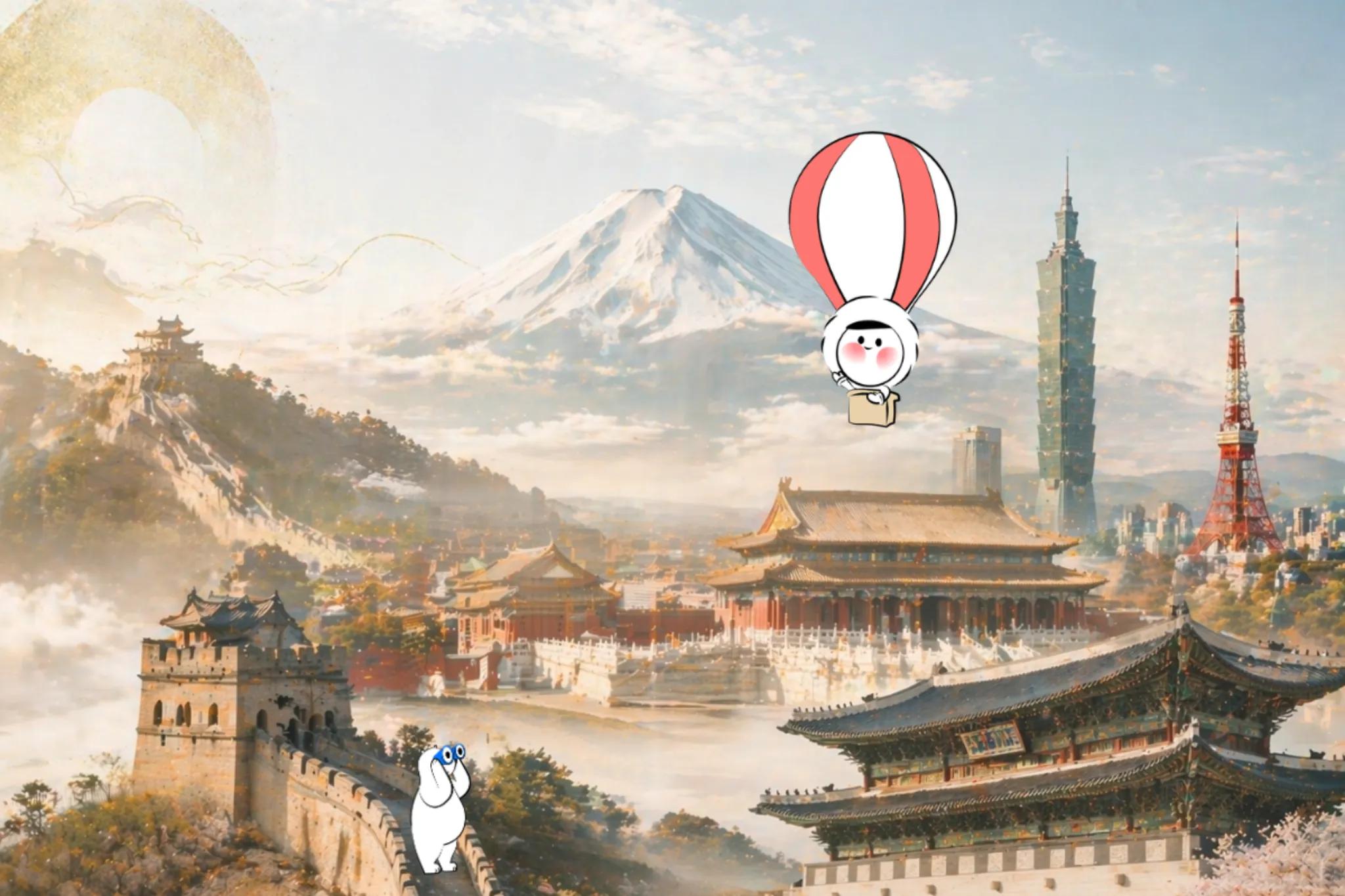
The most famous landmarks in East Asia include the Great Wall, Mount Fuji, Gyeongbokgung Palace, and Taipei 101. Together, they cover the region’s strongest landmark types: imperial history, sacred landscape, royal architecture, and modern skyline icons. The Great Wall is a UNESCO World Heritage site in China, Mount Fuji is listed as “Fujisan, sacred place and source of artistic inspiration,” Gyeongbokgung Palace dates to 1395, and Taipei 101 is presented by its official site as Taiwan’s most representative landmark building.
| Landmark | Country or Territory | Type | Best For |
| Great Wall | China | Historic landmark | First-time China trips, history-focused travel |
| Mount Fuji | Japan | Natural landmark | Scenic trips, photography, first-time Japan visits |
| Gyeongbokgung Palace | South Korea | Royal palace landmark | Seoul itineraries, cultural trips |
| Taipei 101 | Taiwan | Modern city landmark | Skyline views, short city breaks |
Historic Icons
1. Great Wall, China
Location: Northern China
Type: Historic defensive structure
Best for: Bucket-list trips, history-focused itineraries
The Great Wall is the clearest landmark pick in East Asia. UNESCO describes it as an extraordinary example of military architecture and says sections first linked under Qin Shi Huang in the 3rd century BCE later developed into the world’s largest military structure. That mix of scale and historical weight is hard to match anywhere else in the region.
It is the easiest choice for travelers who want one landmark that feels instantly recognizable, historically important, and unmistakably tied to China.
2. Gyeongbokgung Palace, South Korea
Location: Seoul, South Korea
Type: Royal palace landmark
Best for: First-time Seoul trips, cultural itineraries, architecture lovers
Gyeongbokgung Palace was built in 1395 as the main palace of the Joseon dynasty, according to official Korean tourism sources. It remains one of Seoul’s most important cultural landmarks and one of the strongest visual links to Korea’s royal history.
For travelers, it works especially well because it feels substantial without being hard to fit into a city itinerary. It gives East Asia a landmark with ceremonial history and architectural presence, not just scenic or skyline appeal.
3. Forbidden City, China
Location: Beijing, China
Type: Imperial palace complex
Best for: China first-timers, imperial history trips, city-based cultural travel
The Forbidden City adds another top-tier historic landmark to the region. The Palace Museum’s official site describes it as the imperial palace of the Ming and Qing dynasties and a UNESCO World Heritage site.
Its scale is part of the appeal, but so is its role in shaping how many travelers picture imperial Beijing. It is one of the strongest palace landmarks in East Asia and a natural complement to the Great Wall.
Natural And Scenic Icons
1. Mount Fuji, Japan
Location: Honshu, Japan
Type: Natural landmark
Best for: Scenic trips, photography, first-time Japan visits
Mount Fuji is one of the rare natural landmarks that works as a national symbol as strongly as a monument does. UNESCO notes that Fujisan is known around the world and recognizes it as a sacred place and source of artistic inspiration. The Fujisan World Cultural Heritage Council also describes it as a symbol of Japan.
It is one of the safest choices for travelers planning a first trip to Japan because it feels iconic even before you arrive. If the goal is one landmark that looks unmistakably Japanese, this is it.
2. Itsukushima Shrine, Japan
Location: Hiroshima Prefecture, Japan
Type: Sacred coastal landmark
Best for: Scenic cultural trips, shrine visits, photography
Itsukushima Shrine is best known for the floating torii gate that appears to stand on the water at high tide. UNESCO describes the shrine setting as an artistic achievement that fuses architecture and nature, which helps explain why it remains one of Japan’s most memorable scenic landmarks.
It adds a different kind of landmark experience to the region. Instead of scale or height, the appeal comes from composition, setting, and atmosphere.
Modern City Icons
Get Eskimo eSIM to stay connected globally
Need internet while travelling? Here's what we recommend:

Fixed data plans
- No speed reduction
- No expiry, keep your data forever
- Transfer data to anyone
- Personal hotspot


1. Taipei 101, Taiwan
Location: Taipei, Taiwan
Type: Modern city landmark
Best for: Skyline views, city breaks, first-time Taipei trips
Taipei 101 is one of East Asia’s strongest modern landmarks. Its official site calls it Taiwan’s most representative landmark building, and the observatory page positions it as a must-visit stop for sweeping city views.
It earns its place here because it is easy to recognize and closely tied to Taipei’s skyline identity. For a shorter city trip, it is one of the easiest landmark choices in the region.
2. Tokyo Tower, Japan
Location: Tokyo, Japan
Type: Modern city landmark
Best for: Urban trips, skyline views, short Tokyo itineraries
Tokyo Tower rises 333 meters and was built in 1958, according to the official Tokyo travel guide. It remains one of the clearest symbols of postwar Tokyo and one of the city’s most recognizable silhouettes.
It may not carry the historical depth of the Great Wall or the symbolic force of Mount Fuji, but it gives the region a classic urban landmark that still feels visually definitive.
Which East Asia Landmarks Fit Your Trip Best
For a first trip, the safest shortlist is Great Wall, Mount Fuji, and Taipei 101. That mix gives you one historic giant, one scenic icon, and one modern skyline landmark.
For history-focused travel, Great Wall, Forbidden City, and Gyeongbokgung Palace are the strongest picks. They cover military history, imperial rule, and royal court culture without overlapping too much.
For scenery, Mount Fuji and Itsukushima Shrine stand out most. One is defined by pure silhouette. The other is defined by setting.
Practical Tips For Visiting Landmarks In East Asia
A few decisions make these trips easier:
- Check tickets and entry rules before you go, especially for palace complexes, observatories, and high-demand sites. The Palace Museum and Tokyo Tower both publish current visitor details through official channels.
- Go early for lighter crowds and better photography conditions.
- Group landmarks by city or country instead of forcing too many long-distance moves into one trip.
- Leave room for the setting around the landmark. At Mount Fuji, the wider landscape matters. At the Forbidden City and Gyeongbokgung Palace, the surrounding historic context matters just as much.
One Setup For An East Asia Trip
East Asia can be smooth to travel, but the logistics still add up fast. You may need to pull up tickets in Tokyo, check directions in Seoul, look up transit changes in Beijing, or open a map after leaving Taipei 101.
For a trip that crosses several stops, Global Plan Eskimo keep the same setup working across destinations, so you do not need to swap eSIMs every time you land somewhere new. That is especially useful on landmark-heavy itineraries where maps, booking emails, and transport apps stay in constant use. New users also get 500MB of free Global Data valid for 2 years.
FAQs
What are the most famous landmarks in East Asia?
The best-known landmarks in East Asia include the Great Wall, Mount Fuji, Gyeongbokgung Palace, Forbidden City, Taipei 101, and Tokyo Tower. They stand out because they represent different sides of the region’s identity: imperial history, sacred landscape, royal architecture, and modern city life.
Which East Asia landmarks are best for first-time travelers?
The easiest starting points are Great Wall, Mount Fuji, and Taipei 101. They are highly recognizable, visually distinct, and simple to understand as part of a broader trip.
Do I need tickets for famous landmarks in East Asia?
Often, yes. Palace complexes, observatories, and major attractions may have admission rules or timed entry, so it is worth checking official websites in advance.
What is the best time to visit landmarks in East Asia?
Early morning is often the easiest time to visit because crowds are lighter and outdoor landmarks are usually easier to enjoy in softer light. That is especially true for viewpoints and scenic sites.