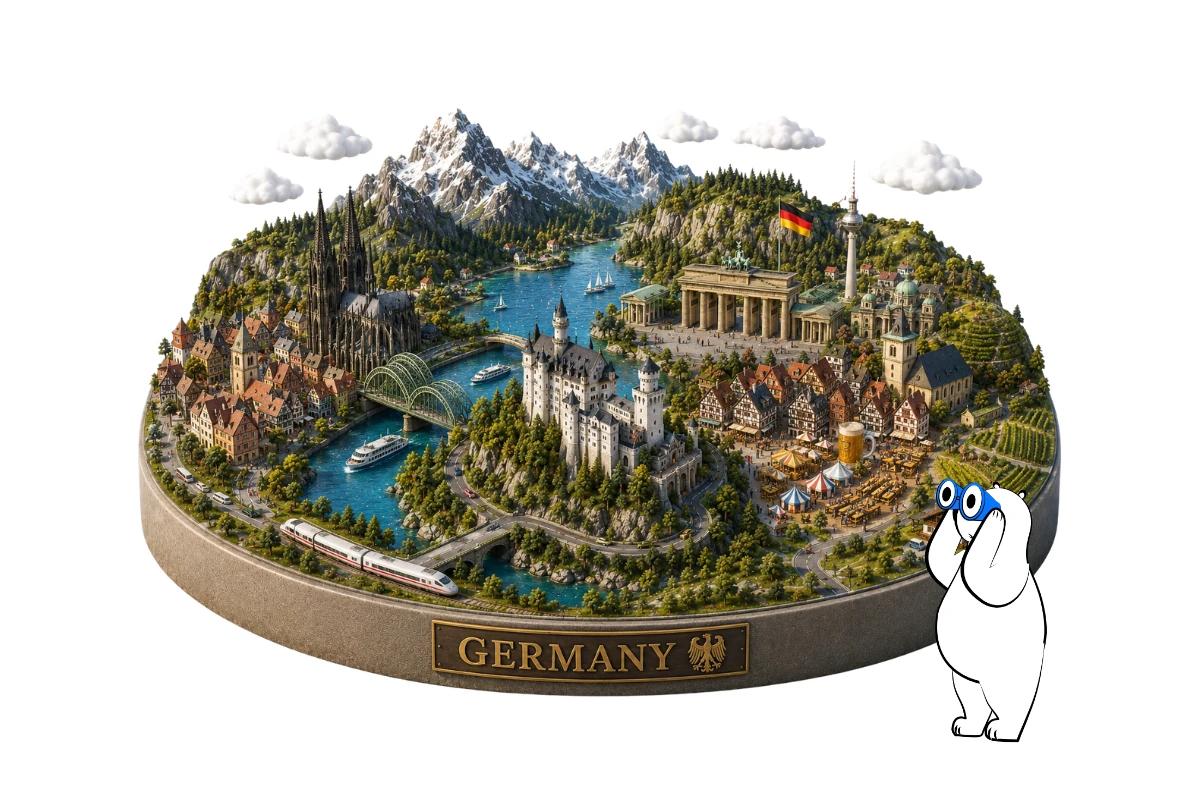
Yes, Germany is worth visiting for travelers who enjoy historic cities, castles, museums, efficient public transport, regional food, and varied landscapes. A single trip can combine Berlin’s modern culture, Rhine Valley villages, Bavarian palaces, medieval towns, forests, beaches, and the German Alps.
Germany particularly suits city breaks, rail journeys, Christmas-market trips, cultural holidays, and scenic road trips. It is not usually the cheapest European destination, but good transport connections and a wide range of accommodation make it possible to control costs.
The country is large enough that trying to see everything in one visit can become exhausting. First-time visitors will generally have a better trip by choosing two or three regions rather than racing between distant cities and don't forget to check Germany's Public Holiday, so you could plan better.
Why Germany Is Worth Visiting
Germany’s strongest advantage is its variety. Berlin, Hamburg, Munich, and Cologne offer very different urban experiences, while smaller cities such as Heidelberg, Bamberg, Lübeck, Dresden, and Rothenburg ob der Tauber provide historic architecture on a more manageable scale.
Beyond its cities, Germany has North Sea and Baltic coastlines, forests, river valleys, lakes, vineyards, and Alpine mountains. The official German tourism board highlights destinations ranging from national parks and islands to scenic routes, cycling regions, castles, and wine-growing areas.
Some of the best reasons to visit Germany include:
- Historic old towns and major museums
- Medieval castles and royal palaces
- Reliable connections between major destinations
- Christmas markets and seasonal festivals
- Hiking, cycling, lakes, and mountain scenery
- Distinct regional food, beer, and wine traditions
- Easy connections to neighboring European countries
Germany’s regions have strong individual identities, so visiting Bavaria can feel very different from traveling through Berlin, the Rhine Valley, Saxony, or the northern coast.
Best Places To Visit In Germany
Berlin
Berlin is the best starting point for modern history, museums, nightlife, contemporary art, and major landmarks. The Brandenburg Gate, Reichstag, Museum Island, East Side Gallery, and memorial sites can fill several days.
The city works especially well for travelers who prefer culture and history over postcard-style scenery. Its neighborhoods also reward slower exploration beyond the central attractions.
Munich And Bavaria
Munich combines major museums, traditional beer halls, parks, palaces, and access to southern Germany. It is also a practical base for trips to Neuschwanstein Castle, the Bavarian Alps, lakes, and towns along the Romantic Road.
Bavaria contains medieval towns, Alpine landscapes, palaces, Baroque churches, and famous events such as Oktoberfest. The region also includes popular scenic routes such as the Romantic Road, Castle Road, and German Alpine Road.
Cologne And The Rhine Valley
Cologne is known for its cathedral, museums, riverside setting, and lively local culture. From there, travelers can continue along the Rhine toward vineyards, hilltop castles, and historic towns.
The Upper Middle Rhine area is particularly suitable for scenic train journeys, river cruises, and short road trips.
Hamburg
Hamburg offers a different side of Germany through its harbor, canals, warehouses, music venues, and maritime history. The Speicherstadt district, Elbphilharmonie, harbor ferries, and nearby lakes make it one of Germany’s most distinctive city breaks.
It is also a useful gateway to Lübeck, Bremen, and the northern coastline.
Dresden And Saxon Switzerland
Dresden combines reconstructed Baroque architecture, important art collections, and an attractive riverside location. Nearby Saxon Switzerland adds sandstone formations, walking trails, viewpoints, and the Bastei Bridge.
This combination works well for travelers who want both architecture and nature without changing accommodation repeatedly.
The Black Forest And German Alps
The Black Forest is suited to scenic drives, woodland walks, spa towns, traditional villages, and access to Lake Constance. Farther east, the German Alps offer mountain trails, lakes, castles, and destinations such as Garmisch-Partenkirchen and Berchtesgaden.
Germany’s Alpine region stretches between Lake Constance and Königssee and includes mountain inns, historic churches, royal castles, and outdoor activities.
Best Things To Do In Germany
Germany’s tourist attractions extend well beyond its most famous cities. A balanced first trip could include several of the following:
- Visit the museums and historical sites of Berlin
- See Cologne Cathedral and travel through the Rhine Valley
- Explore Neuschwanstein and other Bavarian castles
- Walk through a preserved medieval town
- Take a train or boat journey beside the Rhine or Moselle
- Hike in the Black Forest, Saxon Switzerland, or the Alps
- Visit a seasonal festival or Christmas market
- Try regional dishes rather than expecting one national cuisine
- Explore Germany’s industrial heritage and modern architecture
- Spend time along the Baltic or North Sea coast
Castles and palaces can be found throughout Germany, ranging from internationally famous landmarks to smaller regional estates and gardens.
Best Time To Visit Germany
The best time to visit Germany depends on the experience you want.
April to June usually brings mild weather, spring landscapes, and manageable conditions for city sightseeing. Rain is still possible, so a light waterproof layer is useful.
July and August offer warm weather, long daylight hours, outdoor events, and good conditions for lakes and mountain areas. These months can also bring higher accommodation prices and larger crowds.
September and October are excellent for mild temperatures, harvest events, autumn scenery, and regional festivals. Munich becomes especially busy during Oktoberfest.
Late November and December are popular for Christmas markets and winter atmosphere. Days are short, temperatures can be cold, and well-known market destinations become crowded on weekends.
Winter can also suit museum-focused city breaks and Alpine sports, although snow is not guaranteed in every city or lowland region.
Get Eskimo eSIM to stay connected in Germany
Need internet in Germany? Here's what we recommend:

Fixed data plans
- No speed reduction
- No expiry, keep your data forever
- Transfer data to anyone
- Personal hotspot


Unlimited data plans
- Unlimited day pass
- Daily 3GB high-speed + 1Mbps unlimited after
- Personal hotspot

Costs And Budget Planning
Germany is generally a mid-range European destination. Munich, Frankfurt, Hamburg, and central Berlin can be expensive, particularly during trade fairs, football matches, festivals, and major holidays.
Travelers can reduce costs by:
- Booking long-distance trains early
- Staying outside the historic center
- Using local bakeries and lunch menus
- Checking city transport passes carefully
- Visiting free parks, memorials, markets, and viewpoints
- Avoiding major festival dates unless attending the event
- Combining expensive cities with smaller regional destinations
Cashless payments are common, but carrying a small amount of cash remains useful for markets, independent cafés, public toilets, and smaller businesses.
Getting Around Germany
Germany is well suited to independent travel by train. ICE and Intercity services connect major cities, while Regional-Express, Regionalbahn, and S-Bahn trains serve smaller destinations and surrounding areas.
Regional trains generally operate without seat reservations, while reservations can be useful on busy long-distance services. Deutsche Bahn’s DB Navigator provides digital tickets, connection searches, seat reservations, and updates for trains, trams, buses, and urban transport.
Driving is more useful for rural Bavaria, the Black Forest, smaller villages, and scenic routes. City-center parking can be expensive and restricted, so renting a car is rarely necessary for a trip focused on Berlin, Hamburg, Cologne, Frankfurt, or Munich.
Cyclists should look for dedicated cycle routes and confirm whether their train requires a separate bicycle ticket or reservation.
Safety And Practical Travel Tips
Germany is generally manageable for independent travelers, but standard precautions still apply. Watch belongings in busy stations, nightlife districts, festivals, and crowded public transport.
A few practical points can make the trip easier:
- Validate local transport tickets when required
- Check whether a train ticket is tied to a specific departure
- Allow additional time for transfers
- Reserve major attractions during busy periods
- Expect many shops to close on Sundays
- Learn basic phrases such as Guten Tag, Bitte, and Danke
- Carry identification during day trips
- Check local rules before flying drones or entering protected areas
Entry requirements depend on nationality, trip length, and travel purpose. Travelers should check the German Federal Foreign Office visa information before departure rather than relying on older advice.
A Simple Germany Itinerary
A first trip of seven to ten days can focus on three complementary areas:
Days 1 to 3: Berlin Visit major historical sites, museums, neighborhoods, and contemporary cultural areas.
Days 4 to 5: Dresden or the Rhine Valley Choose Dresden for architecture and access to Saxon Switzerland, or Cologne and the Rhine for cathedrals, castles, vineyards, and river scenery.
Days 6 to 9: Munich and Bavaria Explore Munich before taking a day trip to a castle, Alpine lake, or historic Bavarian town.
Travelers with more time could add Hamburg, the Black Forest, Heidelberg, the Moselle Valley, or the Baltic coast. A road trip works best when focused on one region rather than attempting to drive across the entire country.
Who Germany Suits Best
Germany is particularly worth visiting for travelers interested in:
- European history and architecture
- Museums and cultural attractions
- Castles and medieval towns
- Rail travel and multi-city itineraries
- Hiking and scenic driving
- Christmas markets and seasonal events
- Regional food, beer, and wine
- Trips combining cities with nature
Travelers mainly seeking consistently warm weather, low daily costs, or a beach-centered holiday may find other European destinations better suited to their priorities.
For most first-time visitors, Germany offers enough variety for several separate trips. Its strongest appeal is not one single attraction, but the ability to combine very different places without leaving the country.
Mobile Data For A Germany Trip
Mobile data helps with DB Navigator tickets, platform changes, local transport apps, restaurant bookings, attraction reservations, and navigation between cities. Coverage is generally stronger in urban areas and along major transport routes, while reception may weaken inside railway tunnels, rural forests, mountain valleys, and crowded festival venues.
An Eskimo Germany eSIM plan can be installed before arrival. Eskimo’s coverage across 175 countries and regions is useful for travelers continuing into Austria, Switzerland, France, the Netherlands, or other European destinations, while the universal eSIM allows one reusable eSIM to support multiple eligible trips.
New users can also claim free 500MB of Global Data.
FAQs:
FAQ
How many days are enough for Germany?
Seven to ten days are enough for two or three regions. A shorter trip should focus on one city and nearby day trips, while two weeks allows a more relaxed multi-city itinerary.
Is Germany expensive to visit?
Germany is usually a mid-range destination. Accommodation in Munich, Frankfurt, Hamburg, and central Berlin can be expensive, but regional cities, advance train fares, and local bakeries can lower the daily cost.
Is Germany worth visiting without a car?
Yes. Major cities and many popular destinations are connected by long-distance and regional trains. A car becomes more useful for rural villages, mountain areas, and scenic regional routes.
Which German city is best for first-time visitors?
Berlin is strongest for history, museums, and nightlife. Munich is better for Bavarian culture and Alpine day trips, while Hamburg suits travelers interested in maritime history and waterfront neighborhoods.
Is Germany safe to visit alone?
Germany is generally suitable for solo travel. Use normal precautions around busy stations, nightlife areas, festivals, and crowded public transport, and keep valuables secure.