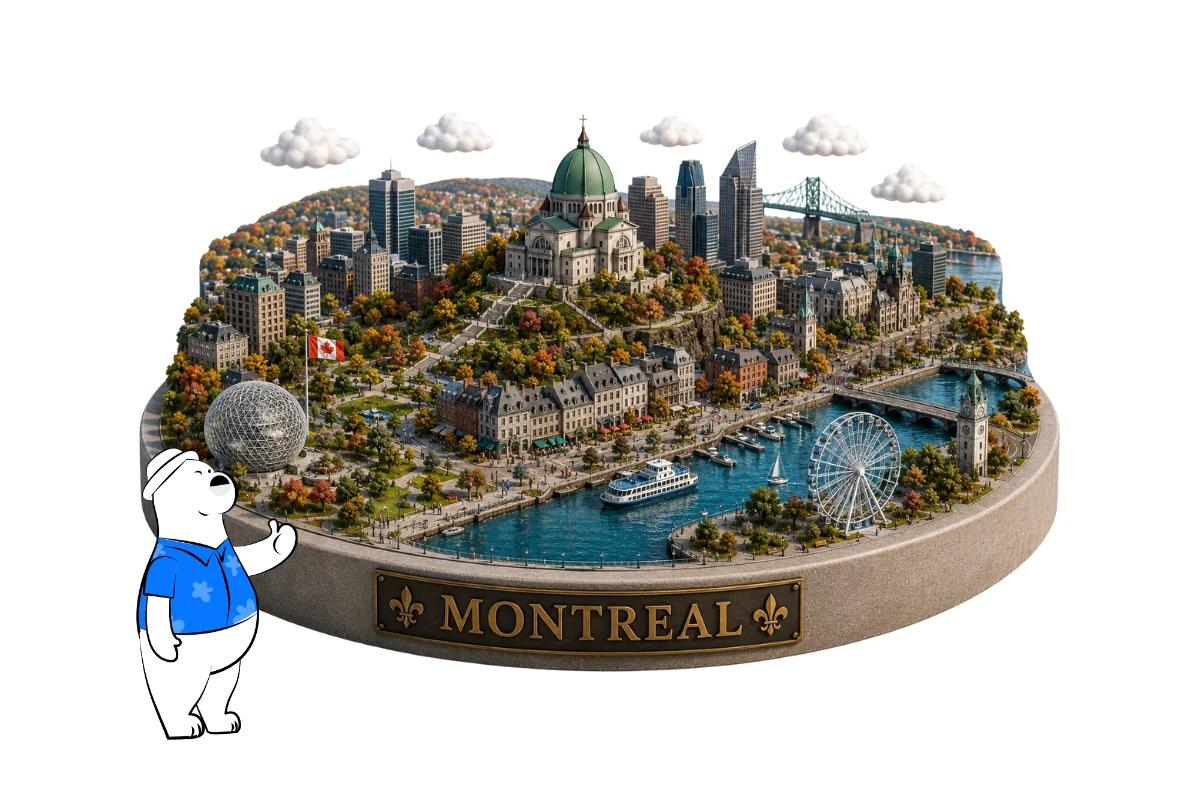
The best things to do in Montreal, Canada, include exploring Old Montreal, walking along the Old Port, climbing Mount Royal, visiting major museums, tasting local food, and experiencing the city’s festivals and nightlife.
Montreal works particularly well for a long weekend because many central attractions are connected by the Metro or located within walkable neighborhoods. Families, couples, solo travelers, and food-focused visitors can all build a satisfying itinerary without renting a car.
The main planning challenge is the weather. Summers can be busy and humid, while winters are cold and snowy. Montreal remains active throughout the year, but the best activities change significantly by season. After all don't forget Montreal is in Canada, and you can check what is Canada Known For, you might extend your trip.
Explore Old Montreal
Old Montreal is the city’s historic core, with cobblestone streets, stone buildings, public squares, galleries, restaurants, and several major Montreal tourist attractions.
Start around Place d’Armes and Notre-Dame Basilica before continuing along Saint-Paul Street. From there, walk toward Place Jacques-Cartier, Bonsecours Market, and the waterfront.
The neighborhood is atmospheric during the day, but an evening visit reveals illuminated buildings and a livelier dining scene. The official Old Montreal and Old Port overview can help with route planning.
Spend Time At The Old Port
The Montreal Old Port stretches along the St. Lawrence River beside Old Montreal. It combines walking and cycling paths with seasonal events, cruises, family activities, food stalls, and waterfront views.
Depending on the season, activities may include the observation wheel, boat trips, pedal boats, ziplining, the Montreal Science Centre, and outdoor festivals. Current activities and temporary events are listed on the official Old Port website.
Walking through the area is free, but individual attractions charge separate admission. Weekends and festival evenings can become crowded, so visit earlier in the day for a quieter waterfront walk.
Climb Mount Royal
Mount Royal provides one of the best free views over downtown Montreal. The most popular viewpoint is Kondiaronk Belvedere, located beside the Mount Royal Chalet.
Walking routes lead through forested areas to viewpoints, since Canada is the Country with Most Lakes, Beaver Lake is one of the best, and several recreational spaces . In winter, parts of the park may support skating, snowshoeing, cross-country skiing, and sledding, depending on weather and facility status.
Mount Royal Park marks its 150th anniversary in 2026, with commemorative activities planned throughout the year. The city’s Mount Royal Park information provides current trail and facility updates.
Allow at least two hours if walking from the Plateau or downtown.
Visit Montreal’s Museums
Montreal museums cover fine art, archaeology, science, social history, contemporary culture, and Canadian heritage.
The Montreal Museum of Fine Arts is a strong choice for major international and Canadian exhibitions. Pointe-à-Callière explores Montreal’s archaeology and history from a site in Old Montreal, while the Montreal Science Centre offers interactive exhibits suited to families.
Other options include the McCord Stewart Museum, Musée d’art contemporain de Montréal, Château Ramezay, and the Biosphere on Île Sainte-Hélène. Exhibition locations and opening arrangements can change, so check each museum’s official website before visiting.
Montreal’s official tourism site maintains an updated overview of the city’s museums, architecture, and cultural attractions.
Eat Montreal’s Essential Foods
Montreal food experiences extend well beyond one signature dish. The city combines French Canadian cooking with Jewish, Caribbean, Middle Eastern, Asian, Indigenous, African, and European influences.
Local staples worth trying include:
- Montreal-style bagels
- Smoked meat sandwiches
- Poutine
- Tourtière
- Maple-based desserts
- Quebec cheeses
- Local pastries and seasonal produce
Jean-Talon Market and Atwater Market are useful places to sample local ingredients without committing to a formal restaurant. Mile End is associated with bagels, cafés, and small independent restaurants, while Little Italy offers markets, bakeries, and Italian dining.
Montreal’s current restaurant openings, food festivals, markets, and regional specialties are featured through Tourisme Montréal’s food section.
Discover The Plateau And Mile End
The Plateau-Mont-Royal and Mile End offer a more residential side of the city than downtown or Old Montreal.
Walk along Saint-Denis Street, Saint-Laurent Boulevard, Mont-Royal Avenue, and the surrounding side streets to see colorful row houses, outdoor staircases, murals, cafés, bookstores, and neighborhood parks.
Mile End is particularly good for bakeries, record shops, casual restaurants, and independent boutiques. The area is easy to combine with a Mount Royal visit, although exploring it properly requires more walking than many first-time visitors expect.
Experience Montreal Nightlife
Montreal nightlife ranges from cocktail bars and breweries to live music, comedy, cabaret, electronic events, and large festivals.
The Plateau, Mile End, downtown, the Village, and Saint-Henri each provide different atmospheres. Crescent Street has mainstream bars and clubs, while Saint-Laurent Boulevard offers a wider mix of venues.
Opening times, admission policies, and event schedules vary. Check the venue directly before traveling across the city, particularly during winter or major festival periods. Tourisme Montréal’s nightlife overview covers current districts and venue types.
Use licensed transport or public transit after drinking, and keep belongings secure in crowded venues.
Get Eskimo eSIM to stay connected globally
Need internet? Here's what we recommend:

Fixed data plans
- No speed reduction
- No expiry, keep your data forever
- Transfer data to anyone
- Personal hotspot


Find Free And Outdoor Activities
Many worthwhile Montreal outdoor activities cost nothing.
Good free options include:
- Walking around Old Montreal
- Visiting Mount Royal’s viewpoints
- Exploring the Old Port waterfront
- Following murals along Saint-Laurent Boulevard
- Walking beside the Lachine Canal
- Relaxing in Parc La Fontaine
- Browsing Jean-Talon Market
- Exploring the Quartier des Spectacles
- Walking through different residential neighborhoods
Public art, temporary installations, concerts, and seasonal events may also be free. During summer, the calendar fills quickly with festivals and street programming. In winter, outdoor skating and illuminated public spaces become part of the experience.
Choose Indoor Activities For Bad Weather
Montreal indoor activities are useful during heavy rain, summer heat, or extreme winter cold.
The Underground City connects shopping centers, office buildings, hotels, and Metro stations across more than 30 kilometers of pedestrian corridors. It is practical rather than a single attraction, but it can make downtown travel more comfortable in poor weather.
Other indoor options include museums, the Montreal Science Centre, food markets, spas, escape rooms, performances at Place des Arts, and the Botanical Garden’s indoor greenhouses.
Keep one flexible indoor activity in your itinerary instead of relying on a completely outdoor schedule.
Plan Family Activities
Popular Montreal family activities include the Montreal Science Centre, Biodome, Botanical Garden, Insectarium, Old Port attractions, and the parks of Parc Jean-Drapeau.
The Biodome recreates several ecosystems under one roof, making it useful during cold or rainy weather. The Science Centre provides interactive exhibits, while the Old Port offers a mix of seasonal attractions for different age groups.
Families should check minimum height rules, timed-entry requirements, and seasonal closures before booking. Bringing snacks and allowing time between attractions can also prevent a full day from turning into an expedition through the Republic of Tired Children.
Build A Montreal Weekend Itinerary
A compact Montreal weekend itinerary can cover the city’s essential districts without becoming rushed.
Day one
Begin in Old Montreal with Notre-Dame Basilica, Saint-Paul Street, and Place Jacques-Cartier. Continue to the Old Port for a waterfront walk, attraction, or river activity.
Finish with dinner in Old Montreal, downtown, or the Plateau.
Day two
Start at Mount Royal and walk to the Kondiaronk viewpoint. Continue through the Plateau and Mile End for bagels, cafés, shops, and neighborhood streets.
Spend the evening at a restaurant, live performance, brewery, or nightlife venue.
Day three
Choose a museum, Jean-Talon Market, the Biodome, or the Botanical Garden. Leave enough time for a relaxed meal before departure.
Three days provide a useful introduction, while four or five days allow more museums, neighborhoods, and seasonal events.
Take A Day Trip From Montreal
Several Montreal day trips are possible without adding another flight.
Quebec’s Eastern Townships suit travelers interested in villages, food, vineyards, and countryside. Mont-Tremblant offers hiking and outdoor activities, although the resort becomes especially busy during autumn foliage and ski season.
Ottawa is reachable for a longer day trip, but an overnight stay is more comfortable. Quebec City is better treated as a separate stop because the journey and its historic center deserve more time.
Travelers without a car should confirm train or bus schedules before committing to a day trip. Services can be less frequent outside major corridors.
Getting Around Montreal
The Metro and bus network covers most central districts, while walking is practical within individual neighborhoods.
The Metro is useful for moving between downtown, Old Montreal, the Plateau, Jean-Talon Market, Parc Jean-Drapeau, and the Olympic Park area. Cycling can also work well in warmer months, but road confidence and route selection matter.
A car is unnecessary for most city itineraries and can become inconvenient because of parking restrictions, construction, snow-clearing rules, and one-way streets.
Plan extra time during major festivals, roadworks, winter storms, and weekday rush hours.
Best Time To Visit Montreal
May through June generally brings milder weather, spring greenery, and fewer peak-summer crowds.
July and August offer the largest festival calendar, long daylight hours, patios, and outdoor events. Accommodation prices and visitor numbers can rise during major weekends.
September and October bring cooler temperatures and autumn foliage. This is a strong period for Mount Royal walks and regional day trips.
December through March suits travelers who enjoy winter festivals, skating, snow, and indoor cultural activities. Temperatures can fall well below freezing, so proper footwear and layered clothing are essential.
Spring weather can be changeable, with rain, melting snow, and muddy park paths.
Mobile Data For Exploring Montreal
Mobile data helps with Metro directions, digital attraction tickets, restaurant reservations, festival schedules, and finding meeting points across Montreal’s neighborhoods. Reception is generally stronger throughout the urban area, although it can weaken inside Metro tunnels, basements, large stone buildings, and crowded event venues.
An Eskimo Canada eSIM plan can be prepared before arrival. Eskimo’s coverage across 175 countries and regions is useful for travelers continuing to the United States or taking other international trips, while no-expiry fixed data means any unused allowance can remain available for future travel.
New users can also claim free 500MB of Global Data.
FAQs:
FAQ
How many days are enough for Montreal?
Three days are enough for Old Montreal, the Old Port, Mount Royal, one museum, and a few food stops. Four or five days allow more neighborhoods and a day trip.
What are the best things to do in Montreal, Canada, for first-time visitors?
Prioritize Old Montreal, the Old Port, Mount Royal, a local food market, and one major museum. Add the Plateau or Mile End for a neighborhood experience.
Is Montreal easy to explore without a car?
Yes. Most central attractions are accessible by Metro, bus, walking, or seasonal bike services. A car is more useful for countryside day trips.
What are the best free things to do in Montreal?
Walk through Old Montreal, visit Mount Royal’s viewpoints, explore the Old Port waterfront, follow the city’s murals, and visit public markets and parks.
Which area is best for staying in Montreal?
Downtown is convenient for transport and museums. Old Montreal suits historic atmosphere, while the Plateau and Mile End work well for restaurants, cafés, and neighborhood life.