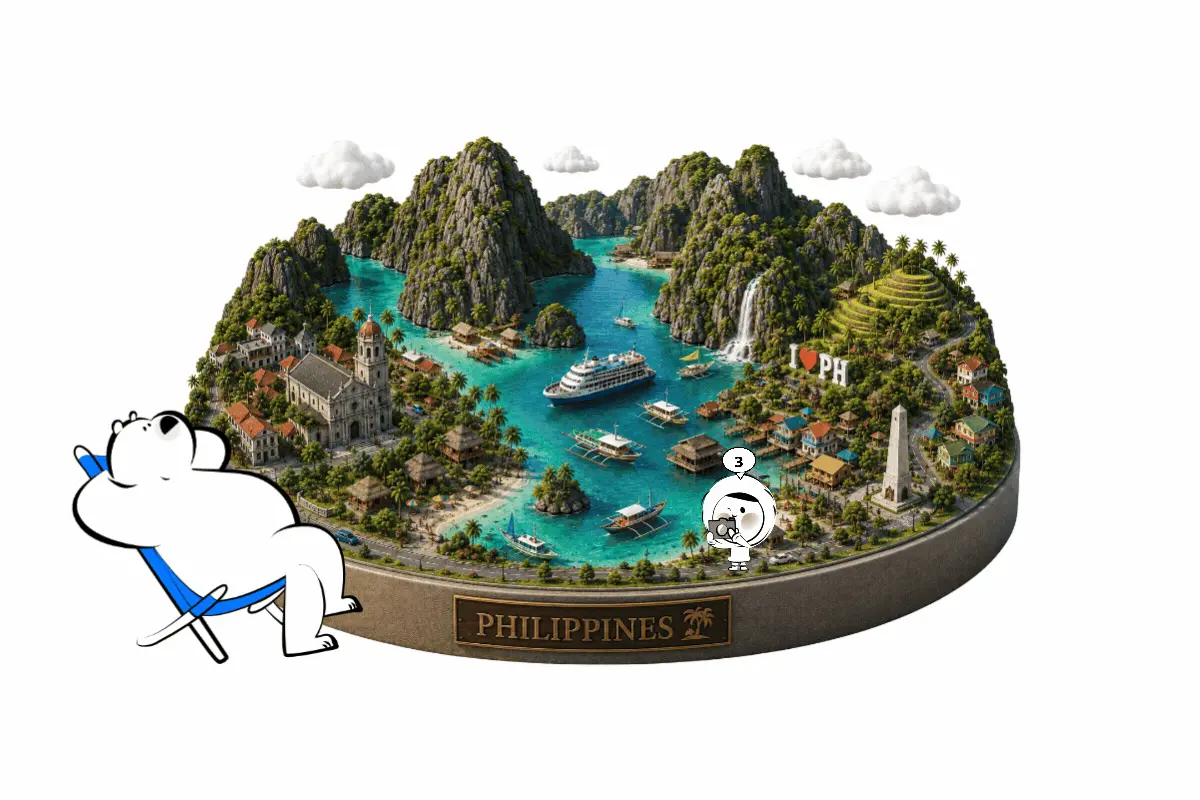
The most useful Philippines travel tips for first-time visitors are to choose only two or three destinations, allow extra time between islands, carry some Philippine pesos, and complete all entry preparations before flying. Ten to fourteen days is usually enough for a comfortable first trip that combines a city, beaches, and one or two island areas.
With thousands of islands spread across a large archipelago, travelling around the Philippines requires more planning than visiting a single compact destination. Domestic flights, ferries, road transfers, and changing weather can all affect the schedule.
Essential Philippines Travel Tips
Keep these points in mind when planning your first visit:
- Choose destinations connected by direct flights or practical ferry routes.
- Allow at least three nights in each major destination.
- Avoid booking a ferry immediately before an international flight.
- Keep cash for local transport, markets, small restaurants, and environmental fees.
- Save hotel details, tickets, maps, and identification documents offline.
- Check weather and marine conditions before island-hopping trips.
- Complete the official eTravel declaration within the permitted registration period.
- Book early for Christmas, Easter, and major domestic holiday weekends.
Trying to visit Manila, Cebu, Bohol, Boracay, Palawan, and Siargao in one short trip may look efficient on a map, but frequent transfers can turn the holiday into a carousel of luggage belts and ferry terminals.
Best Places To Visit In The Philippines
The best places to visit in the Philippines depend on whether you prefer beaches, marine activities, cities, history, nightlife, or quiet island stays.
The official Philippines tourism website provides destination information for travellers planning routes across the country.
Manila
Manila is the main international gateway and a practical place to begin or end a trip.
Popular areas include the historic district of Intramuros, the museums around Rizal Park, Binondo, and the waterfront around Manila Bay. Traffic can be heavy, so visitors should group activities by neighbourhood instead of repeatedly crossing the city.
Most beach-focused travellers need only one or two nights. A future dedicated Manila travel guide can provide more detailed neighbourhood, transport, and airport information without overloading a wider country overview.
Cebu
Cebu offers a useful combination of city facilities, historical attractions, beaches, diving, and onward transport.
Cebu City and nearby Mactan are convenient arrival points. Travellers can continue south towards Moalboal and other coastal areas or take a ferry to Bohol. December to February is generally among the more comfortable periods for exploring Cebu City, while the Sinulog Festival brings larger crowds in January.
A dedicated Cebu travel guide is most useful for travellers planning several days across Cebu City, Mactan, Moalboal, and the southern part of the island.
Palawan
Palawan is one of the leading Philippines tourist spots for lagoons, limestone cliffs, coral reefs, beaches, and island hopping.
The province includes several separate travel areas:
- El Nido for lagoons and boat tours
- Coron for lakes, reefs, and wreck diving
- Puerto Princesa for the Underground River and central Palawan
- Port Barton for a quieter coastal stay
Puerto Princesa, El Nido, and Coron are not one compact destination. Each requires its own accommodation and transport planning. Flights connect Palawan with major Philippine cities, while local routes vary by destination.
A separate Palawan travel guide should eventually cover these areas in greater detail.
Bohol
Bohol works particularly well with Cebu because regular ferry routes connect the two areas.
The main attractions include the Chocolate Hills, countryside scenery, tarsier conservation areas, and the beaches around Panglao. Visitors should use responsible wildlife operators and avoid places that allow touching, feeding, or crowding around animals.
Boracay
Boracay is suitable for travellers seeking a straightforward beach holiday with plenty of accommodation, restaurants, water activities, and nightlife.
Caticlan is the closest airport, followed by land and boat transfers. Kalibo may offer additional flight options, but the journey to Boracay is longer.
Siargao
Siargao is known for surfing, island hopping, lagoons, rock pools, mangroves, and a relaxed social atmosphere.
Cloud 9 is its best-known surfing area, but the island also suits non-surfers. Travellers should allow enough time for road journeys outside the main General Luna area.
Things To Do In The Philippines
The best things to do in the Philippines often centre on the sea, but the country also offers historic districts, food experiences, mountain landscapes, festivals, and wildlife encounters.
Popular activities include:
- Joining a licensed island-hopping tour
- Snorkelling or diving at established marine sites
- Visiting Intramuros and Philippine museums in Manila
- Exploring the Chocolate Hills in Bohol
- Surfing or taking lessons in Siargao
- Diving around Coron or Moalboal
- Visiting rice terraces and mountain communities in northern Luzon
- Trying regional dishes and local markets
- Spending several quiet days on one island instead of changing hotels constantly
Respect marine rules during Philippines island hopping. Do not touch coral, remove shells, stand on reefs, feed wildlife, or leave rubbish behind.
Weather and sea conditions can cause boat trips to be delayed or cancelled, even when conditions near the beach appear calm.
Best Time To Visit The Philippines
The best time to visit the Philippines is generally during the drier months from December to April, especially for beach trips and island hopping. Regional weather varies, so travellers should still check forecasts for each destination.
March and April are often hot, while December through February can feel more comfortable in many areas. Christmas, New Year, Lunar New Year, Easter, and major local festivals may bring higher accommodation prices and heavier domestic travel demand.
Rainfall and tropical storms are more likely during parts of the year from June to November. Rain does not necessarily continue all day, but severe weather can disrupt:
- Domestic flights
- Ferry departures
- Island-hopping tours
- Road access
- Outdoor attractions
The Philippines Public Holidays 2026 calendar can help travellers identify long weekends when flights, ferries, and hotels may become busier.
Get Eskimo eSIM to stay connected in Philippines
Need internet in Philippines? Here's what we recommend:

Fixed data plans
- No speed reduction
- No expiry, keep your data forever
- Transfer data to anyone
- Personal hotspot



Unlimited data plans
- Unlimited day pass
- Daily 3GB high-speed + 1Mbps unlimited after
- Personal hotspot
Planning A Philippines Island-Hopping Route
A first Philippines island-hopping trip should follow a practical route rather than simply collecting famous destinations.
Good combinations include:
- Manila, Cebu, and Bohol
- Manila, El Nido, and Coron
- Cebu, Bohol, and Siargao
- Manila, Boracay, and Cebu
- Puerto Princesa, Port Barton, and El Nido
A domestic flight may take only an hour, but the full transfer can require hotel check-out, airport transport, security, baggage collection, and another journey to the final accommodation.
For ferry routes, leave a backup window before long-haul flights. Schedules can change because of weather, port conditions, or operational issues.
Entry Preparation And eTravel
Entry conditions depend on nationality, passport, visa status, travel purpose, and intended length of stay. Travellers should confirm current requirements through the Philippine Bureau of Immigration or the relevant Philippine embassy before departure.
Preparation may include:
- A valid passport
- A visa or eligibility for visa-free entry
- A return or onward ticket
- Confirmed accommodation details
- An eTravel declaration
- Additional documents required for the traveller’s circumstances
The Philippine eTravel system is the official electronic platform for passenger declarations. Registration is free, and travellers should avoid unofficial websites that request payment.
Eskimo’s eTravel Philippines guide explains the registration process, required information, and QR code preparation.
Check the official rules again shortly before departure because immigration and declaration requirements can change.
Getting Around The Philippines
Domestic flights are often the most practical option for travelling between major island groups.
Manila and Cebu are the two most useful air hubs, although direct flights also operate between selected regional destinations. Not every island pair has a direct route.
Common local transport options include:
- Metered taxis
- Ride-hailing services
- Buses
- Jeepneys
- Tricycles
- Shared vans
- Ferries
- Motorbike taxis
- Rental scooters
Confirm the fare before using informal transport. Travellers renting scooters should have suitable experience, a valid licence, appropriate insurance, and a proper helmet.
Traffic in Manila and Cebu can make short distances unexpectedly slow. Allow generous time when travelling to an airport or ferry terminal.
Money And Travel Costs
The Philippine peso is the country’s official currency.
Cards are commonly accepted at larger hotels, malls, established restaurants, and tourism businesses. Cash remains important for:
- Tricycles and jeepneys
- Markets
- Small eateries
- Local ferries
- Environmental fees
- Tips
- Businesses on smaller islands
ATMs are widely available in cities and developed resort areas but can be limited or temporarily unavailable on remote islands. Withdraw enough money before leaving a major town.
Travel costs vary by destination. Boracay, El Nido, Coron, and private boat tours may cost more than less-developed areas. Domestic flights can also increase the overall budget, especially when booked close to departure.
Food, Water And Local Etiquette
Philippine cuisine varies by region and commonly uses rice, seafood, pork, chicken, vegetables, vinegar, coconut, noodles, and tropical fruit.
Dishes worth trying include:
- Adobo
- Sinigang
- Sisig
- Pancit
- Chicken inasal
- Kare-kare
- Lumpia
- Lechon
- Halo-halo
Many travellers use sealed bottled water or properly filtered drinking water. Ask about ingredients when managing allergies, particularly for dishes containing peanuts, shellfish, soy, fish sauce, or shrimp paste.
English is widely used in airports, hotels, restaurants, and tourism businesses. Travellers should still approach local communities respectfully by dressing appropriately at religious sites, asking before photographing people, and following local environmental rules.
Mobile Data For A Philippines Trip
Mobile data helps with domestic flight updates, ferry information, maps, hotel messages, ride-hailing, weather warnings, and access to travel documents.
A Philippines eSIM plan can be installed on a compatible phone before departure. Eskimo fixed data plans have two-year validity and support hotspot sharing, which may be useful when travelling with another device.
Coverage can weaken on boats, rural roads, and remote islands. Download maps, booking confirmations, emergency contacts, and copies of important documents before leaving areas with a stable connection.
Travellers continuing through several countries can use a regional or Global plan. New users can also claim free 500MB of Global Data before the trip.
FAQs:
What are the most important Philippines travel tips for beginners?
Choose only two or three destinations, allow extra time between islands, carry some cash, complete eTravel correctly, and avoid scheduling ferries immediately before international flights.
What are the best places to visit in the Philippines for a first trip?
Cebu and Bohol provide a practical combined route, Palawan is ideal for lagoons and island hopping, Boracay offers an easy beach stay, and Manila provides history and international transport connections.
How many days are enough for the Philippines?
Ten to fourteen days is a practical length for two or three destinations. A shorter trip is usually better focused on one region.
What is the best time to visit the Philippines?
December to April is generally the most convenient period for beaches and outdoor activities in many popular destinations. Weather patterns differ by region, so check local forecasts before travelling.
Is cash needed when travelling around the Philippines?
Yes. Cards are accepted in larger establishments, but cash is still useful for local transport, markets, small businesses, fees, and less-developed islands.