
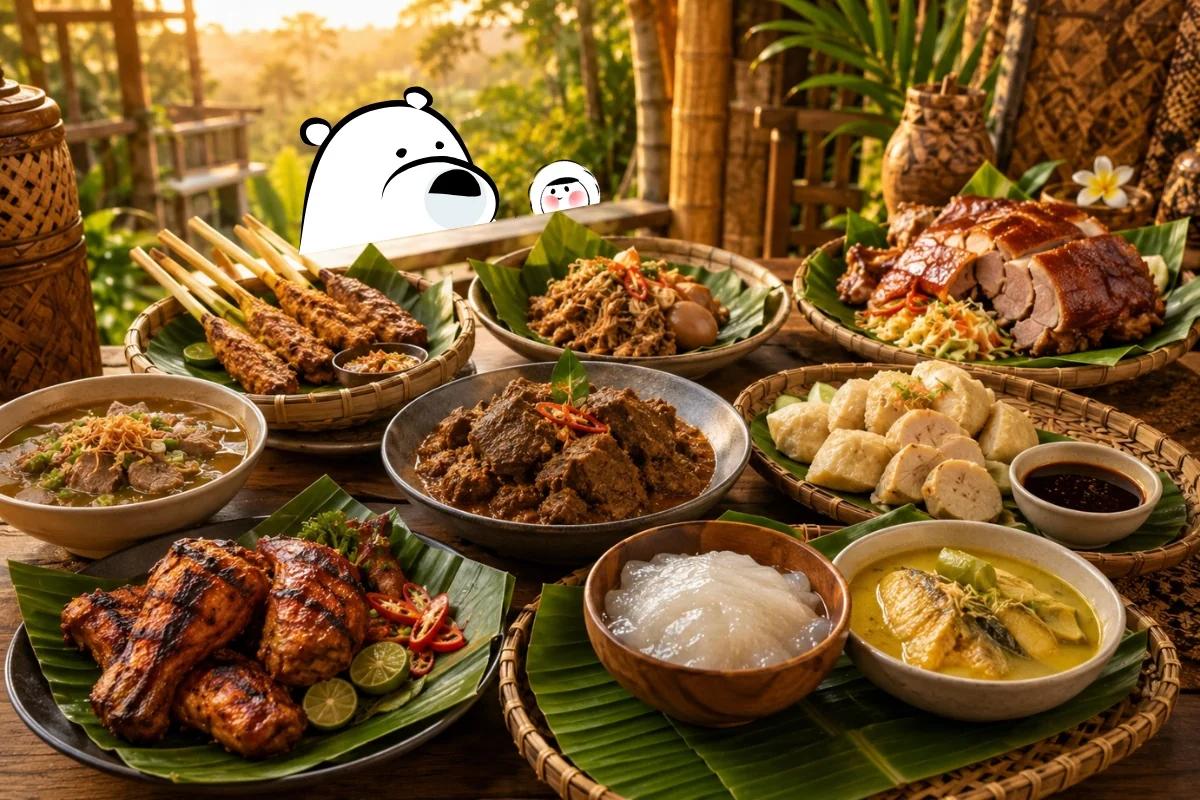
Traditional Indonesian food is one of the best reasons to travel across the country. The easiest way to understand it is by starting with dishes that are strongly tied to place, such as rendang in West Sumatra, gudeg in Yogyakarta, pempek in Palembang, coto Makassar in South Sulawesi, sate lilit and babi guling (Non Halal) in Bali, ayam taliwang in West Nusa Tenggara, and papeda in Papua and Maluku. Indonesia Travel also describes Indonesia as home to hundreds of ethnic groups and a very wide range of culinary traditions, which is exactly why the food varies so much from region to region.
Why Traditional Food Matters In Indonesia
Indonesia’s traditional dishes are not just recipes. They reflect local ingredients, regional history, and the way communities cook and eat. A bowl of coto Makassar says something different about Indonesia than a plate of gudeg or ayam taliwang, even though all of them belong to the same national food culture.
That is also why it helps to think region first. If you already enjoyed the broader overview in (link: Indonesia Travel Guide: Local Food, Culture, and Best Places To Visit), this is the food-focused next step. If you want the faster, cart-and-stall side of eating, Best Indonesian Street Food To Try is the more natural companion piece.
Traditional Indonesian Food To Try
Rendang
Rendang is one of Indonesia’s most famous dishes and is closely tied to West Sumatra and Minangkabau culinary culture. Indonesia Travel describes it as slow-cooked beef simmered with coconut milk and spices until the flavors deepen and the sauce darkens. Padang and Bukittinggi are among the best places to start if you want the dish in its home region.
Gudeg
Gudeg is the signature dish of Yogyakarta and one of the clearest examples of regional food identity in Java. Indonesia Travel describes it as a sweet jackfruit stew that represents both Yogyakarta’s culinary culture and its patient, slow-cooking traditions. If you are spending time around the royal city, Wijilan and Barek are two of the best-known areas for trying it.
Pempek
Pempek comes from Palembang in South Sumatra and is made from fish and tapioca, usually served with cuko, a sweet, sour, and slightly spicy vinegar-based sauce. Indonesia Travel describes it as one of Sumatra’s culinary icons, and it is a very easy dish to add to a trip if you want something distinctly regional without being too heavy.
Coto Makassar
Coto Makassar is one of the classic dishes of South Sulawesi. Indonesia Travel describes it as a rich, spice-heavy soup or stew made with beef and often offal, and notes that it is deeply tied to the city’s culinary history. If you want a traditional dish that feels especially rooted in local identity, this is one of the strongest picks in eastern Indonesia.
Sate Lilit
Sate lilit is one of Bali’s best-known traditional foods. Unlike more familiar satay styles, Indonesia Travel explains that the seasoned meat is wrapped around a stick or skewer rather than pierced in chunks, which gives it a distinct texture and look. It is one of the easiest Balinese dishes to recommend because it is strongly local and widely available.
Babi Guling (Non Halal)
Babi guling (Non Halal) is one of Bali’s signature dishes and is traditionally made from whole roast pig seasoned with Balinese spices. Indonesia Travel describes it as one of Bali’s most famed dishes, usually served with rice, lawar, and sambal. Because it is pork, it is important to label it clearly for readers who need halal options.
Ayam Taliwang
Ayam taliwang comes from West Nusa Tenggara, specifically the Taliwang area in Sumbawa, according to Indonesia Travel. It is typically made with young chicken and a bold seasoning mix, giving it a much punchier profile than many milder grilled chicken dishes. This is a strong choice if you are heading to Lombok or nearby parts of the region.
Get Eskimo eSIM to stay connected globally
Need internet while travelling? Here's what we recommend:

Fixed data plans
- No speed reduction
- No expiry, keep your data forever
- Transfer data to anyone
- Personal hotspot


Papeda
Papeda is one of the most recognizable traditional foods from Papua and Maluku. Indonesia Travel describes it as a sticky sago-based dish that is usually served with yellow fish soup or another seasoned broth. It looks very different from western Indonesian staples and is one of the clearest signs that Indonesia’s food culture changes dramatically as you move east.
Where To Try Traditional Food In Indonesia
The best place to try traditional Indonesian food is usually the region it comes from. Padang and Bukittinggi are strong starting points for rendang. Yogyakarta is the right base for gudeg. Palembang makes the most sense for pempek, while Makassar is the obvious choice for coto Makassar. In Bali, both sate lilit and babi guling (Non Halal) are easy to find, and in Lombok you can look for ayam taliwang. For a broader destination view The Best and Must-Visit Cities in Indonesia is the most relevant internal next read.
How To Order Traditional Food More Confidently
A few small habits help a lot:
- Ask whether a dish contains beef, fish, chicken, or pork.
- Check if it comes with sambal on the side or mixed in.
- Watch for offal in dishes like coto Makassar if that is not your preference.
- Be aware that some dishes, especially babi guling, are not halal.
- Start with the region’s best-known dish if you are unsure what to order first.
Eating Across Indonesia Without Losing Your Way
Traditional food trips in Indonesia often mean moving between markets, small restaurants, neighborhoods, and city-to-city stops. That is much easier when you have reliable access to maps, translation, ride-hailing, and opening-hour checks.
Eskimo fits that kind of trip well because its Indonesia eSIM comes with 2-year validity, which is useful if you are planning ahead or returning later. New users can also get free 500MB of Global Data valid for 2 years here: Eskimo free 500MB offer. For travelers building a slower, deeper trip through the country is also relevant.
FAQ
What is the most traditional food in Indonesia?
There is no single answer because Indonesia has many regional food traditions. Still, rendang, gudeg, pempek, and coto Makassar are among the strongest place-based dishes to start with.
Is babi guling halal?
No. Babi guling is made from pork, so it is not halal. Indonesia Travel describes it as a Balinese roast pig dish, usually served with rice and side dishes.
Where should I try traditional Indonesian food first?
A good way to start is with a region that has a very clear food identity. Yogyakarta for gudeg, Padang for rendang, Palembang for pempek, and Makassar for coto Makassar are all strong choices.
Is traditional Indonesian food always spicy?
No. Some dishes are rich and spicy, but others are milder or sweeter. Gudeg, for example, is known for its sweetness, while rendang and ayam taliwang tend to carry more spice.