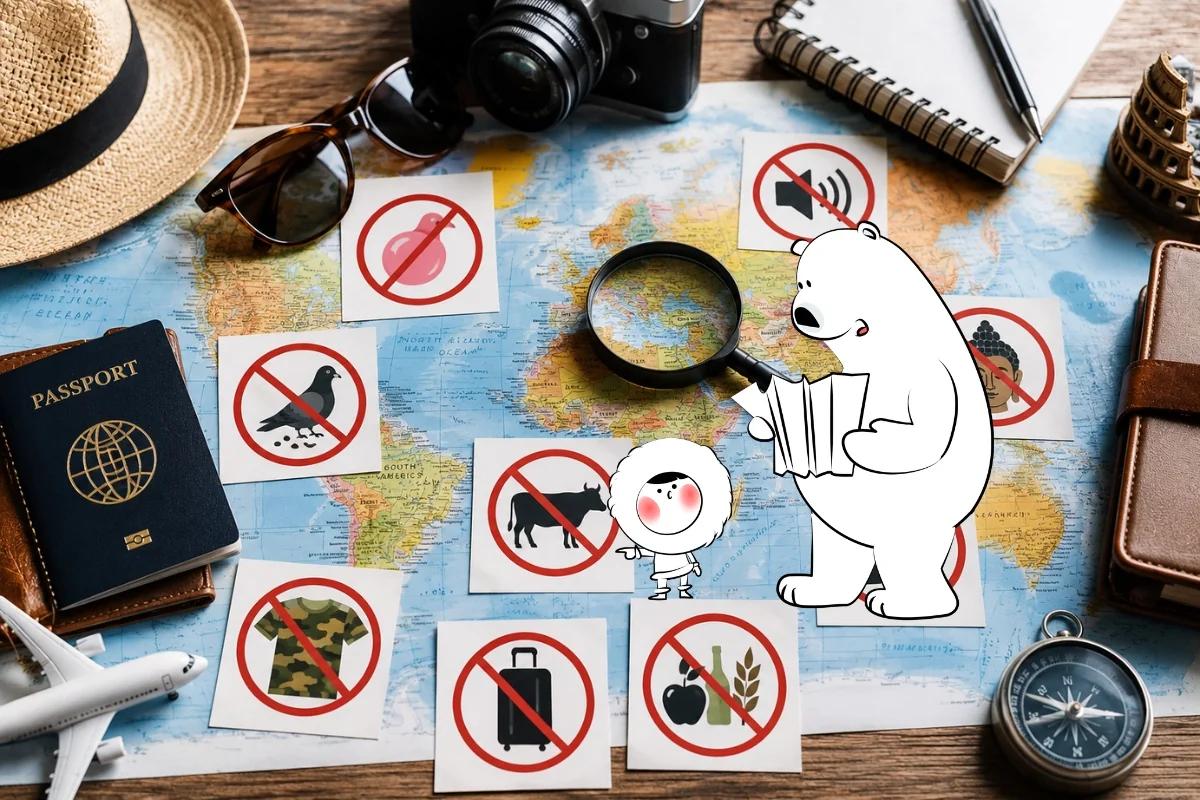
Weird laws around the world are not always myths or internet jokes. Some are official laws, some are local rules, and some are cultural expectations travelers should respect.
A customs rule in the Maldives, quiet train etiquette in Japan, and religious-photo etiquette in Sri Lanka are very different. But each can affect how smooth and respectful your trip feels.
Weird Laws, Local Rules, and Cultural Taboos Travelers Should Know
Singapore: Chewing gum is heavily restricted
Singapore restricts the import and sale of chewing gum, with limited exceptions such as approved therapeutic gums. The common claim that chewing gum is fully illegal is too broad. For travelers, gum is not something to sell, distribute, or bring in casually.
Japan: Trains are quiet shared spaces
In Japan, quiet behavior on public transport is a strong social expectation. Keep phones silent, avoid calls, queue properly, and keep noise low on trains and buses. It is not a criminal law, but it is one of the clearest unwritten rules visitors notice quickly.
For first-time visitors, learning local customs before arrival can make the trip feel smoother .
Japan: Some medicines need prior approval
Japan has strict rules for bringing medication into the country. Depending on the medicine and amount, travelers may need a Yunyu Kakunin-sho, an import certificate arranged before departure. Check official guidance before packing prescriptions or over-the-counter medicines.
Venice, Italy: Tourist behavior can bring fines
Venice fines certain behavior that harms public spaces, hygiene, or local life. This can include swimming in canals, walking around in swimwear, camping in public areas, or feeding birds. Some fines range from €25 to €500.
Sri Lanka: Be careful with Buddha photos
In Sri Lanka, religious images should be treated with care. The issue is not every Buddha photo. The problem is disrespectful posing, especially turning your back to Buddha statues for selfies. Follow temple signs and keep behavior respectful.
India: Cows are deeply respected in many communities
Cows hold religious and cultural importance in many Hindu communities. Beef-related laws vary by state, so broad claims about India are usually wrong. Avoid jokes, careless comments, or disrespectful behavior around cows, temples, and food customs.
Thailand: Treat royal symbols with respect
Thai banknotes and coins carry royal images, so money should be handled respectfully. Avoid stepping on banknotes, damaging currency, or joking about the monarchy.
Australia: Declare food, plants, and outdoor gear
Australia has strict biosecurity rules. Travelers may need to declare food, plant material, animal items, soil, and gear used for hiking, fishing, camping, or sports. If unsure, declare it.
New Zealand: Biosecurity rules are serious
New Zealand also requires travelers to declare biosecurity risk items, including food, plants, wooden products, soil, outdoor equipment, and animal products. Some items may be inspected on arrival.
Maldives: Some items are restricted at customs
Tourists cannot bring prohibited items such as alcohol, pork products, pornography, firearms, and idols of worship into the Maldives. Resort rules are different from customs rules, so do not assume you can bring restricted items yourself.
Barbados: Camouflage clothing is not for tourists
In Barbados, visitors should avoid camouflage clothing and camouflage-patterned items. The rule can apply to adults, children, clothes, bags, and accessories.
Germany: Sundays are for quiet
Sunday rest culture is part of daily life in Germany. Rules vary locally, but apartment guests should avoid loud chores, drilling, heavy cleaning, or noisy behavior on Sundays and public holidays.
South Korea: Food waste has its own system
South Korea separates general waste, recycling, and food waste. Travelers staying in apartments, guesthouses, or Airbnbs should ask how to sort rubbish properly.
Spain: Swimwear may not belong in town
Some Spanish cities and resorts restrict swimwear or shirtless walking away from beaches and pools. Cover up before entering shops, restaurants, streets, or public transport.
UAE: Public etiquette matters
In the UAE, visitors should be mindful of modest dress, public displays of affection, gestures, alcohol rules, and respect for religion and local customs.
Saudi Arabia: Public decorum applies to visitors
Visitors in Saudi Arabia should respect local values, customs, and modest dress expectations in public places. Avoid clothing or behavior that could be seen as offensive.
Switzerland: Quiet hours vary locally
Switzerland is often linked to exaggerated quiet-hour claims, but noise rules and apartment expectations can matter. Read house rules and keep noise low at night.
Weird Travel Laws That Are Often Misunderstood
Longyearbyen, Norway: It is not illegal to die
Death is not illegal in Longyearbyen. The real issue is burial. Ordinary burials are restricted because permafrost prevents bodies from decomposing normally.
Switzerland: There is no national toilet-flushing ban
Switzerland has quiet-hour culture and apartment rules, but there is no nationwide law banning toilet flushing after 10pm.
Get Eskimo eSIM to stay connected globally
Need internet? Here's what we recommend:

Fixed data plans
- No speed reduction
- No expiry, keep your data forever
- Transfer data to anyone
- Personal hotspot


France: The platform kissing ban is mostly folklore
Claims about kissing being banned on French train platforms are mostly treated as old travel folklore today.
Samoa: Forgetting your wife’s birthday is not a verified law
The claim that men in Samoa can be punished for forgetting their wives’ birthdays is not well verified.
Japan: Being overweight is not illegal
Japan’s “Metabo Law” relates to health screening, not criminal law. Individuals are not arrested or fined simply for being overweight.
Australia: Changing a lightbulb is not always electrical work
Basic bulb replacement is different from electrical work, which may require a licensed professional.
Russia: Dirty cars are not banned everywhere
The real issue is usually visibility. If dirt or snow makes a license plate unreadable, that can become a problem.
Poland: Winnie the Pooh was not nationally banned
The story came from a local mascot debate, not a national ban on Winnie the Pooh.
Canada: The purple garage door claim is weak
The claim that purple garage doors are illegal in Canada is too weak to present as fact.
United Kingdom: The policeman’s helmet claim is a legal legend
The idea that pregnant women can legally pee in a policeman’s helmet is a classic legal myth, not a real travel rule.
Scotland: The “drunk in charge of a cow” claim is often misframed
This is better treated as old legal trivia than useful travel advice.
Portugal: The ocean pee ban is weakly sourced
Public urination rules can apply in many places, but the specific ocean claim is too weak to treat as fact.
India: Beef is not banned everywhere
India is diverse. Cow respect and beef-related laws vary by state and community.
Why These Rules Exist
Most strange rules have practical or cultural roots.
Some protect public cleanliness, such as Singapore’s gum restrictions and Venice’s tourist rules. Some protect nature, which explains strict biosecurity in Australia and New Zealand. Others come from religion, heritage, or social respect, including customs around Buddha images in Sri Lanka, cows in India, and public decorum in Saudi Arabia.
How to Avoid Trouble While Traveling
- Check customs rules before packing food, alcohol, medicine, or religious items.
- Research medication restrictions before bringing prescriptions.
- Follow signs at temples, monuments, beaches, parks, and public squares.
- Ask your hotel or host about rubbish, quiet hours, and building rules.
- Avoid jokes about religion, royalty, sacred animals, or national symbols.
- Keep your phone ready for maps, translation, and official travel updates (link: eSIM for International Travel: How It Works and How to Get One).
Check Local Rules Without Relying on Public Wi-Fi
Small rules are easier to follow when you can check them at the right moment. Eskimo helps travelers stay online across countries without changing physical SIM cards, making it useful for checking official guidance, translating signs, and messaging hosts.
For a multi-country trip, the Global Plan is the best fit. New Eskimo users can also get free 500MB of Global Data valid for 2 years. For airport arrivals and short international trips, an eSIM can also reduce arrival-day hassle.
FAQs About Weird Laws Around the World
What are some weird laws around the world travelers should know?
Useful examples include Singapore’s chewing gum restrictions, Japan’s medication rules, Venice’s tourist behavior fines, Barbados’ camouflage clothing ban, and strict biosecurity declarations in Australia and New Zealand.
Are weird laws around the world actually enforced?
Some are enforced, some vary locally, and some are cultural expectations rather than formal laws. Border rules, customs restrictions, public behavior fines, and heritage-site rules are the most important for travelers.
What is the difference between a law and a cultural taboo?
A law is written and enforceable by authorities. A cultural taboo may not always be written as law, but ignoring it can offend locals or cause problems, especially around religion, monarchy, sacred animals, or public etiquette.
How can travelers check local rules before a trip?
Use official government travel pages, customs websites, embassy guidance, airline medication advice, and local tourism authority pages. For accommodation rules, ask your hotel, Airbnb host, or guesthouse directly.