A personal item is usually a small bag that fits under the seat in front of you. That can include a purse, tote, laptop bag, or compact backpack. The exact size limit depends on the airline, which is why the same bag may be fine on one flight and too big on another. Major airlines like American, Delta, and United all frame personal items around under-seat storage, but each carrier can set its own rules.
Quick Answer: What Counts As A Personal Item On A Flight?
In most cases, a personal item is the smaller bag you keep under the seat, not in the overhead bin. If it fits your airline’s under-seat size limit, it will usually count as a personal item.
Common examples include:
- a purse
- a tote bag
- a laptop bag
- a small backpack
What matters most is fit, not the bag’s label.
Personal Item Vs Carry-On: What Is The Difference?
A personal item is the smaller bag. A carry-on is the larger bag.
In most cases:
- A personal item goes under the seat
- A carry-on goes in the overhead bin
- A personal item is included on more restrictive fares more often than a full carry-on
| Bag type | Usually goes where | Common examples |
| Personal item | Under the seat in front of you | Purse, tote, laptop bag, small backpack |
| Carry-on | Overhead bin | Cabin suitcase, larger backpack, larger duffel |
Some airlines also restrict carry-ons more heavily on cheaper tickets while still allowing one personal item. United Basic Economy is a clear example: on many flights, the personal item is included, but a full carry-on may not be.
What Usually Counts As A Personal Item
The bags that most often count are the ones travelers already think of as “small everyday bags.”
1. Purses, tote bags, and laptop bags
These are the most common personal items. Airlines often use examples like a purse, a small handbag, or a laptop bag when they describe what is allowed. American says a personal item like a purse or small handbag must fit under the seat, and Delta gives examples such as a purse or laptop bag.
A tote bag can also count if it is compact enough. The same goes for slim laptop cases or work bags.
2. Can a backpack count as a personal item?
Yes, often. A small backpack is one of the most common personal items people bring on flights. United explicitly lists a backpack as an example of a personal item on some fares, as long as it fits under the seat in front of you.
The catch is size. A compact daypack may count. A large travel backpack usually will not. Soft bags are also easier because they can fit under the seat more easily than rigid ones.
3. Can you bring a purse and a personal item?
Often, no, if they are two separate bags and your ticket allows only one personal item. In practice, many travelers get around this by placing a small purse inside a larger personal item before boarding. The final decision depends on the airline’s policy and how strictly it is enforced. American, for example, says you can bring one personal item and one carry-on, with no extra loose items beyond approved exceptions.
4. Special cases like diaper bags or camera bags
These depend more on the airline. Some carriers allow extra baby-related items or special exceptions for infant travel. Ryanair, for example, allows a 5 kg baby bag for infants on an adult’s lap, in addition to free baby equipment allowances. easyJet also allows a baby changing bag in certain infant scenarios.
That does not mean every diaper bag or camera bag automatically counts as a free extra on every airline. This is one of those cases where “check your carrier” is the right answer.
What Usually Does Not Count As A Personal Item
If a bag is too large for under-seat storage, it usually stops being a personal item.
1. Carry-on suitcases and large bags
A standard rolling cabin suitcase usually counts as a carry-on, not a personal item. American’s published personal item dimensions are smaller than standard carry-on limits, and Delta also separates personal items from roll-aboard luggage meant for the overhead bin.
Get Eskimo eSIM to stay connected globally
Need internet while travelling? Here's what we recommend:
Fixed data plans
- No speed reduction
- No expiry, keep your data forever
- Transfer data to anyone
- Personal hotspot


2. Oversized backpacks and duffel bags
A backpack or duffel is not automatically a personal item just because it is soft. If it is too tall, too wide, or too stuffed to fit under the seat, it is no longer a personal item in practice. This is where travelers get caught most often.
A 40L backpack, for example, will usually be too large to count as a personal item on many airlines unless it is unusually underpacked. Airline sizers and published under-seat dimensions matter more than the bag category name.
3. Multiple separate items
Several loose items usually cause trouble at the gate. A tote plus a separate purse plus a shopping bag can easily turn into “too many items,” even if each one is small. If your airline allows only one personal item, keep smaller loose items inside that one bag before boarding.
If you are still deciding what type of bag to travel with, our guide to travel backpack vs suitcase can help.
Do Airlines Have Different Personal Item Size Rules?
Yes, and this is the part travelers should never ignore. There is no universal personal item size across all airlines. American publishes 18 x 14 x 8 inches for personal items. Ryanair allows one small personal bag up to 40 x 30 x 20 cm. easyJet allows one small under-seat cabin bag up to 45 x 36 x 20 cm. Those differences are exactly why a bag that works on one airline may not work on another.
Budget airlines are often stricter, especially when the fare includes only one small under-seat bag. On those tickets, personal item size matters a lot more because the airline is using it as the main cabin allowance.
One more important clarification: TSA does not set one universal personal item size limit. TSA handles security screening and determines which items can pass through the checkpoint. Airlines set the bag-size rules for personal items and carry-ons.
How To Avoid Personal Item Problems At The Gate
The easiest way to avoid problems is to treat the personal item like a size rule, not a bag label.
A few practical habits help:
- Choose a soft-sided bag
- Do not overstuff it
- Measure it before flying
- Check the airline’s bag policy before you leave
- Place smaller loose items inside one main bag before boarding
This matters most on airlines that use under-seat bag limits as the main allowance on lower fares. Ryanair and easyJet both publish strict free under-seat bag rules, so travelers on those tickets should pay especially close attention to size before they reach the gate.
If you are also trying to travel light overall, this article should stay focused on the rules side. A separate packing guide is better for a weight-saving strategy.
A Small Travel Detail That Can Make Arrival Easier
A well-packed personal item makes travel simpler because the things you need most are easy to reach during the flight and right after landing. That usually means keeping essentials like your passport, wallet, charger, and phone within easy reach.
Sorting out your mobile data before the trip can help in the same way. If you are planning ahead, Eskimo offers 500MB free for new users, valid for 2 years across 109 countries.
A personal item usually means one thing: a small bag that fits under the seat in front of you. That is the clearest rule to remember. After that, the only safe next step is to check your airline’s policy, because size limits and exceptions can vary more than most travelers expect.
FAQs
Does a 40L backpack count as a personal item?
Usually not. A 40L backpack is often too large for under-seat limits, especially on airlines with stricter size rules. It may work only if it is significantly underpacked and still fits the airline’s published dimensions.
Can a duffel bag be a personal item?
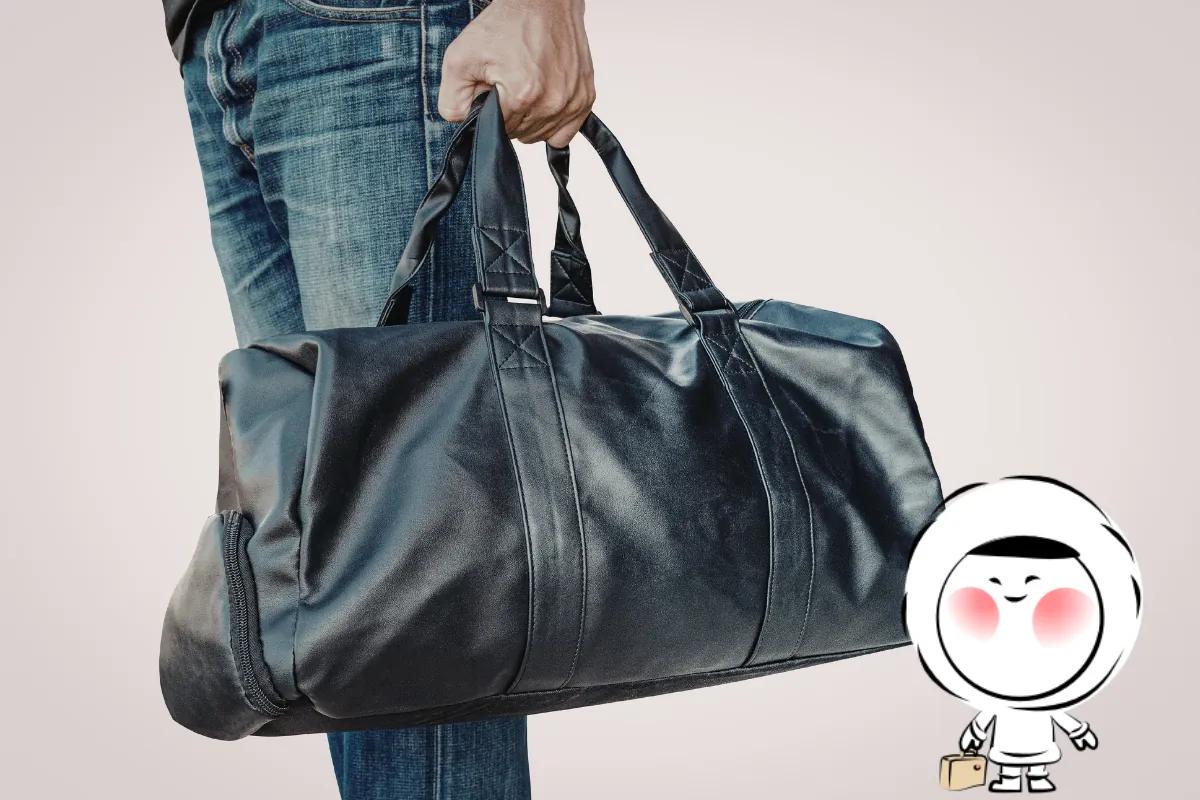
Sometimes. A small duffel can count if it fits under the seat and stays within the airline’s size allowance. A large duffel usually counts as a carry-on instead.
Can a tote bag count as a personal item?
Yes, often. Tote bags are one of the most common personal items, as long as they are small enough to fit under the seat.
What size personal item fits under an airplane seat?
There is no single answer for every airline. American publishes 18 x 14 x 8 inches, while Ryanair and easyJet publish different under-seat bag sizes. Always check your airline’s current rules before you fly.
Are personal item rules stricter on budget airlines?
Often, yes. Budget airlines are more likely to enforce precise under-seat bag limits because the free baggage allowance may be limited to one small personal item only. Ryanair and easyJet are good examples.
Is there a TSA personal item size limit?
No single TSA size rule applies across all airlines. TSA focuses on security screening. Your airline decides what size counts as a personal item.