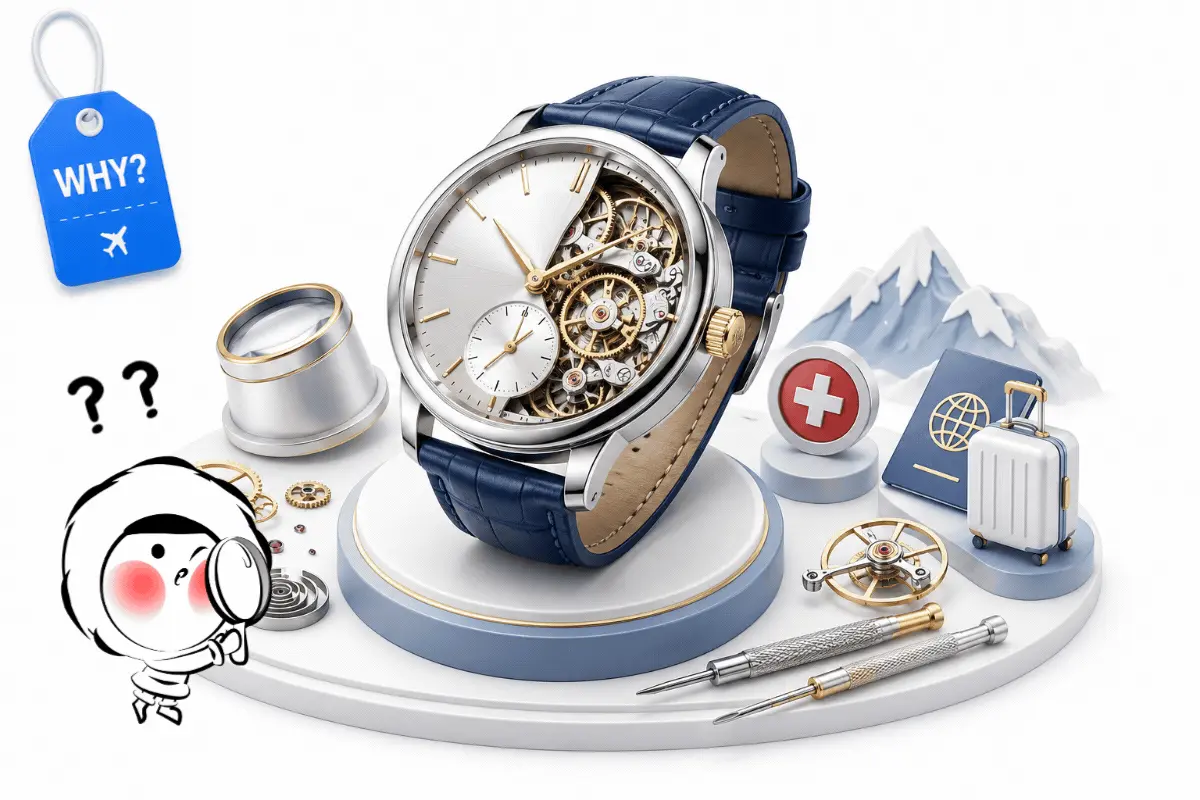
A mechanical Swiss watch is a tiny machine. It uses springs, gears, wheels, screws, jewels, and other small parts to measure time without a battery.
Those parts need to be made precisely, assembled carefully, adjusted, tested, and protected inside a case small enough to sit comfortably on the wrist. A simple three-hand mechanical watch already takes skill. Complicated watches take much more work.
Prices can rise when a watch includes features such as:
- Chronograph timing
- Annual calendar
- Perpetual calendar
- Moonphase display
- Minute repeater
- Tourbillon
Some expensive Swiss watches look simple from the outside. The costly part is often hidden under the dial.
Craftsmanship Adds Time And Value
Luxury Swiss watches often involve hand assembly, polishing, regulation, inspection, and finishing. High-end movements may include polished bevels, Geneva stripes, perlage, engraved rotors, heat-blued screws, or hand-finished bridges.
These details are small, but they take time. They also require trained watchmakers who understand tiny tolerances and delicate mechanical adjustment.
That human skill is one of the main reasons luxury Swiss watches cost far more than basic timepieces. The watch is not only assembled. It is refined, tested, and finished until it meets the brand’s standard.
Premium Materials Raise The Price
Many Swiss luxury watches use high-grade stainless steel, titanium, ceramic, sapphire crystal, gold, platinum, diamonds, mother-of-pearl, or advanced alloys.
Even stainless steel can be expensive when the case, bracelet, clasp, crown, bezel, dial, hands, and crystal are carefully engineered. A good bracelet has to feel smooth, sit well on the wrist, resist wear, and match the finishing of the case.
Precious metals, gem setting, ceramic bezels, and complex case construction can push prices much higher.
Swiss Made Has Legal Standards
“Swiss Made” is not just a nice phrase printed on the dial. For watches, it is tied to legal and industry requirements. The Federation of the Swiss Watch Industry explains that a watch must meet criteria around Swiss production value, Swiss movement, casing-up in Switzerland, and final inspection in Switzerland to qualify as Swiss Made.
These rules help protect the reputation of Swiss watchmaking. They also give travelers more confidence when comparing watches in Geneva, Zurich, Lucerne, Interlaken, or other Swiss cities.
Heritage Shapes The Price
Swiss watch brands often carry decades or centuries of history. Some are linked with diving, aviation, motorsport, mountaineering, space exploration, scientific timing, or royal clients.
That history has value in luxury. Buyers are not only paying for a device that tells time. They are paying for design, trust, heritage, collector appeal, and the story behind the name.
Rolex is known for recognition and demand. Omega has strong links to space history and sports timing. Patek Philippe is associated with complicated watchmaking and generational collecting. Vacheron Constantin is valued for tradition and fine finishing.
The brand story becomes part of the price, tucked inside the watch like a second movement.
Get Eskimo eSIM to stay connected globally
Need internet? Here's what we recommend:

Fixed data plans
- No speed reduction
- No expiry, keep your data forever
- Transfer data to anyone
- Personal hotspot


Limited Supply Can Increase Demand
Some Swiss watches are expensive because demand is higher than availability. Popular models from Rolex, Patek Philippe, and Audemars Piguet can be difficult to buy at retail, especially in major shopping cities.
When production is controlled and demand stays strong, resale prices can rise. This often happens with certain steel sports watches. They may not use gold or diamonds, but their popularity can make them more expensive than heavier precious-metal watches from less in-demand brands.
That does not mean every Swiss watch is an investment. Many watches lose value after purchase. The safer reason to buy one is because you enjoy the design, fit, craftsmanship, and long-term ownership.
Buying A Swiss Watch In Switzerland
Switzerland is one of the best places to experience watch culture, but it is not always the cheapest place to buy a Swiss watch. Final value depends on retail price, exchange rate, card fees, tax refund eligibility, and import duties when you return home.
Before buying, it helps to:
- Buy from an official boutique or authorized dealer
- Ask for the stamped international warranty card
- Keep the box, receipt, and papers
- Compare prices with your home country
- Ask about tax-free shopping before paying
- Check import rules before flying home
Switzerland’s customs authority explains the process for refunds of Swiss VAT for private individuals, including eligibility and export requirements.
Travelers planning a wider Switzerland route can pair watch shopping with Geneva, Zurich, Lucerne, Interlaken, and the Alps. These best places to visit in Switzerland can help with route ideas around the country.
Comparing Prices While Traveling In Switzerland
Swiss watch shopping often involves maps, exchange rates, boutique messages, tax refund details, and quick price checks between cities. Mobile data is useful when you are moving between train stations, shopping streets, and hotel Wi-Fi.
For Switzerland, Eskimo offers a Switzerland eSIM plan for travelers who want data without changing physical SIM cards. Eskimo fixed data plans allow hotspot sharing, which can help when comparing prices on another device or sharing data with a travel partner. New users can also claim free 500MB of Global Data before traveling.
FAQs:
Why Are Swiss Watches So Expensive?
Swiss watches are expensive because they use precise mechanical movements, skilled craftsmanship, premium materials, strict testing, brand heritage, and strong global demand.
Are All Swiss Watches Expensive?
No. Brands such as Swatch, Tissot, Certina, Mido, and Hamilton offer more affordable Swiss-made watches. The highest prices usually come from luxury mechanical brands.
Are Swiss Watches Worth Buying?
Swiss watches can be worth buying if you value craftsmanship, design, heritage, and long-term ownership. They are less worth it if you only need accurate timekeeping.
Should I Buy A Swiss Watch In Switzerland?
Buying a Swiss watch in Switzerland can be memorable, especially from official boutiques. It is not always cheaper, so compare the final price after tax refund rules, exchange rates, and import duties.