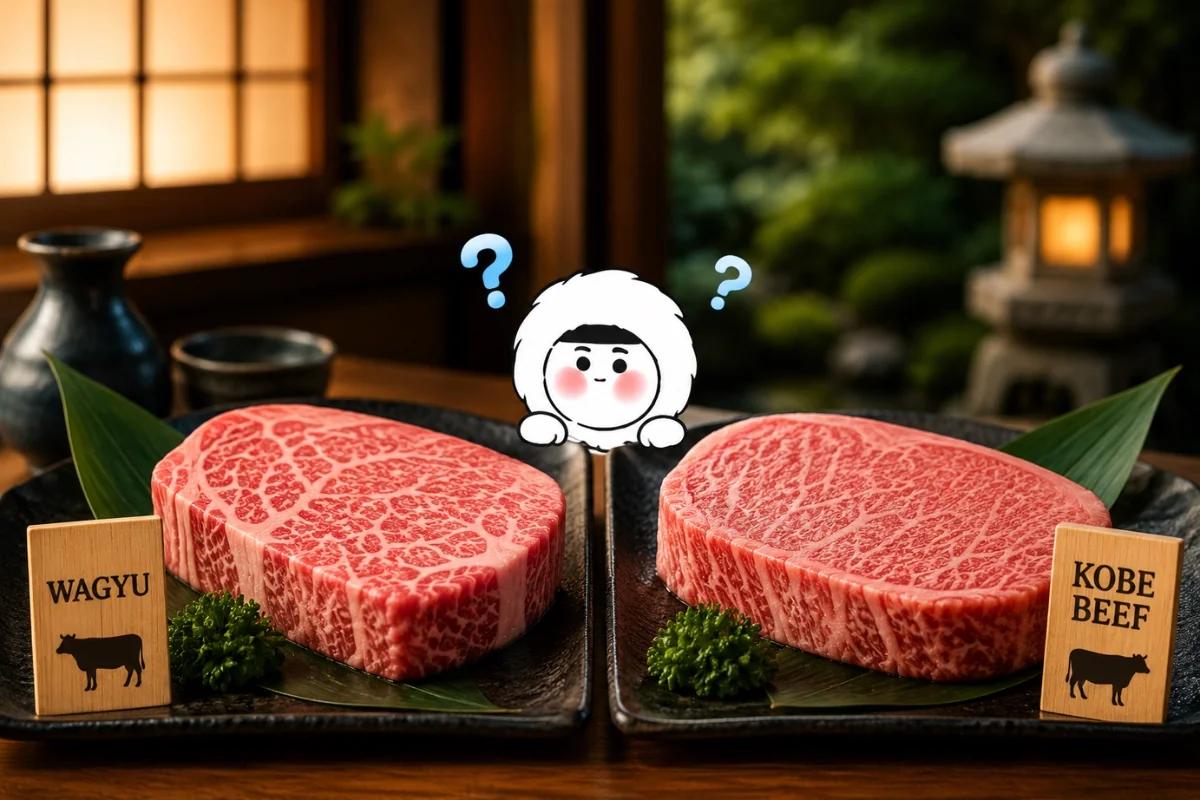
Wagyu vs Kobe beef is easy to understand once you know the main rule: all Kobe beef is wagyu, but not all wagyu is Kobe beef. Wagyu means Japanese cattle, while Kobe beef is a certified type of wagyu from Tajima cattle raised in Hyogo Prefecture. For travelers in Japan, the better choice depends on your budget, route, and how special you want the meal to feel.
Kobe beef is the famous name. Wagyu is the wider world. If you want the most iconic experience, Kobe beef is worth considering, especially in Kobe or nearby Osaka and Kyoto. If you want more flexibility, regional wagyu can be easier to find, less expensive, and still excellent.
Wagyu vs Kobe Beef: Quick Comparison
| Comparison | Wagyu | Kobe Beef |
| Meaning | Japanese beef from specific wagyu cattle breeds | A certified type of wagyu from Hyogo Prefecture |
| Origin | Many regions across Japan | Tajima cattle raised in Hyogo |
| Certification | Depends on brand, grade, and restaurant sourcing | Certified by the Kobe Beef Marketing & Distribution Promotion Association |
| Common experience | Yakiniku, steak, sukiyaki, shabu-shabu, rice bowls | Premium steak, teppanyaki, special tasting courses |
| Best for | Trying high-quality Japanese beef at different budgets | A special food experience with official certification |
What Is Wagyu?
Wagyu means “Japanese cattle.” In restaurants, it usually refers to Japanese beef known for fine marbling, soft texture, and rich fat. The word does not describe one single brand.
Japan has many regional wagyu names. Kobe beef is one of them, but travelers may also see Matsusaka beef, Omi beef, Hida beef, Miyazaki beef, Yonezawa beef, and other local names. Each has its own reputation and flavor profile.
Wagyu can be served in many styles:
- Teppanyaki: steak cooked on a hot iron plate
- Yakiniku: grilled beef in small pieces
- Sukiyaki: thin beef slices cooked in sweet-savory sauce
- Shabu-shabu: thin beef slices dipped in hot broth
- Wagyu sushi: a small bite of beef served over rice
- Wagyu rice bowls: a more casual way to try the flavor
For first-time visitors, wagyu does not need to mean the most expensive dinner. A lunch set, yakiniku platter, or smaller tasting portion can be a smart way to enjoy it without spending too much.
What Is Kobe Beef?
Kobe beef is a certified type of wagyu from Tajima-gyu cattle raised in Hyogo Prefecture. The official Kobe Beef Marketing & Distribution Promotion Association manages certification, standards, and official restaurant listings.
This certification is what makes Kobe beef different from general wagyu. A restaurant cannot simply call any expensive marbled beef “Kobe beef” unless it meets the official requirements.
For travelers, this matters because “Kobe-style beef” and real Kobe beef are not the same. If the menu says Kobe beef, the restaurant should be able to show proof or appear in an official Kobe beef restaurant listing.
Kobe beef is usually rich, soft, and deeply marbled. The portion may be smaller than a typical steak because the beef is intense. A few slices can be enough to understand why it is famous.
Is A5 Wagyu The Same As Kobe Beef?
No. A5 wagyu and Kobe beef are not the same thing.
A5 is a grade. Kobe beef is a certified brand. A5 tells you about yield and meat quality under Japan’s beef grading system. It does not tell you the beef is from Kobe.
The Japan Meat Information Service Center explains that Japanese beef grading uses a yield grade from A to C and a meat quality grade from 1 to 5. Quality grading looks at factors such as marbling, meat color, firmness, texture, and fat quality.
That means you can find A5 wagyu from several regions in Japan. Some Kobe beef may be A5, but not every A5 wagyu is Kobe beef.
For travelers, the main takeaway is simple:
- Choose A5 wagyu if you want very rich, highly marbled Japanese beef.
- Choose Kobe beef if you want certified beef from Hyogo with the famous Kobe name.
- Choose A4 wagyu if you want something rich but a little more balanced.
Which One Should Travelers Try?
Choose Kobe beef if the meal itself is part of your travel goal. It is a strong choice for a birthday dinner, honeymoon meal, food-focused itinerary, or first visit to Kobe.
Choose wagyu if you want more options. You can find excellent wagyu in Tokyo, Osaka, Kyoto, Hokkaido, Kyushu, and other parts of Japan. It can also be easier to match with your budget.
Wagyu is also more flexible for different dining styles. Yakiniku is good for groups because you can order several cuts. Sukiyaki is comforting and classic. Teppanyaki feels more premium. A lunch course is often the best value.
If your Japan trip is built around food, wagyu pairs naturally with sushi, ramen, tempura, kaiseki, matcha desserts, and other dishes in a wider traditional Japanese food list.
Get Eskimo eSIM to stay connected in Japan
Need internet in Japan? Here's what we recommend:

Fixed data plans
- No speed reduction
- No expiry, keep your data forever
- Transfer data to anyone
- Personal hotspot



Unlimited data plans
- Unlimited day pass
- Daily 3GB high-speed + 1Mbps unlimited after
- Personal hotspot


Where To Try Wagyu And Kobe Beef In Japan
Kobe is the most meaningful place to try Kobe beef. The city is easy to reach from Osaka and Kyoto, so it can work as a lunch stop or half-day food trip. Areas around Sannomiya and Motomachi have many steak and teppanyaki restaurants.
Osaka is also practical. It has many yakiniku, steak, and casual wagyu restaurants, making it a good place to compare price ranges.
Kyoto is better for a slower dining experience. Wagyu can appear in kaiseki-style meals, sukiyaki restaurants, and refined steak courses.
Tokyo has the widest selection, from luxury teppanyaki restaurants to casual wagyu bowls. Prices can be high in premium districts, so lunch menus are worth checking.
Before booking, look for:
- whether the restaurant serves certified Kobe beef or general wagyu
- the grade, cut, and portion size
- lunch course options
- reservation requirements
- service charges or minimum course rules
- English menu availability
For wider planning, basic Japan travel tips can help with train routes, cash, restaurant timing, and mobile data before you arrive.
How Much Does Wagyu Or Kobe Beef Cost In Japan?
Prices vary widely by restaurant, city, cut, grade, and meal style. A casual wagyu bowl may be affordable, while a premium Kobe beef teppanyaki dinner can become one of the most expensive meals of the trip.
A simple way to plan your budget:
- Lower budget: wagyu rice bowl, lunch set, or small tasting plate
- Mid-range: yakiniku with several wagyu cuts
- Premium: A5 wagyu steak course
- Special occasion: certified Kobe beef teppanyaki or steak dinner
Lunch is often better value than dinner. Many restaurants offer smaller portions or set menus during the day, which can be ideal for travelers who want the experience without a heavy evening bill.
How To Avoid Fake Kobe Beef
The safest way is to use official sources and ask clear questions. Real Kobe beef should be certified.
Before ordering, check whether:
- the restaurant is listed by the official Kobe beef association
- the menu clearly says certified Kobe beef
- staff can explain the origin
- the restaurant can show a certificate or identification number
- the wording says “Kobe beef,” not only “Kobe-style” or “Kobe-inspired”
This is especially important outside Japan, where the term Kobe is sometimes used loosely. In Japan, certification is usually easier to verify, but it is still worth checking before paying premium prices.
Tips For Ordering Wagyu In Japan
Order less than you think you need. Highly marbled wagyu is rich, and smaller portions often feel more enjoyable.
For a first meal, try one of these:
- Yakiniku: best for comparing different cuts
- Sukiyaki: best for a classic Japanese beef meal
- Teppanyaki: best for a premium steak experience
- Lunch course: best value for many travelers
- Small Kobe beef course: best for a special food memory
If you are unsure, ask for a recommendation based on richness. Some travelers love the buttery texture of A5. Others prefer a slightly leaner cut with a stronger beef flavor.
Find The Restaurant Without Losing The Route
A good wagyu or Kobe beef meal often depends on timing. Reservations, train transfers, map directions, and translation apps are easier when your phone is already connected.
For Japan trips, Eskimo offers Japan eSIM plans that help travelers stay online without changing a physical SIM card. New users can also claim free 500MB of Global Data before traveling.
That small data cushion can be useful for checking a booking confirmation, opening maps near the station, or translating a menu right before dinner.
FAQ
Is Kobe beef better than wagyu?
Kobe beef is a certified type of wagyu, not a separate category. It is famous and strictly controlled, but other regional wagyu in Japan can also be excellent.
Is A5 wagyu always Kobe beef?
No. A5 is a grade, while Kobe beef is a certified brand from Hyogo Prefecture. A5 wagyu can come from many regions in Japan.
Where is the best place to eat Kobe beef in Japan?
Kobe is the most iconic place to try it, especially for travelers already visiting Osaka or Kyoto. Tokyo, Osaka, and Kyoto also have restaurants that serve certified Kobe beef.
Is Kobe beef worth it in Japan?
Yes, if you want a special certified beef experience. If you mainly want to taste high-quality Japanese beef, regional wagyu may offer better value.
How do I know if Kobe beef is real?
Check whether the restaurant is officially listed by the Kobe Beef Marketing & Distribution Promotion Association or can show certification for the beef.
What is the best way to try wagyu for the first time?
Yakiniku or a lunch course is a good first choice. Both let you try wagyu without committing to a large, expensive steak dinner.