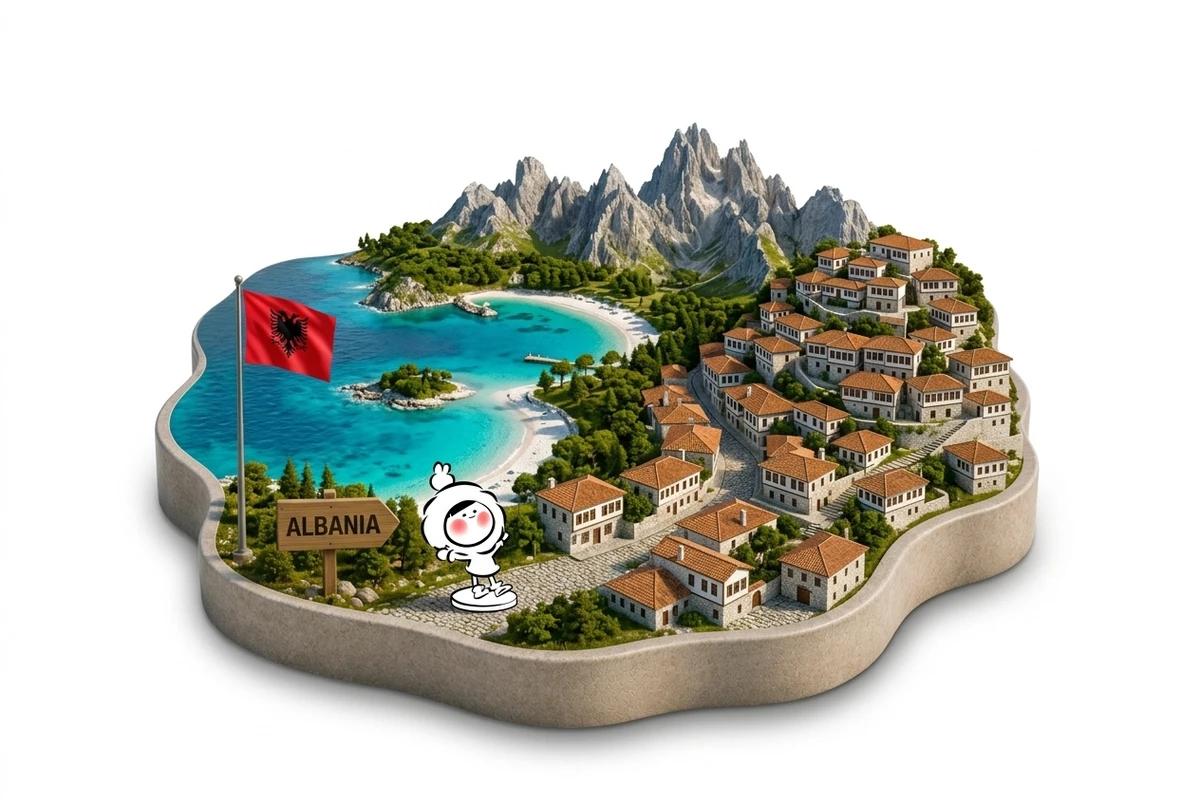
Albania works best as a multi-base trip: spend two days in the capital and Ottoman heritage towns, three to four days along the southern Ionian coast, and save northern mountain hiking for a dedicated extension. Allow seven to ten days for a balanced first visit. With less than a week, focus strictly on either the central cultural triangle or the southern coast to avoid losing entire days to mountainous road transfers.
The country suits travelers who want uncrowded historic fortresses, clear Adriatic and Ionian beaches, and rugged mountain hiking without Mediterranean resort prices. Short straight-line distances are misleading. Winding mountain passes, single-lane rural routes, and limited rail infrastructure mean journeys take longer than navigation maps suggest.
Albania frequently ranks among southern Europe’s top summer vacation spots, but experienced travelers know that visiting outside midsummer offers far better driving conditions and cooler sightseeing weather.
Best Places to Visit in Albania
Tirana and Krujë
Start in Tirana to understand modern Albania. Skanderbeg Square anchors the city center, surrounded by the pastel facade of the National Historical Museum, the 18th-century Et’hem Bey Mosque, and the underground Cold War bunker complex known as Bunk’Art 2. The surrounding Blloku district, once reserved exclusively for high-ranking communist officials, now serves as the capital’s central dining and cafe neighborhood.
An hour north by road, the hillside citadel of Krujë offers an easy half-day cultural excursion. Its restored stone bazaar sells traditional woven carpets and copper goods leading up to the medieval castle that served as the stronghold for national hero Gjergj Kastrioti Skanderbeg.
The Albanian Riviera: Sarandë, Ksamil and Himarë
The southern coastline along the Ionian Sea features some of the clearest water in the Mediterranean. Sarandë serves as the primary regional transport hub and ferry gateway to the Greek island of Corfu, but smaller towns along the coast offer more character.
Himarë provides a relaxed base with accessible town beaches and hillside olive groves. Further south, Ksamil is famous for its white-pebble coves and small offshore islands that swimmers can reach from the shore.
Summer brings dense beach crowds to Ksamil, making nearby archaeological ruins at Butrint a welcome morning excursion. Butrint holds an ancient Greek theater, Roman baths, and a Venetian fortress set within a quiet forested lagoon.
UNESCO Historic Towns: Berat and Gjirokastër
Two inland cities preserve centuries of Ottoman architectural heritage under a shared UNESCO World Heritage listing.
Berat, known as the town of a thousand windows, rises steeply above the Osum River. White stone houses with timber frames stack against the hillside beneath an inhabited 13th-century fortress that houses Byzantine churches and family-run guesthouses.
Further south, Gjirokastër features hillside lanes paved with distinctive limestone cobblestones. The town’s fortified stone tower houses, known locally as kulla, date to the 18th and 19th centuries.
The massive Gjirokastër Castle overlooks the Drino Valley and displays military artifacts and a captured vintage military jet.
The Accursed Mountains: Theth and Valbona
The Albanian Alps in the far north offer remote valley scenery and alpine trekking. The classic route links the mountain hamlets of Theth and Valbona via a scenic 17-kilometer mountain pass. The trail takes six to eight hours to walk and remains accessible between June and October when winter snow melts.
Theth features traditional stone shingle roofs, the historic Lock-in Tower, and the clear waters of the Grunas Waterfall.
Travelers heading to or from the northern valleys often incorporate a passenger ferry ride across Lake Komani, where emerald water cuts through narrow vertical limestone canyons.
One-Week Albania Itinerary
A circular driving route starting and finishing in Tirana covers the country’s cultural landmarks and southern coastal highlights efficiently.
- Day 1: Tirana arrival and city center. Walk Skanderbeg Square, tour Bunk’Art 2, and spend the evening exploring cafes across the Blloku quarter.
- Day 2: Tirana to Berat. Drive two hours south to Berat. Explore the historic Mangalem and Gorica quarters, then walk up to the fortress for sunset views across Mount Tomorr.
- Day 3: Berat to Gjirokastër. Travel two and a half hours south through the Vjosa River valley. Tour Gjirokastër Castle and visit the fortified Zekate House.
- Day 4: Gjirokastër to Sarandë via the Blue Eye. Stop at the natural freshwater spring of Syri i Kaltër, where cold turquoise water bubbles up from a deep karst cave, before continuing to the coast.
- Day 5: Butrint National Park and Ksamil. Spend the morning exploring Butrint’s ruins before summer heat peaks, then spend the afternoon on the beaches around Ksamil or mirror-calm Pasqyra Beach.
- Day 6: Coastal drive along the Llogara Pass to Himarë. Follow the coastal highway north over the 1,027-meter Llogara Pass, which offers aerial panoramic views of the Ionian Sea before descending to Himarë.
- Day 7: Return to Tirana. Drive north past Vlorë and Durrës on the highway back to Mother Teresa International Airport in Tirana for your departure flight.
Get Eskimo eSIM to stay connected in Albania
Need internet in Albania? Here's what we recommend:

Fixed data plans
- No speed reduction
- No expiry, keep your data forever
- Transfer data to anyone
- Personal hotspot
Best Time to Visit Albania
May, June, September, and October offer the best travel conditions. Daytime temperatures hover between 22 and 28 degrees Celsius, road traffic remains manageable, and coastal hotels charge shoulder-season rates. Coastal water stays warm enough for comfortable swimming through mid-October.
July and August bring peak summer holidaymakers from across Europe. Temperatures regularly exceed 35 degrees Celsius, coastal highway traffic through Vlorë and Sarandë slows significantly, and beach umbrellas in Ksamil book out days in advance.
Winter from December through March brings frequent rain to coastal regions and heavy snow to the northern mountain passes. Northern trekking routes close, and many coastal restaurants shutter until Easter.
Getting Around Albania: Driving, Buses and Ferries
Renting a car provides the greatest flexibility for exploring rural regions and historic hillside towns. Major international car rental desks operate at Tirana International Airport.
Main highways connecting Tirana, Durrës, Vlorë, and Fier are paved and dual-carriageway in sections. Mountain roads, including stretches toward Gjirokastër and along coastal bluffs, require attentive driving due to tight hairpin curves and roaming livestock.
Drivers should review UK Foreign Travel Advice for Albania regarding road safety and local driving regulations before setting out.
Public buses and private minibuses, called furgons, connect major towns. Furgons run on flexible schedules, departing when full rather than adhering strictly to printed timetables. Fares are inexpensive and paid directly in cash to the driver or conductor.
In the northern mountains, the passenger and vehicle ferry across Lake Komani connects Koman to Fierzë in two and a half hours, cutting out hours of rough mountain roads between Shkodër and Valbona.
Costs and Practical Travel Tips
Albania remains one of the most budget-friendly European countries for dining, accommodations, and transport.
- Currency and payment: The official currency is the Albanian Lek (ALL). Cash is essential throughout the country. While large hotels and major supermarkets in Tirana accept credit cards, local guesthouses, taxis, furgons, and coastal beach bars deal exclusively in cash.
- ATMs and cash withdrawal: Bank ATMs charge varying foreign card fees. Credins Bank and OTP Bank generally offer clear fee disclosures during withdrawal. Carry sufficient cash when venturing into rural mountain areas like Theth where ATMs do not exist.
- Visas and entry: Passport holders from the United States, United Kingdom, European Union, Australia, and Singapore can enter Albania visa-free for tourism stays of up to 90 days within a 180-day period. Check the official Albanian tourism portal for seasonal border updates and airport transit guidelines.
- Drinking water: Tap water in major cities is treated but generally not recommended for drinking due to older municipal pipe systems. Bottled mineral water is cheap and widely available at corner markets.
Staying Connected Across Albania
Mobile connectivity helps travelers navigate rural switchbacks, check furgon minibus departures, book regional guesthouses, and translate restaurant menus in smaller towns.
Cellular reception is consistently fast and dependable across Tirana, Durrës, and major coastal towns along the Riviera, but signal naturally weakens inside deep mountain valleys around Theth, along the forested shores of Lake Komani, and through mountain road passes.
An Albania eSIM provides instant cellular data connectivity across Albania’s leading telecom networks as soon as your flight lands at Tirana airport.
Eskimo covers 175 countries and regions, which allows travelers combining Albania with Greece, Montenegro, North Macedonia, or Italy to move easily across Balkan border crossings without buying separate local SIM cards.
Unused fixed data comes with no expiration date, meaning any data remaining at the end of your Balkan trip stays in your account for future international travels.
New users can also claim a free 250MB Global eSIM.
Frequently Asked Questions About Albania Travel
Is Albania safe for tourists?
Albania is very safe for foreign tourists, including solo and female travelers. Violent crime against visitors is rare, and hospitality toward foreign guests is deeply ingrained in traditional Albanian culture, known as besa.
Standard precautions regarding pickpocketing apply around busy bus stations and crowded markets in Tirana.
Do I need cash in Albania?
Yes, cash is necessary for daily travel in Albania. Small restaurants, beach cafes, local minibuses, and traditional guesthouses rarely accept debit or credit cards.
Keep a supply of Albanian Lek on hand for minor purchases, entry tickets, and tips.
How many days do you need in Albania?
Seven to ten days is the ideal trip length for a first visit. This allows two days for Tirana and historical towns like Berat, three days along the southern Riviera beaches, and travel days to transition between bases comfortably.
Can you drink tap water in Albania?
Most locals and visitors drink bottled mineral water rather than tap water. While municipal water is treated, local piping infrastructure varies widely, making bottled water the safer choice for drinking and brushing teeth during short holidays.