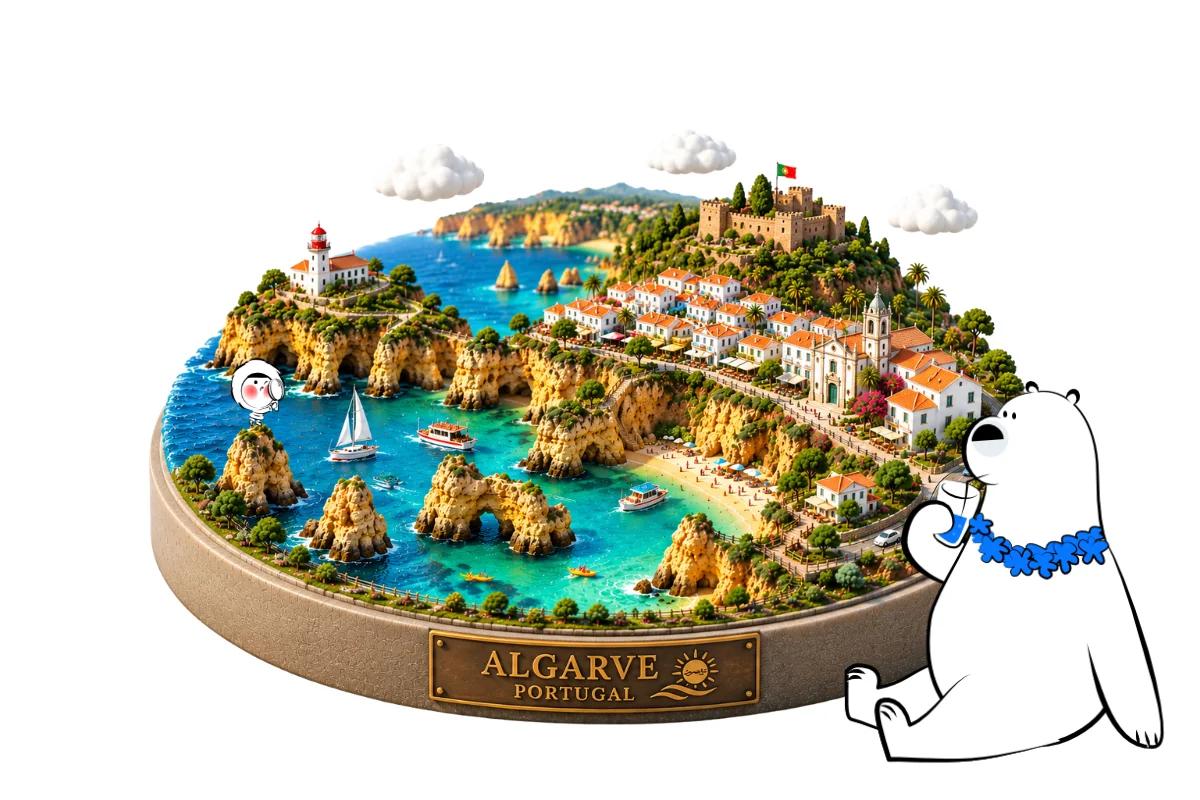
The Algarve is southern Portugal’s coastal region, best known for its limestone cliffs, Atlantic beaches and contrasting seaside towns. Lagos is a versatile first-time base; Tavira is quieter, Albufeira offers resorts and nightlife, and Faro works well for transport connections.
Plan five to seven days for a relaxed first visit. May, June and September are often the best balance of weather and crowds. A rental car helps with remote beaches, although it is not essential for town-based trips.
Where the Algarve Is
The Algarve is the southernmost region of mainland Portugal. Faro is its main airport gateway, while the coastline runs west toward Sagres and east toward the Spanish border. The western coast has exposed Atlantic beaches and surf; the central coast is known for limestone cliffs and resort towns; the east has sandy barrier islands and the Ria Formosa lagoon. Inland, Silves and Monchique offer castles, villages and hills away from the beach. For orientation, use the official Algarve map from Visit Portugal to compare towns and the coastline.
Best Places to Stay and Explore
Lagos: First-time visitors
Lagos combines a walkable historic center, restaurants and access to the dramatic Ponta da Piedade headland. It is a practical base for travelers who want a mix of beach time and sightseeing.
Albufeira: Resorts and nightlife
Albufeira has extensive accommodation, busy beaches and nightlife, particularly around the Strip. Families can choose quieter areas outside the nightlife center.
Faro: Transport and historic streets
Faro is convenient for airport arrivals and public transport. Its walled old town and access to Ria Formosa make it worth exploring rather than treating it only as a transfer stop.
Tavira: A quieter eastern base
Tavira has riverside streets, traditional buildings and access to the sandy Ilha de Tavira by boat. Check seasonal ferry routes before traveling.
Carvoeiro, Sagres and Silves
Choose Carvoeiro for coastal walks and nearby limestone formations, Sagres for surfing and exposed Atlantic scenery, or inland Silves for its castle and historic center.
Best Algarve Beaches
For striking cliff scenery, consider Praia da Marinha or Praia do Camilo. Both can become crowded, and Praia do Camilo requires a long staircase. Praia da Marinha also has a steep approach, so check access conditions before visiting. Praia da Falésia offers a longer sandy shoreline, while Ilha de Tavira has dunes and broad beaches reached by boat. Praia da Arrifana on the west coast attracts surfers, but conditions can be rough. Check lifeguard flags, tides and access before swimming; never stand beneath unstable cliffs.
Things to Do Beyond the Beach
Walk the viewpoints at Ponta da Piedade, explore the coastal Seven Hanging Valleys Trail, visit the markets in Olhão or Loulé, and take a boat excursion in Ria Formosa. For Benagil Cave, swimming into the cave, landing on its interior beach and renting kayaks without a guide are prohibited under the published rules. Use an authorized operator and check the Portimão maritime captaincy notices for amendments or temporary closures before booking.
Best Time to Visit
May, June and September usually offer the most comfortable balance of beach weather, outdoor sightseeing and lighter crowds. July and August are busiest and often cost more. October can still be pleasant, but rainfall becomes more likely, but for ensure all things, just check Portugal Public Holiday overview. Winter is mild by northern European standards, though swimming weather and seasonal services are less dependable.
Get Eskimo eSIM to stay connected in Portugal
Need internet in Portugal? Here's what we recommend:

Fixed data plans
- No speed reduction
- No expiry, keep your data forever
- Transfer data to anyone
- Personal hotspot



Unlimited data plans
- Unlimited day pass
- Daily 3GB high-speed + 1Mbps unlimited after
- Personal hotspot

Getting There and Getting Around
Faro Airport is the main international gateway. For Faro city, compare the local bus and taxi options; for Lagos or Albufeira, a prebooked transfer, rental car or bus connection may be more practical depending on luggage and arrival time. Lisbon is another option for a longer Portugal trip, with rail and bus connections south. Check live train schedules and fares through Comboios de Portugal. A rental car makes remote beaches and inland villages easier to reach, but Faro, Lagos and Tavira are among the easier bases without a car. Regional rail stations are sometimes outside beach areas, so check the last leg before choosing accommodation. The A22 motorway tolls were removed in January 2025; other roads may still charge tolls. The change is documented in Portugal’s published legislation. Check current road rules before driving.
How Long to Stay
Allow five to seven days for a first trip. With three days, stay around Lagos and focus on its old town, Ponta da Piedade and nearby beaches. With five days, add Carvoeiro and an inland stop such as Silves. With seven days, consider dividing your stay between the western or central coast and Tavira or Faro. Avoid treating this broad destination overview as a minute-by-minute route.
Algarve Travel Costs
Accommodation is often the largest expense, particularly in July and August. Rather than relying on a fixed daily budget, price your trip around four items: accommodation per night, airport and local transport, meals, and optional activities such as boat excursions.
Compare accommodation for your actual travel dates and check whether the quoted price includes taxes and parking. Travelers without a car may spend less on transport but should budget for occasional taxis to beaches beyond the rail and bus network. Booking in May, June or September can sometimes provide better value than peak summer.
Food and Practical Tips
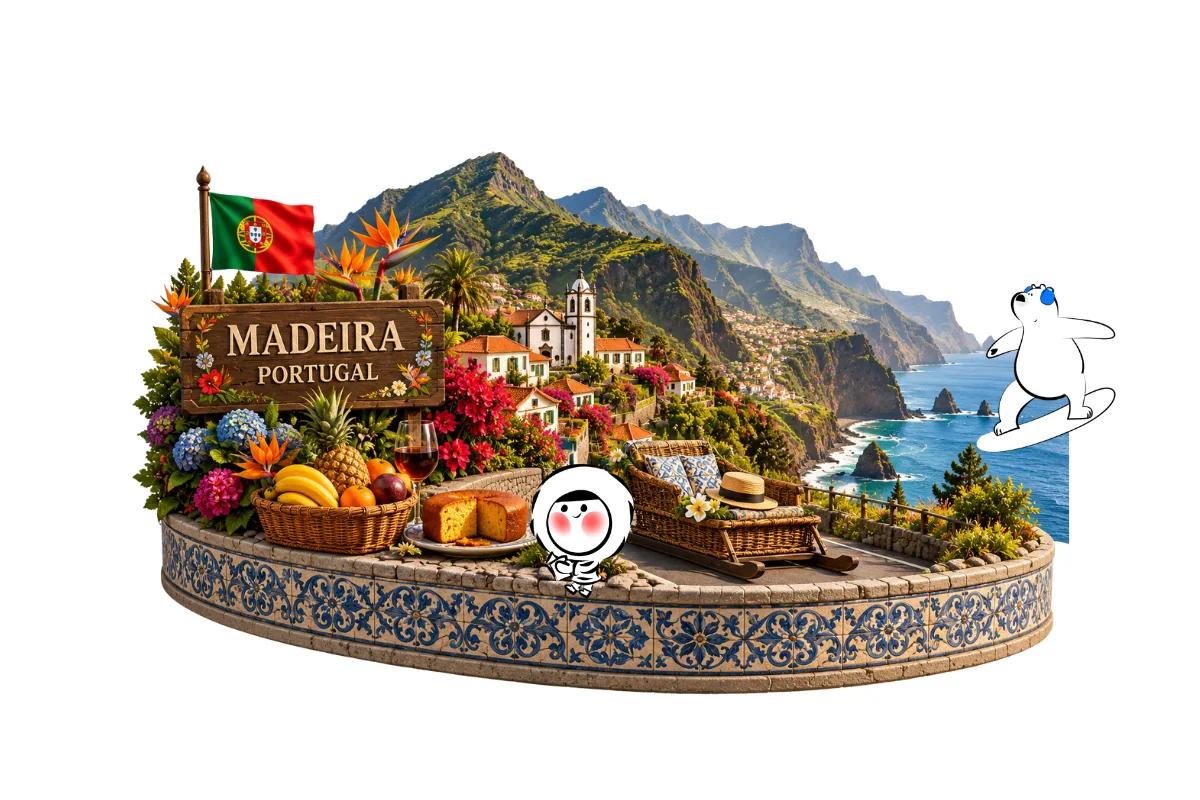
Try seafood cataplana, grilled sardines, piri-piri chicken and almond-based sweets. Book peak-summer lodging early, carry water for exposed coastal trails, and check whether beach access requires steep stairs. Atlantic water can be cool even in summer. Portugal is in the Schengen Area; entry requirements vary by passport and should be checked with the relevant official consular authority. Families comparing beach holidays can also consult Eskimo’s family travel destinations, which features the Algarve. For a different Portuguese landscape, Eskimo’s European islands overview discusses Madeira as a hiking-focused alternative.
Using Mobile Data Around the Algarve
Mobile data helps with coastal route navigation, regional train updates, parking searches near beach viewpoints and confirming boat departures around Lagos. Reception is generally stronger in towns and along major roads, while it may weaken in secluded coves and rural stretches.
For a Portugal-only trip, start by checking the Portugal destination in Eskimo’s eSIM plan selector and confirm the available Country plan before purchase. Eskimo’s overall coverage spans 175 countries and regions, useful for future international trips, although each plan has its own eligible destinations. On eligible fixed-data plans, unused data has no expiry, so it can remain available for a later journey.
New users can also claim a free 250MB Global eSIM.
FAQs
Where is the Algarve in Portugal?
The Algarve is the southernmost region of mainland Portugal, bordering the Atlantic Ocean and Spain. Faro is its principal airport gateway.
What is the best month to visit the Algarve?
September is a strong choice for warm weather and fewer peak-season crowds. May and June are also good for sightseeing.
Which Algarve town is best for a first visit?
Lagos is a versatile first-time base, with beaches, a historic center and coastal viewpoints nearby.
Do you need a car in the Algarve?
Not necessarily. Trains and buses connect major towns, but a car helps with remote beaches, rural stops and flexible day trips.
How many days are enough for the Algarve?
Five to seven days lets most travelers combine beaches, towns and a few excursions without rushing.