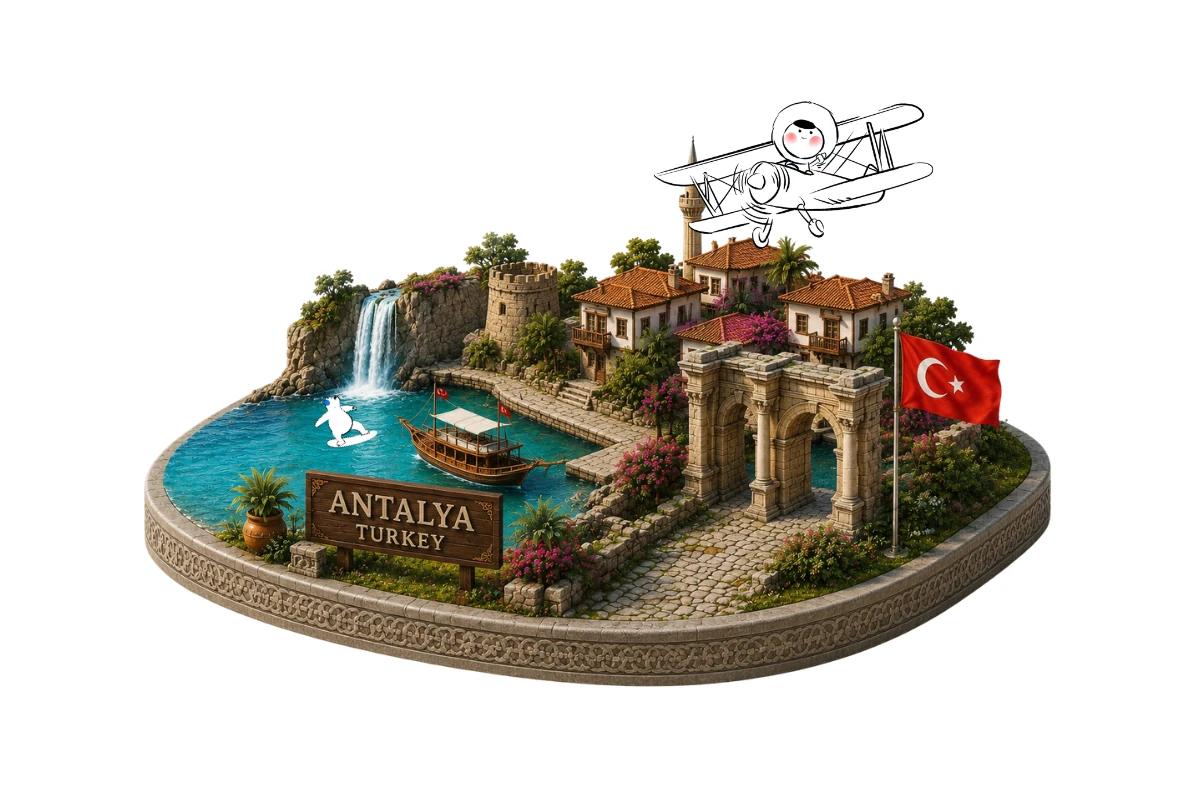
Antalya, Turkey, is worth visiting for its Mediterranean beaches, historic Old Town, nearby Roman ruins, waterfalls, resort areas, and warm climate. It works equally well for a short city break, a family beach holiday, or a longer road trip along Türkiye’s southern coast.
The city itself deserves at least three days. Five to seven days allows time for Kaleiçi, Konyaaltı and Lara beaches, Perge or Aspendos, a waterfall visit, and a relaxed day rather than turning the trip into a sunlit relay race.
Antalya has especially strong travel potential around attractions, beaches, weather, hotels, the airport, and Old Town planning.
Where Antalya Is
Antalya is on Türkiye’s southwestern Mediterranean coast, backed by the Taurus Mountains. It is the main urban and transport hub for a large coastal province that also includes resort destinations such as Kemer, Belek, Side, Kaş, and Alanya.
The city combines a working modern center with beaches, a historic harbour, residential neighborhoods, museums, restaurants, and major transport connections. This makes it more varied than a resort zone built mainly around hotels.
Travelers planning a broader Türkiye itinerary can compare Antalya with other must-visit cities in Turkey.
Best Things to Do in Antalya
Explore Kaleiçi Old Town
Kaleiçi is Antalya’s compact historic center and one of the best places to begin exploring the city.
Its narrow streets contain Ottoman-era houses, boutique hotels, cafés, restaurants, small museums, shops, mosques, and remnants from several historical periods. Hadrian’s Gate provides one of the main entrances and was built in Roman times in honour of Emperor Hadrian. The streets descend toward Antalya’s old Roman harbour.
Visit in the morning for quieter lanes, then return near sunset when restaurants and terraces become livelier. The stone streets can be uneven and steep, so comfortable footwear is far more useful than heroic optimism.
See Hadrian’s Gate
Hadrian’s Gate is one of Antalya’s best-preserved Roman structures and stands between the modern city and Kaleiçi.
The triple-arched gateway was built around 130 CE in connection with Emperor Hadrian’s visit. It is free to view and easy to include in a walking route through Old Town.
Walk Around the Old Harbour
The historic harbour sits below Kaleiçi and is lined with boats, cafés, viewpoints, and steep lanes.
Short sightseeing cruises often depart from this area, including trips toward the Lower Düden Waterfall. Prices, schedules, and routes vary, so check the boat operator before boarding rather than relying on handwritten signs from another season.
Visit Lower Düden Waterfall
Lower Düden Waterfall is one of Antalya’s most distinctive natural attractions because the river drops directly from the cliffs into the Mediterranean.
The waterfall lies toward Lara, around eight kilometers from the city center. It can be viewed from the surrounding park or from selected boat trips departing near Kaleiçi.
Wind can carry spray across the viewpoints, and the midday sun can be intense. Morning or late afternoon generally feels more comfortable.
Visit Antalya Museum
Antalya Museum is a strong choice for understanding the ancient cities scattered across the region.
Its collections cover archaeology from prehistoric periods through the Roman era, including sculptures and objects recovered from sites around Antalya. The museum is near the western side of the city and can be combined with Konyaaltı Beach.
Opening hours and ticket arrangements can change, so confirm them through Türkiye’s official museum channels before visiting.
Antalya Old Town
Antalya Old Town is the best area for travelers who want atmosphere, historic architecture, restaurants, and evening walks within a compact area.
Kaleiçi contains accommodation ranging from small guesthouses to restored boutique properties. Staying inside the walls is convenient for sightseeing, but taxis may not reach every narrow lane, and nightlife can create noise around busy streets.
Choose a hotel near the outer edge of Old Town if you are carrying heavy luggage or planning frequent day trips. Stay deeper inside Kaleiçi if the historic setting matters more than vehicle access.
Best Antalya Beaches
Konyaaltı Beach
Konyaaltı is one of Antalya’s two main city beaches. It lies west of the center and stretches for around seven kilometers toward the Beydağları Mountains.
The beach is mostly pebbly, with clear water, a long promenade, cafés, parks, hotels, and beach facilities. The dramatic mountain backdrop makes it one of the most recognizable Antalya beaches.
The water can deepen quickly in places, so families should supervise children carefully and check local sea conditions.
Lara Beach
Lara lies east of central Antalya and is better known for sand, broad resort areas, and large hotels.
The official tourism description places Lara Beach southeast of the city center and highlights its wide beach and fine sand. Public and commercially managed sections offer different levels of facilities, including loungers, food, showers, and entertainment.
Lara suits travelers prioritizing an all-inclusive resort or a classic beach-holiday setup. It is less convenient than Kaleiçi for walking to historic sights.
Çıralı and Olympos
Çıralı is farther from Antalya city and combines a beach with access to the ancient city of Olympos and the forested coastal landscape.
The area is quieter and more rural than central Antalya. It works best as a day trip with transport arranged in advance or as a separate overnight stop along the coast.
Ancient Cities Near Antalya
Perge
Perge is one of the most important ancient sites near Antalya and is known for its colonnaded streets, stadium, baths, gates, and Roman urban remains.
It is close enough for a half-day visit from the city and pairs well with Antalya Museum, where several sculptures from the wider region are displayed.
Shade is limited, so bring water, sun protection, and footwear suitable for uneven stone.
Aspendos
Aspendos is best known for its large Roman theatre, one of the region’s most impressive surviving structures.
The site sits east of Antalya and can be combined with Perge on an organized tour or independent day trip. Event access, restoration work, and opening arrangements can change, so check official cultural heritage information before traveling.
Side
Side combines archaeological remains, a coastal town, beaches, restaurants, and a harbour.
Its Temple of Apollo is especially popular around sunset. Side is farther from Antalya than Perge, so allow most of a day and factor in summer traffic.
Travelers interested in the region’s historical scale can continue through Eskimo’s overview of famous landmarks in Europe.
Get Eskimo eSIM to stay connected in Turkey
Need internet in Turkey? Here's what we recommend:

Fixed data plans
- No speed reduction
- No expiry, keep your data forever
- Transfer data to anyone
- Personal hotspot



Unlimited data plans
- Unlimited day pass
- Daily 3GB high-speed + 1Mbps unlimited after
- Personal hotspot

Antalya Weather and Best Time to Visit
Antalya has hot, dry summers and milder, wetter winters.
April to June is one of the best periods for sightseeing, beaches, and outdoor day trips before the most intense summer heat.
July and August suit travelers focused on swimming and resort life, but temperatures, crowds, and accommodation prices are generally higher.
September and October often provide warm sea conditions with more comfortable sightseeing weather than midsummer.
November to March is quieter and better for Old Town, museums, and archaeological sites, although rain is more likely and some seasonal coastal businesses may reduce operations.
Weather varies from year to year. Check a current forecast before hiking, taking a boat trip, or visiting exposed archaeological sites.
Antalya Hotels and Resorts
Choose your accommodation area according to the trip rather than booking the first glamorous pool that floats across the screen.
Kaleiçi is best for history, restaurants, nightlife, and short city stays.
Konyaaltı suits travelers who want beach access while remaining connected to central attractions.
Lara is the main choice for large resorts, sandy beaches, and all-inclusive stays.
Belek lies outside the city and is associated with resort complexes and golf-focused holidays.
Before booking, check the exact location. Some properties marketed as Antalya hotels are many kilometers from the city center and may require taxis, transfers, or a rental car.
Antalya Nightlife
Antalya nightlife ranges from relaxed Old Town bars and harbour terraces to beach clubs, live music venues, and resort entertainment.
Kaleiçi has the greatest concentration of central evening venues. Konyaaltı combines beachfront cafés and bars, while Lara’s nightlife is more closely tied to hotels and resort complexes.
Dress codes and seasonal opening patterns vary. Keep noise in mind when choosing accommodation inside Old Town, especially around weekends.
Getting from Antalya Airport to the City
Antalya Airport is northeast of the city center and connects to central Antalya by road, public buses, taxis, and the AntRay tram.
The airport states that the drive from the center takes approximately 20 minutes under normal conditions. AntRay connects the airport with the city center, Antalya’s intercity bus terminal, and the Fatih direction. Municipal bus times can be checked using the Antalyakart application.
Antalya Airport has separate terminals, and the international terminals are not all directly beside one another. Free shuttle services operate between selected terminal buildings, so confirm your terminal before departure.
Allow extra time during summer because traffic, security queues, and terminal transfers can stretch a simple journey into a small administrative saga.
Getting Around Antalya
Public transport includes trams, buses, and local services using the Antalyakart payment system.
Walking works well inside Kaleiçi and nearby central districts, but Antalya is spread out. Beaches, waterfalls, museums, and outer neighborhoods may require public transport or taxis.
A rental car is useful for independent trips to ancient cities and coastal towns, but parking can be difficult around Old Town. Do not drive after drinking, and check local parking signs carefully.
Organized Antalya tours can be practical for Perge, Aspendos, Side, boat trips, or mountain excursions, especially when several dispersed sights are combined in one day.
A Three-Day Antalya Itinerary
Day one
Explore Hadrian’s Gate, Kaleiçi, the old harbour, and Karaalioğlu Park. Finish with dinner inside Old Town.
Day two
Visit Antalya Museum and spend the afternoon at Konyaaltı Beach. Return to the center for an evening walk or harbour view.
Day three
Choose Perge and Aspendos for history, or Lara Beach and Lower Düden Waterfall for a slower coastal day.
With additional time, add Side, Çıralı, Olympos, Kaş, or another destination along the Turkish Riviera.
Practical Antalya Travel Tips
Book hotels and airport transfers early for July, August, and major holiday periods. Turkey’s domestic travel demand can rise sharply around Bayram holidays, so review Turkey’s public holidays before fixing your dates.
Carry water and sun protection when visiting archaeological sites. Shade can be limited, especially around midday.
Use licensed taxis and ask for the meter to be used. Keep your accommodation address saved in Turkish.
Dress respectfully when entering mosques. Shoulders and knees should be covered, and visitors should avoid prayer times when possible.
Do not attempt to fit Kaleiçi, two beaches, Perge, Aspendos, and a waterfall into one day. Antalya rewards breathing room.
Mobile Data Around Antalya
Mobile data helps with AntRay routes, airport updates, attraction tickets, restaurant reservations, and navigation between beaches and ancient sites. Coverage is generally stronger in Antalya city and along major coastal roads, while reception may weaken in mountain areas, archaeological sites, tunnels, and remote coves.
An Eskimo Turkey eSIM plan can be prepared before arrival. Eskimo’s coverage across 175 countries and regions is useful for travelers continuing through Europe, the Caucasus, or the eastern Mediterranean, while no-expiry fixed data can remain available for another trip if the full allowance is not used in Türkiye.
New users can also claim free 500MB of Global Data.
FAQs:
FAQ
Is Antalya worth visiting?
Yes. Antalya is worth visiting for its beaches, Old Town, Roman ruins, waterfalls, resort areas, warm weather, and easy access to the Turkish Riviera.
How many days do you need in Antalya?
Three days is enough for Kaleiçi, one beach, a museum, and a nearby attraction. Five to seven days allows time for ancient cities, waterfalls, and a relaxed coastal day.
Which Antalya beach is better, Konyaaltı or Lara?
Konyaaltı is better for mountain views, a long promenade, and access from central Antalya. Lara is better for sand, large resorts, and an all-inclusive beach holiday.
What is the best time to visit Antalya?
April to June and September to October generally offer the best balance of warm weather, swimming conditions, and more comfortable sightseeing temperatures.
Can you get from Antalya Airport to the city by tram?
Yes. The AntRay tram connects Antalya Airport with the city center and the intercity bus terminal. Check current operating times through official airport or Antalyakart information before traveling.