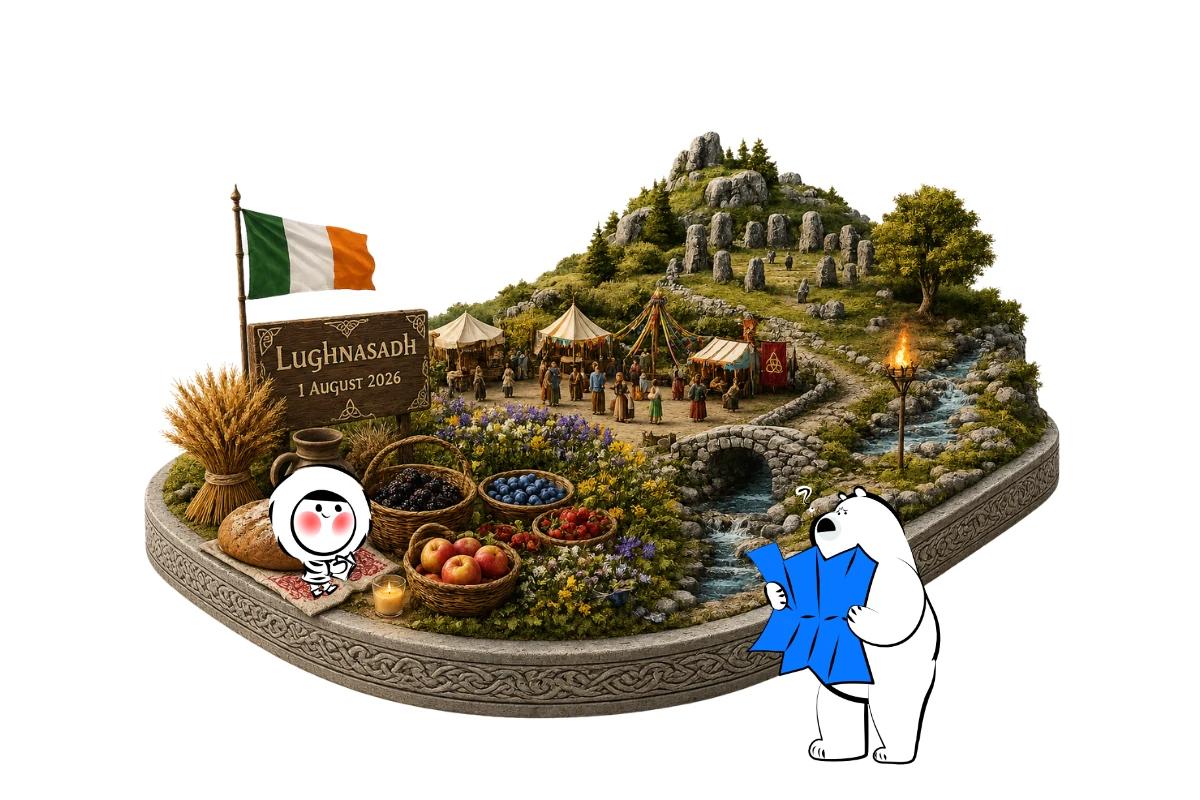
Lughnasadh is an ancient Gaelic festival marking the beginning of the harvest season. Traditionally associated with 1 August, it brought communities together for fairs, athletic contests, shared food, hill gatherings, and ceremonies connected with the first crops.
Lughnasadh 2026 falls on Saturday, 1 August. Ireland’s August public holiday follows on Monday, 3 August, although the modern holiday is not a formal nationwide reenactment of the ancient festival. Ireland officially observes a public holiday on the first Monday of August.
Lughnasadh Meaning And History
The name is commonly interpreted as the assembly or gathering of Lugh, a major figure in Irish mythology associated with skill, sovereignty, and the Tuatha Dé Danann.
Medieval tradition connects the festival with games and gatherings founded by Lugh in memory of Tailtiu, his foster mother. The story says she died after clearing land for agriculture, linking Lughnasadh with farming, sacrifice, and the beginning of the harvest.
Tourism Ireland identifies Lughnasa as one of ancient Ireland’s four main seasonal festivals, alongside Imbolc, Bealtaine, and Samhain. It traditionally opened the harvest period on Lá Lughnasa, 1 August.
The spelling varies. Lughnasadh is common in historical, spiritual, and international writing, while Lughnasa is a widely used modern Irish form. Lúnasa is also the Irish word for August.
Lughnasadh Traditions
Historic Lughnasadh traditions varied by place and changed over centuries. They were not one fixed ceremony followed identically across Ireland.
Community gatherings
People gathered at fairs, markets, sacred places, hills, wells, and other local meeting points. These occasions supported trade, matchmaking, music, storytelling, athletic competition, and the renewal of community ties.
Local survivals later appeared under names such as Garland Sunday, Bilberry Sunday, and Crom Dubh Sunday, sometimes held on different dates between late July and mid-August.
Hill and mountain visits
Climbing hills and mountains became one of the best-known seasonal customs. High places offered gathering grounds, pilgrimage routes, and symbolic links between the landscape, weather, and agricultural year.
Some modern hill walks are religious pilgrimages, some are community events, and others are contemporary interpretations. Visitors should respect local customs, private farmland, weather warnings, and protected heritage sites.
Fairs and athletic contests
Games, races, horse events, music, dancing, and contests formed part of the festival tradition. The legendary Tailteann Games are closely connected with Lughnasadh in Irish literature.
Modern cultural festivals may draw inspiration from these gatherings, but their programmes, dates, and historical claims vary. Check the organiser’s official information before planning a trip.
Lughnasadh Symbols
Common Lughnasadh symbols reflect harvest, food, seasonal change, and community.
- Grain and wheat: The first cereal crops and the work of harvesting
- Bread: Food made from the newly gathered grain
- Berries: Seasonal wild fruits traditionally collected in late summer
- Harvest tools: Labour, agriculture, and preparation for winter
- Hills and mountains: Historic gathering and pilgrimage places
- Sun imagery: The fading height of summer and movement toward autumn
- Yellow and gold: Ripening fields and late-summer light
Modern spiritual communities may use additional symbols, altar arrangements, or colours. These are living interpretations and should not automatically be presented as universal ancient Irish practices.
Lughnasadh Food And Recipes
Bread is the food most frequently associated with modern Lughnasadh celebrations because the festival marks the first grain harvest. A simple loaf, oat bread, soda bread, or seasonal fruit bake can provide a respectful connection to harvest themes.
Other suitable foods include:
- Blackberries, blueberries, and apples
- Oats and barley
- Potatoes and root vegetables
- Local cheeses
- Honey
- Seasonal vegetable soups
- Fruit pies and crumbles
The historical diet varied by period and region, so there is no single official Lughnasadh menu. Modern recipes often combine Irish ingredients with contemporary pagan or family traditions.
Get Eskimo eSIM to stay connected globally
Need internet? Here's what we recommend:

Fixed data plans
- No speed reduction
- No expiry, keep your data forever
- Transfer data to anyone
- Personal hotspot


How To Celebrate Lughnasadh
A Lughnasadh celebration does not require elaborate costumes or invented ritual language.
Simple ways to mark the season include:
- Bake bread and share it with others
- Visit a farmers’ market
- Prepare a meal using local seasonal produce
- Walk through the countryside without disturbing crops or livestock
- Learn about Irish mythology from reputable cultural sources
- Support a harvest festival, craft fair, or local producer
- Express gratitude to the people involved in growing and preparing food
- Donate food or contribute to a community meal
People following a contemporary pagan path may include personal blessings, offerings, meditation, or an altar. Fire should only be used where it is legal and safe, and nothing should be left at archaeological sites or natural landmarks.
Ireland’s Heritage Ireland sites provide a more responsible way to explore the country’s archaeology and cultural landscapes without treating ancient monuments as unregulated ritual spaces.
Lughnasadh Rituals And Blessings
There is no single historically verified Lughnasadh ritual suitable for every visitor or belief system.
A simple modern observance can focus on three ideas:
- Recognising the work behind the first harvest
- Sharing food with family, friends, or neighbours
- Reflecting on what has grown, changed, or reached maturity during the year
A short seasonal blessing may express gratitude for food, land, labour, and community without claiming to reproduce an ancient ceremony.
Avoid removing stones, plants, grain, or other objects from heritage sites and working farms. Respectful participation means leaving the landscape intact.
Lughnasadh And Lammas
Lughnasadh and Lammas occur around the same time, but their origins are different.
Lughnasadh developed from Gaelic seasonal and mythological traditions connected with harvest gatherings and Lugh.
Lammas comes from the Old English idea of “loaf mass,” a Christian observance involving bread made from the first grain harvest.
Over time, their dates, food customs, and harvest themes overlapped. Modern calendars sometimes use the names interchangeably, but they should not be treated as historically identical.
Lughnasadh In Ireland Today
Lughnasadh is not observed across Ireland through one standard national ceremony. Its legacy survives through the Irish name for August, folklore, hill gatherings, harvest events, fairs, seasonal customs, literature, and renewed cultural interest.
The first Monday in August is an Irish public holiday. The government has also described Ireland’s traditional seasonal festivals as reflected in the modern public-holiday calendar, including Lughnasadh in August.
Travelers visiting around this period should expect busier roads, popular accommodation, and local events during the long weekend. Eskimo’s overview of Ireland’s bank holidays in 2026 can help with closure and crowd planning.
Those interested in the landscapes, folklore, and historic sites behind the festival can also explore what to see and do in Ireland.
Mobile Data During An Ireland Festival Trip
Mobile data helps with event schedules, public transport updates, weather forecasts, and navigation to rural heritage sites during a Lughnasadh trip. Coverage is generally stronger in Irish cities, towns, and along major roads, while reception may weaken in mountain areas, isolated valleys, and remote stretches of countryside.
An Eskimo Ireland eSIM plan can be prepared before arrival. Eskimo’s coverage across 175 countries and regions is useful for travelers continuing to Northern Ireland, Great Britain, or elsewhere in Europe, while no-expiry fixed data can remain available for another trip if the full allowance is not used in Ireland.
New users can also claim free 500MB of Global Data.
FAQ
When is Lughnasadh 2026?
Lughnasadh falls on Saturday, 1 August 2026. Ireland’s August public holiday is Monday, 3 August 2026.
What does Lughnasadh celebrate?
Lughnasadh marks the beginning of the harvest season and is associated with community gatherings, first crops, fairs, contests, and the mythological figure Lugh.
How is Lughnasadh pronounced?
A common English approximation is “LOO-nuh-suh.” Pronunciation varies according to language, dialect, and spelling.
What foods are eaten at Lughnasadh?
Modern celebrations often include bread, grain dishes, berries, apples, honey, seasonal vegetables, and locally produced food. There is no single required menu.
Are Lughnasadh and Lammas the same festival?
No. Lughnasadh has Gaelic and mythological origins, while Lammas developed from an English Christian loaf-mass tradition. Their harvest themes and early-August timing later overlapped.