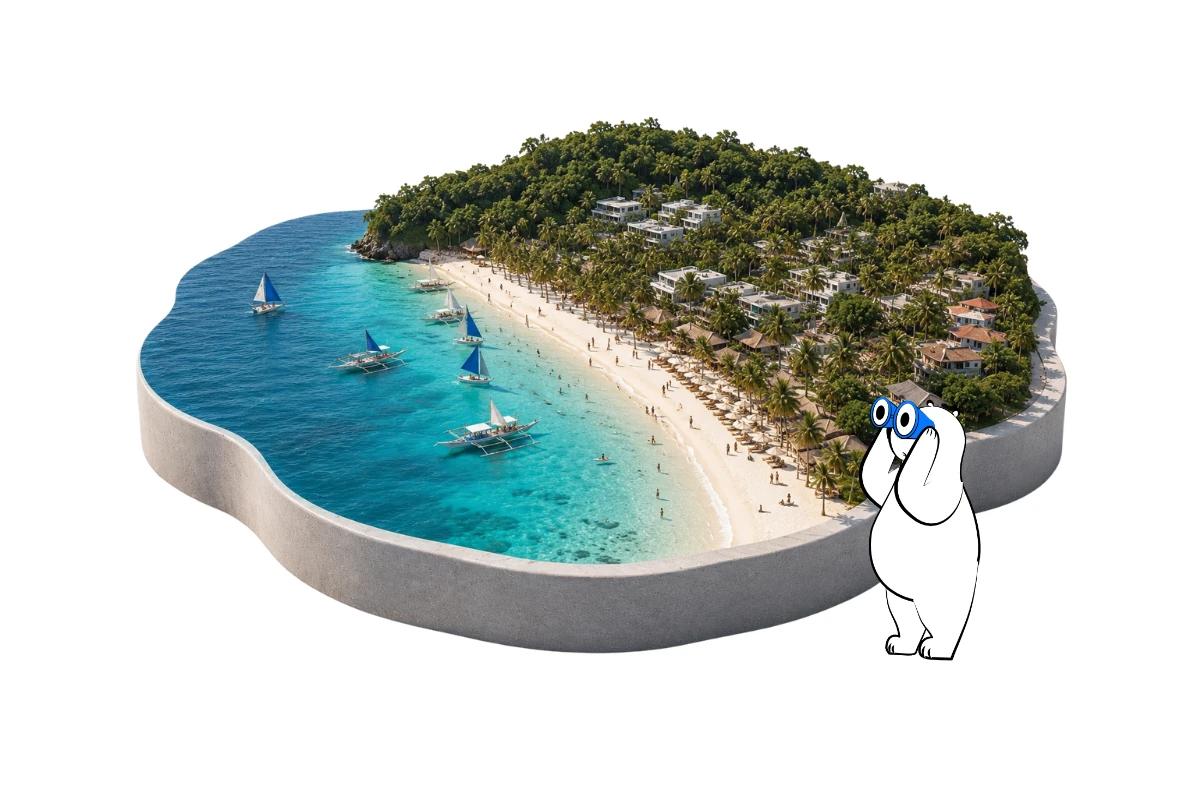
Boracay is best for travelers who want a straightforward beach holiday built around soft white sand, swimming, sunsets, watersports, restaurants, and lively evenings. Its compact size makes it easier to navigate than many Philippine islands, while its range of hotels suits budget trips, family holidays, and luxury stays.
Most visitors spend three to five days in Boracay. That is enough time to enjoy White Beach, take a boat trip, try several water activities, and leave room for slower mornings by the sea.
The main trade-off is popularity. White Beach and Station 2 can feel crowded during holidays and the dry season, so choosing the right travel dates and accommodation area makes a significant difference.
Where Boracay Is Located
Boracay is a small island in the municipality of Malay, Aklan, in the Western Visayas region of the Philippines. It lies just off the northwestern coast of Panay Island.
The island is divided into three barangays: Balabag, Manoc-Manoc, and Yapak. Most visitor activity is concentrated around White Beach, Bulabog Beach, and the northern resort areas. (Aklan Province)
Boracay is often included in longer Philippine itineraries with Manila, Cebu, Palawan, or nearby Panay. Travelers comparing island destinations can also see how Boracay fits among the best islands to visit.
The Best Time To Visit Boracay
The best time to visit Boracay is generally from November to May, when conditions are usually drier and the water along White Beach is calmer.
December to April offers some of the most reliable beach weather, but it is also the busiest period. Hotel rates often rise around Christmas, New Year, Lunar New Year, Holy Week, and long Philippine holiday weekends.
June to October brings the southwest monsoon, locally known as habagat. Rain becomes more likely, winds can be stronger along White Beach, and some boat activities may be delayed or cancelled. The advantage is lower accommodation pricing and fewer visitors. June and October can work as shoulder months, although conditions are less predictable. (Philippines Travel)
Travelers visiting during the wetter months should leave some flexibility in their schedule rather than booking every boat activity back to back.
How To Get To Boracay
Boracay does not have an airport on the island. Most travelers fly to either Caticlan or Kalibo before continuing by road and boat.
From Caticlan Airport
Caticlan Airport, also called Godofredo P. Ramos Airport, is the closest airport to Boracay.
From the airport, take a short transfer to Caticlan Jetty Port. After completing registration and paying the applicable boat, terminal, and environmental fees, cross to Boracay by boat. The journey usually continues from Cagban Port to the hotel by e-tricycle or arranged transfer.
Caticlan is normally the fastest and simplest option, particularly for a short trip.
From Kalibo Airport
Kalibo Airport is farther away but may offer cheaper or more convenient flights.
The land transfer from Kalibo to Caticlan usually takes around two hours, depending on traffic and the type of transport. Travelers then follow the same port and boat process to enter Boracay.
Boracay Entry And Port Fees
Visitors should expect boat fares, terminal charges, and an environmental fee. These charges can change, so check the latest amount before departure.
Aklan Province encourages travelers to register and settle applicable fees through the official LezzGo Boracay system. The platform generates a registration QR code that can be presented at the jetty port. On-site payment may also be available, but completing the process online can reduce paperwork on arrival. (Aklan Province)
Keep a digital copy of your hotel booking, valid identification, payment confirmation, and QR code accessible during the transfer.
Where To Stay In Boracay
The best area depends on how much activity, nightlife, and privacy you want.
Station 1
Station 1 has a broad section of White Beach and many of the island’s higher-end resorts. It suits couples, families, honeymooners, and travelers who prefer a quieter beachfront while remaining within walking distance of central Boracay.
Accommodation is generally more expensive than in Stations 2 and 3.
Station 2
Station 2 is the busiest and most convenient part of the island. It is close to D’Mall, restaurants, shops, bars, activity operators, and evening entertainment.
Choose Station 2 for easy access to almost everything. Light sleepers and travelers seeking a peaceful beach retreat may prefer another area.
Station 3
Station 3 has a more relaxed atmosphere and a wider selection of budget-friendly accommodation. It is still connected to the rest of White Beach by the beachfront path.
It works well for backpackers, longer stays, and travelers who want a quieter base without moving far from the main beach.
Bulabog Beach And Northern Boracay
Bulabog Beach is popular for kiteboarding and wind-dependent activities, particularly during the northeast monsoon. It is also conveniently located behind central White Beach.
Northern areas such as Yapak offer larger resorts, quieter surroundings, and beaches including Puka Beach. They can feel more removed from restaurants and nightlife, so check whether the hotel provides shuttle transport.
The Best Beaches In Boracay
White Beach
White Beach is Boracay’s defining attraction. Its long shoreline is divided into Stations 1, 2, and 3, each offering a different balance of resorts, restaurants, nightlife, and quieter sand.
The water is often calmest during the dry season. Sunset is the busiest period, when visitors gather along the beachfront and paraw sailing trips head onto the water.
Puka Beach
Puka Beach sits toward the northern end of Boracay. It has a less developed setting than central White Beach, although day tours and road transfers still bring regular crowds.
The sand is coarser in places, the water can become deeper more quickly, and conditions may be rougher. It is better for scenery and a change of atmosphere than for guaranteed calm swimming.
Bulabog Beach
Bulabog Beach lies on the eastern side of the island. It is the main base for kiteboarding and other wind-driven watersports during suitable seasonal conditions.
The beachfront is narrower and more activity-focused than White Beach. It is also a useful area for sunrise walks and quick access to central Boracay.
Diniwid Beach
Diniwid Beach is a small cove north of White Beach. It offers a quieter setting with a handful of hotels and restaurants.
It can be reached by road or, when access conditions allow, by following the coastal path from the northern end of White Beach.
Get Eskimo eSIM to stay connected globally
Need internet? Here's what we recommend:

Fixed data plans
- No speed reduction
- No expiry, keep your data forever
- Transfer data to anyone
- Personal hotspot


The Best Things To Do In Boracay
The official Philippine tourism board highlights White Beach, paraw sailing, island hopping, snorkeling, paddleboarding, parasailing, kiteboarding, seafood, and nightlife among Boracay’s main experiences. (Love the Philippines)
Popular activities include:
- Walking the full length of White Beach
- Taking a sunset paraw sailing trip
- Joining an island-hopping or snorkeling tour
- Trying paddleboarding, parasailing, or helmet diving
- Learning to kiteboard at Bulabog Beach
- Booking a scuba-diving trip
- Visiting Puka Beach
- Watching the sunset from the beachfront
- Exploring restaurants around D’Mall and the three stations
- Spending an unplanned morning swimming or reading by the sea
Prices vary between operators, seasons, group sizes, and private or shared tours. Compare what is included before booking, especially transport, equipment, environmental charges, meals, and underwater photography.
Weather and marine conditions can affect departures. Confirm the meeting point and cancellation policy before paying.
Getting Around Boracay
Boracay is compact, and much of White Beach is easiest to explore on foot.
E-tricycles are the main option for longer trips between stations, beaches, ports, and inland hotels. Fares depend on distance and whether the ride is private or shared, so confirm the price before departure.
Some resorts provide scheduled shuttle services to D’Mall or White Beach. Ask about frequency and operating hours before booking a hotel in the northern part of the island.
Motor vehicles are restricted in some beachfront areas, which keeps much of the White Beach path pedestrian-friendly.
Food And Nightlife
Boracay has one of the broadest dining selections among Philippine beach destinations. Choices range from local eateries and seafood restaurants to international cuisine, beachfront cafés, hotel dining, and quick meals around D’Mall.
Try Filipino dishes such as grilled seafood, sinigang, adobo, kinilaw, pancit, and fresh tropical fruit. Restaurant prices are generally highest directly on the beachfront, while inland streets often offer more affordable meals.
Station 2 has the greatest concentration of bars, live music, and late-night venues. Station 1 is more subdued, while Station 3 tends to have smaller and more relaxed beachfront establishments.
Drinking, smoking, and leaving rubbish directly on the beach are restricted. Use designated areas and follow local environmental rules.
Boracay Travel Costs
Boracay can suit several budgets, but transport and island fees make it more expensive than some mainland Philippine destinations.
The largest expenses are usually:
- Flights to Caticlan or Kalibo
- Airport and port transfers
- Accommodation
- Boat, terminal, and environmental fees
- Watersports and island tours
- Beachfront dining
Budget travelers can reduce costs by staying in Station 3 or on inland roads, eating away from the main beachfront, visiting during shoulder season, and booking shared transfers.
Travelers choosing Caticlan may pay more for flights but save time and reduce the length of the land transfer.
Carry some Philippine pesos for transport, small eateries, tips, and situations where card terminals or electronic payments are unavailable.
Practical Boracay Travel Tips
Book accommodation early for December to April, Holy Week, and major holiday weekends.
Use reef-safe sunscreen, stay hydrated, and avoid prolonged midday sun. The combination of heat, bright sand, and reflected sunlight can cause sunburn faster than expected.
Bring a waterproof pouch for boat transfers, particularly during windy or wet conditions. Luggage may be moved between several vehicles and boats before reaching the hotel.
Do not expect every activity to run in poor weather. Boat operators and authorities may suspend trips when sea conditions become unsafe.
Choose your station carefully. The cheapest or most luxurious hotel may still be a poor fit if its location conflicts with the atmosphere you want.
Respect Boracay’s environmental rules. Dispose of waste properly, avoid taking sand or shells, and follow restrictions around eating, drinking, and smoking on the beachfront.
Mobile Data Around Boracay
Mobile data helps with airport transfers, Boracay registration, QR codes, e-tricycle directions, weather updates, restaurant bookings, and messages from boat operators. Reception is generally stronger around White Beach and populated areas, while signal may vary at remote northern beaches, during sea crossings, or inside some resort buildings.
An Eskimo Philippines eSIM plan can be installed before arrival. Eskimo’s coverage across 175 countries and regions is useful for travelers reaching the Philippines through an international stopover or continuing to another country, while no-expiry fixed data can remain available for a future trip when the full allowance is not used in Boracay.
New users can also claim free 500MB of Global Data.
FAQs:
FAQ
How many days are enough for Boracay?
Three to five days is enough for most Boracay trips. Three days covers White Beach and a few activities, while four or five days allows more time for boat trips, other beaches, and relaxed mornings.
Which Boracay station is best for first-time visitors?
Station 2 is best for convenience, restaurants, shopping, and nightlife. Station 1 suits travelers wanting a quieter or more luxurious stay, while Station 3 is generally more relaxed and budget-friendly.
Is Caticlan or Kalibo better for Boracay?
Caticlan is better for speed because it is close to the jetty port. Kalibo may offer cheaper flights, but it requires a much longer road transfer before the boat crossing.
Can you swim at White Beach throughout the year?
Swimming is possible for much of the year, but conditions vary. White Beach is generally calmer during the dry season, while wind, rain, waves, or storms may affect swimming and boat activities during the wetter months.
Do travelers need to pay an environmental fee for Boracay?
Visitors generally pay an environmental fee along with applicable terminal and boat charges. Amounts and payment procedures can change, so check the official Aklan registration platform before traveling.