
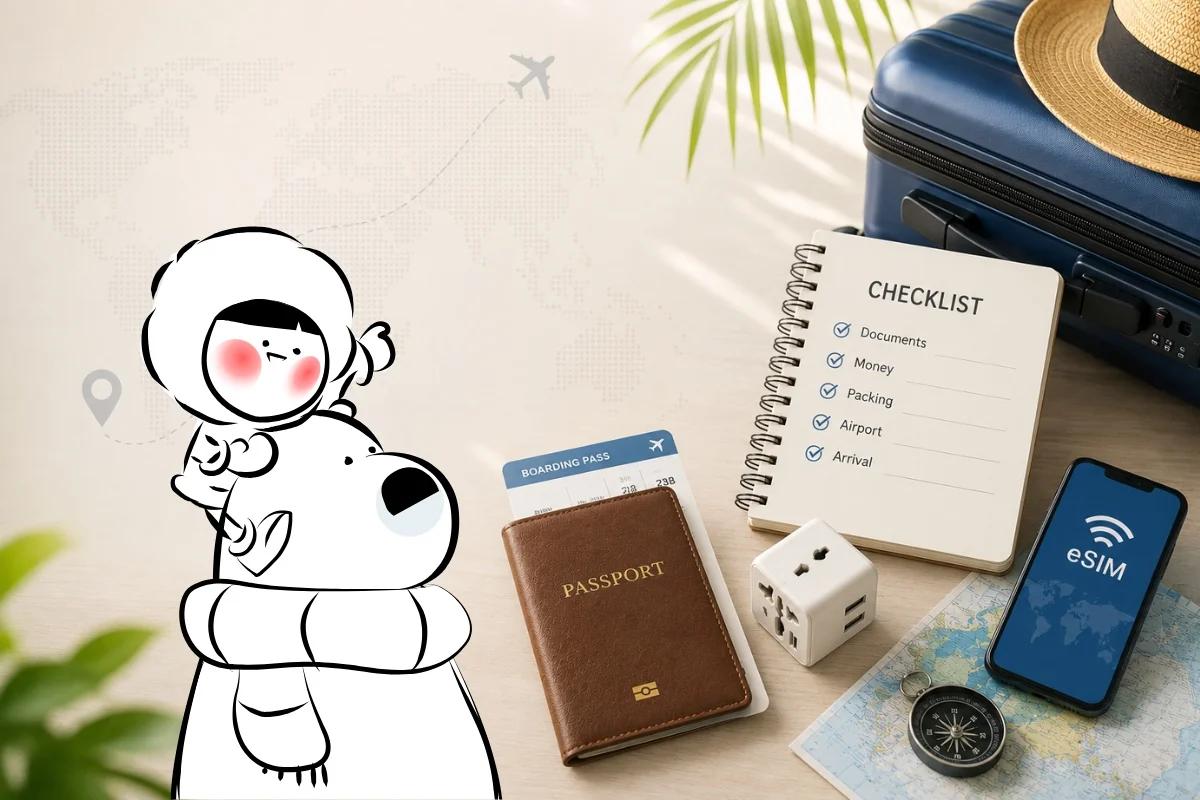
Your first international trip is much easier when you prepare the essentials before departure. Start with your passport, visa requirements, travel insurance, payment cards, packing basics, airport timing, and mobile data. A simple international travel checklist helps you avoid last-minute stress and arrive with fewer surprises.
Before you go, check these basics:
- Documents: Passport, visa, boarding pass, and accommodation details
- Money: Main card, backup card, and some local cash
- Packing: Adapter, charger, medicine, and weather-appropriate clothes
- Airport: Check-in time, baggage rules, and immigration process
- Arrival: Transport, hotel address, mobile data, and local emergency number
Check Your Passport, Visa, and Travel Documents
For first time international travel, your passport is the first thing to check. Many destinations require your passport to be valid for at least six months after your arrival or departure date, but rules vary by country. Always confirm the entry requirements with the official immigration or embassy website before booking.
Prepare these documents needed for international travel:
- Passport
- Visa or electronic travel authorization, if required
- Flight booking
- Accommodation address
- Travel insurance details
- Return or onward ticket, if required
- Digital and printed copies of important documents
Keep copies in your email or cloud storage, and save offline versions on your phone. Printed copies are still useful if your phone battery runs low or airport Wi-Fi is unreliable.
Plan Your Money Before You Fly
A good money setup gives you backup options. Bring one main card and one backup card, ideally from different banks or networks. Check whether your bank charges foreign transaction fees, and confirm if you need to enable overseas card use.
It also helps to carry a small amount of local cash for transport, snacks, or places that do not accept cards. You do not need to carry too much. ATMs are widely available in many destinations, but airport exchange counters often have less favorable rates.
For safety, keep your cards and cash in separate places. Save your bank’s emergency contact number in case your card is lost or blocked.
Get Eskimo eSIM to stay connected globally
Need internet while travelling? Here's what we recommend:

Fixed data plans
- No speed reduction
- No expiry, keep your data forever
- Transfer data to anyone
- Personal hotspot


Pack the International Travel Essentials
Your international travel packing list should focus on comfort, safety, and daily convenience. Avoid overpacking for your first trip abroad. A lighter bag is easier to manage through airports, trains, hotels, and city streets.
Useful essentials include:
- Passport and travel documents
- Travel adapter
- Phone charger and power bank
- Basic medicine and prescriptions
- Toiletries within airline liquid limits
- Weather-appropriate clothes
- Comfortable walking shoes
- Backup payment card
- Reusable water bottle, if allowed at your destination
- Mobile data setup before departure
For a lighter packing approach, see Backpacking Essentials for First-Time Backpackers.
Know What to Expect at the Airport
For international flights, arriving around three hours before departure is usually a safe plan, especially if it is your first time flying abroad. Some airports and airlines may suggest different timing, so check your booking details before leaving.
The usual flow is simple:
- Check in online or at the airport counter
- Drop your checked baggage
- Go through security screening
- Pass immigration or passport control
- Find your gate
- Board when your group is called
Keep your passport and boarding pass easy to reach. Airport staff may ask to see them several times. For more practical airport preparation, read The Ultimate Airport Survival Guide: Smart Hacks and Essentials.
Prepare for Arrival and Jet Lag
After landing, follow the signs for immigration, baggage claim, and customs. You may be asked basic questions about your trip, such as where you are staying and how long you plan to visit. Answer clearly and keep your accommodation details ready.
Once you leave the airport, use official taxis, airport trains, or trusted ride-hailing apps where available. If you arrive tired, keep your first day light. Drink water, eat at normal local meal times, and try to sleep according to the destination’s time zone. This can help your body adjust more smoothly when learning how to deal with jet lag.
Get Online Before You Need It
Mobile data matters most when everything is new. On a first international trip, you may need maps, translation apps, ride-hailing, hotel messages, banking alerts, and family updates before you find stable Wi-Fi.
Eskimo offers a Global Plan for travelers visiting one or multiple destinations. A helpful feature for first-time travelers is its 2-year data validity, which means unused paid plan data can stay ready for future trips instead of expiring quickly.
New Eskimo users can also get free 500MB of Global Data, which is useful for testing mobile data before relying on it abroad.
For more on travel connectivity, see eSIM for International Travel: How It Works and How to Get One or Buy a Local SIM at the Airport or Use an eSIM Before You Go?.
FAQs
What should I prepare for my first international trip?
Prepare your passport, visa or entry approval, flight details, accommodation address, travel insurance, payment cards, packing essentials, airport timing, and mobile data. Save digital copies of important documents before you leave.
What documents do I need for international travel?
Most travelers need a valid passport, boarding pass, accommodation details, and visa or entry approval if required. Some countries may also ask for proof of onward travel, travel insurance, or arrival forms.
How early should I arrive for an international flight?
Arriving around three hours before departure is a safe rule for many international flights. Always check your airline and airport guidance because timing can vary by route, airport size, and travel season.
What should I pack for international travel?
Pack your passport, documents, adapter, charger, power bank, medicine, toiletries, comfortable clothes, walking shoes, and a backup payment card. Keep valuables and essentials in your carry-on bag.
Is an eSIM useful for first-time international travel?
Yes. An eSIM can help you get online soon after landing, which makes maps, translation, ride-hailing, hotel check-in, and family updates easier. Check that your phone supports eSIM before buying a plan.