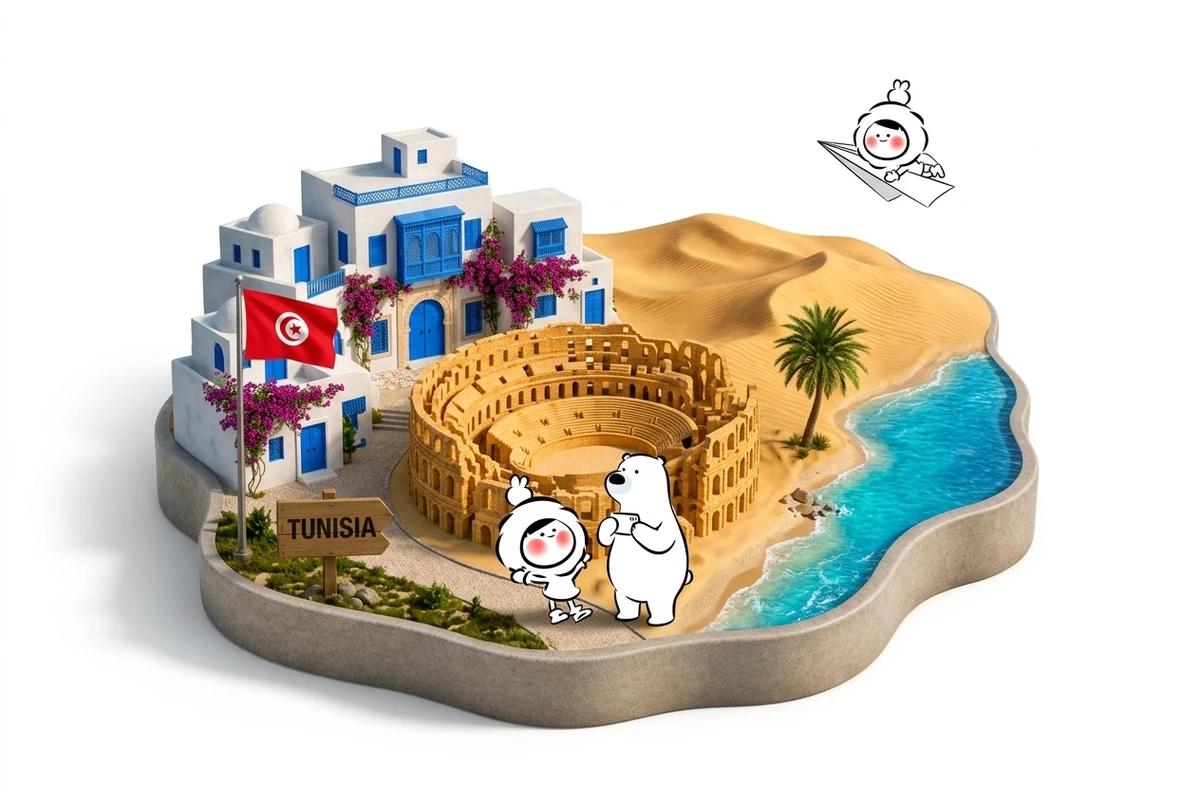
Tunisia combines Mediterranean beaches, Roman archaeological monuments, centuries-old Islamic medinas, and vast Saharan landscapes into an accessible North African destination. For first-time travelers, navigating the country is relatively straightforward thanks to extensive shared transport networks, affordable daily travel costs, and hospitable local culture.
A successful trip depends on choosing travel dates that avoid extreme desert heat while matching your preferred balance of coastal relaxation, cultural touring, and southern desert expeditions.
Travelers can combine coastal heritage destinations such as Tunis, Sidi Bou Said, and Sousse with inland Roman monuments and desert oases within a single seven- to ten-day journey.
Best Time To Visit Tunisia
The best time to visit Tunisia for cultural touring and desert exploration is during spring from March to May and autumn from September to November.
During these transitional seasons, daytime temperatures commonly range between 20°C and 28°C, creating comfortable conditions for wandering through open-air ruins and exploring Saharan landscapes without oppressive heat.
Summer months between June and August bring scorching temperatures that frequently exceed 40°C in inland archaeological areas and the Sahara Desert.
While coastal resort destinations such as Djerba, Hammamet, and Monastir attract beachgoers and water sports enthusiasts during this period, midday sightseeing in central and southern regions can become exhausting.
Winter lasts from December through February, bringing cooler weather and occasional rainfall to the northern coast and mountains.
Although Mediterranean waters are generally too chilly for comfortable swimming, winter offers pleasant temperatures for exploring the Sahara Desert and southern oasis towns such as Tozeur.
Essential Things To Do In Tunisia
Tunisia possesses an extraordinary concentration of historical and natural attractions spanning ancient civilizations, Mediterranean settlements, and desert landscapes.
Explore Sidi Bou Said
Wander through the whitewashed cliffside village of Sidi Bou Said.
Overlooking the Gulf of Tunis, this coastal enclave features cobblestone lanes lined with bright cobalt-blue doors, ornamental iron window grilles, and climbing bougainvillea.
Stop at Café des Délices for mint tea flavored with pine nuts while admiring Mediterranean sea views.
The village is particularly appealing in the late afternoon when the sunlight illuminates its distinctive blue-and-white architecture.
Discover the Medina of Tunis and Carthage
Explore the Medina of Tunis and the ancient archaeological ruins of Carthage.
The historic walled medina preserves narrow covered souks filled with leather goods, brassware, and perfume artisans surrounding the eighth-century Zitouna Mosque.
Nearby on the coast, the Archaeological Site of Carthage showcases Phoenician remains, Roman thermal baths, and historical monuments documenting the ancient city’s importance.
Together, these destinations offer an introduction to Tunisia’s Islamic, Phoenician, and Roman heritage.
Visit the Roman Amphitheatre of El Jem
Marvel at the Amphitheatre of El Jem, one of Tunisia’s most impressive ancient monuments.
Built in the third century, this colossal UNESCO World Heritage monument ranks among the largest and best-preserved Roman amphitheatres globally.
Visitors can walk through subterranean gladiator chambers and explore the tiered stone seating arches that once accommodated approximately 30,000 spectators.
The amphitheatre is an essential stop for travelers interested in Roman history and ancient architecture.
Experience the Sahara Desert and Tozeur
Venture into the Sahara Desert through Tozeur and Chott el Djerid.
The southern oasis town of Tozeur serves as a gateway to palm groves, canyons, and the sparkling white salt crust of Chott el Djerid.
Nearby mountain oases such as Chebika and Tamerza provide opportunities to explore dramatic desert landscapes.
In Matmata, visitors can discover subterranean troglodyte homes excavated into the hillsides.
These traditional underground dwellings are internationally recognized for their association with filming locations from the Star Wars franchise.
Relax on the Island of Djerba
Unwind on the Mediterranean island of Djerba.
Connected to mainland Tunisia by an ancient causeway, Djerba offers whitewashed fishing villages, historic pottery workshops in Guellala, colorful street art in Erriadh, and sandy beaches.
The island combines coastal relaxation with traditional architecture and cultural heritage.
Its relaxed atmosphere makes it an appealing destination for travelers looking to conclude a busy sightseeing itinerary with several days by the sea.
A Practical 7-Day Tunisia Itinerary
A one-week itinerary allows travelers to experience Tunisia’s coastal cities, Roman architecture, and southern oasis landscapes.
Because distances between northern cities and the Sahara can be substantial, this itinerary works best with a rental car or private driver for the southern portion.
Days 1–2: Tunis, Carthage and Sidi Bou Said
Begin your journey in Tunis.
Base yourself near the historic center or the seaside suburb of La Marsa.
Spend your first morning exploring the winding souks of the Medina of Tunis before heading to the Bardo National Museum to examine its renowned collection of Roman mosaics.
On the second day, visit the Roman ruins of Carthage and spend a leisurely afternoon strolling through the blue-and-white streets of Sidi Bou Said.
These destinations are located close enough to combine into a convenient day of sightseeing.
Day 3: Sousse, El Jem and Kairouan
Travel south toward Sousse and El Jem.
Stop in Sousse to visit the fortified Ribat and seaside promenade before continuing to the Amphitheatre of El Jem.
Spend approximately two to three hours exploring the ancient arena.
Continue toward Kairouan, one of the most historically important Islamic cities in North Africa.
Visit the Great Mosque of Sidi Uqba and explore the surrounding historic medina.
Days 4–5: Tozeur, Chott el Djerid and Matmata
Head into Tunisia’s southern interior toward Tozeur and Matmata.
Cross the shimmering expanses of Chott el Djerid, one of North Africa’s largest salt lakes.
Visit the mountain oases of Chebika and Tamerza, where desert canyons, palm groves, and natural springs create striking landscapes.
Continue to Matmata to explore traditional troglodyte cave dwellings where local Amazigh communities have lived underground for generations.
Travelers should allow sufficient time for the long road journeys connecting these destinations.
Days 6–7: Djerba, Sfax and Return to Tunis
Begin your return journey northward via coastal Sfax or the island of Djerba.
Travelers choosing Djerba can explore its traditional villages, pottery workshops, and Mediterranean beaches.
Alternatively, stop in Sfax for a traditional seafood lunch and a short exploration of its historic center.
Return to Tunis for departure from Tunis-Carthage International Airport.
Depending on your chosen route, a domestic flight or an additional overnight stop may be necessary to avoid excessive driving.
Transport And Getting Around Tunisia
Getting around Tunisia is relatively efficient and economical through a network of shared passenger vehicles, trains, local taxis, and rental cars.
Traveling by Louage
Shared long-distance minivans known locally as louages represent the backbone of intercity travel.
Operating from designated louage stations in major cities, these vehicles typically depart once all passenger seats are filled.
Louages are affordable and generally do not require advance reservations.
Travelers can arrive at the station, purchase a ticket, and board the vehicle assigned to their destination.
Although convenient, departure times depend on passenger demand, making louages less predictable than scheduled trains.
Traveling by Train
The national rail network, operated by SNCFT, connects Tunis with major eastern coastal cities, including Sousse, Monastir, Mahdia, and Sfax.
Trains offer a comfortable alternative to road transport between major urban centers.
Some services provide air-conditioned first-class and comfort-class carriages.
Travelers should check current timetables and service availability before departure.
Get Eskimo eSIM to stay connected in Tunisia
Need internet in Tunisia? Here's what we recommend:

Fixed data plans
- No speed reduction
- No expiry, keep your data forever
- Transfer data to anyone
- Personal hotspot

Using Local Taxis
For travel within metropolitan areas such as Tunis, Sousse, and Sfax, yellow metered taxis are abundant and affordable.
Ensure the driver activates the dashboard meter before departure.
A nighttime surcharge may apply to metered fares after 9:00 PM.
For longer journeys or trips outside city boundaries, confirm the fare arrangement before setting off.
Renting a Car
Renting a car provides greater flexibility for travelers venturing into southern desert oases and mountain regions.
Major international and local rental agencies operate at Tunis-Carthage International Airport.
Driving is on the right side of the road, and major highways are generally well maintained.
Some expressways have toll plazas, so carrying cash is useful.
Travelers planning to visit remote desert areas should check local road conditions and any applicable travel restrictions before departure.
Travel Costs And Budgeting In Tunisia
Tunisia offers excellent value across accommodation, food, and sightseeing, making it one of the more budget-friendly destinations in the Mediterranean region.
Daily expenses depend on travel style, accommodation preferences, and transportation choices.
Budget Travel: USD 25–40 Per Day
Budget travelers using louages for intercity transportation, staying in modest guesthouses, and dining at local sandwich and couscous stalls typically spend between USD 25 and 40 per day.
This budget is most practical for travelers using public transportation and choosing inexpensive local accommodation.
Mid-Range Travel: USD 60–110 Per Day
Mid-range travelers staying in restored boutique dars, traditional courtyard homes, and enjoying full-service restaurants can expect to spend approximately USD 60 to 110 per day.
This budget may also accommodate occasional private transportation or guided day excursions.
Luxury Travel: USD 200 or More Per Day
Luxury travelers choosing coastal beach resorts in Djerba, upscale desert camps, and private guided tours can expect daily expenses starting around USD 200.
Premium accommodation and exclusive desert experiences may increase costs considerably.
These figures are approximate daily estimates and may not include international flights, major guided excursions, or expensive activities.
Currency and Money Exchange
The local currency is the Tunisian Dinar (TND).
Tunisia maintains strict currency regulations, and the import or export of Tunisian Dinars is restricted.
Travelers can exchange foreign currencies such as euros, US dollars, and British pounds at authorized exchange counters or banks.
Local bank ATMs also provide access to Tunisian Dinars.
Retain official currency exchange receipts, as they may be required when converting leftover dinars back into foreign currency before departure.
Practical Tunisia Travel Tips
Understanding Tunisia’s entry requirements, languages, cultural customs, and local regulations will help travelers prepare for a smoother journey.
Visa and Entry Requirements
Citizens of the United States, United Kingdom, many European Union countries, Canada, and Australia can generally enter Tunisia visa-free for tourist visits of up to 90 days.
However, entry requirements depend on nationality and may change.
Always confirm current passport validity requirements, permitted stay durations, and border entry rules before departure.
Travelers can consult the Tunisian National Tourist Office for destination information.
The UK Foreign Travel Advice for Tunisia also provides updated information about entry requirements, security considerations, and local regulations.
Languages Spoken in Tunisia
Tunisian Arabic, commonly called Derja, is the primary language of everyday communication.
French is also widely spoken in hotels, restaurants, shops, and public transportation hubs.
English is increasingly understood by younger Tunisians and tourism professionals in major destinations.
Learning basic French numbers and Arabic greetings can make interactions with local residents easier.
Cultural Etiquette and Dress Codes
Dress customs are relatively relaxed in cosmopolitan districts of Tunis and coastal beach resorts.
However, modest attire covering shoulders and knees is expected when visiting religious landmarks, rural market towns, and traditional medinas.
Visitors should also respect local customs regarding photography and behavior around religious sites.
For travelers exploring North Africa for the first time, discover more destination ideas in our Eskimo Travel guide to the best African countries for first-time visitors.
Drinking Water and Food Safety
Tap water in Tunisia is treated in many larger cities and is generally suitable for brushing teeth.
However, its mineral content and taste may be unfamiliar to international visitors.
Travelers who prefer bottled mineral water should check that bottle caps remain factory-sealed before drinking.
Choose reputable restaurants and freshly prepared meals, particularly when traveling through remote areas.
Mobile Connectivity Across Tunisia
Navigating historic medina streets in Tunis, coordinating louage connections at transportation stations, using translation tools, and checking weather conditions in the Sahara Desert all require reliable mobile data.
Cellular reception is generally strong across Tunis, coastal towns, and major highway corridors.
However, connectivity can become limited in remote desert dunes and deep canyon landscapes in the southern interior.
Stay Connected With Eskimo eSIM
Travelers can arrange mobile connectivity before departure using an eSIM-compatible smartphone.
Explore Eskimo’s eSIM plans to find a suitable option for your Tunisia itinerary and confirm destination coverage before purchasing.
Eskimo provides network coverage across 175 countries and regions, allowing travelers combining North African itineraries with Mediterranean European stopovers to maintain connectivity without purchasing multiple local physical SIM cards.
Eskimo’s no-expiry fixed data feature also allows eligible unused data allowances to remain available for future travel.
This can be particularly useful for travelers who regularly visit multiple countries throughout the year.
New users can also claim a free 250MB Global eSIM to get started.
Frequently Asked Questions
Is Tunisia safe for international tourists?
Tunisia welcomes international tourists, particularly in established coastal resorts and major cultural destinations.
However, security conditions vary by region, and some border areas and remote southern territories are subject to travel warnings or restrictions.
Travelers should consult current government travel advisories before departure.
Standard precautions include securing valuables in crowded markets, using reputable transportation, and avoiding unfamiliar or isolated areas after dark.
Can I use credit cards across Tunisia?
Credit and debit cards are accepted in major international hotels, car rental agencies, and larger supermarkets in Tunis and Sousse.
Outside these establishments, cash in Tunisian Dinars is frequently required for louages, taxis, souk stalls, museum entry desks, and local cafes.
Carrying sufficient local currency is particularly important when visiting smaller towns and rural destinations.
What is the best way to travel from Tunis to the Sahara Desert?
Travelers can take a train or louage south toward Sfax or Gabes before transferring to regional transportation serving southern destinations such as Tozeur.
Alternatively, renting a private car in Tunis provides greater flexibility for exploring southern oasis landscapes.
Travelers planning to visit remote desert locations should consider using experienced local guides and confirm current travel restrictions before departure.
How should I dress when visiting religious sites in Tunisia?
When visiting the Great Mosque of Kairouan or other historic religious sanctuaries, travelers should dress conservatively.
Men and women should ensure their shoulders, chests, and knees are covered.
Women may be asked to wear a headscarf in certain religious areas, although specific requirements vary by location.
Always follow posted visitor instructions and respect restrictions on access to prayer halls.