
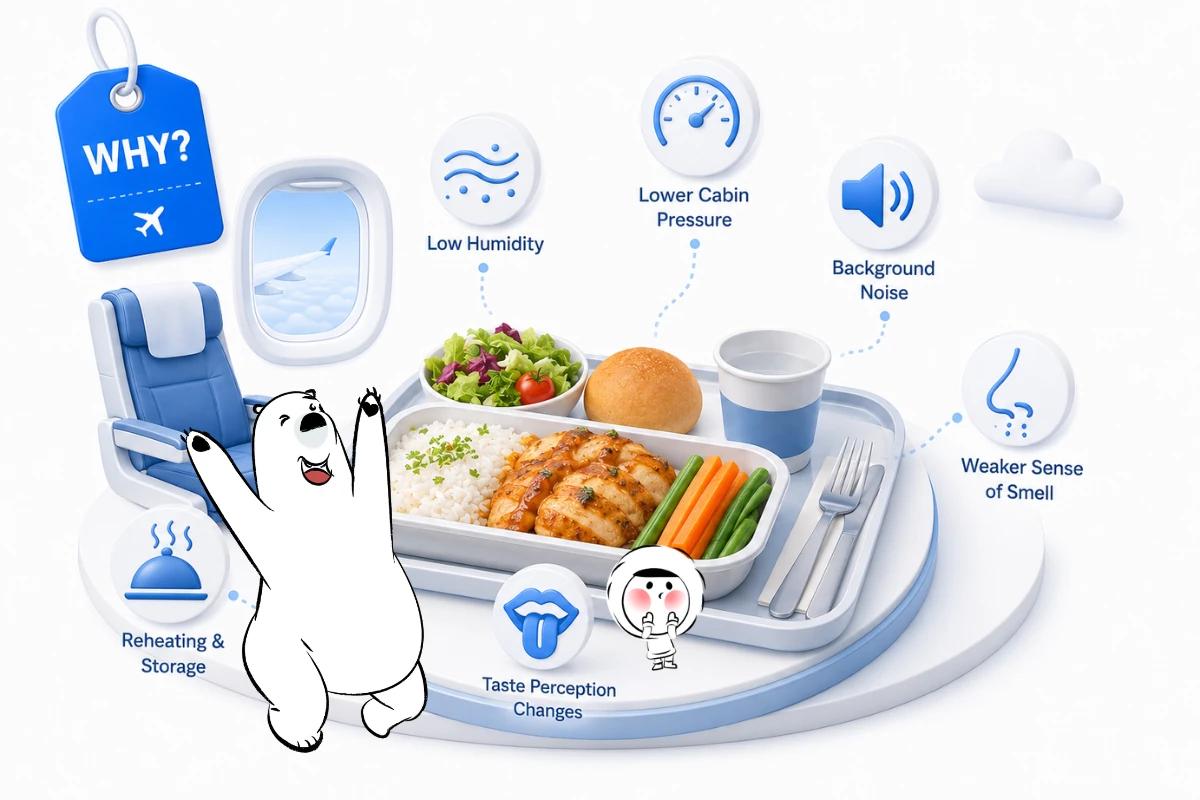
Airplane food often tastes bland because flying changes how you perceive flavor. Dry cabin air, lower air pressure, constant background noise, and a weaker sense of smell can reduce the impact of sweet and salty tastes.
The meal itself also matters. Most food on flights is prepared on the ground, chilled, transported, and reheated before serving. Even a well-designed dish must survive a demanding journey before reaching your tray table.
Dry Cabin Air Weakens Flavor
Aircraft cabins have much lower humidity than most homes and restaurants. The dry air can leave your mouth and nasal passages feeling parched.
This matters because flavor depends on both taste and smell. When your nose is dry, fewer food aromas reach the receptors responsible for smell, so meals may seem flatter or less distinctive.
Drinking water throughout the flight can help with dryness, although it will not completely restore how food tastes on the ground.
Cabin Pressure Changes Taste And Smell
Commercial aircraft are pressurized, but the cabin pressure is still lower than at sea level. Research conducted in simulated flight conditions has found that reduced pressure can weaken taste and odor perception.
The Fraunhofer Institute for Building Physics has tested airline meals under controlled cabin conditions, including changes in pressure, humidity, noise, temperature, and vibration.
Sweetness and saltiness can become less noticeable during a flight. This is one reason a meal that was properly seasoned on the ground may taste bland in the air.
Aircraft Noise Affects The Palate
The steady noise inside an airplane can also change the way food tastes.
Research from Cornell University found that loud background noise can suppress perceived sweetness while making umami, the savory taste found in foods such as tomatoes, mushrooms, and soy sauce, stand out more strongly.
That helps explain why tomato juice can taste unusually satisfying on a plane, even to travelers who rarely drink it elsewhere.
In-Flight Meals Must Be Reheated
Airline meals are generally cooked before departure, cooled for safe transport, and reheated in the aircraft galley. Cabin crew do not cook meals from raw ingredients onboard.
Reheating can affect:
- Meat tenderness
- Sauce consistency
- Vegetable texture
- Bread and rice moisture
- Overall aroma
Dishes with sauces, spices, or plenty of moisture often cope better than delicate fried foods or meals that dry out easily.
Get Eskimo eSIM to stay connected globally
Need internet? Here's what we recommend:

Fixed data plans
- No speed reduction
- No expiry, keep your data forever
- Transfer data to anyone
- Personal hotspot


Airlines Design Meals For The Air
Airline catering teams account for cabin conditions when creating menus. They may use stronger aromas, herbs, spices, acidity, sauces, and umami-rich ingredients to keep flavors noticeable.
Meals that often work well in flight include:
- Curries and stews
- Tomato-based dishes
- Mushroom or soy-based meals
- Pasta with a rich sauce
- Braised meat
- Strongly seasoned vegetarian dishes
More salt is not always the answer. A balanced mix of aroma, acidity, spice, and savory flavor can be more effective.
For airlines known for stronger meals and overall cabin service, see TOP 10 Best Economy Class Airlines in the World (2026).
Making Food On Flights Taste Better
A few small choices can improve the experience:
- Drink water before and during the flight
- Choose dishes with sauce or moisture
- Pick savory or umami-rich options
- Avoid expecting fried food to remain crisp
- Bring familiar snacks when permitted
Travelers carrying their own meal should also check airport security and destination restrictions. Can You Bring Food Through TSA? explains the rules for solid foods, liquids, gels, and checked baggage.
For long overnight journeys, meal timing can affect comfort and sleep. How to Survive an Overnight Flight in Economy includes practical advice on food, hydration, movement, and rest.
Mobile Data Before And After Your Flight
Mobile data helps with digital boarding passes, gate changes, delay notifications, baggage updates, and airport transport after landing. Reception is generally reliable around major airports, but indoor dead zones and network congestion can occur inside busy terminals.
An Eskimo Global eSIM plan suits international flights and connecting itineraries. Eskimo’s coverage across 175 countries and regions is practical for stopovers and onward journeys, while the universal eSIM lets travelers use one reusable eSIM across multiple eligible destinations.
New users can also claim free 500MB of Global Data.
FAQs:
Why does airplane food taste so bad?
Dry cabin air, lower pressure, engine noise, reduced smell, and reheating can weaken flavor and make sweet or salty foods taste less intense.
Why does food taste different on planes?
Flying changes the environment around your senses. Low humidity dries the nose and mouth, while cabin pressure and background noise can alter taste and aroma perception.
Why does tomato juice taste better on a plane?
Tomato juice contains strong savory, or umami, flavors. Research suggests that umami can remain noticeable in noisy environments where sweetness becomes less intense.
Is airplane food prepared on the plane?
Usually not. Airline meals are generally prepared in catering kitchens, chilled, loaded onto the aircraft, and reheated before serving.
What food tastes best on a flight?
Moist, strongly flavored dishes often hold up best. Curries, stews, tomato-based meals, pasta with sauce, mushrooms, and other umami-rich foods are common examples.