Saffron is so expensive because every flower produces only three usable red stigmas, each one must be collected by hand, and thousands of flowers create only a small amount of dried spice.
The flowers also bloom during a short harvest period, while separating and drying the delicate saffron threads requires speed and care. Low yield, intensive labour, quality grading, and limited production areas combine to make saffron one of the world’s most expensive spices by weight.
What Saffron Is
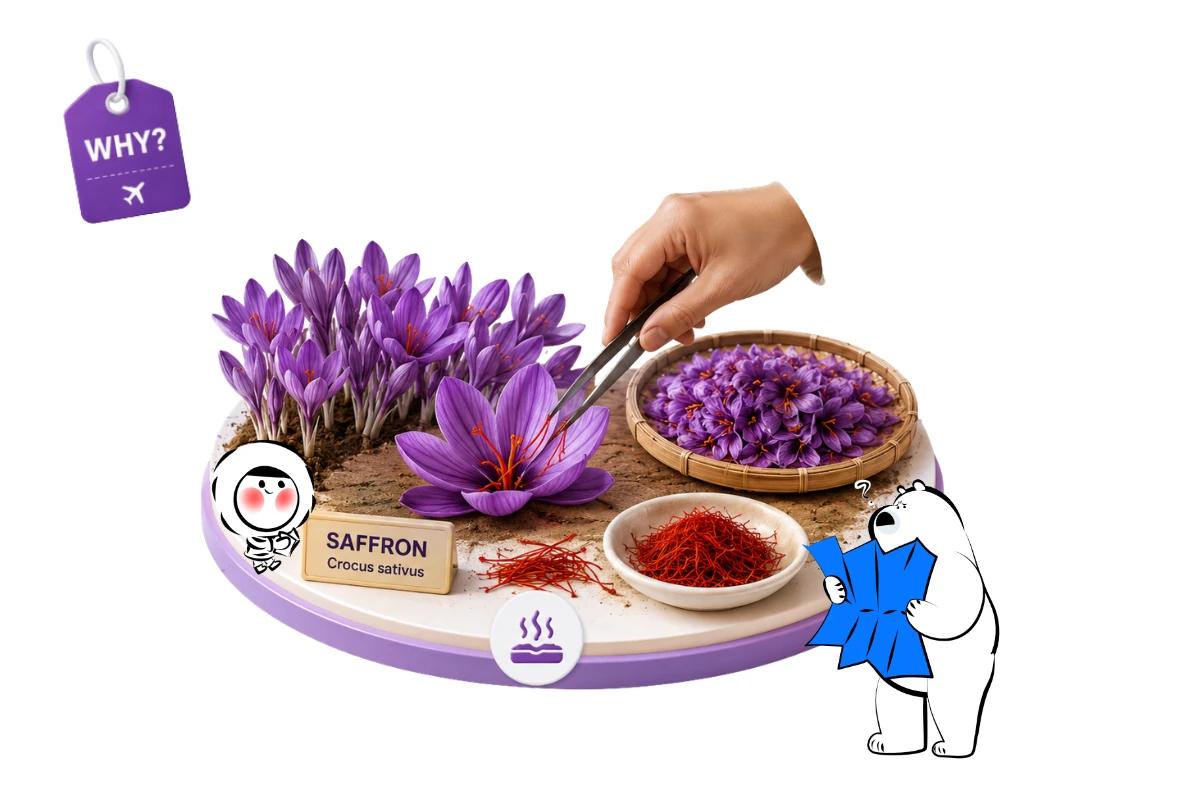
Saffron is a spice made from the dried red stigmas of the Crocus sativus flower.
It does not come from the petals or the entire plant. Each purple saffron flower contains only three red stigmas, which become the familiar saffron threads sold for cooking.
The current ISO saffron specification covers dried saffron sold as whole filaments, cut filaments, or powder.
Every Flower Produces Very Little
The low yield begins inside the flower.
A single crocus gives farmers only three delicate stigmas. ISO estimates that roughly 250,000 flowers may be needed to produce one kilogram of saffron, although exact yields vary according to growing conditions, moisture, processing, and farming methods.
Most of the harvested flower does not become spice. The valuable portion is tiny, which means growers need substantial land, planting material, labour, and time for a comparatively small finished crop.
Saffron Must Be Harvested By Hand
Mechanical harvesting is difficult because saffron threads are small, fragile, and easily damaged.
Workers generally collect the flowers by hand and then separate the stigmas individually. The process often involves:
- Picking flowers during a limited flowering period
- Moving them quickly before they wilt
- Opening each flower
- Separating the three red stigmas
- Drying the stigmas carefully
- Sorting and packaging the finished threads
ISO describes this hand-picked harvest process as a major reason behind saffron’s high value.
The Harvest Window Is Short
The saffron crocus flowers for only a brief period, usually during autumn in major producing regions.
Farmers cannot spread the work evenly across the year. Large numbers of flowers may need to be picked and processed within days or weeks, creating an intense demand for seasonal labour.
Delays can reduce quality because the flowers and stigmas are delicate. Harvesting at the right time is therefore part farming, part choreography, and part race against a very small botanical clock.
Drying Reduces The Final Weight
Fresh stigmas contain moisture and must be dried before they become usable saffron.
Drying concentrates the colour, aroma, and flavour, but it also reduces weight. The amount collected in the field therefore becomes an even smaller quantity after processing.
Poor drying can damage the spice or leave too much moisture, while excessive moisture can also be used to make saffron appear heavier. International testing standards assess factors such as moisture, floral waste, purity, colour, aroma, and flavour characteristics.
Saffron Grows In Limited Regions
Saffron has long been cultivated across a belt extending from the Mediterranean toward Kashmir.
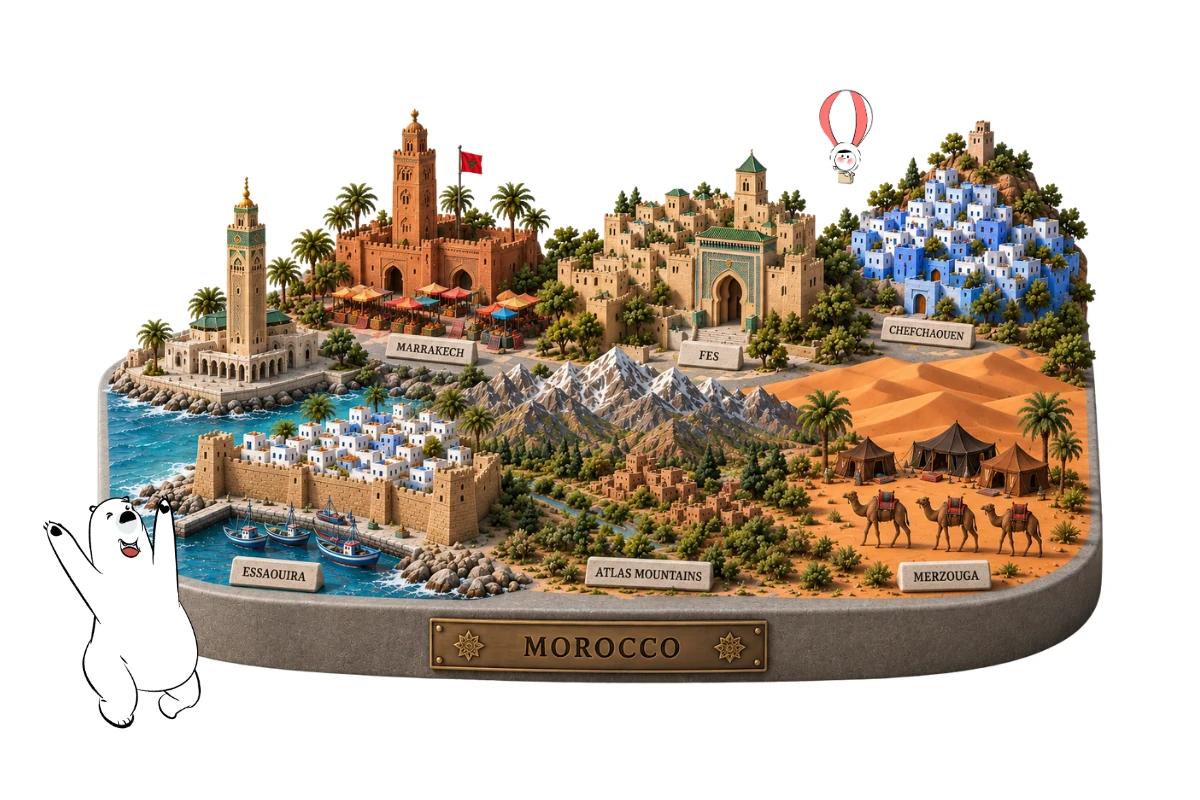
Major producing areas include Iran, India, Afghanistan, Greece, Morocco, and Spain, although output and market availability vary. Growing saffron requires suitable soil, seasonal temperatures, healthy corms, and careful management.
Country of origin can influence reputation and price, but it does not determine quality by itself. Grade, purity, handling, storage, age, and processing are also important.
Travelers exploring the markets and food culture covered in Eskimo’s Morocco travel article may encounter saffron among the spices used in local kitchens, but genuine products should still be assessed carefully.
Get Eskimo eSIM to stay connected globally
Need internet? Here's what we recommend:

Fixed data plans
- No speed reduction
- No expiry, keep your data forever
- Transfer data to anyone
- Personal hotspot


Quality Changes The Price
Not all saffron has the same concentration of flavour, colour, and aroma.
Retail prices may differ according to:
- The proportion of red stigma in the product
- Purity and absence of foreign matter
- Moisture level
- Strength of colour, flavour, and aroma
- Whether it is sold as threads or powder
- Packaging and storage
- Origin and certification
- Current harvest and market conditions
Whole saffron threads are often easier to inspect than powder. Powdered products can be more vulnerable to adulteration because cheaper plant material, dyes, or other spices are harder to detect visually.
This echoes other premium ingredients, where origin and harvesting shape quality long before the product reaches a shop shelf.
Saffron Supply Cannot Expand Quickly
Higher demand does not immediately produce more saffron.
Growers need suitable land, healthy corms, labour, processing facilities, and favourable weather. Expanding production also takes time, while crop losses or poor conditions can reduce supply.
That limited ability to scale separates saffron from spices that can be planted, harvested, and processed more mechanically.
What Real Saffron Tastes Like
Saffron has a complex taste that can feel floral, earthy, slightly bitter, and honey-like.
Only a small amount is normally needed. The threads are often soaked in warm water or milk before being added to rice, stews, sauces, breads, or desserts.
Turmeric and safflower can provide yellow or orange colour, but they do not reproduce saffron’s aroma and flavour. They are substitutes for appearance or practicality, not the same spice wearing a cheaper coat.
Buying Saffron While Travelling
Choose a reputable spice shop, producer, cooperative, or established food retailer.
Look for:
- Mostly deep red threads
- A clear origin and producer
- Secure, light-resistant packaging
- A harvest or packing date where available
- Quality certification
- A price that is plausible for genuine saffron
Be cautious with unusually cheap saffron, brightly dyed fibres, excessive yellow material, or products sold without clear labelling.
Import rules for plant and food products differ by destination. Check the customs regulations of the country you are entering before carrying saffron home.
Mobile Data Across Saffron-Producing Regions
Mobile data can help travelers locate reputable markets, translate product labels, check customs restrictions, and navigate between farms, villages, and regional food destinations. Coverage is generally stronger in cities and established tourism areas, while reception may weaken along rural roads, mountain routes, and agricultural districts.
An Eskimo Global eSIM plan is suitable for trips involving several saffron-producing destinations. Eskimo’s coverage across 175 countries and regions supports international stopovers and onward journeys, while its universal eSIM allows one reusable eSIM to serve multiple eligible destinations without installing a separate profile for each country.
New users can also claim free 500MB of Global Data.
FAQ
Is saffron the world’s most expensive spice?
Saffron is generally described as the world’s most expensive spice by weight. Its price varies by grade, purity, origin, harvest quality, and market conditions.
How is saffron harvested?
Saffron flowers are picked, opened, and separated by hand. The three red stigmas from each flower are then carefully dried to create saffron threads.
Where does saffron come from?
Saffron comes from the stigmas of Crocus sativus. It is produced in several regions, including Iran, India, Afghanistan, Greece, Morocco, and Spain.
Why is saffron rare?
Saffron is rare because each flower produces only three stigmas, the flowering period is short, harvesting requires extensive manual labour, and the dried yield is very low.
Is saffron a spice?
Yes. Saffron is a spice made from dried crocus stigmas and is used to add colour, aroma, and flavour to food.