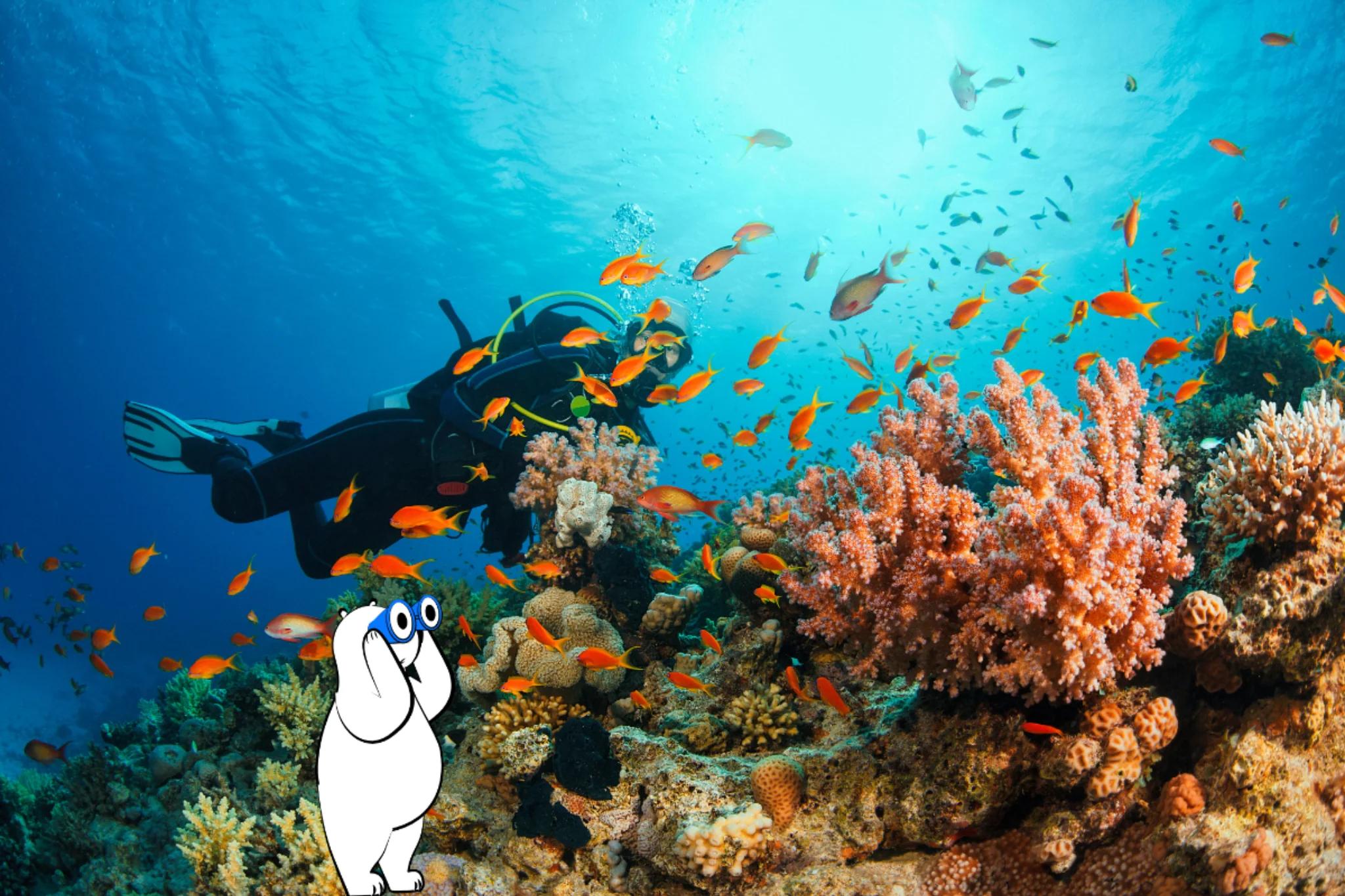
The best places for scuba diving are defined by consistent ecological health, reliable dive conditions, and long-term marine protection rather than popularity or tourism volume. Using data from marine biodiversity research, established conservation records, and long-term diver return patterns, a small group of destinations consistently ranks above the rest.
These locations sit within well-documented marine systems, offer predictable diving conditions, and support a wide range of diver skill levels. Rather than focusing on trend-driven hotspots, this list highlights places that deliver measurable underwater quality year after year.
Raja Ampat, Indonesia
Raja Ampat is widely regarded as the best scuba diving destination in the world due to its unparalleled marine biodiversity and long-term reef health.
Located in West Papua, eastern Indonesia, Raja Ampat lies at the center of the Coral Triangle, a region recognized by marine scientists as having the highest concentration of coral and reef fish species globally. Surveys conducted across the region consistently record species density levels unmatched elsewhere.
The reefs are predominantly shallow and structurally complex, supporting high biodiversity while remaining accessible to recreational divers. Marine protected area regulations limit fishing pressure, contributing to stable reef conditions and healthy fish populations. Water temperatures remain warm year-round, and visibility is generally good, though currents vary by site and tide.
Raja Ampat is best suited for experienced recreational divers and underwater photographers seeking dense reef systems, intact coral structures, and consistently high-quality diving across multiple sites.
Komodo National Park, Indonesia
Komodo National Park is one of the best scuba diving destinations because of its nutrient-rich currents and large marine life.
Located between the islands of Flores and Sumbawa in eastern Indonesia, Komodo experiences strong tidal flows through narrow channels. These currents attract manta rays, sharks, and large schools of fish.
Diving here typically involves drift dives, seamounts, and exposed sites, which require good buoyancy control and experience. Visibility is often high, but conditions can change quickly.
Komodo is most suitable for intermediate to advanced divers who are comfortable diving in currents and want dynamic, high-energy dive environments.
Tubbataha Reefs Natural Park, Philippines
Tubbataha is one of the best scuba diving locations in Asia because of its isolation and strict protection.
Situated in the middle of the Sulu Sea, far from permanent settlements, Tubbataha is a UNESCO World Heritage Site with limited seasonal access. Fishing and human activity are prohibited.
This isolation has preserved coral health and fish populations, resulting in frequent pelagic encounters and excellent visibility during the dive season.
Tubbataha is best for experienced divers and liveaboard travelers seeking pristine reef systems and minimal human impact.
Anilao, Philippines
Anilao is considered one of the best places for scuba diving for macro biodiversity.
Located in Batangas, approximately three hours south of Manila, Anilao features volcanic sand slopes and coral patches that support rare and small marine species.
Diving conditions are calm, shallow, and close to shore. While visibility is moderate, species diversity at small scales is exceptionally high.
Anilao is ideal for beginner divers, macro photographers, and divers focused on critter identification, rather than large animals or deep dives.
Cozumel, Mexico
Cozumel is one of the best places for scuba diving because of its stable currents, high visibility, and protected reef system.
The island lies off Mexico’s Yucatán Peninsula and is part of the Cozumel Reefs National Marine Park. Fishing and anchoring restrictions help maintain reef health.
Cozumel is known for drift diving, where divers move with the current along reef walls. This reduces physical effort, improves air consumption, and increases safety.
Visibility frequently reaches 25–30 meters, and water temperatures remain warm year-round. Cozumel is best suited for recreational and intermediate divers who want consistent, low-effort diving.
Get Eskimo eSIM to stay connected in Bonaire
Need internet in Bonaire? Here's what we recommend:

Fixed data plans
- No speed reduction
- No expiry, keep your data forever
- Transfer data to anyone
- Personal hotspot



Bonaire, Dutch Caribbean
Bonaire is considered one of the best scuba diving destinations because of its shore-accessible reefs and long-term conservation policies.
Located north of Venezuela, Bonaire’s west coast allows direct shore entry at marked dive sites. Marine protection laws have been enforced for decades.
Conditions are calm, visibility is consistently good, and reefs remain healthy due to strict regulation.
Bonaire is ideal for independent divers and beginners who want flexibility, safe conditions, and easy dive planning without reliance on boats.
Grand Cayman, Cayman Islands
Grand Cayman is known for its wall diving and clear, calm conditions.
Located west of Jamaica, the island offers steep underwater drop-offs that begin close to shore. Visibility is high, and currents are generally mild.
Dive operations are well-regulated, contributing to safety and consistency. Grand Cayman is best suited for beginner and recreational divers who want dramatic underwater terrain without technical difficulty.
Cenotes of the Yucatán Peninsula, Mexico
The cenotes of the Yucatán are considered one of the best scuba diving environments because they offer a unique freshwater cave system.
Located around Playa del Carmen and Tulum, these flooded limestone caves provide crystal-clear water, stable conditions, and complex geological formations.
There is little to no current, and visibility is often near perfect. Diving is slow, controlled, and strictly regulated. Cenote diving is best for certified divers seeking overhead environments and precise buoyancy control, rather than marine life encounters.
Medes Islands, Spain
The Medes Islands are among the best scuba diving sites in the Mediterranean due to long-term marine protection.
Located off the Costa Brava near L’Estartit in northeastern Spain, this marine reserve has been protected for decades.
Fish biomass is significantly higher than surrounding areas, and reef structures remain intact. The Medes Islands are best for recreational divers looking for protected Mediterranean ecosystems and controlled diving conditions.
Cabo de Palos and Islas Hormigas, Spain
Cabo de Palos is considered the best scuba diving site on mainland Europe because of nutrient-rich currents and deeper reef systems.
Located near Cartagena on Spain’s southeastern coast, this marine reserve supports higher fish density than most Mediterranean sites.
It also features preserved wrecks and deeper dive profiles. Cabo de Palos is best for experienced divers seeking more challenging Mediterranean diving.
Vis Island, Croatia
Vis Island is known for historic wreck diving and clear Adriatic water.
Located off Croatia’s central Dalmatian coast, Vis was closed to foreign access for decades, which preserved its underwater sites.
Visibility is high, and wrecks remain well intact, though reef biodiversity is moderate. Vis is best suited for wreck divers and advanced recreational divers interested in historical sites rather than coral reefs.
Staying Connected Between Dives
Many of the world’s top scuba diving destinations are remote, island-based, or far from reliable public infrastructure. Between dives, divers often rely on mobile data for navigation, logistics, safety coordination, and communication with operators or travel partners.
Global eSIM services like Eskimo allow divers to stay connected across multiple countries without switching local SIM cards. For short trips or liveaboard transitions, a small data allowance is typically sufficient for messaging, maps, and essential coordination. New users can also test a free global eSIM with 500MB, which covers basic travel needs between dive locations.
FAQs
What makes a place good for scuba diving?
A good scuba diving destination has healthy marine life, suitable water conditions, reliable visibility, safe access, and established dive operations that allow consistent diving over time.
Where is the best scuba diving in Asia?
The best scuba diving in Asia is found in Indonesia and the Philippines. Raja Ampat and Komodo in Indonesia lead globally, while Tubbataha and Anilao in the Philippines are known for pristine reefs and macro biodiversity.
What are the best places for scuba diving in the Caribbean?
Cozumel in Mexico, Bonaire in the Dutch Caribbean, and Grand Cayman in the Cayman Islands are considered the best scuba diving destinations in the Caribbean due to clear water, stable conditions, and protected reefs.
Is Europe good for scuba diving?
Europe has limited but high-quality scuba diving locations. The Medes Islands and Cabo de Palos in Spain, and Vis Island in Croatia, are considered the best European sites due to marine protection, visibility, and historical wrecks.