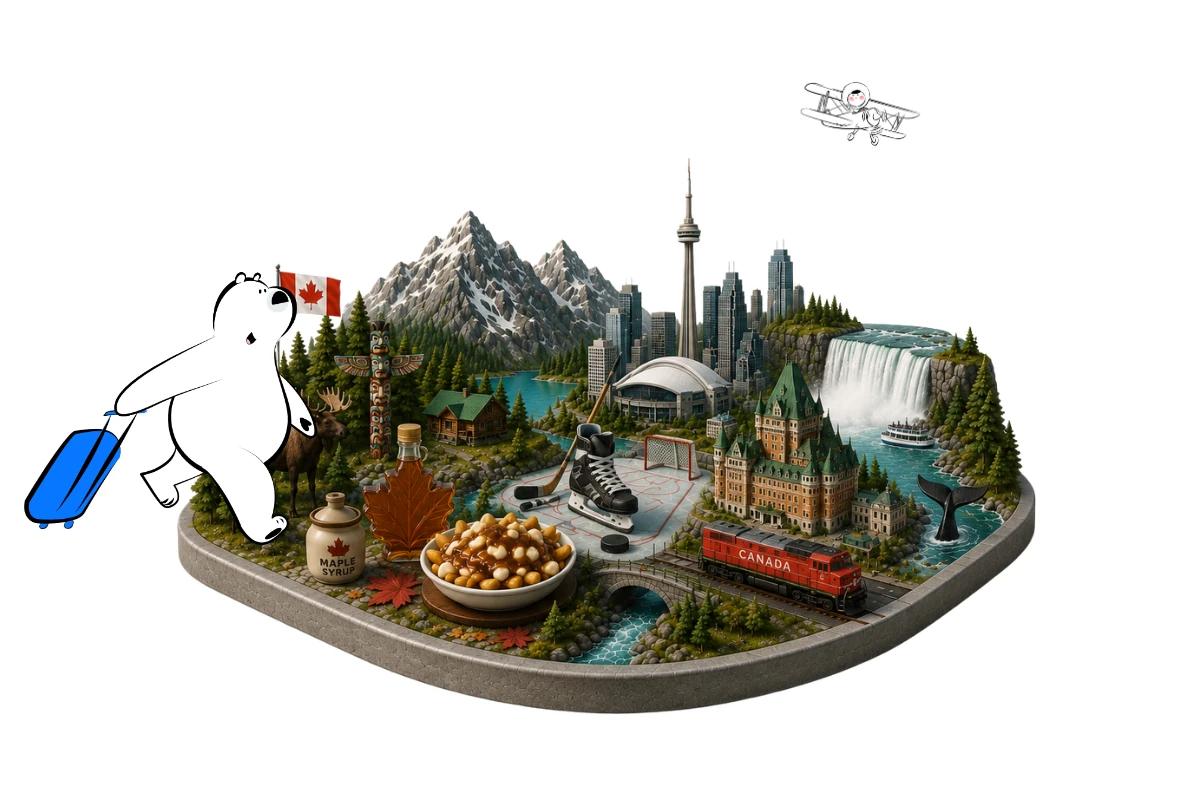
Canada is known for the Rocky Mountains, Niagara Falls, maple syrup, poutine, ice hockey, multicultural cities and vast natural landscapes. For travelers, these familiar Canadian symbols lead to mountain road trips, regional food discoveries, wildlife encounters and city breaks with distinctly different characters.
Canada covers an enormous area, so most trips focus on one or two regions. The landscapes, food and travel experience can change considerably between British Columbia, the Prairies, Ontario, Quebec, Atlantic Canada and the northern territories.
Canada’s Famous Natural Landscapes
The Canadian Rockies
The Canadian Rockies are one of the clearest answers to what Canada is known for. Snow-covered peaks, glacial valleys and blue-green lakes stretch across Alberta and British Columbia.
Banff and Jasper are the best-known bases for hiking, mountain drives and wildlife watching. Lake Louise, Moraine Lake and the Icefields Parkway are major highlights, but access arrangements can change by season. Check current shuttle reservations, road conditions and trail notices through Parks Canada before visiting.
Turquoise glacial lakes
Canada’s turquoise lakes receive their colour from fine rock particles carried into the water by melting glaciers. Lake Louise, Moraine Lake, Peyto Lake and Emerald Lake are among the most photographed examples.
The colour is usually strongest during the warmer months after the lakes have thawed. Mountain weather can change quickly, while some roads, trails and viewpoints remain inaccessible until late spring or early summer.
Forests and national parks
Canada is famous for its extensive forests, open wilderness and protected natural areas. Its national parks include mountain ranges, coastal reserves, grasslands, wetlands, boreal forests and Arctic tundra.
Travelers visiting remote areas should check fire restrictions, trail closures and wildlife notices before setting out. Mobile reception may also weaken away from towns and major roads.
The Northern Lights
The aurora borealis can appear across northern Canada when skies are dark and clear. Yukon, the Northwest Territories, northern Manitoba and parts of northern Alberta are among the best-known viewing regions. You can check also where you can see the Northern Lights outside Canada.
Long winter nights create more viewing opportunities, but aurora activity and cloud cover remain unpredictable. Staying for several nights gives travelers a better chance than planning around a single evening.
Famous Canadian Food And Drink
Maple syrup
Maple syrup is one of Canada’s most recognizable products. Quebec produces most of the country’s supply and is closely associated with spring sugar-shack traditions.
A traditional sugar-shack meal may include pancakes, baked beans, sausages and maple taffy poured over snow. Experiences range from rustic countryside cabins to larger seasonal restaurants.
Poutine
Poutine combines French fries, cheese curds and brown gravy. It originated in Quebec and is now served across Canada, although recipes and toppings vary.
For a classic version, visit a Quebec snack bar or casse-croûte. Fresh cheese curds should retain a mild flavour and slightly springy texture beneath the hot gravy.
Regional seafood
Canada’s Atlantic and Pacific coastlines support different seafood traditions. Atlantic Canada is associated with lobster, mussels, scallops and oysters, while British Columbia is known for Pacific salmon, spot prawns and Dungeness crab.
Availability depends on the region and fishing season. Coastal markets and independent restaurants are often good places to try seafood landed nearby.
Butter tarts and Nanaimo bars
Butter tarts are small pastries filled with a rich mixture usually made from butter, sugar, syrup and eggs. They are strongly associated with Ontario, although opinions remain divided over whether raisins belong inside.
Nanaimo bars come from British Columbia. They combine a crumb base, custard-flavoured centre and chocolate topping, creating a small but particularly rich dessert.
Landmarks And Cities Canada Is Known For
Niagara Falls
Niagara Falls is Canada’s most internationally recognizable natural landmark. The Canadian side offers wide views of Horseshoe Falls, the largest of the three waterfalls that form the Niagara Falls system.
Boat trips, riverside viewpoints and evening illuminations are popular. Summer weekends and public holidays can be crowded, so arriving early often provides a calmer experience.
Toronto and the CN Tower
Toronto is known for its skyline, multicultural neighbourhoods, sport and broad dining scene. The CN Tower remains its defining landmark, while Kensington Market, Chinatown and the Distillery District reveal different sides of the city.
Toronto also served as one of Canada’s two host cities for the 2026 men’s football tournament. Travelers exploring the country’s recent sporting history can see the wider North American context in Eskimo’s FIFA World Cup 2026 host cities overview.
Quebec City’s historic centre
Quebec City is known for fortified walls, historic squares, steep streets and French-influenced architecture. Old Quebec feels different from most North American city centres, with stone buildings overlooking the St. Lawrence River.
French is the main language in Quebec, although English is commonly understood in major visitor areas. Canada recognizes English and French as its official languages at the federal level.
Vancouver’s city-and-nature setting
Vancouver combines urban neighbourhoods with beaches, forests and nearby mountains. Visitors can cycle around Stanley Park, explore Granville Island and reach mountain viewpoints without traveling far from the city centre.
The coastal climate is milder than in many Canadian cities, but rain is common outside summer. Vancouver was also a Canadian host city during the 2026 football tournament.
Get Eskimo eSIM to stay connected in Canada
Need internet in Canada? Here's what we recommend:

Fixed data plans
- No speed reduction
- No expiry, keep your data forever
- Transfer data to anyone
- Personal hotspot



Canadian Culture And National Identity
Ice hockey
Ice hockey is deeply connected to Canadian identity, from frozen community rinks and junior leagues to major professional teams. Interest is especially strong during the winter season and the Stanley Cup playoffs.
Tickets for major professional games can be expensive. Junior, university and local league matches can offer a more affordable way to experience Canadian hockey culture.
Multicultural cities
Canada’s largest cities have been shaped by generations of immigration. Toronto, Vancouver, Montreal and Calgary contain neighbourhoods, markets and restaurants connected to communities from around the world.
That diversity is especially visible through food. A single city trip may include Cantonese dim sum, Punjabi cooking, Caribbean dishes, Middle Eastern bakeries and regional Canadian specialties.
Indigenous cultures and experiences
First Nations, Inuit and Métis cultures are living, diverse and specific to their communities and territories. They should not be presented as one uniform tradition or reduced to historical displays.
Travelers can support Indigenous-owned cultural centres, guided experiences, accommodation and culinary businesses. Destination Indigenous provides information about tourism experiences led by Indigenous operators across Canada.
National and regional celebrations
Canada Day is observed on 1 July, but public holidays and local traditions vary between provinces and territories. Quebec’s Saint-Jean-Baptiste Day, Calgary’s Stampede season and winter festivals in several cities create very different travel experiences.
Holiday dates can affect transport, opening hours and accommodation demand. Eskimo’s overview of Canada public holidays in 2026 provides additional planning context for long weekends and seasonal trips.
Wildlife And Outdoor Experiences
Bears, moose and whales
Canada is associated with black bears, grizzly bears, polar bears, moose, elk and several whale species. Sightings are possible in many regions, but they are never guaranteed.
British Columbia is known for whale-watching and bear-viewing tours, while Churchill in Manitoba is associated with polar bears and beluga whales. Responsible operators maintain safe distances and follow regional wildlife regulations.
Winter sports
Canada’s cold winters support skiing, snowboarding, ice skating, snowshoeing and other seasonal activities. Whistler, Banff, Mont-Tremblant and resorts across British Columbia and Alberta are among the best-known winter destinations.
Snowfall and resort opening dates vary each year. Check official resort updates before booking accommodation, transport or equipment.
Autumn colours
Eastern Canada is known for forests turning red, orange and gold during autumn. Ontario, Quebec and the Maritime provinces are popular for scenic drives and hiking during the foliage season.
Peak colour depends on latitude, elevation and weather. It often occurs between late September and mid-October, but regional foliage reports are more reliable than fixed annual dates.
Planning A Trip Around What Canada Is Known For
A first trip should focus on a manageable region rather than attempting to cross the entire country. Domestic flights between major destinations can take several hours, while road distances are often far greater than they appear on a map.
For mountain scenery and glacial lakes, focus on Alberta and British Columbia. Ontario works well for Toronto, Niagara Falls, museums and multicultural food. Quebec suits travelers interested in French-speaking culture, historic cities and regional cuisine. Atlantic Canada is stronger for coastal scenery, seafood and smaller communities.
Summer provides the widest access to hiking routes, lakes and road trips, but it is also the busiest season. Autumn brings colourful foliage to many eastern regions, while winter is better suited to skiing, skating and northern-light trips.
Using Mobile Data Across Canada
Mobile data helps with national park notices, road conditions, weather alerts, attraction reservations and navigation between distant stops. Coverage is generally stronger in cities and along major highways, while reception may weaken in mountain valleys, forests, rural roads and remote national parks.
An Eskimo Canada eSIM plan is suitable for a single-country trip. Eskimo’s coverage across 175 countries and regions is also useful for travelers entering through the United States or continuing elsewhere after Canada, while no-expiry fixed data can remain available for another journey when the full allowance is not used.
New users can also claim free 500MB of Global Data.
Frequently Asked Questions
What is Canada most famous for?
Canada is most famous for the Rocky Mountains, Niagara Falls, maple syrup, poutine, ice hockey, multicultural cities and large areas of protected wilderness.
What food is Canada known for?
Canada is known for poutine, maple syrup, butter tarts, Nanaimo bars and regional seafood. Food traditions vary considerably between Quebec, Ontario, British Columbia, the Prairies and Atlantic Canada.
Which part of Canada is best for a first visit?
Toronto and Niagara Falls suit travelers interested in cities and major landmarks. Banff is better for mountain scenery, Vancouver combines city attractions with nature, and Quebec City offers historic architecture and French-speaking culture.
What is Canada known for culturally?
Canada is known for its English and French linguistic heritage, multicultural communities, ice hockey and the diverse living cultures of First Nations, Inuit and Métis peoples.
What is the best time to visit Canada?
The best time depends on the experience. Summer is popular for hiking and road trips, autumn brings colourful foliage, winter suits skiing and aurora trips, and spring can offer fewer crowds in many cities