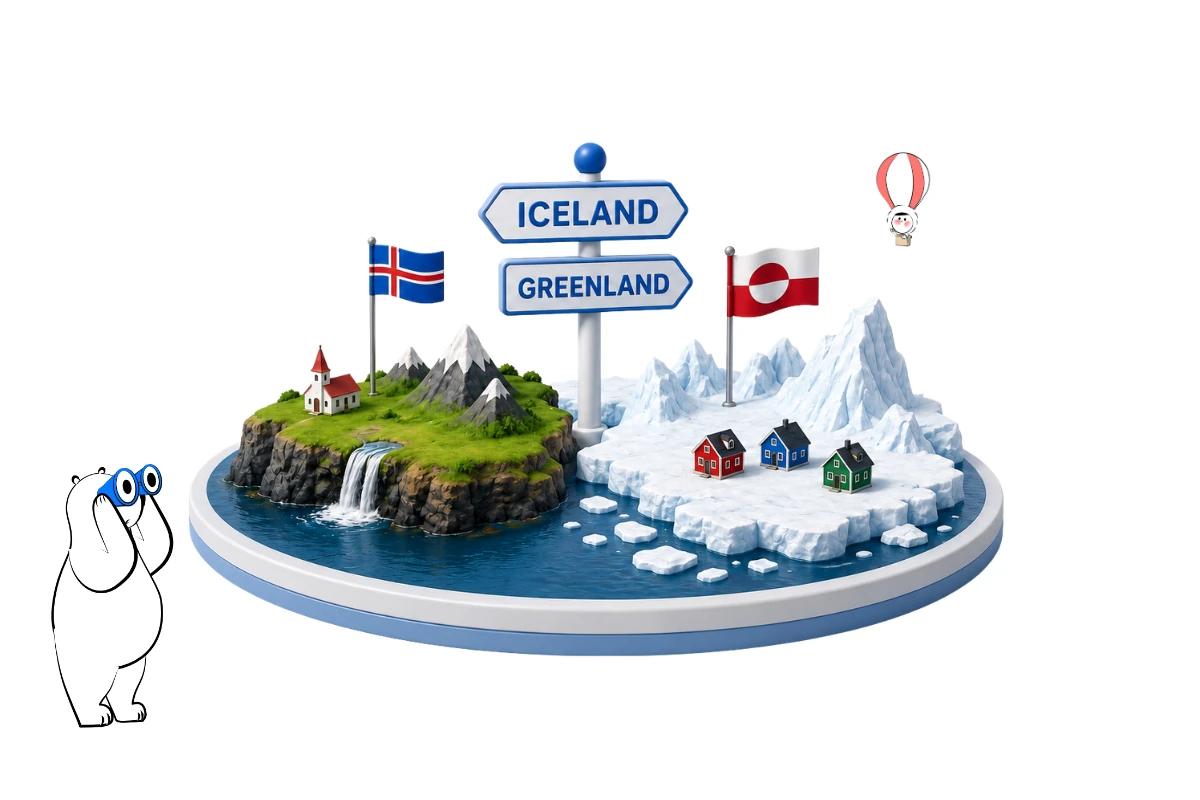
Iceland is relatively green and Greenland is mostly icy because their names came from Norse explorers, not from an accurate comparison of their landscapes. Iceland was named after sea ice seen by an early visitor, while Greenland received an inviting name that may have helped attract settlers.
The contrast is real, but simplified. Iceland contains glaciers and snowy highlands, while parts of southern Greenland become green during summer. The names describe particular experiences and settlement stories rather than each place as a whole.
Why Greenland Is Called Greenland
Erik the Red is credited with naming Greenland more than 1,000 years ago after being exiled from Iceland and exploring land to the west.
According to the Norse sagas, he returned to Iceland describing the territory as “green land.” The attractive name may have encouraged other people to join the new settlement. Erik later sailed back with a fleet, and Norse communities developed in the greener fjords of southern Greenland. Visit Greenland’s account of Erik the Red explains how the name became connected to the island’s Viking settlement period.
Calling Greenland green was not entirely fictional. South Greenland has fertile valleys, grazing land, and vegetation during summer. The name reflected the area where Norse settlers lived, rather than the enormous ice-covered interior.
Why Greenland Is Covered In Ice
Greenland lies farther north than Iceland, and a vast ice sheet covers most of its interior. Its high elevation, Arctic position, and long-term accumulation of snow have allowed ice to remain across much of the island.
The edges are more varied. Coastal Greenland includes rocky mountains, fjords, tundra, settlements, and green valleys during warmer months.
The scale of the ice becomes especially clear at Ilulissat Icefjord, where one of the world’s most active glaciers carries ice from the Greenland Ice Sheet toward the sea. UNESCO describes the site as a rare meeting of an enormous ice sheet, a fast-moving glacier, and an iceberg-filled fjord.
Why Iceland Is Called Iceland
The origin of the name Iceland is traditionally linked to the Norse explorer Hrafna-Flóki Vilgerðarson.
According to Icelandic settlement tradition, Flóki climbed a mountain after a difficult winter and saw a fjord filled with drift ice. He then called the island Ísland, meaning “land of ice.”
The name was based on one harsh experience in one part of the country. It did not mean that the entire island was permanently frozen.
Why Iceland Is So Green
Iceland sits farther south than much of Greenland and is influenced by relatively warm North Atlantic ocean currents. Coastal areas have milder conditions than their latitude might suggest, allowing grass, moss, farmland, and low vegetation to grow.
Its landscapes also receive plenty of rain and snow. Volcanic soils, rivers, geothermal activity, and long summer daylight support green valleys and agricultural areas.
Iceland is still an icy country. Glaciers cover parts of the island, and the interior highlands can remain cold, barren, and difficult to cross. The official Visit Iceland destination information presents the country as a mix of glaciers, volcanic landscapes, hot springs, waterfalls, and green lowlands.
Get Eskimo eSIM to stay connected globally
Need internet? Here's what we recommend:

Fixed data plans
- No speed reduction
- No expiry, keep your data forever
- Transfer data to anyone
- Personal hotspot


The Names Were Never Truly Reversed
The idea that Vikings deliberately switched the names is catchy, but too simple.
Greenland’s name may have served as persuasive promotion, yet its southern settlement areas really can be green. Iceland’s name came from an encounter with drift ice, although much of its inhabited coastline becomes green during warmer months.
Travelers drawn to these northern landscapes can compare the best places to see the northern lights or learn how to see the northern lights before planning a winter trip.
Mobile Data For An Iceland Trip
Mobile data helps with road-condition updates, changing weather forecasts, hiking information, accommodation messages, and northern lights alerts in Iceland. Reception is generally stronger in Reykjavík, towns, and along major roads, while it may weaken in remote highlands, tunnels, valleys, and isolated coastal areas.
An Eskimo Iceland eSIM plan can be prepared before arrival. Eskimo’s coverage across 175 countries and regions is useful for travelers continuing through Denmark, Norway, or other parts of Europe, while no-expiry fixed data can remain available for another trip if the full allowance is not used in Iceland.
New users can also claim free 500MB of Global Data.
FAQ
Who named Iceland and Greenland?
Norse explorers named both places. Hrafna-Flóki is traditionally associated with naming Iceland, while Erik the Red is credited with naming Greenland.
Why is Greenland called Greenland if it is covered in ice?
Erik the Red reportedly chose the attractive name to encourage settlement. The southern fjords where Norse communities developed also become genuinely green during summer.
Why is Iceland green despite its name?
Iceland has a relatively mild maritime climate, regular precipitation, long summer daylight, and extensive coastal vegetation. It also contains glaciers and cold interior highlands.
Did Vikings switch the names of Iceland and Greenland?
There is no strong evidence of a deliberate switch. Each name came from a different explorer, experience, and purpose.
Is Greenland completely covered in ice?
No. The interior is dominated by the Greenland Ice Sheet, but many coastal areas are ice-free and include fjords, tundra, mountains, settlements, and seasonal vegetation.