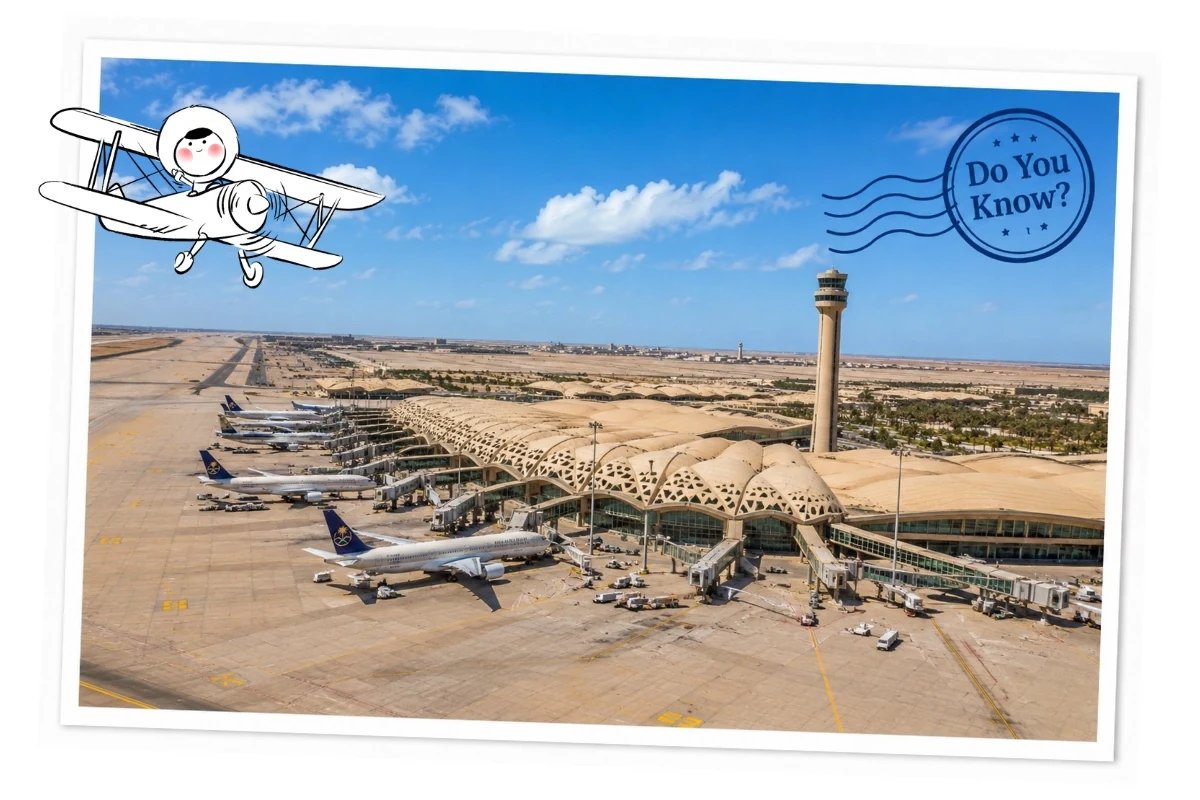
King Fahd International Airport in Saudi Arabia is commonly ranked as the biggest airport in the world by total land area. Located near Dammam, the airport occupies a reported footprint of roughly 776 square kilometres (300 square miles).
That figure comes with an important distinction. The entire reported area is not filled with terminals and runways. The measurement covers the airport’s overall property, including land associated with infrastructure and future development.
How Big Is the Biggest Airport in the World?
King Fahd International Airport, also known by its airport code DMM, serves Dammam and Saudi Arabia’s Eastern Province.
Its headline land area of around 776 km² makes it dramatically larger by total footprint than other major airports commonly included in land-area rankings. Recent rankings place Denver International Airport a distant second at about 53 square miles.
The scale can sound almost impossible because most travelers only experience a fraction of the property. The passenger terminals, runways, roads, and other operational facilities occupy only part of the airport’s overall land.
That is why “largest airport by land area” is the most accurate way to describe King Fahd International Airport.
Biggest Does Not Mean Busiest
Airport rankings change depending on what is being measured.
King Fahd International Airport leads when comparing total land area, but that does not make it the airport handling the most passengers.
Passenger traffic is a completely different measurement. Airports with much smaller physical footprints can process far more travelers each year. Eskimo’s busiest airports in the world ranking looks specifically at passenger numbers rather than physical size.
So, in simple terms:
- Biggest by total land area: King Fahd International Airport
- Busiest: determined by annual passenger traffic
- Largest terminal: another separate measurement
This distinction explains why different airports can appear as the “world’s largest” depending on the ranking.
Get Eskimo eSIM to stay connected globally
Need internet while travelling? Here's what we recommend:

Fixed data plans
- No speed reduction
- No expiry, keep your data forever
- Transfer data to anyone
- Personal hotspot


Traveling Through A Mega Airport
Large airports can mean longer walks, more distant gates, and extra time moving between different parts of a terminal complex. Checking your gate and flight information before boarding can save unnecessary backtracking.
If you have a long connection, keeping travel documents, chargers, and essential items accessible can also make the wait easier. Eskimo’s airport survival guide has practical tips for navigating busy terminals, delays, and layovers.
Travelers using King Fahd International Airport can check current passenger information through the official airport website.
Mobile Data At King Fahd International Airport
Mobile data can help at King Fahd International Airport with boarding passes, live flight updates, baggage information, ride-hailing, and onward navigation toward Dammam or elsewhere in Saudi Arabia. Reception is generally stronger around populated and developed areas, but indoor signal quality can vary within large terminal spaces.
An Eskimo Saudi Arabia eSIM plan can provide data for a trip to Dammam and other parts of the country. Eskimo’s coverage across 175 countries and regions is also useful for international travelers arriving from or continuing to another destination, while no-expiry fixed data means unused data can remain available for a future trip.
New users can also claim free 500MB of Global Data.
FAQs:
What is the biggest airport in the world?
King Fahd International Airport in Saudi Arabia is commonly ranked as the biggest airport in the world by total land area, with a reported footprint of roughly 776 km².
Where is King Fahd International Airport?
King Fahd International Airport is near Dammam in Saudi Arabia’s Eastern Province. Its IATA airport code is DMM.
How big is King Fahd International Airport?
Its commonly reported total land footprint is around 776 square kilometres, or approximately 300 square miles. Much of that figure represents the overall airport property rather than passenger terminals and runways.
Is the biggest airport in the world also the busiest?
No. Airport size and passenger traffic are different measurements. King Fahd International Airport ranks first by total land area, while rankings of the world’s busiest airports are based on passenger numbers.