Nusa Penida is a large island southeast of Bali best known for dramatic limestone cliffs, turquoise bays, beaches, snorkeling, and scenic viewpoints. Most travelers reach it by fast boat from Bali, with Sanur serving as one of the main departure points.
A day trip can cover several famous sights, but staying one or two nights gives you much more breathing room. Roads can be slow, attractions are spread across the island, and trying to visit both the east and west coasts in one rushed day can mean spending more time in a vehicle than enjoying the scenery.
Nusa Penida works especially well for travelers who enjoy coastal landscapes, snorkeling, photography, and active sightseeing. Anyone planning to explore independently should also be prepared for steep paths, uneven terrain, strong sun, and longer road journeys than distances on a map may suggest. The topic was validated as a strong destination opportunity, particularly around transport, accommodation, activities, and trip planning.
Nusa Penida Location
Nusa Penida lies southeast of Bali and is part of Klungkung Regency. It is the largest of the three main Nusa islands, alongside Nusa Lembongan and Nusa Ceningan.
The island is separated from mainland Bali by the Badung Strait, so there is no road connection. Travelers arrive by boat at ports including Toyapakeh and Sampalan. The Bali Provincial Government identifies Sampalan as a port receiving speedboats from Sanur and Padang Bai. (Bali Provincial Government)
If Nusa Penida is part of a longer Bali holiday, the Indonesia travel guide can help with planning other regions before or after the island.
Getting To Nusa Penida From Bali
For most visitors, Sanur is the most convenient starting point for Nusa Penida. Fast boats operate between Sanur and the Nusa islands, and Sanur Port was developed specifically to improve connections with Nusa Penida and Nusa Ceningan. (Dispuprkim Bali)
Boat times and operators can change, so check your selected operator’s current departure details before traveling. Sea conditions can also affect crossings.
From Sanur
Arrange transport to Sanur Port, then take a fast boat to Nusa Penida. Allow extra time before departure for check-in, luggage handling, and finding the correct boat.
Sanur is also a useful base before or after Nusa Penida because it has hotels, restaurants, and easy access to southern Bali. Travelers building a wider itinerary can also use Eskimo’s Bali first-timer ideas for other stops around the island.
From Ubud
There is no direct road route from Ubud to Nusa Penida. The usual journey is Ubud to Sanur by road, followed by a boat crossing.
Traffic conditions around Bali can vary considerably, so avoid planning a very tight connection between your hotel transfer and boat departure.
From Bali Airport
From I Gusti Ngurah Rai International Airport, travel by road to Sanur before taking a boat to Nusa Penida.
If your flight arrives late in the day, staying overnight in Bali may be more practical than trying to connect immediately with a boat. Check your operator’s latest departures before booking flights and accommodation around the crossing.
Best Time To Visit Nusa Penida
For outdoor sightseeing, April to October is generally the easiest period to visit. Indonesia’s official tourism information identifies April to October as Bali’s typical dry season, although seasonal patterns have become less predictable. (Visit Indonesia)
Dry weather usually makes cliff viewpoints, beach paths, scooter journeys, and boat trips easier to plan. Popular locations can also become crowded during peak travel periods, especially around late morning and early afternoon.
November to March is generally wetter. Nusa Penida can still be visited, but heavy rain may affect road conditions, visibility, walking paths, and sea crossings.
Best Things To Do In Nusa Penida
Nusa Penida’s biggest attractions are concentrated around its coast, so grouping nearby sights together saves considerable travel time.
Kelingking Beach
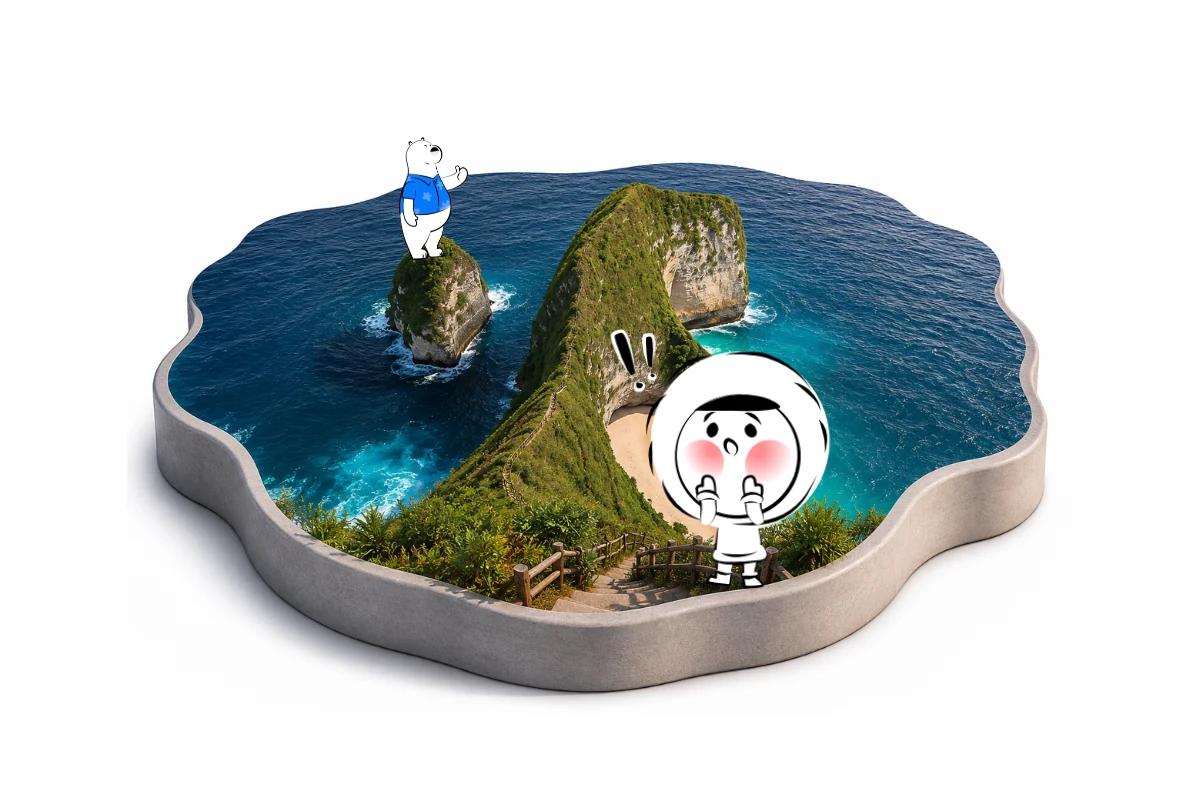
Kelingking Beach is the island’s signature viewpoint, with a steep green headland dropping toward a white-sand beach below. Indonesia’s official tourism material also highlights Kelingking as one of Nusa Penida’s standout attractions. (Visit Indonesia)
The viewpoint is much easier to visit than the beach itself. The descent is steep and physically demanding, so travelers with limited time can enjoy the cliff view without hiking all the way down.
Broken Beach And Angel’s Billabong
Broken Beach is known for its natural rock arch and circular coastal inlet. Nearby Angel’s Billabong is a natural tidal formation.
Conditions around exposed coastal rock can change quickly. Keep back from unsafe edges and avoid entering water when waves or local warnings indicate dangerous conditions.
Diamond Beach
Diamond Beach sits beneath towering limestone cliffs on Nusa Penida’s eastern side. A staircase gives access toward the beach, although the descent and return climb require reasonable mobility.
Go earlier in the day for cooler conditions and more time to combine the stop with other east-coast sights.
Atuh Beach
Atuh Beach is another east-coast option framed by cliffs and offshore rock formations. It suits travelers who want a beach stop rather than moving only between viewpoints.
Crystal Bay
Crystal Bay is popular for swimming, snorkeling, and sunset visits. Sea conditions vary, so follow local advice and avoid entering the water when currents are strong.
Snorkeling and diving trips around Nusa Penida can also include marine sites where manta rays are sometimes encountered. Sightings are never guaranteed, and choosing an experienced operator is important.
Get Eskimo eSIM to stay connected globally
Need internet while travelling? Here's what we recommend:

Fixed data plans
- No speed reduction
- No expiry, keep your data forever
- Transfer data to anyone
- Personal hotspot


Getting Around Nusa Penida
There is no comprehensive public transport network designed around the island’s tourist sights, so visitors usually rely on private drivers, organized tours, or scooters.
A private car with a driver is often the easier choice for first-time visitors. It removes the need to navigate unfamiliar roads and works well when visiting several attractions in one day.
Scooters offer more flexibility, but some roads are narrow, steep, uneven, or busy. Only ride if you are properly licensed, insured, comfortable on challenging roads, and wearing appropriate safety equipment.
Travel times can be longer than expected. Instead of trying to cross the island repeatedly, group west-coast sights such as Kelingking and Broken Beach together, then cover east-coast locations on a separate route.
Where To Stay In Nusa Penida
Choose your base according to your itinerary rather than simply booking the closest hotel to one attraction.
Toyapakeh and the northwest coast are practical for boat arrivals, restaurants, diving operators, and access toward several popular areas.
The north coast around Sampalan can also work well for travelers who want access to local services and onward transport.
Staying closer to the east can make sense if Diamond Beach and Atuh Beach are priorities, but accommodation and dining choices may be more spread out.
For a one-night visit, staying near your arrival port usually keeps logistics simpler.
How Long To Spend In Nusa Penida
Two days and one night is a strong minimum for most travelers. It allows you to divide the island into two areas instead of racing between distant attractions.
A day trip is possible if you only want a handful of highlights. Keep the itinerary focused on one side of the island and avoid treating every famous viewpoint as mandatory.
Three days gives you more room for snorkeling, slower beach stops, weather changes, and less time spent rushing between locations.
Nusa Penida Trip Planning Tips
A few practical choices can make the island considerably easier to enjoy:
- Carry drinking water and sun protection, especially around exposed viewpoints.
- Wear secure footwear for steep paths and uneven ground.
- Keep some cash for smaller businesses and local expenses.
- Confirm boat details before leaving your accommodation.
- Download important booking information before traveling.
- Avoid packing both east and west Nusa Penida into an overly tight schedule.
- Follow local safety signs around cliffs, beaches, currents, and natural pools.
- Check weather and sea conditions before snorkeling or taking a boat.
Mobile Data On Nusa Penida
Mobile data can help with boat confirmations, driver messages, navigation between coastal sights, weather checks, and finding accommodation. Reception is generally more dependable around settlements and populated routes, while signal may weaken near remote beaches, cliffs, quieter roads, or during sea crossings. Coverage depends on terrain and local partner networks.
An Eskimo Indonesia eSIM plan is the most relevant option for a Nusa Penida trip. Eskimo’s coverage across 175 countries and regions can also be useful if Indonesia is one stop on a longer international itinerary or you have another trip planned afterward. No-expiry fixed data means any unused fixed data can remain available for a future trip instead of needing to be used before a short Bali holiday ends. (Eskimo Travel)
New users can also claim free 500MB of Global Data.
FAQs:
FAQs
How do you get to Nusa Penida from Bali?
Most travelers take a fast boat from Bali to Nusa Penida, with Sanur serving as one of the main departure points. Check current boat schedules and arrive early enough for check-in.
How many days do you need in Nusa Penida?
Two days and one night is a comfortable starting point. A day trip works for a small number of sights, while two or three days allows more time for both coasts, beaches, and snorkeling.
Is Nusa Penida worth visiting on a Bali trip?
Yes, particularly if you enjoy dramatic coastal scenery, beaches, snorkeling, and viewpoints. Stay overnight if you want a less rushed experience.
Where is the best area to stay in Nusa Penida?
The northwest and Toyapakeh area is convenient for many first-time visitors because it offers practical access to boat arrivals, restaurants, drivers, and tour operators.
How do tourists get around Nusa Penida?
Most visitors use a private driver, organized tour, or scooter. A driver is usually the easiest option for first-time visitors, while scooters suit experienced and properly licensed riders who are comfortable with steep and uneven roads.