
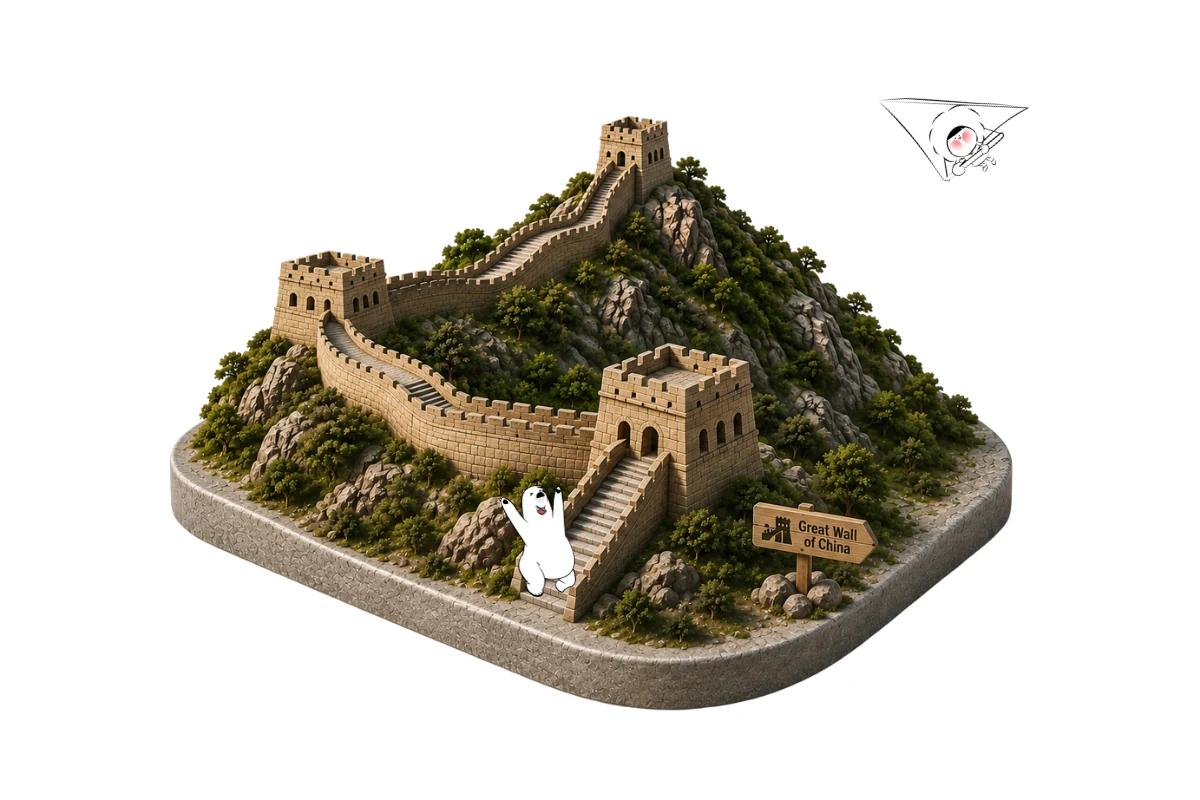
Yes, the Great Wall of China is worth visiting, but choosing the right section can make a huge difference. For most first-time visitors staying in Beijing, Mutianyu is the best all-round choice because it combines mountain scenery, restored walking routes, visitor facilities, and relatively straightforward access. Badaling is a practical option when convenience matters most, while Jinshanling is better suited to travelers prioritizing hiking, photography, and a less developed Great Wall experience.
This Great Wall of China travel guide focuses on that decision first, then covers how to visit from Beijing, when to go, how long you need, walking difficulty, crowds, and the history behind what you are seeing.
The Great Wall is not one continuous tourist walkway. It is an enormous defensive system of walls, passes, towers, fortresses, and other structures built across northern China over many centuries.
Great Wall of China Quick Guide
If you are deciding where to go, start here:
- Best for first-time visitors: Mutianyu
- Best for straightforward visitor infrastructure: Badaling
- Best for hiking and photography: Jinshanling
- Best for a night experience: Simatai
- Best for a shorter journey from central Beijing: Juyongguan or Badaling
- Best all-round choice: Mutianyu
The trade-offs matter too. Choose Mutianyu for balance, Badaling when straightforward access matters more than atmosphere, Jinshanling when you are willing to travel farther for hiking and scenery, and Simatai when the night experience is part of the reason for going.
Most travelers only need to visit one Great Wall section. Picking the section that fits your travel style is usually more rewarding than trying to squeeze several into the same day.
Which Great Wall Section Should You Visit?
There are many sections of the Great Wall, but visitors based in Beijing commonly consider Mutianyu, Badaling, Jinshanling, Simatai, and Juyongguan.
Mutianyu: Best for most first-time visitors
Mutianyu is the strongest all-round recommendation for a first Great Wall trip.
Located in Beijing’s Huairou District, the restored section combines mountain scenery and watchtowers with developed visitor facilities. Its official scenic-area information also confirms cable-car, ropeway, and slide facilities, which can reduce some of the climbing required during a visit. (MUTIANYU GREAT WALL)
That combination makes Mutianyu particularly suitable for first-time visitors, families, and travelers who want a classic Great Wall experience without choosing one of the more hiking-focused sections.
The official Mutianyu website currently uses real-name reservation and publishes seasonal opening information, so check its latest visitor notice before you travel. (Mutianyu Great Wall)
Badaling: Best when convenience is the priority
Badaling is another practical option for travelers who value established visitor infrastructure and straightforward trip planning.
It is also one of the Great Wall’s best-known sections, so the experience can feel very different depending on when you visit. Rather than assuming it will always be crowded, treat timing as part of your planning. Weekends and major Chinese holiday periods are particularly worth checking before you go.
If convenience matters more than finding a quieter hiking atmosphere, Badaling can make sense. Travelers prioritizing mountain walks and photography may prefer Mutianyu or Jinshanling.
Jinshanling: Best for hiking and photography
For travelers who care more about walking and scenery than easy logistics, Jinshanling is one of the strongest choices.
Its appeal is the experience of following the Wall through a more expansive mountain landscape rather than simply reaching a famous viewpoint. Recent traveler reports also consistently highlight the longer journey from Beijing as the main trade-off, so it is better suited to a dedicated Great Wall day than a packed sightseeing schedule. (Reddit)
Choose Jinshanling if hiking and photography are major priorities and you are comfortable spending more of the day in transit.
Simatai: Best for a night experience
Simatai stands out because it can be combined with Gubei Water Town and offers a designated night-tour experience.
Current Gubei Water Town visitor information confirms that Simatai night visits are tied to entry to Gubei Water Town, while visitors interested only in a daytime Simatai visit are advised to book ahead because ticket availability is limited. (Gubei Water Town)
That makes Simatai particularly interesting if you want something different from a standard daytime Great Wall visit.
Night-tour schedules and access arrangements can change, however. Check the current official Gubei Water Town and Simatai information before building your itinerary around an evening visit.
Juyongguan: Best when travel time matters
Juyongguan is worth considering if you want a Great Wall experience without traveling as far from Beijing.
Beijing’s official tourism information describes Juyongguan as the closest Great Wall section to Beijing, slightly closer than Badaling. Its setting is built around an important historic mountain pass, giving the visit a different feel from longer ridge walks such as Jinshanling. (Visit Beijing)
That makes it a practical alternative when your Beijing itinerary is tight. If sweeping mountain walks are the priority, Mutianyu or Jinshanling will usually be stronger choices.
How to Visit the Great Wall From Beijing
Most international travelers visit the Great Wall from Beijing as a day trip, but there is no single best way to get there.
Your transport choice should depend on how much independence you want and which section you choose.
- Public transport: Best for budget-conscious travelers who are comfortable navigating China’s transport system and working around fixed schedules.
- Organized tour or tourist bus: Best if you want transportation arranged in advance and would rather avoid planning transfers yourself.
- Private driver or taxi: Best for flexibility, families, small groups, early departures, or sections where public transport is less convenient.
Badaling and the sections closer to Beijing are generally easier to build into an independent trip. Mutianyu has several transport options but still requires more planning than simply traveling around central Beijing. More distant choices such as Jinshanling make a private transfer, tourist service, or carefully planned independent journey more appealing.
If you plan to use public transport independently, read Eskimo’s Transportation in China: A Complete Guide for Travelers before your trip.
China’s transport, payment, and navigation systems may also work differently from what you use at home. Eskimo’s Things You Should Know Before Visiting China covers practical preparation before arrival.
For a comfortable day, avoid combining too many major Beijing attractions with the Great Wall. Transportation plus several hours of walking can already turn the excursion into a full day.
Best Time to Visit the Great Wall of China
The best time to visit the Great Wall of China is generally spring or autumn if comfortable walking conditions are your priority.
Spring can bring milder temperatures and greener scenery, although conditions vary.
Summer is lush but can also be hot, humid, rainy, and busy. Bring water and sun protection, and check the weather forecast before leaving Beijing.
Autumn is popular for cooler walking conditions and seasonal mountain scenery.
Winter can produce a striking and much colder Great Wall experience. Wind, snow, freezing temperatures, and icy stairs can also make walking more difficult.
Chinese public holidays can significantly increase demand at major attractions and on transportation. If possible, check the holiday calendar when choosing your dates and book ahead where reservations are required.
How Long to Spend at the Great Wall
Allow half a day to a full day for a Great Wall trip from Beijing.
For many travelers, roughly two to four hours of actual Wall time is enough for walking, watchtowers, viewpoints, and photographs. The complete excursion takes longer once transportation, ticketing, shuttle transfers, cable cars, meals, and walking to and from entrances are included.
The section matters too.
A closer section can fit into a shorter itinerary, while Jinshanling deserves more time because getting there and back consumes a larger part of the day.
Avoid measuring the experience only by how many hours you physically spend standing on the Wall. A relaxed visit to one well-chosen section is usually better than racing through several attractions.
Get Eskimo eSIM to stay connected in China
Need internet in China? Here's what we recommend:

Fixed data plans
- No speed reduction
- No expiry, keep your data forever
- Transfer data to anyone
- Personal hotspot



Unlimited data plans
- Unlimited day pass
- Daily 3GB high-speed + 1Mbps unlimited after
- Personal hotspot



Tickets, Cable Cars and Practical Costs
There is no single Great Wall ticket because the tourist sections operate as separate visitor attractions.
Entrance tickets, shuttle services, cable cars, ropeways, slides, and night experiences can therefore have different booking arrangements and charges.
Mutianyu, for example, currently operates real-name ticket reservations through its official scenic-area system. Its official visitor information also distinguishes between standard admission and services such as cable cars, ropeways, and the slide. (MUTIANYU GREAT WALL)
Other sections may use different arrangements.
For that reason, check the official website or official booking channel for your chosen section shortly before visiting. Do not rely on an old ticket price or opening schedule from a travel article.
This is particularly important for:
- Current opening hours
- Advance reservation requirements
- Passport or identification requirements
- Cable-car and shuttle operations
- Night-tour schedules
- Temporary closures
- Weather-related restrictions
Booking ahead is particularly sensible during weekends, holidays, and other high-demand periods.
How Difficult Is Walking the Great Wall?
Walking the Great Wall can range from manageable sightseeing to a strenuous hike.
Even restored sections contain stairs, slopes, uneven surfaces, and repeated climbs between watchtowers. The Wall was built for defence, not as a modern pedestrian trail.
Cable cars and similar services can reduce some climbing at developed sections such as Mutianyu, but they do not make the entire experience flat or step-free. (MUTIANYU GREAT WALL)
Wear shoes with reliable grip and carry water. Sun protection is important in warm weather, while winter conditions require extra caution on exposed or icy surfaces.
Families and travelers who prefer less demanding walking should generally favor developed sections with established visitor facilities and research the exact route before arriving.
If hiking is one of the main reasons for your visit, Jinshanling offers a more walking-focused experience. Research current trail access before setting out rather than assuming every historic stretch of the Wall is open to visitors.
Great Wall Facts That Help You Understand What You Are Seeing
The Great Wall is much more complicated than the single stone wall usually shown in photographs.
UNESCO describes the complete Great Wall route as extending for more than 20,000 kilometers. Its components include walls, watchtowers, shelters, fortresses, passes, and other parts of a vast defensive system. (UNESCO World Heritage Centre)
Construction did not happen in one period. UNESCO dates the Wall’s continuous development from around the 3rd century BCE to the 17th century CE, with successive Chinese empires constructing and expanding defensive works along the country’s northern frontier. (UNESCO World Heritage Centre)
That is why asking who “built the Great Wall” has no single simple answer. What travelers see today represents different periods, building techniques, landscapes, and defensive priorities rather than one enormous project completed by one ruler.
The Great Wall was inscribed as a UNESCO World Heritage Site in 1987. (UNESCO World Heritage Centre)
Where Is the Great Wall of China?
The Great Wall stretches across northern China, rather than existing at one location outside Beijing.
UNESCO describes the complete route as extending for more than 20,000 kilometers, from Shanhaiguan in Hebei Province in the east to Jiayuguan in Gansu Province in the west. (UNESCO World Heritage Centre)
Beijing is simply the most common gateway for many international travelers because several famous sections can be visited from the capital.
That geography also explains why a Great Wall of China map can look more complicated than expected. The Great Wall is a vast network of fortifications created across different eras, not one perfectly continuous tourist path that visitors can walk from beginning to end.
If the Great Wall is part of a wider East Asia trip, Eskimo’s guide to the Most Famous Landmarks in East Asia places it alongside other major regional heritage and cultural sites.
Great Wall Photography and Crowd Tips
Good Great Wall photography is partly about scenery and partly about timing.
A few choices can improve your chances:
- Arrive early when your chosen section’s official opening hours allow it.
- Check Chinese public holidays before choosing your date.
- Move beyond the busiest entrance and transport areas when permitted.
- Consider Jinshanling if hiking and landscape photography are major priorities.
- Check the weather and visibility before leaving Beijing.
- Give yourself enough time to walk instead of stopping at the first viewpoint.
Do not assume every section has the same crowd pattern. Accessibility, season, holidays, weather, time of day, and transport options can all change how busy a visit feels.
Stay Connected While Exploring China
A Great Wall day trip is easier when you can access maps, transportation details, bookings, translations, and messages while away from your hotel.
An Eskimo China eSIM gives you mobile data without needing to swap a physical SIM after arriving. Eskimo’s current China fixed-data plans include data that does not expire, personal hotspot support, and China coverage through local network partners. (Eskimo Travel)
It is also worth setting up the apps you expect to use before heading to China, particularly for navigation, payments, transportation, and translation. See Apps You Should Download Before Traveling to China for practical preparation.
New Eskimo users can also get free 500MB of Global Data.
FAQs
Is the Great Wall of China worth visiting?
Yes. The Great Wall combines extraordinary scale, mountain scenery, and centuries of Chinese history. The experience is usually better when you choose a section that matches your priorities rather than automatically visiting the most famous one.
Which section of the Great Wall is best?
Mutianyu is the best all-round choice for most first-time visitors because it combines restored Great Wall scenery with established visitor facilities. Choose Jinshanling if hiking and photography matter more, Badaling if straightforward trip planning is your priority, or Simatai if you specifically want a night experience.
How long is the Great Wall of China?
UNESCO says the complete Great Wall route extends for more than 20,000 kilometers. That figure refers to the wider defensive system, not one continuous tourist walkway. (UNESCO World Heritage Centre)
Why was the Great Wall of China built?
The Great Wall developed primarily as a military defensive system along China’s northern frontier. Successive states and empires constructed, connected, rebuilt, and expanded fortifications over many centuries. (UNESCO World Heritage Centre)
How long should you spend at the Great Wall?
Around two to four hours on the Wall itself works for many visitors, but allow half a day or a full day for the complete trip from Beijing. More distant sections require additional transportation time.
Is the Great Wall crowded?
It can be, but crowd levels depend heavily on the section, season, public holidays, weather, and time of day. Choosing your section carefully and checking the Chinese holiday calendar can make a significant difference.
Can you visit the Great Wall as a day trip from Beijing?
Yes. Visiting the Great Wall as a day trip from Beijing is practical, and several sections can be reached from the capital. Mutianyu is a strong all-round choice, while Juyongguan and Badaling suit travelers prioritizing proximity or straightforward logistics. Jinshanling requires a larger time commitment.
Official Information and Sources
Great Wall operating arrangements can change, so use official sources for final trip planning:
- UNESCO World Heritage Centre: Great Wall history, length, geography, and World Heritage status.
- Mutianyu Great Wall official scenic-area website: current tickets, reservations, opening hours, and visitor notices.
- Beijing Municipal Government / Visit Beijing: official visitor information for Great Wall attractions in Beijing.
- Gubei Water Town: current Simatai daytime and night-tour arrangements.
Check these sources again shortly before your visit, especially for opening hours, reservations, night access, ticketing, cable cars, and weather-related closures.