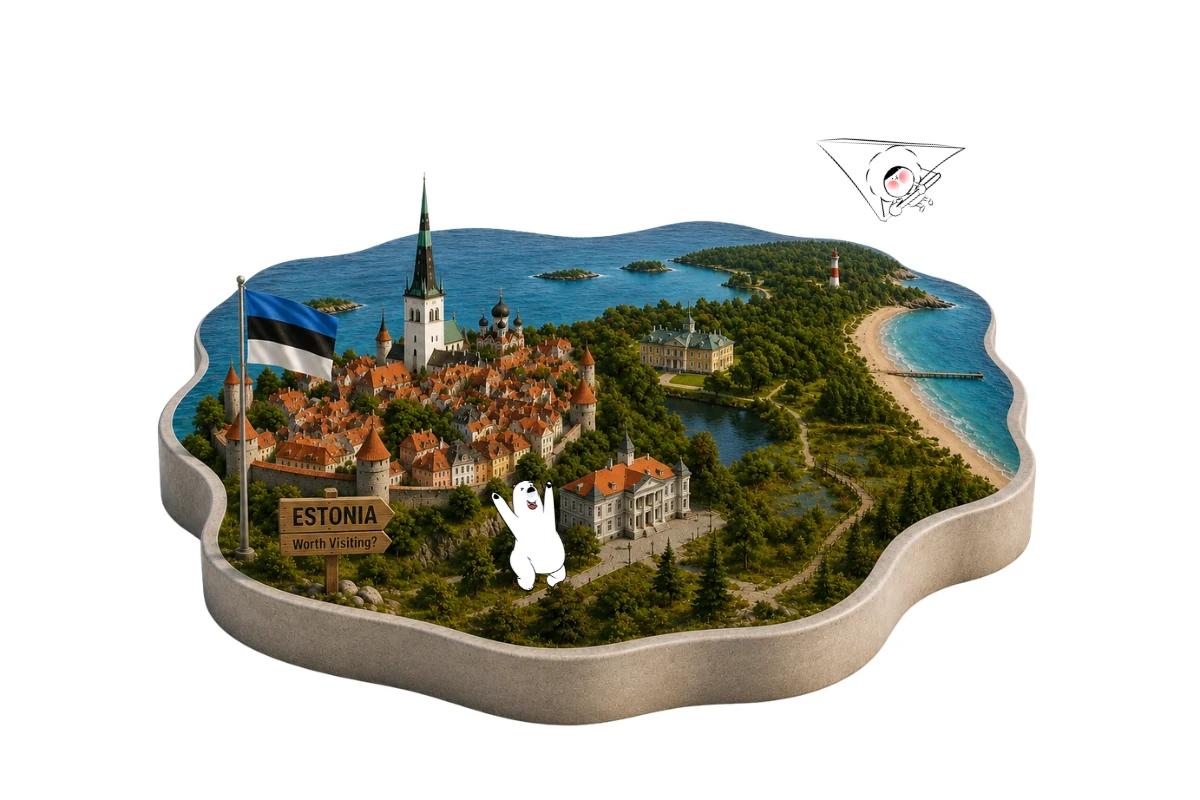
Yes, Estonia is worth visiting if you enjoy historic cities, accessible nature, distinctive local culture, and a slower style of European travel. Tallinn gives you a remarkably well-preserved medieval center, while Tartu, Pärnu, Lahemaa National Park, the countryside, and Estonia’s islands make it easy to see more than the capital.
Estonia suits travelers who want to combine a city break with forests, coastline, food, and local culture without spending most of the trip moving between major cities.
The main trade-offs are the weather, short winter daylight hours, and a smaller collection of internationally famous landmarks than countries such as Italy, France, or Spain.
Reasons To Visit Estonia
Estonia works particularly well because several different travel experiences fit into a relatively compact country.
You can spend a morning walking through medieval Tallinn, move on to a university city such as Tartu, visit the Baltic coast around Pärnu, or head into forests and wetlands at Lahemaa National Park.
That variety makes Estonia more rewarding than treating it as a one-night stop between neighboring Baltic countries.
Tallinn Old Town
Tallinn is the obvious starting point for most first-time visitors.
Tallinn Old Town is a UNESCO World Heritage Site known for its preserved medieval street plan, city walls, towers, historic buildings, churches, cafés, and viewpoints. The Old Town has been on the UNESCO World Heritage List since 1997. (Visit Estonia)
Its compact layout makes Tallinn especially good for walking. Many of the historic center’s main sights can be explored without spending much of the day on public transport.
Tallinn is also more than its medieval core. Travelers interested in contemporary Estonia can spend time in areas such as Telliskivi, Noblessner, and Kadriorg rather than staying entirely inside the Old Town.
For a different side of the capital, Eskimo’s overview of the world’s most digital-friendly cities includes Tallinn and its role in Estonia’s digital-first culture.
Tartu
Tartu offers a useful contrast to Tallinn.
It is Estonia’s major university city, with a younger atmosphere, cafés, museums, cultural venues, parks, and neighborhoods that feel less dominated by international tourism.
The University of Tartu dates to 1632, and the large student population still shapes the city’s character. The official Estonian tourism board describes Tartu as a university town with strong scientific, literary, and cultural traditions. (Visit Estonia)
Tartu makes sense for travelers who want to see everyday urban life beyond the capital rather than simply collect another historic center.
Lahemaa National Park
Estonia becomes much more interesting once nature is added to the trip.
Lahemaa National Park is about an hour by road from Tallinn and combines forests, wetlands, coastline, historic manor houses, and small settlements. The area works well as a day trip, although staying longer gives you more time for walking and exploring the coast. (Visit Estonia)
Lahemaa is a strong choice for travelers who want a nature break without building an entirely separate hiking holiday around it.
Pärnu And The Coast
Pärnu is one of Estonia’s best-known summer destinations.
Its beach, parks, cafés, and seasonal atmosphere make it particularly appealing during warmer weather. It gives an Estonia itinerary another character again, especially after time in Tallinn or Tartu.
Pärnu is less compelling as a classic beach destination outside the warmer months, so the season matters considerably when deciding whether to include it.
Islands And Countryside
Estonia’s appeal extends beyond its cities.
Forests, wetlands, small villages, rural roads, coastline, and islands create plenty of opportunities for a slower trip. Saaremaa and Hiiumaa are among the best-known islands, but visiting them requires more time than a short Tallinn break.
This part of Estonia suits travelers who enjoy quiet landscapes and want the journey itself to be part of the experience.
Estonia’s Culture And Food
Estonia should not be treated simply as another stop on a generic Baltic itinerary.
The country has its own language, traditions, history, architecture, food, and strong cultural identity. Its location has also brought centuries of interaction with Nordic, Baltic, German, and Russian influences.
Tallinn, Tartu, Pärnu, and Viljandi were historically Hanseatic trading cities, which helps explain some of the architectural and commercial history visible today. (Visit Estonia)
Food adds another layer to the trip. Traditional Estonian cooking commonly features rye bread, potatoes, fish, pork, dairy products, berries, mushrooms, and other seasonal ingredients.
Contemporary restaurants increasingly mix those traditions with modern Nordic and European cooking styles.
Timing your trip around national celebrations can also change the experience. Estonia’s Midsummer celebrations in June are particularly important culturally, although accommodation and transport demand can increase around the holiday period. Eskimo’s overview of Estonia public holidays in 2026 explains the main dates that may affect travel plans.
Estonia For Nature-Focused Travelers
One of Estonia’s strongest advantages is the ease of combining cities and nature.
A trip does not have to choose between architecture and outdoor time. You can spend several days in Tallinn and then add forests, bog trails, beaches, islands, or rural landscapes without crossing enormous distances.
This makes Estonia particularly suitable for travelers who become tired of city-only itineraries.
Nature experiences also change considerably with the seasons. Long summer days allow more time outdoors, while autumn brings different colors and cooler conditions. Winter creates a much more northern atmosphere but requires greater flexibility because daylight is limited.
Crowds And Travel Pace
Estonia is not free from tourism crowds.
Tallinn Old Town can become busy during popular summer periods, weekends, major events, and times when cruise visitors are in the city.
The experience changes quickly outside the most visited streets. Neighborhoods beyond the Old Town, smaller cities, national parks, coastal areas, and the countryside generally offer more space.
That makes Estonia appealing to travelers who prefer a flexible pace instead of scheduling a famous attraction every hour.
Get Eskimo eSIM to stay connected in Estonia
Need internet in Estonia? Here's what we recommend:

Fixed data plans
- No speed reduction
- No expiry, keep your data forever
- Transfer data to anyone
- Personal hotspot


Unlimited data plans
- Unlimited day pass
- Daily 3GB high-speed + 1Mbps unlimited after
- Personal hotspot
Estonia Travel Costs
Estonia is not automatically a cheap destination.
Accommodation and restaurants in central Tallinn can be noticeably more expensive than travelers expecting old stereotypes about inexpensive Eastern European travel might assume.
Costs depend heavily on season, accommodation style, dining choices, and how far you travel beyond Tallinn.
A typical trip budget needs to account for:
- Accommodation
- Meals and drinks
- Local transport
- Intercity transport
- Attraction tickets
- Day trips or car rental
- Ferry travel if visiting islands
Travelers who mix restaurants with casual meals and spend time outside Tallinn can usually adjust costs more easily than visitors staying entirely in the capital’s most tourist-focused areas.
Estonia uses the euro, which simplifies payments and budgeting if your trip continues through other euro-area countries.
Best Time To Visit Estonia
Late spring through early autumn is the easiest period for most first-time visitors.
Summer brings long daylight hours, warmer conditions, active outdoor attractions, and easier access to the coast, countryside, and islands.
It is also the main domestic travel season. Around Midsummer in late June, many Estonians travel outside the cities, which can increase demand in rural and coastal destinations.
Spring and early autumn can be good alternatives if you prefer cooler temperatures and a quieter atmosphere.
Winter is worth considering for Christmas markets, cold-weather scenery, and a distinctly northern experience, but daylight is much shorter and weather can affect outdoor plans.
Ideal Trip Length
Three to four days is enough for a first look at Tallinn with one nearby excursion.
Five to seven days is more comfortable if you want to understand why Estonia is worth visiting beyond its capital. That gives you time to combine Tallinn with somewhere such as Tartu, Pärnu, or Lahemaa National Park without turning the trip into constant transfers.
Allow more time if you want to explore Saaremaa, Hiiumaa, or several rural destinations.
For a short European city break, Tallinn alone can work well. Eskimo’s advice on choosing city breaks for different travel styles can also help decide whether a compact capital such as Tallinn fits the kind of trip you want.
Safety In Estonia
Estonia is generally considered a safe destination for travelers.
As of March 31, 2026, the U.S. Department of State lists Estonia at Level 1: Exercise Normal Precautions, its lowest advisory level. Travelers should still stay aware of their surroundings in crowded tourist areas and follow instructions from local authorities. (U.S. Department of State Travel)
Entry requirements depend on your nationality and can change. Check the relevant government or consular guidance before departure rather than relying on older visa information.
Travelers Who Will Enjoy Estonia Most
Estonia is a particularly strong choice for travelers who like:
- Walkable historic cities
- Medieval architecture
- Forests, wetlands, and coastlines
- Smaller cities
- Local food and culture
- Trips that combine cities with nature
- Slower itineraries with room for spontaneous stops
- Northern European destinations without relying entirely on major headline attractions
It also works well as one part of a wider Baltic or Northern European itinerary.
Travelers Who May Prefer Somewhere Else
Estonia may not be the strongest fit if your trip revolves around guaranteed hot weather, large beach resorts, major nightlife districts, or a long checklist of internationally famous monuments.
Pärnu and the Baltic coast can be enjoyable in summer, but Estonia is not primarily a hot-weather beach destination.
Tallinn has bars, restaurants, events, and nightlife, but travelers choosing a destination mainly for large-scale nightlife have stronger options elsewhere in Europe.
The same applies to landmark-heavy sightseeing. Estonia’s appeal comes from the combination of history, atmosphere, culture, and nature rather than a collection of globally famous attractions.
The Verdict On Visiting Estonia
Estonia is worth visiting because it offers much more than a medieval weekend in Tallinn.
The capital is an excellent introduction, but Tartu, Pärnu, Lahemaa National Park, the islands, and the countryside make the country far more varied than its size suggests.
For most first-time visitors, five to seven days gives Estonia enough space to reveal that variety without rushing.
If you prefer compact historic cities, quieter landscapes, local culture, and easy access to nature over nonstop landmark sightseeing, Estonia deserves serious consideration.
Using Mobile Data Around Estonia
Mobile data is useful in Estonia for public transport information in Tallinn, intercity travel updates, restaurant reservations, digital tickets, weather checks, and navigation when driving toward Lahemaa or rural areas. Reception is generally stronger in cities and populated areas, while signal can vary in forests, national parks, rural roads, and more remote coastal or island locations.
An Eskimo Estonia eSIM plan is the most direct option for a trip focused on Estonia. Eskimo’s coverage across 175 countries and regions can also be useful if your itinerary continues through Latvia, Finland, Sweden, or elsewhere in Europe, while no-expiry fixed data means unused fixed data can remain available for another trip instead of needing to be used before the holiday ends.
New users can also claim free 500MB of Global Data.
FAQs:
FAQs
Is Estonia Worth Visiting For First-Time Visitors To Europe?
Yes, if you prefer smaller historic cities, nature, and a more relaxed itinerary. Travelers whose first Europe trip is focused mainly on famous landmarks may prefer to combine Estonia with another destination.
Is Tallinn Enough For A Trip To Estonia?
Tallinn works well for a short two- or three-day city break, but seeing somewhere outside the capital gives you a more complete impression of Estonia. Lahemaa, Tartu, or Pärnu are logical additions.
How Many Days Should You Spend In Estonia?
Three to four days works for Tallinn and a nearby excursion. Five to seven days is better if you want to add another city, national park, coastal destination, or countryside experience.
Is Estonia Worth Visiting In Winter?
Yes, if you want cold-weather atmosphere, seasonal events, and a northern European winter experience. Short daylight hours and unpredictable weather make winter less suitable for travelers prioritizing long outdoor sightseeing days.
Is Estonia Worth Visiting In Summer?
Yes. Summer is one of the easiest times to visit Estonia because long daylight hours make it practical to combine Tallinn with national parks, coastal destinations, islands, and countryside trips.