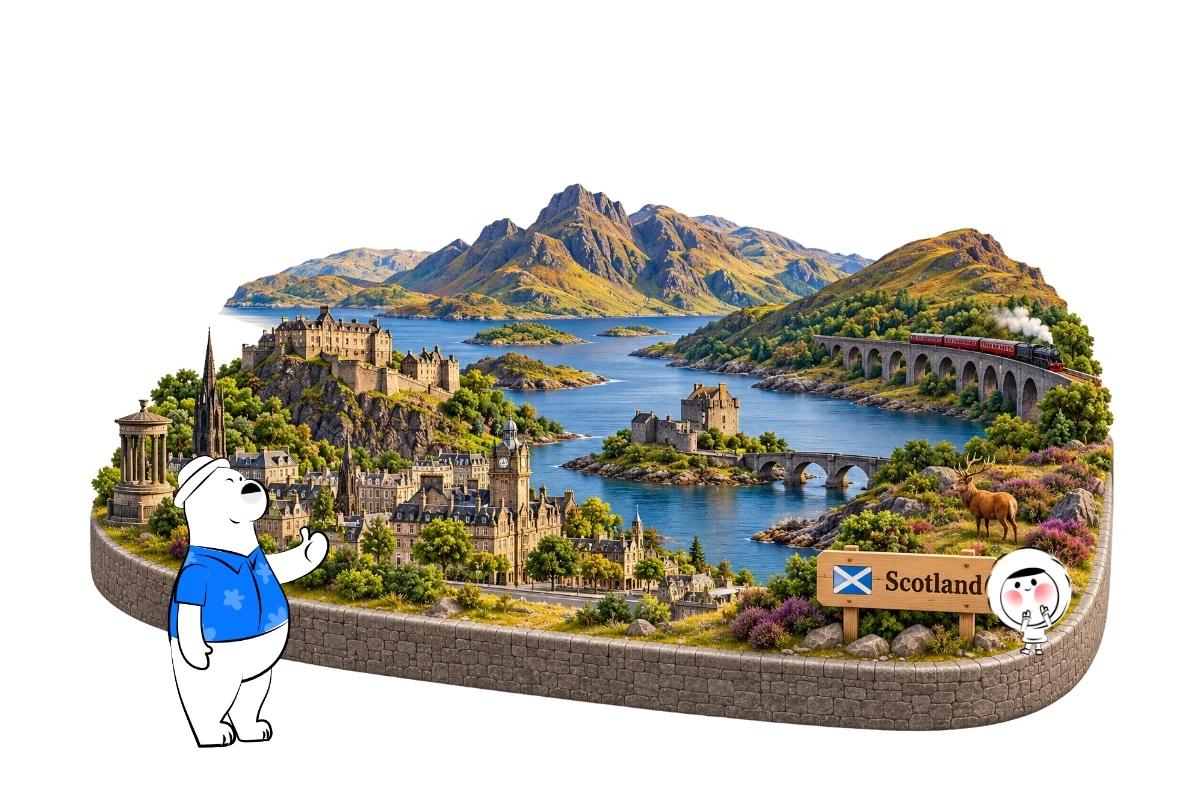
The best time to visit Scotland is usually May or September for a first trip combining cities, scenic drives and countryside. Choose May for longer sightseeing days, or September for a visit after the main summer period. Neither month guarantees dry weather or quiet attractions.
For a city-focused break, your preferred events and accommodation may matter more than the season. For island crossings and mountain walks, check the seasonal travel conditions in Scotland before fixing your dates.
Best Months For Different Scotland Trips
Choose your dates around the experience that matters most:
- May for a first mixed trip: A strong choice for combining city sightseeing with countryside outings, particularly when you value long evenings outdoors.
- September for travel after summer: Consider it for a city-and-countryside visit outside the main summer period, accepting substantially shorter days than May.
- June for the longest outdoor days: Useful for evening scenery and sightseeing around transfers, although long daylight does not extend attraction opening hours.
- August for Edinburgh performances: Choose it for the festival atmosphere rather than a quiet city break, and prioritize accommodation near your planned venues.
- October for woodland scenery: A good candidate for autumn color, with the exact timing depending on location and weather.
- November to March for potential accommodation savings: Compare these dates for a city-led trip, checking holidays, events and seasonal opening calendars separately.
The clearest difference between the two first-trip favorites is daylight. Edinburgh has roughly three and a half more daylight hours in mid-May than mid-September, using the consistent monthly reference dates below.
Scotland Month By Month
Temperature figures are average daytime highs and overnight lows at Edinburgh Gogarbank, taken from the Met Office’s 1991–2020 climate averages and rounded to whole degrees Celsius. They are not forecasts, Scotland-wide averages or mountain temperatures.
Daylight refers to Edinburgh on the 15th of each month in 2027, rounded to the nearest ten minutes. It measures the interval between sunrise and sunset, not hours of sunshine.
January
Average high: 7°C; overnight low: 2°C. Edinburgh’s mid-January daylight lasts about 7 hours 40 minutes.
Choose January for a city break built around museums, restaurants and short outdoor visits. The limited daylight makes a sightseeing-heavy countryside circuit less practical. Put outdoor attractions around the middle of the day and choose accommodation close to the places you most want to visit.
February
Average high: 8°C; overnight low: 2°C. Edinburgh’s mid-February daylight lasts about 9 hours 40 minutes.
February offers more time for countryside outings than January while remaining a winter month. It suits a city stay with an optional low-level walk or scenic excursion. Choose a trip you would enjoy without snow rather than making snowy landscapes essential to the booking.
March
Average high: 9°C; overnight low: 3°C. Edinburgh’s mid-March daylight lasts about 11 hours 50 minutes.
March is a useful candidate for gardens, historic properties and the beginning of spring. Browse spring experiences in Scotland, then check the opening calendar of each must-see attraction. Do not assume every seasonal property follows the same dates.
April
Average high: 12°C; overnight low: 4°C. Edinburgh’s mid-April daylight lasts about 14 hours 10 minutes.
April suits spring gardens, town visits and scenic outings. Its main compromise is the difference between increasingly long days and still-cool mornings and evenings. Bring clothing you can layer rather than packing only for the warmest part of the afternoon.
May
Average high: 15°C; overnight low: 7°C. Edinburgh’s mid-May daylight lasts about 16 hours 20 minutes.
May is a strong choice for combining Edinburgh or Glasgow with a countryside base. There is ample daylight for outdoor sightseeing before the main summer period. Midges can already be active, however, so a spring booking does not remove the need for insect protection in affected areas.
June
Average high: 17°C; overnight low: 9°C. Edinburgh’s mid-June daylight lasts about 17 hours 30 minutes.
June is especially useful for evening scenery and outdoor-focused trips. The practical limit may be an attraction’s closing time or your final return connection rather than sunset. Check those hours before relying on a late visit to fit an otherwise busy day.
July
Average high: 19°C; overnight low: 11°C. Edinburgh’s mid-July daylight lasts about 17 hours.
July suits travelers who prioritize outdoor activities during the warmer part of the year. It also falls within the main summer travel period. For a summer holiday in Scotland, secure accommodation essential to your route before committing to surrounding bookings.
August
Average high: 19°C; overnight low: 11°C. Edinburgh’s mid-August daylight lasts about 15 hours 10 minutes.
August is the clearest choice for Edinburgh’s festival atmosphere. The Edinburgh Festival Fringe runs from 6 to 30 August 2027. Choose accommodation around the venues you expect to use and allow time between performances. Consider dates outside the festival period when quieter sightseeing is the priority.
September
Average high: 17°C; overnight low: 9°C. Edinburgh’s mid-September daylight lasts about 12 hours 50 minutes.
September suits a mixed city-and-countryside trip as summer gives way to autumn. The main compromise against May is reduced daylight, not necessarily colder conditions at the Edinburgh reference station. For woodland color, treat September as the beginning of the season rather than assuming peak foliage has arrived.
October
Average high: 13°C; overnight low: 6°C. Edinburgh’s mid-October daylight lasts about 10 hours 30 minutes.
Choose October for autumn woodland and garden visits. The main uncertainty is the timing of the colors, which varies between places and years. Select a base with several nearby options rather than building the whole trip around one supposedly perfect foliage date.
Get Eskimo eSIM to stay connected globally
Need internet while travelling? Here's what we recommend:

Fixed data plans
- No speed reduction
- No expiry, keep your data forever
- Transfer data to anyone
- Personal hotspot


November
Average high: 10°C; overnight low: 4°C. Edinburgh’s mid-November daylight lasts about 8 hours 20 minutes.
November is a useful candidate for museums, galleries, food and a comfortable city base. It is less suitable for a visit that depends on numerous outdoor attractions. Check individual opening calendars before booking, especially when a seasonal property is your main reason for visiting an area.
December
Average high: 7°C; overnight low: 1°C. Edinburgh’s mid-December daylight lasts about 7 hours.
December suits a festive city break or a deliberately quiet winter stay. Choose your preferred celebrations first, then confirm their dates and booking requirements. Restaurant, attraction and transport arrangements need checking for your actual holiday dates rather than assuming normal operating patterns.
The Best Time For The Highlands, Skye And Cities
Choose the places you most want to visit before committing to dates. Comparing the best places to visit in Scotland helps distinguish trips centered on urban attractions from those that depend on rural transport and outdoor conditions.
The Highlands
For a first Highland visit focused on scenic stops and accessible walks, May through September is a useful starting window. Choose dates around the activities you can realistically enjoy, rather than assuming every mountain route becomes suitable in summer.
For a car-free stay, check the journey beyond the railway station. A town’s rail connection does not establish access to a particular trail, viewpoint or rural attraction. Confirm that final connection before choosing your accommodation.
Skye and the western islands
Consider May or September for a visit outside the main summer period, or June and July when long outdoor days matter most. For any itinerary that uses ferries, check the sailing timetable before booking accommodation on either side of the crossing.
CalMac’s published winter timetable period runs from 19 October 2026 to 25 March 2027. This describes the timetable season, not guaranteed operation of an individual sailing.
Check CalMac’s service status close to departure. Avoid placing a critical flight connection immediately after a weather-sensitive crossing.
Edinburgh and Glasgow
City breaks offer more flexibility to choose around performances, exhibitions and accommodation because indoor activities can occupy poor-weather hours. Start with the events or attractions you most want to visit, then check their calendars.
For a winter or Christmas break, distinguish an ordinary sightseeing weekend from a holiday celebration. The booking requirements can be quite different, even within the same month.
Midges, Rain And Mountain Conditions
Midges and outdoor evenings
According to VisitScotland’s midge advice, Scotland’s biting midges are generally active from May to October, with activity often peaking in midsummer. They are more troublesome in damp, sheltered places and during still conditions, particularly early in the morning and in the evening.
Carry repellent and clothing that covers exposed skin in affected countryside areas. A midge head net can help when camping or spending extended periods outdoors. No fixed travel date guarantees that you will avoid them.
Rain and regional differences
Scotland’s conditions vary by location, so countrywide averages are less useful for tomorrow’s outing than a forecast for the place you will visit. Use the overview of weather in Scotland for seasonal expectations and current local forecasts for daily decisions.
Choose a nearby indoor alternative for a weather-dependent outing. That gives you a practical replacement without spending the day traveling elsewhere in search of better conditions.
Mountain conditions
Use the Met Office mountain forecasts for hillwalking decisions rather than a city forecast. Wind, visibility and conditions at elevation can matter more than the temperature outside your accommodation.
Winter mountain outings require additional skills, navigation and equipment, as explained in Mountaineering Scotland’s winter preparation advice. Travelers without the necessary experience should choose suitable low-level alternatives or seek a qualified guided option.
Cheaper Dates And Booking Priorities
November to March often offers lower accommodation rates, according to VisitScotland’s accommodation advice. This is a seasonal tendency, not proof that a particular winter weekend will cost less than every spring or summer date.
May and September can offer a compromise between peak-season travel and winter limitations. Weigh the advantages of shoulder-season travel against the opening hours, transport and activities your trip requires.
Before making nonrefundable bookings, identify the parts of the trip with the least flexibility: accommodation in a small destination, an essential ferry crossing or a date-specific performance. Check their availability together before committing to flights.
Compare room prices on equivalent terms, including cancellation conditions and the cost of reaching the property. A cheaper stay may offer little practical saving when it creates a difficult daily journey.
Packing And Planning For Your Season
Pack layers, a waterproof outer layer and footwear suited to your activities. Add warmer clothing for cold-season trips, and carry a layer you can put on after an outdoor stop or in the evening.
Let the season change the route, not just the packing list. Longer summer days can accommodate sightseeing around transfers. In winter, keep scenic journeys within daylight and reduce accommodation changes rather than attempting the same schedule.
Before departure, check the opening calendars, return connections and cancellation terms that could affect your ability to change plans. A flexible itinerary is useful only when the bookings allow you to adjust it.
Mobile Data For Scotland’s Changing Conditions
Mobile data helps with mountain forecasts, CalMac service updates, road closures and digital rail tickets. Check mobile coverage for your route, but save essential maps and booking details offline: reception can vary in Highland valleys and on remote island roads.
An Eskimo United Kingdom eSIM plan is the relevant option for Scotland. Eskimo’s wider coverage across 175 countries and regions is useful for onward European travel when you choose the appropriate plans for those destinations. Fixed data does not expire, so unused UK data can remain available for a return visit.
New users can also claim a free 250MB Global eSIM.
FAQs:
Is April or October better for sightseeing in Scotland?
Choose April when daylight is the priority: Edinburgh has about three hours and forty minutes more daylight in mid-April than mid-October, using the monthly figures above. Choose October for an autumn-woodland focus. Neither choice guarantees favorable weather.
What is the best time to visit Scotland without a car?
Late spring and summer are useful choices when countryside excursions are central to the trip. For rail-based city breaks, events and accommodation may matter more than season. Check your intended connections using Scotland’s rail travel information before fixing the dates.
Do early- and late-month trips have similar daylight?
Not always. In Edinburgh, daylight increases from about 13 hours 10 minutes on 1 April 2027 to about 15 hours 20 minutes on 30 April. Check the daylight for your actual travel dates when planning outdoor activities.
Can I book a winter Scotland trip expecting snow?
Snow is possible, especially in mountain areas, but it is not guaranteed for particular dates or city stays. Keep snow-dependent activities flexible and check current conditions before committing to them. Choose accommodation somewhere you would still enjoy visiting without snow.