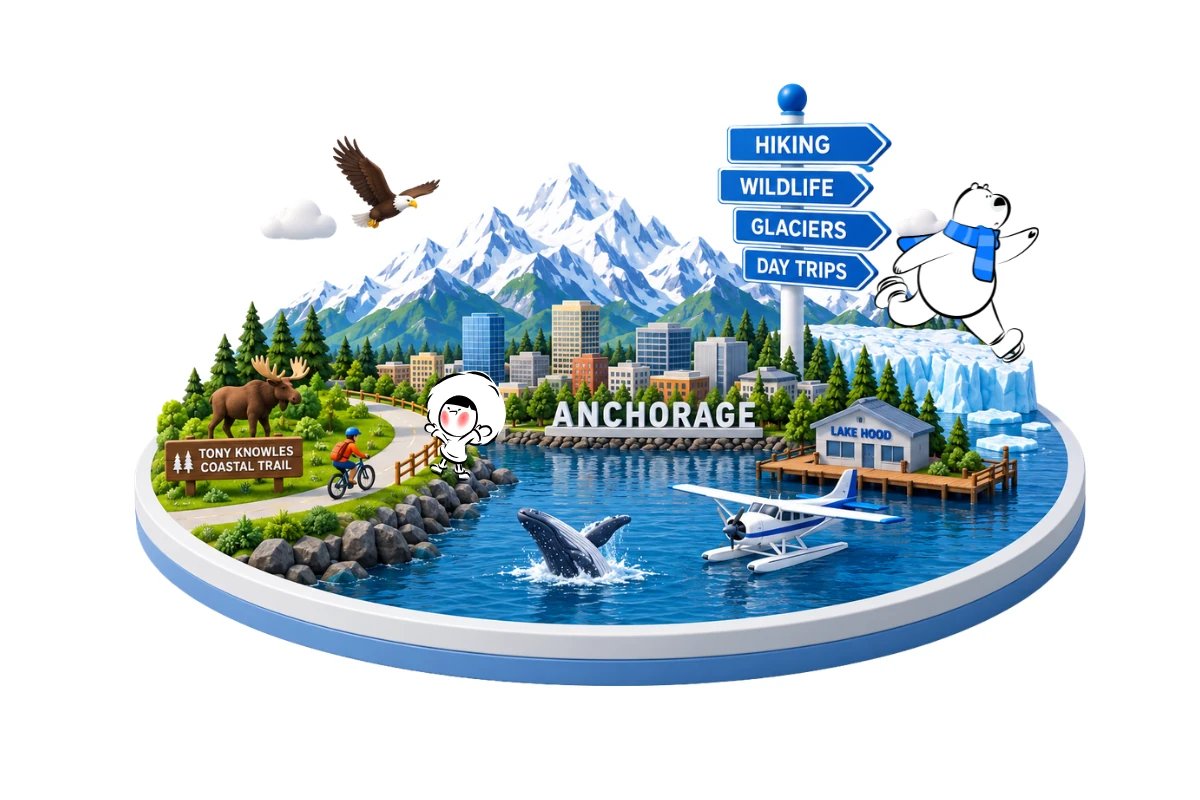
The best things to do in Anchorage combine Alaska’s outdoors with the convenience of a real city. You can cycle beside Cook Inlet, hike into the Chugach Mountains, learn about Alaska Native cultures, watch floatplanes take off, and use the city as a base for glaciers, wildlife, and scenic rail journeys.
Anchorage suits travelers who want access to Alaska’s landscapes without spending every day in a remote lodge or constantly changing accommodation. Three days gives most visitors enough time for the city plus one substantial outdoor experience, while four or five days creates more room for longer excursions.
Distance is the main planning challenge. Alaska is enormous, and destinations that look close on a map may require several hours of driving, rail travel, or a flight. Anchorage is best treated as a base for Southcentral Alaska rather than a starting point for rushed day trips to every major attraction in the state.
Why Anchorage Is Worth Visiting
Anchorage works particularly well for first-time Alaska visitors because wilderness begins surprisingly close to downtown.
Chugach State Park covers roughly 495,000 acres, with its western boundary only several miles east of central Anchorage. Trails, mountain viewpoints, wildlife habitat, and winter recreation are accessible without committing to a multi-day backcountry trip.
At the same time, Anchorage has museums, restaurants, accommodation, transport connections, and Ted Stevens Anchorage International Airport. You can spend the morning in a museum, hike above the city in the afternoon, then leave for a glacier or wildlife excursion the following day.
Best Things To Do In Anchorage
Explore the Tony Knowles Coastal Trail
The Tony Knowles Coastal Trail is one of the easiest ways to experience Anchorage outdoors without leaving the city.
The paved trail follows Cook Inlet for about 11 miles between downtown and Kincaid Park. Walk a short section from downtown or rent a bike for a longer ride through coastal marshes, wooded areas, and viewpoints. Moose and eagles can appear along the route, so give wildlife plenty of space.
On clear days, viewpoints can open toward Mount Susitna and distant peaks across the inlet.
Best for: Cycling, walking, scenery, and an easy first day Time needed: Around 1 hour for a short walk or half a day for a longer ride Cost: Free, excluding bike rental
Visit the Alaska Native Heritage Center
The Alaska Native Heritage Center provides an introduction to the cultures and living traditions of Alaska Native peoples through exhibitions, films, performances, demonstrations, and outdoor village sites.
For the 2026 summer season, the center is open daily from 9 a.m. to 5 p.m. through September 13. Adult summer admission is US$30. Winter operations change, so check the official Alaska Native Heritage Center visitor information before going.
The paved route around Lake Tiulana and the Village Sites is wheelchair accessible, although the Healing Garden is not.
Best for: Alaska Native culture, history, families, and first-time Alaska visitors Time needed: 2 to 4 hours
Spend a Few Hours at the Anchorage Museum
The Anchorage Museum is a strong choice for a rainy day, winter visit, or anyone who wants more context before exploring the rest of Alaska.
Its collections and exhibitions cover art, history, science, environment, and northern cultures. The museum is in downtown Anchorage at 625 C Street.
For 2026, general adult admission is US$25. Summer hours run from 10 a.m. to 6 p.m. daily through September, while the October to April schedule closes on Mondays and opens later on Sundays. Check current hours through the Anchorage Museum before visiting.
Best for: Culture, history, families, and poor-weather days Time needed: 2 to 3 hours
Head Into Chugach State Park
Few major cities provide mountain access on Anchorage’s scale.
The Glen Alps area of Chugach State Park is around a 20-minute drive from downtown and provides trail access plus broad views over Anchorage, Cook Inlet, and the Alaska Range.
A viewpoint visit suits travelers who want the scenery without a demanding hike. More experienced hikers can tackle Flattop Mountain, but the summit route is steep and includes scrambling. Alaska State Parks classifies the route as difficult and warns that falls have caused serious injuries.
Conditions can change quickly in the mountains. Carry layers, water, navigation, and appropriate footwear, and check conditions before setting out.
Best for: Hiking, mountain scenery, and active travelers Time needed: About 1 hour for viewpoints to half a day or longer for hiking
Watch Floatplanes at Lake Hood
Lake Hood sits beside Ted Stevens Anchorage International Airport and offers a glimpse of a form of transport that remains important across Alaska.
Floatplanes depart for communities, lodges, fishing areas, glaciers, and remote wilderness. Travelers with more time and budget can also book flightseeing trips over mountains and glaciers, sometimes with remote landings.
Watching the aircraft is free. Flightseeing prices vary according to route, aircraft, duration, and whether a landing is included.
Best for: Aviation, photography, families, and a short stop near the airport
Look for Wildlife Without Leaving Anchorage
Wildlife sightings are possible surprisingly close to Anchorage’s urban areas.
Moose can appear around parks, trails, wetlands, and residential neighborhoods. Bald eagles are also common, while seasonal opportunities may include salmon and other wildlife.
Never approach a moose for a photograph. Give animals a wide escape route, especially cows with calves. Wildlife should determine the distance, not the camera.
For more predictable viewing, the Alaska Wildlife Conservation Center south of Anchorage houses native animals in large enclosures and pairs easily with a drive along Turnagain Arm.
Best for: Travelers hoping to see Alaska wildlife without committing to a remote excursion
Walk Around Downtown Anchorage
Downtown is compact enough to explore on foot and fits easily into the first or final few hours of a trip.
The Anchorage Museum, Alaska Railroad depot, shops, restaurants, galleries, visitor information, and northern end of the Coastal Trail sit within a relatively concentrated area.
Downtown is the most practical base for travelers without a rental car. Once you start visiting trailheads and destinations beyond central Anchorage, having a vehicle becomes considerably more useful.
Best for: First-time visitors, car-free trips, museums, restaurants, and short stays
Best Day Trips From Anchorage
Anchorage becomes much more rewarding once at least one day is reserved for the landscapes beyond the city. The right excursion depends on whether you prioritize scenery, glaciers, wildlife, or mountain activities.
Turnagain Arm
The Seward Highway south of Anchorage follows Turnagain Arm between the water and Chugach Mountains.
Scenic pullouts provide views across the inlet, while Beluga Point and Bird Point have accessible viewpoints and interpretive facilities. Allow time for stops rather than treating the highway simply as a route between attractions.
Best for: Scenic driving, photography, and travelers with only half a day
Girdwood
Girdwood combines mountain scenery with hiking, winter sports, and the Alyeska area, making it one of the easiest substantial excursions from Anchorage.
It can fill half a day, although combining Girdwood with Turnagain Arm viewpoints or the Alaska Wildlife Conservation Center makes better use of a rental car.
Best for: Mountain scenery, hiking, skiing, couples, and travelers who want an easy day trip without spending most of the day driving
Portage And Whittier
Continue south for glacier country around Portage or onward to Whittier, where cruises depart into Prince William Sound.
Choose this direction if seeing glaciers and dramatic coastal scenery matters more than hiking or exploring towns. Glacier cruises are highly seasonal, and departure schedules vary, so booking ahead is sensible during summer. Weather can also affect visibility and marine conditions.
Dozens of glaciers lie within 50 miles of Anchorage, giving travelers several ways to add a glacier experience without crossing the state.
Best for: Glaciers, Prince William Sound scenery, boat trips, and travelers with a full day available
Get Eskimo eSIM to stay connected globally
Need internet while travelling? Here's what we recommend:

Fixed data plans
- No speed reduction
- No expiry, keep your data forever
- Transfer data to anyone
- Personal hotspot


Matanuska Valley
Travel north and northeast from Anchorage for broad valley scenery, smaller communities, and access toward the Matanuska Glacier area.
This option suits travelers who want a more road-trip-oriented day and are comfortable spending longer behind the wheel. Driving time depends on the exact destination and road conditions, so avoid building a tight schedule around map estimates alone.
Guided glacier activities should be booked with qualified local operators rather than attempted independently on unfamiliar ice.
Best for: Glacier activities, longer scenic drives, and travelers comfortable with a full-day road trip
Anchorage To Denali
Denali is better treated as the next stop on an Alaska itinerary than as a rushed Anchorage day trip.
During the 2026 summer season, the Alaska Railroad’s Denali Star departs Anchorage at 8:20 a.m. and reaches Denali at 3:40 p.m. The rail journey alone therefore takes more than seven hours before any time in the national park area. The seasonal service runs between Anchorage, Denali, and Fairbanks from mid-May into September. Check the Alaska Railroad schedule for current dates and times.
Driving provides more flexibility but still requires a substantial travel day.
For most visitors, spending at least one night near Denali is more practical than trying to return to Anchorage on the same day.
Anchorage In Summer
Summer is the easiest season for hiking, wildlife trips, long scenic drives, cycling, glacier cruises, and extended daylight.
Typical summer temperatures are mild rather than hot, with daytime conditions often ranging roughly from 50°F to 70°F, or about 10°C to 21°C. Long daylight hours give visitors much more flexibility for outdoor plans.
June and July combine very long days with high demand for accommodation, rental cars, and tours. August remains active but is generally wetter.
Pack layers even in midsummer. Sunshine, wind, rain, and cool evenings can all occur during the same trip.
Anchorage In Winter
Winter shifts the focus toward skiing, fat biking, snow-covered trails, dog sledding, cultural attractions, and the northern lights.
Aurora viewing is generally possible from September through April when nights are sufficiently dark. The lights can sometimes be seen within Anchorage, but darker locations away from urban lighting improve the chances of seeing faint displays.
Point Woronzof, Glen Alps, Eagle River, and areas beyond the brightest city lights are among the options around Anchorage. Visibility still depends on cloud cover and solar activity.
Eskimo’s comparison of the best cities to see the Northern Lights places Anchorage alongside Fairbanks and other northern destinations. For planning around darkness, forecasts, timing, and photography, see these Northern Lights viewing tips.
Winter drivers should also prepare for snow, ice, reduced visibility, and shorter daylight.
Best Time To Visit Anchorage
Choose June through August for the broadest range of outdoor activities and easiest first visit. These months offer long daylight, established summer tour schedules, and good access to hiking, cycling, wildlife excursions, scenic drives, and glacier trips.
Choose May or September if you prefer shoulder-season travel and can accept a narrower selection of seasonal tours and services.
For northern lights, plan between September and April. Travelers focused on snow sports should visit once dependable winter conditions are established rather than choosing a month solely for aurora darkness.
There is no single best month for every trip. Summer favors access and long days, while the darker seasons favor aurora viewing and winter activities.
How Long To Spend In Anchorage
Three days is a strong starting point for a first visit.
With one day, concentrate on downtown, the Anchorage Museum or Alaska Native Heritage Center, and part of the Coastal Trail.
With two days, add Chugach State Park, wildlife viewing, or a drive along Turnagain Arm.
With three days, reserve one full day for Girdwood, glacier country, or another Southcentral Alaska excursion.
Four or five days provides more flexibility for weather changes, longer drives, hiking, and flightseeing without packing every day too tightly.
Getting Around Anchorage
Downtown Anchorage is walkable, so a short city-focused visit is possible without renting a car.
Taxis, ride-hailing, organized excursions, and local transport add flexibility. Travelers concentrating on downtown attractions can often postpone renting a vehicle until they begin exploring beyond the center.
A rental car is much more useful for Glen Alps, Turnagain Arm, Girdwood, Portage, wildlife attractions, and flexible sightseeing outside Anchorage.
The Alaska Railroad is another option for longer journeys. Summer passenger services connect Anchorage with destinations including Girdwood, Seward, Talkeetna, Denali, and Fairbanks, although routes and frequencies vary by season.
Build extra time into driving days. Wildlife, construction, weather, scenic stops, and Alaska’s long distances can all affect journey times.
Where To Stay In Anchorage
Downtown is the easiest base for first-time visitors who want restaurants, museums, the railroad station, and sections of the Coastal Trail within walking distance.
Midtown suits travelers with a rental car and provides practical access toward the airport and major roads.
Near the airport makes sense for late arrivals, early departures, or short overnight connections.
Travelers planning several excursions by car do not necessarily need to pay a premium for downtown accommodation. Those arriving by rail or planning a largely car-free stay gain more from being central.
Practical Anchorage Travel Tips
Pack for changing conditions rather than relying only on the day’s temperature forecast. A waterproof outer layer, warm mid-layer, and comfortable walking shoes are useful through much of the year.
Carry bear spray where appropriate on wilderness trails and learn how to use it before hiking. Keep food secured and give wildlife generous space.
Popular tours, glacier cruises, rental cars, and rail journeys can fill well ahead during peak summer dates. Book the hardest-to-replace parts of the trip first.
Check weather and trail conditions before mountain outings. Flattop and other accessible-looking routes still involve genuine mountain terrain.
Keep some flexibility in the schedule. Clouds can reduce the value of flightseeing, rough weather may affect marine trips, and aurora viewing depends on conditions that cannot be guaranteed.
Mobile Data Around Anchorage And Alaska
Mobile data can help with trail maps, changing weather, Alaska Railroad information, road navigation, and tour confirmations around Anchorage. Reception is generally stronger in the city and populated areas, while signal may weaken on remote highways, in mountain terrain, and farther inside parks and wilderness areas. Download essential maps and booking details before leaving reliable coverage.
An Eskimo USA eSIM plan can be set up for an Alaska trip. Eskimo’s coverage across 175 countries and regions is useful for international travelers connecting through another country or continuing elsewhere after the United States, while no-expiry fixed data means unused data can remain available for a later trip instead of needing to be used before leaving Alaska.
FAQs:
What are the best things to do in Anchorage for first-time visitors?
Start with the Tony Knowles Coastal Trail, Alaska Native Heritage Center, Anchorage Museum, downtown, and Chugach State Park. Add Turnagain Arm or a glacier excursion if you have at least three days.
How many days are enough for Anchorage?
Three days works well for most first visits. It allows time for the city, nearby outdoor attractions, and one substantial excursion without making the itinerary feel rushed.
Can you visit Anchorage without a car?
Yes. Downtown attractions are relatively concentrated, and organized excursions can cover some destinations farther away. A rental car becomes much more useful for Chugach State Park, Turnagain Arm, Girdwood, Portage, and other places outside central Anchorage.
Can you see the Northern Lights in Anchorage?
Yes. Dark, clear nights from roughly September through April provide the main viewing season. Moving away from the brightest parts of the city generally improves conditions, but cloud cover and aurora activity cannot be guaranteed.
Is Denali a day trip from Anchorage?
Denali is not a practical day trip for most visitors. The 2026 summer train journey from Anchorage to Denali takes more than seven hours each way, so spending at least one night near Denali is a much better option.