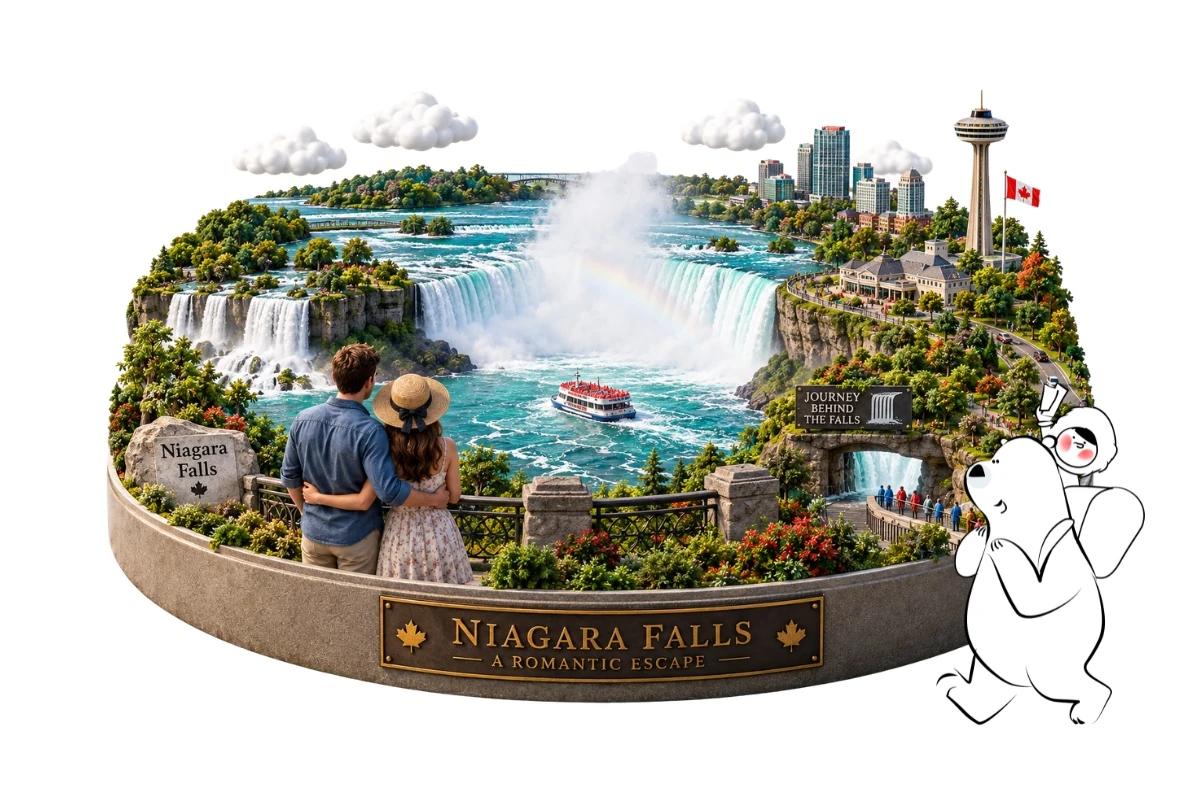
The best time to visit Niagara Falls for most travelers is from late spring through early fall. Summer offers the widest choice of attractions and boat experiences, while September is arguably the best overall month for couples, with comfortable sightseeing conditions, many seasonal attractions still operating, and peak summer crowds beginning to ease.
Niagara Falls can also still work remarkably well as a honeymoon or romantic getaway. The key is not treating it as a two-hour photo stop. Stay overnight, see the falls after dark, add a boat trip or Journey Behind the Falls, and consider extending the trip into Niagara-on-the-Lake.
Couples looking for dramatic scenery, easy sightseeing, wine-country excursions, and a short North American escape will probably enjoy it most. Those expecting a secluded resort honeymoon or several days of beach-style relaxation may prefer to make Niagara Falls one part of a longer trip.
Why Niagara Falls Became a Honeymoon Capital
Niagara Falls did not acquire its romantic reputation through a modern tourism campaign.
According to Niagara Falls Tourism, one of the early celebrated honeymoon visits took place in 1801, when Theodosia Burr Alston, daughter of U.S. Vice President Aaron Burr, traveled to Niagara Falls with her husband Joseph Alston on what they called a bridal tour. Jérôme Bonaparte, Napoleon Bonaparte’s younger brother, later visited with his bride Elizabeth Patterson in 1804.
As transportation improved, Niagara Falls became accessible to far more newlyweds. Rail travel helped transform what had once been an elite journey into a mainstream honeymoon tradition.
The association survived into the 20th century through photographs, advertising, popular culture, and the sheer theatricality of the falls themselves. Niagara Falls Tourism still promotes the destination for weddings, proposals, anniversaries, and honeymoons today.
The more useful question for modern couples is whether Niagara Falls still earns that romantic reputation.
Niagara Falls As A Modern Honeymoon Destination
Niagara Falls works best for couples who like a honeymoon with activities rather than total seclusion.
The strongest reason to come is still obvious: the waterfalls are enormous, loud, misty, and difficult to reduce to a photograph. Seeing them from several angles over a full day gives the trip much more depth than arriving, taking a picture, and leaving.
Couples may especially enjoy Niagara Falls if they want:
- Dramatic natural scenery without a remote expedition
- A short honeymoon or anniversary getaway
- Boat rides and viewpoints rather than beach time
- Evening illumination and waterfront walks
- Easy access to restaurants and entertainment
- A side trip into Niagara-on-the-Lake and Ontario wine country
- A trip that can combine Canada and the United States
The destination is less convincing for couples seeking complete privacy. The main viewpoints can be busy, and the Canadian side in particular has a lively tourism district rather than a secluded-resort atmosphere.
For a more romantic pace, combine the main falls with quieter sections of the Niagara Parkway, Niagara-on-the-Lake, a winery visit, and at least one evening near the water.
Best Time To Visit Niagara Falls
The best season depends on whether your priority is warm weather, full attraction access, lighter crowds, autumn color, or winter atmosphere.
For couples, September offers one of the strongest balances of weather, attraction availability, and crowd levels. July and August are better if your priority is the fullest summer schedule, while late spring can suit travelers who want fewer crowds without committing to colder conditions.
Niagara City Cruises currently operates seasonally from April through November, although exact opening dates, closing dates, and daily hours can vary. Journey Behind the Falls operates year-round. Check Niagara Parks operating information before booking.
Niagara Falls in spring
Spring suits couples who want dramatic waterfall scenery without the full intensity of summer crowds.
Temperatures can change quickly, especially earlier in the season, so waterproof layers matter. Mist from the falls can make viewpoints feel cooler than nearby streets.
Some seasonal attractions gradually reopen as conditions improve, which makes late spring easier to plan than March or early April.
May can be particularly attractive for travelers combining Niagara Falls with a wider Ontario trip. Gardens begin filling out, daylight increases, and summer crowd levels have usually not peaked yet.
Niagara Falls in summer
Summer provides the widest range of activities and the simplest logistics for first-time visitors.
Many of the best Niagara Falls attractions are operating at full seasonal rhythm, including boat experiences, outdoor viewpoints, walking routes, restaurants, and entertainment. Niagara City Cruises on the Canadian side takes visitors past the American and Bridal Veil Falls toward Horseshoe Falls and uses timed ticketing.
The compromise is crowds.
June through August can be busy, particularly on weekends, school holidays, and around Canadian and U.S. public holidays. Accommodation near the falls can also become more expensive.
Couples visiting in summer can make the trip feel less hectic by seeing the falls early in the morning, booking timed attractions in advance, and returning after dinner for the illuminated nighttime view.
Traveling around July 1 can also coincide with Canada Day activity. Eskimo’s Canada public holidays 2026 calendar can help identify holiday periods that may affect crowds and accommodation demand.
Niagara Falls in fall
Early fall may be the strongest all-round choice for couples.
September often retains comfortable sightseeing conditions while removing some of the midsummer intensity. Many seasonal attractions are still available, while the surrounding region begins transitioning toward autumn.
As fall develops, trees along the Niagara River and across southern Ontario begin changing color. Peak foliage varies with weather and location, so travelers visiting primarily for autumn scenery should not rely on a fixed annual date.
Niagara-on-the-Lake and the surrounding wine region also give couples a quieter contrast to the main tourism district.
October and November require more schedule checking as colder conditions arrive and some seasonal attractions reduce hours or eventually close.
Niagara Falls in winter
Winter changes Niagara Falls completely.
Snow, ice, mist, and frozen surfaces can make the landscape feel much more dramatic, while visitor numbers are generally lower than in summer. For couples who prefer winter scenery and quieter viewpoints, that can be a worthwhile trade.
Some seasonal experiences, including boat tours, are unavailable during the coldest part of the year.
Journey Behind the Falls remains a year-round option, according to Niagara Parks, giving winter visitors a way to experience Horseshoe Falls from much closer range even when seasonal boat tours are unavailable.
Winter also demands better clothing. Mist can freeze on surfaces near viewpoints, and wind near the gorge can make temperatures feel harsher.
For couples attracted to snowy scenery rather than a packed sightseeing schedule, that quieter character may be the point.
Best Things To Do At Niagara Falls For Couples
A romantic Niagara Falls trip works better when the waterfalls are the centerpiece rather than the entire itinerary.
See Horseshoe Falls from the Canadian side
For the broadest classic panorama, the Canadian side is difficult to beat.
The Niagara Parkway and areas around Table Rock place visitors close to Horseshoe Falls while also providing views toward the American and Bridal Veil Falls.
Visit once in daylight and return after dark. The atmosphere changes significantly once the falls are illuminated.
Take a Niagara Falls boat tour
Getting close to the falling water is a completely different experience from observing it from above.
On the Canadian side, Niagara City Cruises operates the Voyage to the Falls experience seasonally from April through November, subject to operating conditions and exact seasonal dates. The route passes the American and Bridal Veil Falls before approaching Horseshoe Falls.
Expect mist. The provided poncho helps, but waterproof footwear and phone protection are still sensible.
Go behind Horseshoe Falls
Journey Behind the Falls descends through tunnels in the bedrock to viewing portals and observation areas beside Horseshoe Falls.
Niagara Parks lists the attraction as operating year-round, which makes it especially useful outside the boat-tour season.
This is one of the better choices for couples who want something more immersive than another viewpoint.
Walk the Niagara River
Not every hour needs a ticket.
Walking sections of the river gives you time away from attraction queues while still keeping the landscape at the center of the day.
The U.S. side has a noticeably greener park character. The National Park Service describes the Niagara Reservation as a landscape shaped by Frederick Law Olmsted and Calvert Vaux, with parkland and paths forming an important part of the American-side experience.
Spend an evening by the falls
A Niagara Falls honeymoon becomes much more convincing after the day-trippers begin leaving.
Have dinner, walk back toward the river, and see the illuminated falls rather than trying to squeeze everything between arrival and sunset.
Seasonal fireworks may also operate on selected dates. Check official schedules before planning an evening around them.
Add Niagara-on-the-Lake
Niagara-on-the-Lake gives the trip a completely different tempo.
Its historic center, restaurants, wineries, surrounding countryside, and slower atmosphere make it one of the strongest additions for couples.
It also fits naturally into a wider Ontario trip. Eskimo’s overview of what Canada is known for covers Niagara Falls alongside other Canadian landscapes, cities, food, and seasonal experiences for travelers continuing beyond the Niagara region.
Get Eskimo eSIM to stay connected globally
Need internet? Here's what we recommend:

Fixed data plans
- No speed reduction
- No expiry, keep your data forever
- Transfer data to anyone
- Personal hotspot


Canada Side Vs USA Side For Couples
The Canadian and American sides offer different versions of the same destination.
For most first-time couples, the Canadian side is the stronger base because it provides the famous panoramic views across Horseshoe, American, and Bridal Veil Falls, together with more hotels, restaurants, evening entertainment, and easy access to Niagara-on-the-Lake.
The U.S. side is better for travelers who prefer parkland and closer access to the American Falls.
Niagara Falls State Park also has significant historical importance. The National Park Service notes that the Niagara Reservation was established in 1885, helping protect the landscape from intensive commercial development.
A simple way to choose is:
- Choose Canada for panoramic views, Fallsview hotels, restaurants, nightlife, and a first Niagara Falls honeymoon.
- Choose the USA for a more park-focused experience and travelers already exploring New York State.
- Visit both if border-entry requirements allow and you have enough time.
Travelers continuing deeper into the state can use Eskimo’s New York travel overview to plan Niagara Falls as part of a longer U.S. itinerary.
Crossing Between Canada And The United States
Niagara Falls sits directly on the Canada-U.S. border, but crossing from one side to the other is an international border crossing.
The Rainbow Bridge connects Niagara Falls, Ontario, with Niagara Falls, New York. Travelers should carry the immigration and travel documents required for their nationality and destination rather than assuming that visiting one side automatically gives access to the other.
Entry requirements depend on citizenship, visa status, travel authorization, and how you enter each country. Travelers who may need Canadian authorization can also review Eskimo’s explanation of the Canada eTA before planning a cross-border itinerary.
Check current Canadian and U.S. government entry requirements before building both sides into a honeymoon trip, particularly if either traveler requires a visa or electronic travel authorization.
Border wait times can vary. Couples with a restaurant reservation, attraction timeslot, or onward transport should leave some flexibility.
How Long To Spend At Niagara Falls
A day trip is enough to see the falls, but it is not the best format for a romantic trip.
One day works if Niagara Falls is simply one stop on a larger itinerary. Focus on the major viewpoints and one paid attraction.
One night gives couples much more breathing room. You can see the falls during the day, have dinner, return after dark, and avoid squeezing every experience into a few crowded hours.
Two nights is the sweet spot for many honeymoon trips. It gives you one full day around Niagara Falls plus time for Niagara-on-the-Lake, a winery, or a slower drive along the Niagara River.
Three days or more makes sense if Niagara is part of a broader Ontario or New York itinerary rather than a stand-alone waterfall visit.
For most couples, two nights feels substantial without stretching the destination too thin.
Where To Stay At Niagara Falls
The right area matters more than chasing a long list of individual hotels.
Fallsview, Ontario
Fallsview is the strongest choice for couples who want convenience and the possibility of waterfall views from their accommodation.
It places you close to major attractions and restaurants, though rooms with premium views can cost considerably more.
Check exactly what “falls view” means before booking. Views can vary by floor, orientation, building, and room category.
Clifton Hill and central Niagara Falls
This area suits couples who want restaurants, entertainment, and easy access to evening activity.
It is lively rather than secluded, so honeymooners looking for quiet surroundings may prefer somewhere farther from the entertainment district.
Niagara-on-the-Lake
Choose Niagara-on-the-Lake if the priority is a slower, more intimate stay rather than sleeping directly beside the falls.
It works especially well for couples with a car who want wineries, restaurants, heritage character, and countryside alongside their Niagara Falls visit.
Niagara Falls, New York
The U.S. side is practical for travelers already touring New York State or those who prefer the park environment around the American Falls.
Accommodation choice is generally less centered on the dramatic hotel-room panoramas associated with the Canadian Fallsview district.
A Three-Day Niagara Falls Honeymoon Plan
Three days allows the trip to feel like a getaway instead of a checklist.
Day one: First views and Niagara at night
Arrive, check in, and walk directly to the falls before adding anything complicated to the schedule.
Explore the Canadian viewpoints around Horseshoe Falls, have dinner nearby, then return to the river after dark for the illuminated waterfalls.
Keep the first evening simple. Niagara is most impressive when there is time to stand still and watch it.
Day two: Get close to the water
Book one of the major immersive experiences.
During the operating season, take Niagara City Cruises. At other times of year, Journey Behind the Falls provides a year-round alternative.
Spend the rest of the day exploring the Niagara Parkway, the American side if your travel documents allow, or a quieter section of the river.
Leave the evening open for dinner rather than stacking attractions until closing time.
Day three: Slow down in Niagara-on-the-Lake
Use the final day for contrast.
Head toward Niagara-on-the-Lake, visit the historic center, book a winery or meal, and give yourselves a few hours without attraction queues or observation decks.
For many couples, this slower final day is what turns a Niagara Falls sightseeing trip into something that feels more like a honeymoon.
Practical Tips For A Niagara Falls Trip
A few decisions can make the visit considerably easier.
- Book seasonal headline attractions ahead of time. Timed tickets can sell through convenient slots during busy periods.
- Carry a waterproof layer. Mist near the falls can soak clothing and electronics even when the weather itself is dry.
- Wear shoes with reliable grip. Walkways can be wet near major viewpoints.
- Check operating dates. Boat tours and some outdoor attractions are seasonal.
- Visit early or stay late. Midday tends to concentrate day-trip crowds.
- Do not assume both countries are automatically accessible. Check border requirements before planning Canada and the U.S. in one day.
- Allow time for Niagara-on-the-Lake. Couples staying more than one night gain a very different side of the region by moving beyond the main falls district.
- Check public holidays before booking. Canadian and U.S. long weekends can increase visitor numbers and room demand.
Mobile Data Around Niagara Falls
Mobile data can help with attraction tickets, border wait information, navigation between Niagara Falls and Niagara-on-the-Lake, restaurant bookings, weather changes, and directions when moving between the Canadian and U.S. sides. Reception is generally stronger in the built-up tourism areas and along major roads, although indoor spaces, the gorge, and crowded viewpoints can affect signal quality.
An Eskimo Canada eSIM plan suits travelers spending most of the trip on the Canadian side. Eskimo’s wider coverage across 175 countries and regions can also be useful for couples continuing into the United States or taking other international trips, provided the plan selected includes the required destinations. Hotspot sharing can help a partner connect another phone or tablet when needed.
New users can also claim a free 250MB Global eSIM.
FAQs:
What is the best month to visit Niagara Falls?
September is one of the strongest overall choices, especially for couples. Many seasonal attractions are still operating, sightseeing conditions are generally comfortable, and peak summer crowds often begin easing.
Is Niagara Falls good for a honeymoon?
Yes, especially for couples who enjoy scenery, sightseeing, boat trips, restaurants, and short road trips. It works best as a one-to-three-night romantic getaway rather than a secluded resort-style honeymoon.
Why is Niagara Falls called the Honeymoon Capital?
Niagara Falls has been associated with honeymoons since the early 19th century. High-profile newlyweds visited in the 1800s, and improved rail access later helped turn the destination into a mainstream honeymoon tradition.
Which side of Niagara Falls is better for couples?
The Canadian side is usually better for first-time couples because of its panoramic waterfall views, larger accommodation selection, restaurants, and access to Niagara-on-the-Lake. The U.S. side is better for a greener, park-focused experience.
Can you visit both sides of Niagara Falls on the same trip?
Yes, if both travelers meet the entry requirements for Canada and the United States. Crossing the Rainbow Bridge is an international border crossing, so carry the required travel documents and allow time for immigration procedures.