Why is it called Black Friday? The shopping term is most strongly associated with Philadelphia, where police used “Black Friday” for the Friday after Thanksgiving as heavy traffic, Christmas shoppers, and visitors arriving for the Army-Navy football game crowded the city.
The name originally carried a negative meaning. It referred to congestion and difficult working conditions for police rather than retailers suddenly becoming profitable. The familiar story that stores moved from losses “in the red” to profits “in the black” became popular later.
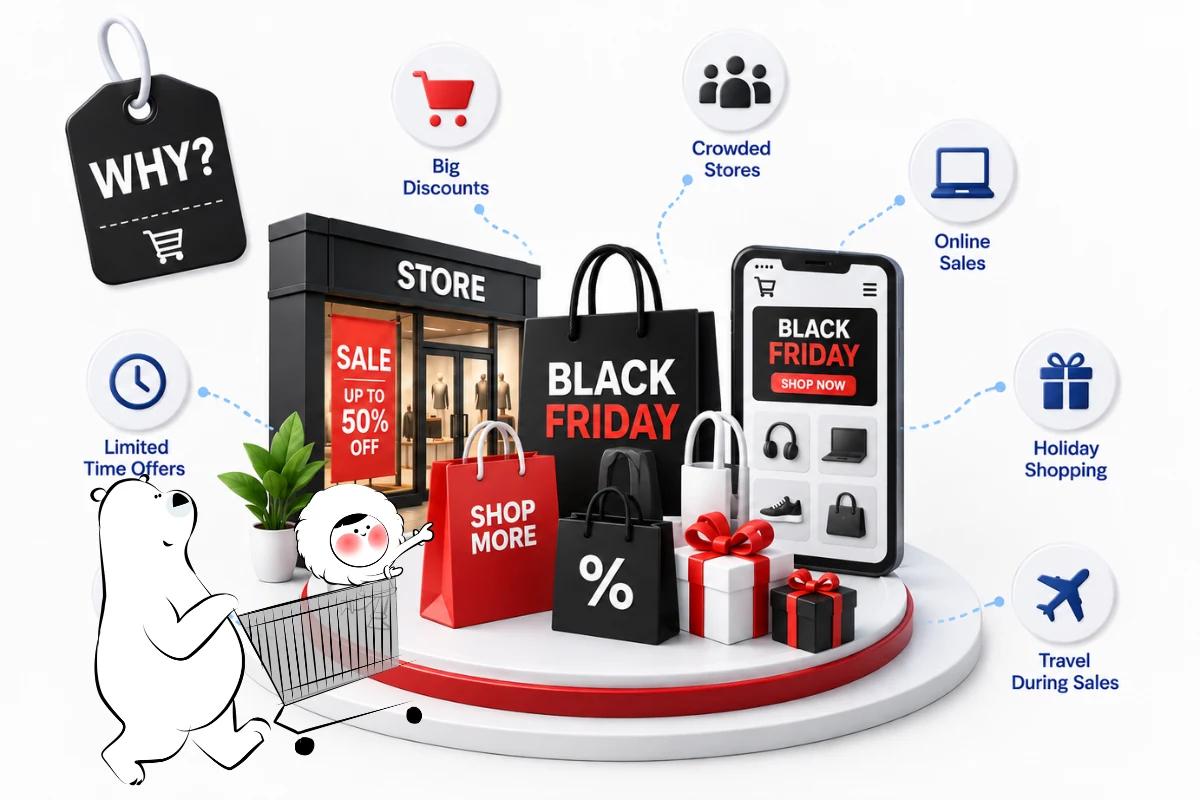
Today, Black Friday has a very different meaning. It is a major late-November retail event in the United States and many other countries, spanning physical stores and online shopping.
Why Is It Called Black Friday?
The modern shopping meaning of Black Friday is most strongly associated with Philadelphia, where police used the term for the Friday after Thanksgiving.
During the mid-20th century, central Philadelphia became especially crowded on that day. Christmas shoppers filled downtown stores while visitors arrived ahead of the annual Army-Navy football game. Police faced heavy traffic, crowded sidewalks, and demanding shifts.
Historical accounts reported by the Philadelphia Inquirer point to the term being used within the Philadelphia Police Department in the late 1950s or early 1960s. A 1961 account also described police referring to the post-Thanksgiving period as “Black Friday” and “Black Saturday.”
Local merchants reportedly tried promoting the friendlier name “Big Friday,” but it never replaced Black Friday.
Where The Name Black Friday Came From
The phrase “Black Friday” existed long before the modern shopping event.
It had previously been used for crises and disasters, including the US gold-market crash of 1869. That earlier financial use is separate from the post-Thanksgiving retail meaning.
For the shopping term, the evidence points most strongly toward Philadelphia’s crowded streets and police workload. As the expression spread beyond the city, it gradually became attached to the wider post-Thanksgiving shopping period.
The national meaning therefore evolved over time. What began as an unfavorable description of traffic and crowds eventually became one of the most recognizable names in retail.
The “Into The Black” Explanation
A widely repeated explanation says Black Friday got its name because retailers spent much of the year operating “in the red” before holiday purchases moved their accounts “into the black.”
That is a useful accounting metaphor, but it is not considered the original explanation for the shopping name.
The Library of Congress describes the profitability explanation as a myth and connects the shopping use of Black Friday with Philadelphia.
Retailers later embraced the more positive accounting interpretation because it gave an awkward name a commercially appealing meaning.
What Black Friday Means Today
Black Friday now refers to the major shopping period immediately after Thanksgiving in the United States.
Retailers commonly offer promotions on electronics, clothing, appliances, beauty products, toys, travel products, and many other categories. Online shopping has also stretched the event beyond a single Friday.
Black Friday has spread to countries that do not celebrate US Thanksgiving. International retailers, online marketplaces, and multinational brands have helped turn it into a recognizable late-November shopping event.
For travelers, Black Friday can mean crowded shopping districts, changed store hours, busy roads, and a surge of online promotions.
How Black Friday Became A Major Shopping Event
The Friday after Thanksgiving was associated with Christmas shopping before the Black Friday name became nationally familiar.
Thanksgiving traditionally marked the start of the US holiday shopping period, giving retailers several weeks to promote Christmas purchases. Philadelphia’s Black Friday terminology gradually became attached to this established shopping pattern.
The expression spread nationally over time rather than appearing everywhere at once. Retail advertising, television coverage, large national chains, and later e-commerce helped transform it from a regional expression into a major retail event.
Today, Black Friday promotions often start before the Friday itself and may continue through the weekend and into the following week.
Black Friday And Thanksgiving
Black Friday falls on the Friday immediately after US Thanksgiving.
Thanksgiving is observed on the fourth Thursday of November, which means Black Friday can fall between November 23 and November 29.
In 2026, Thanksgiving falls on Thursday, November 26, according to the US Office of Personnel Management. Black Friday 2026 therefore falls on Friday, November 27.
Thanksgiving is a US federal holiday, but Black Friday is not. Federal offices follow the Thanksgiving holiday schedule, while businesses decide their own Black Friday operating hours.
Travelers planning around the Thanksgiving period can also compare it with other major celebrations in Eskimo’s overview of the most celebrated holidays in the world.
Get Eskimo eSIM to stay connected globally
Need internet? Here's what we recommend:

Fixed data plans
- No speed reduction
- No expiry, keep your data forever
- Transfer data to anyone
- Personal hotspot


Why Black Friday Spread Outside The United States
Black Friday spread internationally because retailers could export the sales format without countries needing to adopt Thanksgiving itself.
Multinational retailers began offering late-November discounts in other markets, while online shopping made the promotions visible to consumers worldwide. International brands could also coordinate campaigns around the same date across multiple countries.
As a result, the name now appears in countries where Thanksgiving has little or no role in the local calendar.
In markets such as the UK, Australia, Germany, and Singapore, Black Friday is primarily understood as a retail event rather than part of a Thanksgiving tradition.
Black Friday Around The World
Black Friday does not work exactly the same way in every country.
In the United States, it remains closely linked to Thanksgiving weekend. In the UK and Australia, retailers have widely adopted the event even though neither country observes US Thanksgiving as a national holiday.
Germany and Singapore also see late-November Black Friday promotions from international brands, online stores, electronics retailers, fashion companies, and other businesses.
Individual retailers decide when their promotions begin and end, so discounts may start before Friday and continue for several days.
Black Friday is also separate from Boxing Day, another major shopping period in several countries. Eskimo’s overview of Boxing Day meaning and traditions explains how the December 26 holiday developed from a different British tradition.
Black Friday, Cyber Monday And Extended Sales
Black Friday increasingly functions as a promotional period rather than a single 24-hour sale.
Some retailers begin discounts before Thanksgiving, continue them through Black Friday weekend, and extend online offers into Cyber Monday.
Cyber Monday is the Monday after Thanksgiving and developed as an online-focused counterpart to Black Friday. The distinction has become less clear as retailers increasingly run both online and in-store promotions throughout the same period.
A Black Friday label also does not automatically mean a product is at its lowest possible price. Comparing the normal selling price, previous discounts, delivery costs, warranties, and return conditions can provide a clearer picture of the actual value.
Shopping During Black Friday While Traveling
Travelers shopping during Black Friday should account for crowds, opening hours, regional pricing, and local retail rules.
Shopping districts and malls may be busier than usual, especially in the United States. Individual stores can change their hours, and heavily promoted products may sell out. Travelers building a trip around retail can also compare Eskimo’s best shopping destinations in the world for cities known for major shopping districts, markets, malls, and luxury retail.
When buying online from another country, check which regional version of the retailer’s website you are using. Prices, taxes, delivery options, warranties, product specifications, and payment methods may differ.
Currency conversion, foreign card fees, international shipping, and import duties can also change the real cost of a purchase.
Mobile Data For Black Friday Travel
Mobile data can help during Black Friday trips with price comparisons, digital receipts, payment verification, ride-hailing, boarding passes, and checking store hours while moving between airports, hotels, and shopping areas. Reception is generally stronger in cities and along major transport routes, while indoor malls, underground stations, airports, and heavily crowded shopping districts may experience weaker signal or network congestion.
An Eskimo Global eSIM plan can suit travelers crossing several countries during late-November trips. Eskimo’s wider network footprint covers 175 countries and regions overall, which is useful for stopovers and onward journeys, while the Universal eSIM allows one reusable Eskimo eSIM to support multiple eligible destinations without installing a new eSIM for each trip.
New users can also claim a free 250MB Global eSIM.
FAQs:
Why is it called Black Friday?
Black Friday is most strongly associated with Philadelphia police, who used the term for the heavy traffic, crowds, and difficult working conditions on the Friday after Thanksgiving. The retail-profit explanation became popular later.
What is the real origin of Black Friday?
The shopping use of Black Friday is most strongly linked to Philadelphia in the mid-20th century, where police used the term for post-Thanksgiving congestion involving shoppers and visitors arriving for the Army-Navy football game.
What does Black Friday mean?
Today, Black Friday means the major retail sales period following US Thanksgiving. It began as an American shopping event but is now promoted by retailers in many countries.
Did Black Friday get its name from businesses going into the black?
The evidence does not support that as the original explanation. The “red to black” accounting story became a popular interpretation later, while historical evidence points more strongly to Philadelphia traffic and police usage.
When is Black Friday 2026?
Black Friday 2026 is Friday, November 27. Thanksgiving falls on Thursday, November 26, 2026, making the following day Black Friday.