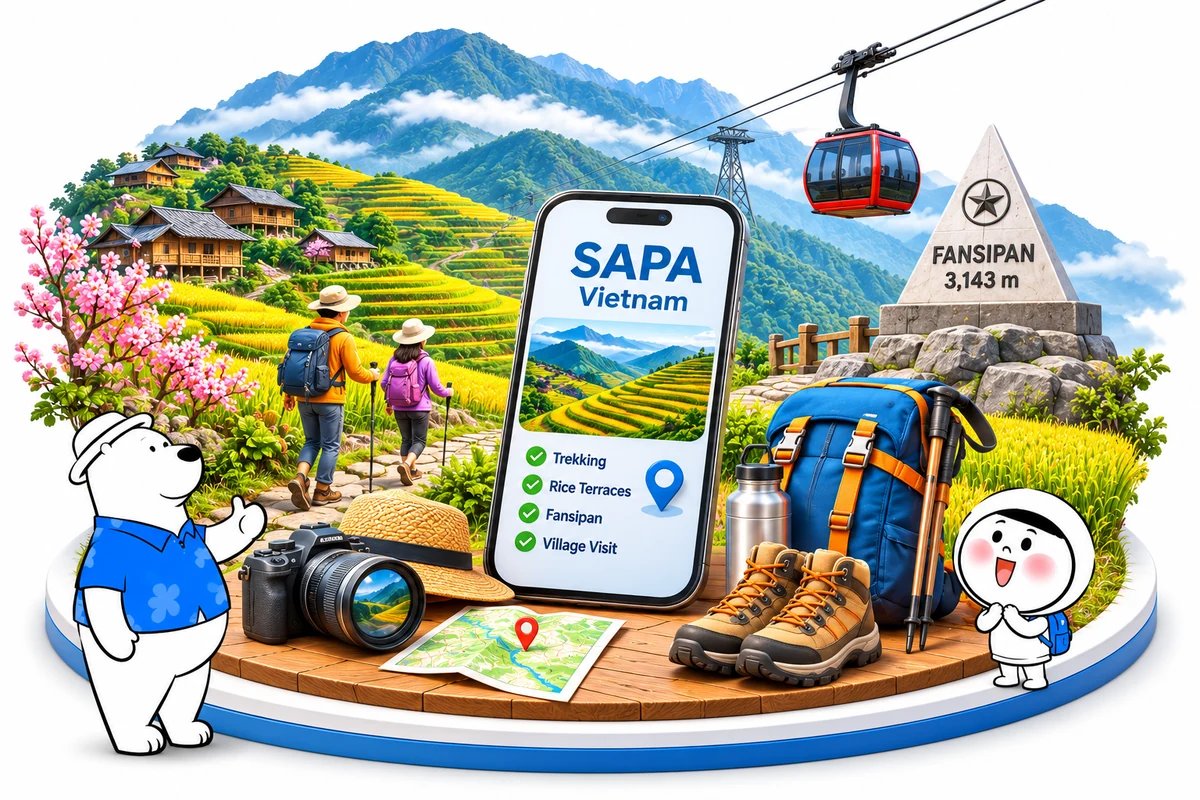
Why is Sapa so popular? Its terraced rice fields, mountain villages, trekking trails, and access to Fansipan reveal a different side of Vietnam. The trade-offs are steep paths, changeable visibility, and a lengthy journey from Hanoi. For first-time visitors, three days is a practical starting point.
Why Is Sapa So Popular With Travelers?
Sapa, also written Sa Pa, sits in the mountains of Lao Cai Province in northwestern Vietnam. Its appeal comes from a rare combination of cultivated landscapes, living cultural traditions, and mountain activities within reach of one town.
Rice terraces in Muong Hoa Valley
The stepped rice fields around Muong Hoa Valley follow the contours of steep hillsides. They are working farmland, so their appearance changes through the growing season: green during cultivation, golden near harvest, and often bare or flooded at other times.
September and early October can be particularly scenic, but harvest timing varies by weather, elevation, and individual fields. Choose your dates based on the landscape you want to see rather than expecting emerald terraces all year.
Hmong, Red Dao and other local communities
Hmong, Red Dao, Giay, and other communities contribute to the area's cultural character through everyday village life, farming, textile traditions, and food. Village visits are most meaningful when travelers treat homes and fields as lived-in places, not outdoor exhibits.
A local guide can explain the landscape and customs, help navigate village paths, and support the host community through paid work. Ask permission before photographing people, especially children, and agree on prices for guiding or crafts in advance.
Fansipan and highland scenery
At 3,143 meters, Fansipan is widely known as the Roof of Indochina. The peak offers mountain views when skies are clear, but cloud and wind can obscure the summit even when Sapa town looks sunny.
Visitors can reach the upper mountain complex using the Sun World Fansipan Legend cable car. Reaching the summit marker may still involve stairs or an additional funicular service; check current accessibility and operating conditions before booking.
Best Time to Visit Sapa
September to October is generally the strongest period for golden rice terraces, while April to May often offers milder trekking weather. Sapa's mountain climate can bring mist and rain in any season, and the farming calendar changes from year to year.
| Period | Typical Experience | What to Prepare For |
| March–May | Mild spring conditions, flowers and greener hillsides | Cool mornings and occasional rain |
| June–August | Lush scenery and active farming | Heat, heavy showers and slippery trails |
| September–October | Golden terraces around harvest time | Popular viewpoints and variable harvest dates |
| November–February | Cooler weather, winter mist and occasional frost at altitude | Cold evenings and reduced mountain visibility |
The Vietnam National Authority of Tourism's Sapa information highlights September–October for rice terraces and April–May for favorable conditions. For photographs of golden fields, confirm the harvest status locally shortly before traveling.
Best Things to Do in Sapa
The best Sapa experiences combine outdoor scenery with unhurried visits to villages. Reserve your clearest forecast day for Fansipan and leave room to adjust trekking plans if rain makes paths unsafe.
Trek through Lao Chai and Ta Van
A guided walk through the Muong Hoa Valley commonly passes rice terraces and villages such as Lao Chai and Ta Van. Routes vary from shorter valley walks to steeper, muddy paths, so ask your guide about distance, elevation gain, and footwear before committing.
Beginners can choose a shorter walk with a transport pickup at the finish. More experienced hikers may enjoy longer routes, but wet clay and stone steps can be challenging even on a relatively short trek.
Take the Fansipan cable car
The cable car is the simplest way for most visitors to approach Fansipan's summit area. The ride takes about 15 minutes under normal operating conditions, followed by additional movement around the upper complex.
Allow extra time for queues, walking, changing weather, and any funicular transfer. Operator hours can change for maintenance or severe weather, so check current Fansipan service announcements before making a fixed-day plan.
Stay in a village homestay
A homestay around Ta Van or another village can provide quieter evenings away from Sapa town. Ask about private versus shared bathrooms, heating, luggage access, meals, and the walking distance from the vehicle drop-off point.
Choose accommodation run by local hosts where possible, and respect household rules and privacy. A homestay is a place to stay, not a guarantee of organized cultural activities.
Explore Sapa town and local markets
Sapa town is useful for restaurants, accommodation, supplies, and arranging drivers or trekking guides. Local markets can also be interesting, but opening days, stall locations, and transport options should be checked locally rather than assumed from older itineraries.
How to Get from Hanoi to Sapa
Sapa has no major passenger airport or railway station in the town itself. Most travelers arrive from Hanoi by road or take an overnight train to Lao Cai before continuing uphill to Sapa.
- Direct bus or shared van: Commonly around five to six hours in normal conditions, with longer journeys possible during traffic, storms, or holiday periods. Confirm the pickup and drop-off points.
- Train to Lao Cai plus road transfer: Travel overnight to Lao Cai station, then continue by shuttle, taxi, or arranged transfer to Sapa. This involves an extra connection rather than a train directly into town.
- Private car: Convenient for groups and travelers with substantial luggage, but mountain roads still require careful driving and weather flexibility.
For a combined trip, Eskimo's Hanoi and Sapa travel itinerary outlines how to divide time between the capital and the highlands. Its Hanoi and Sa Pa destination overview also helps travelers compare the two experiences before choosing overnight stays.
Get Eskimo eSIM to stay connected in Vietnam
Need internet in Vietnam? Here's what we recommend:

Fixed data plans
- No speed reduction
- No expiry, keep your data forever
- Transfer data to anyone
- Personal hotspot



Unlimited data plans
- Unlimited day pass
- Daily 3GB high-speed + 1Mbps unlimited after
- Personal hotspot



Sapa Travel Costs and Fansipan Tickets
A Sapa budget depends most on transport, accommodation, guided walks, and whether you visit Fansipan. Check live prices before paying, especially during holidays or when booking a package that combines transport and attractions.
- Fansipan cable car: Sun World's published 2026 reference fare is 850,000 VND for an adult round trip. Its official booking website may display promotional rates or separate funicular tickets, so compare the final checkout total.
- Hanoi transport: Bus, van, and train prices vary by seat or cabin class, operator, and travel date. Compare the cost of the Lao Cai-to-Sapa connection when choosing a train.
- Village trekking: Costs depend on group size, route length, included transport, meals, and whether the guide is private. Agree on the complete price before departure.
- Homestays and hotels: Basic village rooms and centrally located hotels offer different levels of comfort. Check heating, bathroom facilities, and access arrangements rather than comparing nightly rates alone.
- Cash and extras: Keep a modest amount of Vietnamese dong for small purchases and potential village charges, while confirming which admission fees your tour already includes.
Use the Sun World Fansipan booking platform for the current ticket options. Do not assume that a discounted cable car fare includes the additional summit funicular or meals.
A Practical Three-Day Sapa Itinerary
Three days gives first-time visitors room for one valley trek, Fansipan, and time in town. This plan assumes you have already accounted for the journey from Hanoi; a three-day trip including both long road transfers will feel more rushed.
Day one: Arrive and explore town
Check into your accommodation, confirm your trekking pickup, and walk around the town center. Use the afternoon to gauge the weather and organize transport rather than squeezing in a long hike immediately after arrival.
Day two: Muong Hoa Valley trek
Spend the day walking through terraces and villages with a route matched to your fitness. Consider a locally guided Lao Chai–Ta Van walk, and plan a vehicle pickup rather than assuming you can find an on-demand ride deep in the valley.
Day three: Fansipan and onward travel
Visit Fansipan if conditions and operating hours allow. Keep your departure time flexible, since queues, clouds, and road conditions can affect the schedule; travelers with an early return to Hanoi may need to choose between Fansipan and another activity.
Sapa Trekking Safety and Transport Tips
Mountain conditions can change within a single day, and a beautiful path can become slippery after rain. Prepare for weather and road limitations rather than relying solely on a phone map or an app-based vehicle booking.
- Wear grippy shoes and carry a light waterproof layer, drinking water, and warm clothing for higher elevations.
- Ask about the difficulty of each route, particularly steep descents, stream crossings, and muddy sections.
- Hire a local guide for unfamiliar rural paths; do not enter farmland or private homes without permission.
- Arrange the return ride with your guide, hotel, or homestay before heading into remote villages. Ride-hailing availability is not assured.
- Download maps and the address of your accommodation offline because signal may weaken in valleys or forested areas.
- Allow extra time for road delays, fog, and cable car weather restrictions.
Is Sapa Vietnam Worth Visiting?
Sapa is worth visiting for travelers who enjoy landscape photography, walking, village stays, and cool mountain scenery. It is less suitable for travelers seeking guaranteed panoramic views, step-free mountain access, or a short excursion without substantial transport time.
The most visited routes and attractions can be crowded, especially during weekends and holidays. Staying at least two nights, choosing an appropriate trek, and planning around the rice-growing season usually provide a more rewarding experience than rushing in and out from Hanoi.
Mobile Data for Trekking Around Sapa
Mobile data can help with Hanoi transfer messages, changing bus departure details, weather alerts, and contacting a homestay before a village pickup. Reception is generally more reliable in Sapa town and along main roads than in deep valleys, forested sections, or isolated mountain paths. Save your route and important booking details offline before trekking.
An Eskimo Vietnam eSIM plan offers a mobile-data option for compatible, unlocked phones. Eskimo's overall network reaches 175 countries and regions, which may be useful if Vietnam is one stop on a longer Southeast Asian itinerary, although individual plans include different destinations. No-expiry fixed data can remain available for later eligible travel if you do not use the full allowance during your Sapa trip.
New users can also claim a free 500MB Global eSIM.
Frequently Asked Questions
Why is Sapa so popular with tourists?
Sapa is known for its rice terraces, mountain treks, village homestays, and access to Fansipan. It offers cooler highland scenery and a different travel experience from Vietnam's major cities.
What is the best month to see Sapa's golden rice terraces?
September is often a strong choice, with harvest scenery sometimes continuing into early October. Exact timing depends on local planting, weather, and elevation.
Can beginners go trekking in Sapa?
Yes. Beginners can choose shorter guided valley walks with arranged transport. Ask about mud, steep sections, and total walking time before booking.
How long should I spend in Sapa?
Two nights and roughly three days is a useful starting point for a first visit. Allow more time if you want both longer treks and a relaxed Fansipan visit.
Can I reach Fansipan without a difficult hike?
Yes. The cable car reaches the upper mountain area, with stairs and an optional funicular for some remaining sections. Accessibility and operations vary, so confirm current arrangements with Sun World.
Conclusion
Sapa's appeal is its mix of working rice terraces, mountain scenery, village life, and accessible Fansipan excursions. The strongest itinerary is not necessarily the busiest one: choose your season carefully and leave time for a guided valley walk and a flexible mountain day.
For a first visit, plan around three days, verify transport connections and cable car conditions, and agree on trekking arrangements before setting off. With realistic expectations about weather and terrain, Sapa can be a memorable part of northern Vietnam.