
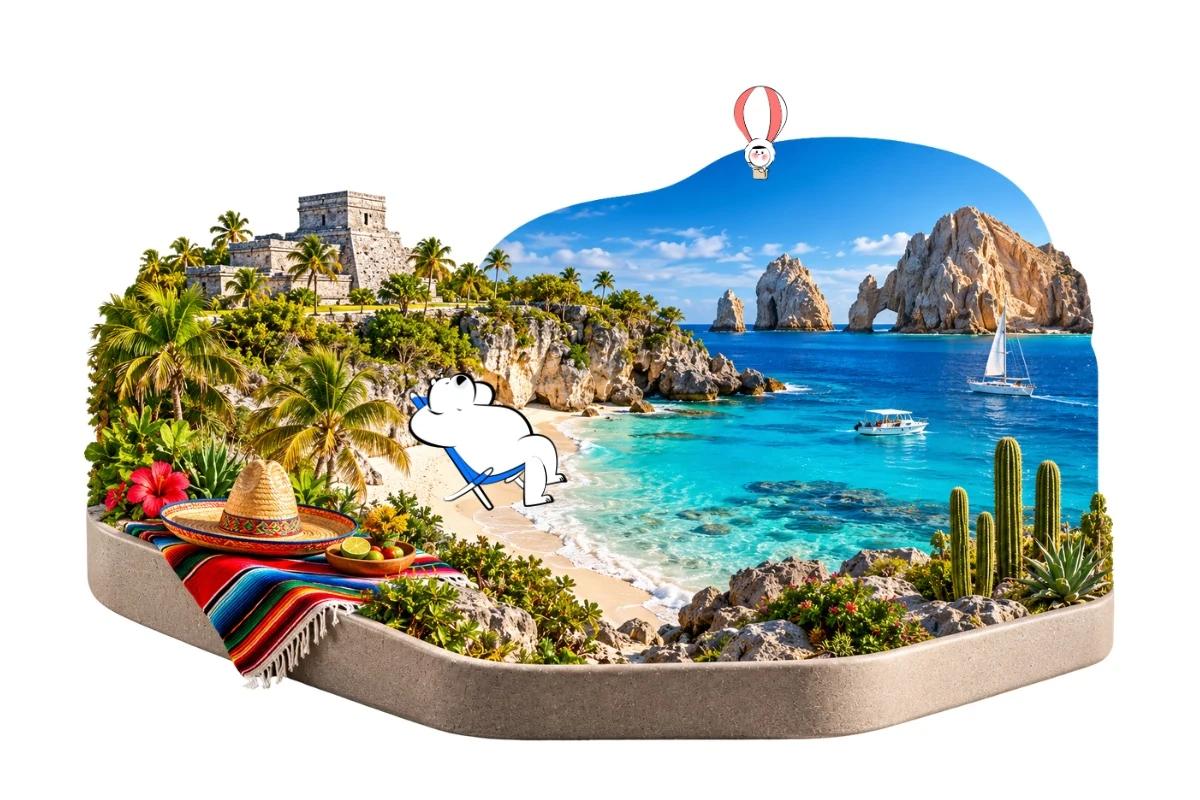
Mexico’s best beaches range from the calm turquoise water of Playa Norte and the reefs around Cozumel to Pacific surf breaks and sheltered Baja coves. The right choice depends on what matters most to you: swimming, snorkeling, surfing, nightlife, family-friendly water, or a quieter stretch of coast.
Mexico has beaches on the Caribbean Sea, Gulf of Mexico, Pacific Ocean, and Gulf of California, so conditions vary considerably between regions. Travelers planning a first beach trip will usually get more from choosing one coastal region than trying to combine several distant beach destinations. For a broader introduction to the country, what Mexico is known for covers its beaches alongside food, cities, archaeological sites, and regional culture.
Best Beaches In Mexico
Playa Norte, Isla Mujeres
Best for: calm Caribbean water
Playa Norte is one of the strongest choices for travelers who want turquoise water, pale sand, and easy access to restaurants and other island facilities. Isla Mujeres is around a 20-minute ferry trip from Cancún, according to Mexico’s official tourism portal.
The beach is especially convenient for travelers who want an island atmosphere without committing to a remote destination. It can become busy during popular travel periods, particularly as day-trippers arrive from Cancún.
Playa Delfines, Cancún
Best for: a classic Cancún beach day
Playa Delfines offers a broad sweep of Caribbean sand in Cancún’s Hotel Zone without being defined by a single beachfront resort. It suits travelers who want an easy beach stop while staying in Cancún.
Caribbean conditions can change with weather, currents, and sargassum. Check local flags and current beach conditions before entering the water rather than assuming calm-looking water is safe for swimming.
Playa Paraíso, Tulum
Best for: Caribbean scenery
Tulum’s coastline pairs pale sand and blue Caribbean water with easy access to cenotes, restaurants, and archaeological sites. Playa Paraíso works well for travelers who want to combine beach time with Tulum’s other attractions.
Tulum can be busy, and transport times can vary considerably with traffic. Sargassum can also affect parts of the Quintana Roo coastline. Mexican authorities continue to operate sargassum monitoring, containment, and collection programs, including measures covering Tulum and other Caribbean destinations. Conditions can change quickly, so check recent local reports before visiting.
Akumal Beach, Riviera Maya
Best for: marine life
Akumal sits between Playa del Carmen and Tulum on the Riviera Maya. The bay is closely associated with marine life and snorkeling, making it a better fit for travelers interested in time in the water than those looking primarily for nightlife.
Wildlife encounters should never be treated as guaranteed. Follow current local access rules and conservation requirements, especially in protected marine areas.
Xpu-Há Beach, Riviera Maya
Best for: a slower Riviera Maya beach day
Xpu-Há offers a more beach-focused alternative to the larger resort centers of Cancún and Playa del Carmen. Its Caribbean setting suits swimming, relaxing, and spending most of the day close to the water when conditions cooperate.
Facilities and access arrangements can differ along the beach, so check current entry conditions before traveling there.
Playa El Cielo Area, Cozumel
Best for: snorkeling and boat trips
Cozumel is one of Mexico’s major Caribbean snorkeling and diving destinations. The waters around El Cielo are known for clear, shallow marine scenery, but reaching the area generally involves a boat excursion rather than simply walking onto a conventional public beach.
Choose operators that follow local marine rules, and avoid touching coral or wildlife. Sea and visibility conditions can change from day to day.
Playa Punta Cocos, Holbox
Best for: a quieter island atmosphere
Punta Cocos sits away from the busiest part of Holbox and suits travelers looking for a slower beach day rather than a resort-heavy experience.
Holbox is an island destination, so ferry timing, weather, and onward ground transport should be part of the planning. Infrastructure is lighter than in Cancún or Playa del Carmen, which is part of its appeal but can make logistics less predictable.
Playa Los Muertos, Puerto Vallarta
Best for: beach life and nightlife
Playa Los Muertos is a practical choice for travelers who want the beach within easy reach of Puerto Vallarta’s restaurants, bars, accommodation, and lively Zona Romántica.
Puerto Vallarta combines a Pacific beach trip with a walkable urban stay, making it particularly convenient for travelers who do not want to spend the whole holiday inside a resort. Mexico’s official tourism portal also highlights the city’s Malecón, Zona Romántica, and nearby beaches.
Conchas Chinas, Puerto Vallarta
Best for: a quieter beach near town
Conchas Chinas offers a more relaxed coastal setting close to Puerto Vallarta. It works well for travelers who want to stay near the city while putting some distance between themselves and its busiest central beaches.
Mexico’s official tourism portal identifies Conchas Chinas as one of Puerto Vallarta’s options for relaxing and swimming in the bay. Conditions still vary, so check the water before entering.
Sayulita Beach, Nayarit
Best for: surf-town atmosphere
Sayulita combines beach time with restaurants, shops, nightlife, and a strong surf culture. It is a better match for travelers who enjoy an active beach town than for those seeking an isolated stretch of sand.
Surf conditions vary by day and season. Beginners should use an appropriate lesson or instructor rather than judging conditions only from shore.
Playa Carrizalillo, Puerto Escondido
Best for: a sheltered Puerto Escondido beach
Carrizalillo sits in a small cove near Puerto Escondido and offers a different experience from the area’s powerful open-ocean surf beaches.
Access involves steps, which may make it less suitable for travelers with limited mobility. Its compact size also means arriving earlier can make for a more comfortable visit during busy periods.
Get Eskimo eSIM to stay connected in Mexico
Need internet in Mexico? Here's what we recommend:

Fixed data plans
- No speed reduction
- No expiry, keep your data forever
- Transfer data to anyone
- Personal hotspot



Unlimited data plans
- Unlimited day pass
- Daily 3GB high-speed + 1Mbps unlimited after
- Personal hotspot

Playa Zicatela, Puerto Escondido
Best for: experienced surfers and watching big waves
Zicatela represents the wilder side of Mexico’s Pacific coast. It is internationally associated with powerful surf and is much better known for wave riding and watching surfers than for relaxed family swimming.
Strong waves and currents can make conditions dangerous. Follow local warning flags and lifeguard advice, and do not assume that a famous beach is automatically a safe swimming beach.
Playa El Médano, Cabo San Lucas
Best for: swimming close to Cabo’s action
El Médano is one of the most practical beach choices in Cabo San Lucas for travelers who want swimmable water alongside restaurants, beach clubs, water activities, and easy access to town.
This distinction matters in Los Cabos because not every beach is suitable for swimming. The Los Cabos tourism board describes Médano as a leading swimmable beach and warns that other parts of the region can have strong undertows and sharp drop-offs.
Chileno Bay Beach, Los Cabos
Best for: swimming and snorkeling
Chileno Bay is a strong option for travelers who want a calmer alternative to Cabo San Lucas’ busier central beaches. Its sheltered water can suit swimming and snorkeling when conditions are favorable.
The beach has public facilities including parking, showers, toilets, waste stations, and a lifeguard stand. Visit Los Cabos also identifies Chileno as one of the region’s swimmable beaches.
Santa Maria Beach, Los Cabos
Best for: snorkeling in a sheltered cove
Santa Maria Beach lies in a sheltered natural cove along the Los Cabos Tourist Corridor. Large granite rocks help shelter the bay, creating conditions that can work well for swimming and snorkeling.
Morning can offer better underwater visibility, according to the Los Cabos tourism board. The beach can be reached by road, while boat excursions also visit the bay from Cabo San Lucas.
Best Mexico Beaches By Trip Type
For families and calmer swimming, Playa Norte, El Médano, Chileno Bay, and Santa Maria are among the strongest options on this list. Conditions can still change, and local swimming warnings should always take priority.
For snorkeling, Cozumel, Akumal, Chileno Bay, and Santa Maria stand out. Choose responsible operators where boat access is required and follow conservation rules around reefs and marine animals.
For surfing, Sayulita and Puerto Escondido are stronger choices than the sheltered Caribbean beaches. Zicatela is particularly associated with powerful surf and is not a casual swimming recommendation.
For nightlife and restaurants, Playa Los Muertos, El Médano, and the main beach areas around Cancún put visitors close to established tourism infrastructure.
For a quieter trip, Punta Cocos, Xpu-Há, and smaller coves around the Pacific and Baja coasts can offer a slower pace, although quiet conditions depend heavily on season and time of day.
Caribbean Vs Pacific Beaches In Mexico
Mexico’s Caribbean coast is the stronger choice for travelers prioritizing pale sand, turquoise water, reef snorkeling, and established resort destinations such as Cancún, Isla Mujeres, Cozumel, and the Riviera Maya.
The Pacific coast is more varied. Puerto Vallarta combines beaches with a substantial city and nightlife, Nayarit has surf towns, and Oaxaca’s coast includes powerful open-ocean beaches alongside smaller coves.
Baja California Sur adds another character entirely. Around Los Cabos, desert landscapes meet the sea, and choosing the correct beach matters because some stretches have currents and shore breaks that make swimming unsafe. Around Los Cabos, several of the best-known swimmable beaches sit on the more sheltered Sea of Cortés side.
For travelers still deciding which part of the country fits their trip, the Caribbean generally favors classic turquoise-water beach holidays, while Pacific destinations offer a wider mix of surf, urban beaches, rugged coastline, and smaller coves.
When To Visit Mexico’s Beaches
There is no single best month for every Mexican beach. Weather patterns differ between the Caribbean, Pacific, and Baja coasts, while water conditions and rainfall can change within the same region.
November through April is generally a popular period for many Mexican coastal destinations because conditions are often drier. It is also a busy travel season, particularly around Christmas, New Year, spring break periods, and Semana Santa. Mexico’s 2026 public holidays and cultural events calendar can help identify dates when domestic travel demand may increase.
Storm season deserves attention for summer and autumn trips. The National Hurricane Center’s tropical cyclone climatology lists the Atlantic hurricane season as June 1 to November 30 and the eastern Pacific season as May 15 to November 30. Tropical storms do not affect every destination or every trip during these months, but travelers should monitor current forecasts as departure approaches.
Sargassum is another practical consideration on the Caribbean coast. Conditions can vary substantially between beaches and from one day to another. Quintana Roo and Mexican federal authorities operate monitoring, containment, and collection programs, so checking recent local conditions is more useful than relying on older beach reports or photos.
Practical Tips For A Mexico Beach Trip
Do not assume every beach is safe for swimming. Pacific surf, currents, shore breaks, wind, and changing weather can create very different conditions even at neighboring beaches. Follow warning flags, lifeguards, and local restrictions.
For multi-stop trips, group destinations geographically. Cancún, Isla Mujeres, Cozumel, Tulum, and the Riviera Maya can fit into a Caribbean itinerary, while Puerto Vallarta and Nayarit work naturally together. Los Cabos belongs on a separate Baja itinerary unless you have enough time for domestic flights.
Bring reef-conscious sun protection, drinking water, and footwear suited to the specific beach. Facilities vary dramatically between developed resort beaches and quieter stretches of coast.
During Semana Santa and other major Mexican holiday periods, popular coastal destinations can become substantially busier. Booking accommodation, ferries, domestic flights, and long-distance transport earlier can reduce last-minute problems.
Using Mobile Data On A Mexico Beach Trip
Mobile data can help with ferry schedules to Isla Mujeres or Cozumel, airport transfers, ride-hailing in resort areas, navigation between beaches, weather updates, and messages from accommodation or tour operators. Reception is generally stronger in established towns and resort areas, while signal can vary on remote beaches, rural coastal roads, nature reserves, and boat trips.
An Eskimo Mexico eSIM plan is the most relevant option for a trip focused on Mexico. Eskimo’s wider network footprint covers 175 countries and regions overall, which can be useful if Mexico is one stop on a longer international itinerary or you have another trip planned later. No-expiry fixed data means unused fixed data can remain available for a future trip instead of needing to be used before the beach holiday ends.
New users can also claim a free 250MB Global eSIM.
FAQs:
Which side of Mexico has the best beaches?
The Caribbean side is a strong choice for turquoise water, pale sand, and snorkeling, while the Pacific offers more surf, dramatic coastline, and beach towns. Baja California Sur is particularly good for travelers who want desert scenery alongside sheltered bays.
Where is the clearest water in Mexico?
Isla Mujeres, Cozumel, and parts of the Riviera Maya are known for clear Caribbean water. Visibility varies with weather, waves, currents, and seasonal sargassum, so conditions are never identical every day.
Which Mexico beaches are best for families?
Playa Norte, El Médano, Chileno Bay, and Santa Maria are among the better-known options for families seeking relatively sheltered or recognized swimming areas. Always check local flags and water conditions before children enter the sea.
What is the best beach in Mexico for snorkeling?
Cozumel is one of Mexico’s strongest snorkeling destinations, while Akumal, Chileno Bay, and Santa Maria also suit travelers planning time in the water. The best choice depends on marine conditions, access, and whether you prefer shore or boat-based snorkeling.
Are Mexico beaches swimmable year-round?
Some are, but swimming conditions can change throughout the year and from day to day. Waves, currents, storms, wind, and local hazards all matter, and some beaches in destinations such as Los Cabos and Puerto Escondido are unsafe for casual swimming even when nearby beaches are suitable.