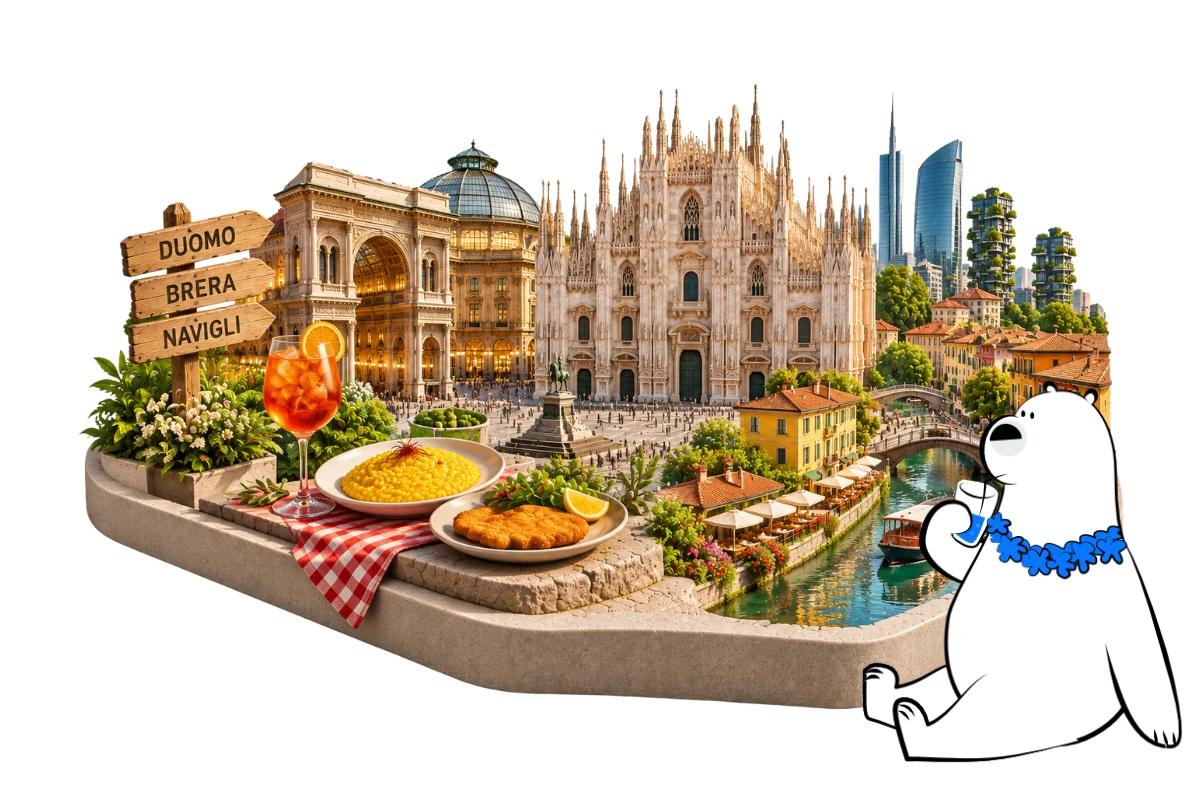
Milan is worth visiting for two to three days, especially if you enjoy architecture, art, design, food and cities with a strong contemporary side. The best things to do in Milan start with the Duomo rooftop and Leonardo da Vinci’s The Last Supper, but the city becomes more rewarding once you add Brera, Navigli, historic trams and modern neighborhoods.
Travelers expecting Rome’s ancient ruins or Venice’s immediate drama may find Milan more understated. Give it time, though, and the city works particularly well as a compact city break or as the northern stop on a longer 10-day Italy itinerary.
If your time is tight, prioritize five experiences: the Duomo rooftop, Galleria Vittorio Emanuele II, The Last Supper, Brera and Navigli.
The 17 Milan Experiences Worth Your Time
Walk across the Duomo rooftop
Do not stop after taking the obligatory photo from Piazza del Duomo. The rooftop is the experience that makes Milan Cathedral special.
Visitors can walk among the cathedral’s marble spires, sculptures and flying buttresses while looking across central Milan. The terraces can be reached by stairs or lift, with different ticket options available.
As of October 2026, the official Duomo di Milano calendar lists standard rooftop access from 9am to 7pm, although hours can change for religious services, events and special openings.
Late afternoon can provide softer light, while morning is generally a better choice if avoiding the busiest part of the day matters more.
Milan Cathedral also features in Eskimo’s collection of the most majestic cathedrals in Europe, alongside landmarks including Notre-Dame, Cologne Cathedral and Sagrada Família.
Cross Galleria Vittorio Emanuele II slowly
Galleria Vittorio Emanuele II sits directly beside the Duomo, making the two easy to combine.
Its glass-and-iron roof, mosaic floors and ornate façades make it more than a luxury shopping arcade. Walk through toward Piazza della Scala, but give yourself time to look upward rather than treating it as a shortcut.
Early morning usually provides more breathing room for architecture and photographs. Later in the day, the Galleria becomes busier as shoppers, diners and sightseers fill the arcade.
You do not need to shop here to enjoy it.
See Leonardo’s Last Supper
Leonardo da Vinci’s The Last Supper is one Milan attraction where relying on a last-minute ticket is risky.
The painting is inside the refectory of Santa Maria delle Grazie. According to the official Last Supper Museum, reservations are compulsory and visitor numbers are tightly controlled for conservation.
The museum currently operates Tuesday to Sunday from 8:15am to 7pm, with last admission at 6:45pm. Visits take place in 15-minute sessions, and visitors must arrive 30 minutes before their booked time.
Reservations open quarterly, generally around three months ahead. If seeing the painting matters to you, make it one of the first bookings you arrange after fixing your Milan dates.
Combine Sforza Castle With Parco Sempione
Castello Sforzesco gives Milan a completely different architectural personality from the Duomo.
The former fortress now houses several museums and collections, but travelers with limited time do not necessarily need to see every room. Walking through its courtyards and continuing into Parco Sempione already creates a worthwhile central-Milan route.
From the park, continue toward Arco della Pace if you want a longer walk.
This is also a useful part of Milan to leave slightly unstructured. After several timed museums and churches, having an hour without another entry slot can make the day feel considerably less rushed.
Wander Through Brera
Brera is one of the best areas in Milan for slowing the pace.
The neighborhood’s smaller streets, historic buildings, cafés and galleries provide a calmer counterpoint to Piazza del Duomo. It works particularly well in the late afternoon and early evening.
Art is a major reason to make a dedicated visit. Pinacoteca di Brera houses an important collection of Italian paintings, but the neighborhood also works for travelers who simply want to walk, stop for coffee and see a more intimate side of central Milan.
If you only have one evening away from the Duomo area, Brera is a strong choice.
Have Aperitivo Around Navigli
Navigli works best as an evening neighborhood rather than another daytime monument to tick off.
The canals are lined with restaurants and bars, and the area becomes particularly lively around aperitivo time. Drinks are often paired with snacks or small plates, although the format and what is included depend on the venue.
Walk along Naviglio Grande before choosing somewhere to stop rather than automatically taking the first available table.
Friday and Saturday evenings can become busy. Visit earlier or choose a weekday if you prefer a calmer walk along the canals.
See A Performance At Teatro Alla Scala
La Scala is one of Milan’s defining cultural institutions.
Opera and ballet fans should check the performance calendar before traveling because attending a production offers a very different experience from simply photographing the exterior.
If a performance does not fit your schedule or budget, the theater museum provides another way to see the historic setting and learn about La Scala’s role in Italian opera.
Schedules, ticket availability and visitor requirements vary by performance, so check Teatro alla Scala’s official website before booking.
Give Pinacoteca Di Brera Proper Time
If you enjoy art, do not treat the Pinacoteca as an optional extra simply because Milan has so many other famous sights.
Its collection focuses heavily on Italian painting, with works by artists including Raphael, Caravaggio, Bellini and Mantegna.
Allow roughly two hours rather than squeezing it between several other attractions. Pairing the gallery with time in Brera also avoids unnecessary travel across the city.
Travelers who are not particularly interested in painting can reasonably skip the museum and spend that time exploring the neighborhood itself.
See Milan’s Contemporary Side At Fondazione Prada
Milan is not only Gothic spires and Renaissance paintings.
Fondazione Prada is a strong stop for travelers interested in contemporary art, architecture and design. Its Milan venue occupies a transformed former industrial complex south of the historic center.
It requires more of a detour than the central attractions, so it makes the most sense during a two or three-day stay.
Check the current exhibition program before going because temporary exhibitions can substantially shape the experience.
Walk Through Porta Nuova
Porta Nuova reveals the contemporary Milan that a historic-center itinerary can easily miss.
The modern district around Piazza Gae Aulenti contrasts sharply with the cathedral and older streets in the center. Nearby, Bosco Verticale’s plant-covered residential towers have become recognizable features of Milan’s modern skyline.
From here, you can walk toward Corso Como or continue into Isola.
The district is worth including if architecture, urban design or contemporary Milan interests you. It also helps explain why the city feels different from many other major Italian destinations.
Browse The Quadrilatero Della Moda
Milan’s fashion district deserves a walk even if a designer shopping spree is nowhere near the budget.
The Quadrilatero della Moda centers on streets including Via Montenapoleone and Via della Spiga, where major Italian and international fashion houses occupy some of central Milan’s most polished storefronts.
Treat it as urban sightseeing rather than a shopping obligation.
Fashion Week periods can significantly change the atmosphere and increase demand for accommodation, so check your dates before booking a trip around major fashion events.
Step Inside San Maurizio Al Monastero Maggiore
San Maurizio al Monastero Maggiore is easy to underestimate from outside.
Its interior is covered with elaborate 16th-century frescoes, creating a striking contrast with the relatively restrained exterior.
The church is conveniently located for combining with other central sights rather than requiring a dedicated journey across Milan.
Access can be affected by religious services, events or maintenance, so check current opening information before building a tightly timed schedule around it.
Get Eskimo eSIM to stay connected globally
Need internet while travelling? Here's what we recommend:

Fixed data plans
- No speed reduction
- No expiry, keep your data forever
- Transfer data to anyone
- Personal hotspot


Visit The Basilica Of Sant’Ambrogio
The Basilica of Sant’Ambrogio offers a look at Milan long before the fashion houses and modern skyline.
Its origins reach back to the fourth century, although the structure visitors see today reflects centuries of rebuilding and alteration. Its Romanesque architecture provides a strong visual contrast with the Gothic Duomo.
The basilica is relatively close to Santa Maria delle Grazie, making it sensible to combine with a Last Supper booking.
Remember that this remains an active religious site. Dress and behave accordingly, particularly during services.
Ride One Of Milan’s Historic Trams
Sometimes the transport becomes part of the sightseeing.
Milan still operates distinctive older trams alongside modern vehicles. Catching one during an ordinary journey gives you a street-level view of the city without requiring a dedicated sightseeing bus.
Do not build an entire day around finding a particular vintage tram. Instead, treat one as a bonus when the route fits where you are already going.
Milan’s public transport network makes it easy to combine walking with short tram and metro journeys.
Eat Risotto Alla Milanese And Cotoletta
Milanese food is heavier and richer than the pizza-and-pasta image many travelers associate with Italy.
Two classics are risotto alla Milanese, traditionally flavored with saffron, and cotoletta alla Milanese, a breaded veal cutlet. Ossobuco, often paired with risotto, is another traditional dish worth looking for.
For something quicker, try a panzerotto, a filled dough pocket commonly associated with casual Milan eating.
There is no need to squeeze every specialty into one day. One traditional meal and an evening aperitivo already provide a useful introduction to Milanese food culture.
See San Siro If Football Matters To You
For football fans, San Siro can outrank several museums.
The stadium is associated with both AC Milan and Inter Milan and sits west of the historic center. Match schedules, ticket availability and tour access can change, so confirm the latest information through the official San Siro website before planning your visit.
A match naturally provides a different experience from a stadium tour, so choose according to your dates and interest.
If football is not a priority, this is an easy attraction to skip. Milan has enough central sights to fill a short visit without making the journey west.
Spend An Evening Without A Checklist
The final experience is deliberately not another monument.
Milan becomes more rewarding once you stop racing between pins. Pick Brera, Navigli, Isola or another neighborhood that appeals to you and leave part of the evening open.
Have an aperitivo, walk a few streets and eat somewhere that suits the mood rather than another schedule.
For a city frequently treated as a short transit stop, leaving some unplanned time can reveal more of its everyday character.
How To Spend 1, 2 Or 3 Days In Milan
With one day, stay focused on central Milan. Visit the Duomo and rooftop first, walk through Galleria Vittorio Emanuele II, continue toward Brera and Sforza Castle, then finish around Navigli or Brera.
With two days, use the second morning for The Last Supper if you secured tickets, followed by Sant’Ambrogio and more time in Brera. Add Porta Nuova or one museum in the afternoon.
With three days, add Fondazione Prada, Pinacoteca di Brera, La Scala or another interest-specific stop. The third day also gives you room to slow down rather than turning Milan into an attraction marathon.
If Milan is part of a longer Italian trip, two nights can work well. Three nights are better if museums, design, shopping or nightlife are priorities.
Where To Stay In Milan
For a first visit, Centro Storico around the Duomo is the easiest area for reaching major attractions, although that convenience often comes with higher accommodation prices.
Brera suits travelers who want attractive streets, restaurants and evening atmosphere within walking distance of the center.
Navigli is better suited to nightlife and late evenings, while Centrale is practical for travelers prioritizing rail connections or taking an early onward train.
Porta Nuova and Isola work well if you prefer contemporary Milan while retaining straightforward metro access to the historic center.
Milan’s transport network means staying directly beside the Duomo is convenient rather than essential.
Getting Around Milan
Central Milan is highly walkable for sightseeing, but the metro and trams become useful for places such as San Siro, Fondazione Prada and neighborhoods farther from the historic core.
As of October 2026, ATM lists a standard Mi1-Mi3 ticket at €2.20 for 90 minutes, a 24-hour ticket at €7.60 and a three-day ticket at €15.50. Contactless payment is available on the metro and supported surface services.
For most first-time visitors, walking plus public transport is easier than renting a car. Driving adds parking and restricted-traffic complications without offering much benefit for central sightseeing.
Milan also works well as a rail stop within a longer Italian trip, with high-speed services linking it to major cities including Turin, Bologna, Florence, Venice and Rome. Check current schedules and fares through Trenitalia before traveling.
Best Time To Visit Milan
Spring and autumn generally provide the most comfortable conditions for city sightseeing, with milder temperatures than the hottest part of summer.
April to June and September to October are particularly suitable for long walking days, although major events can sharply affect hotel availability and prices.
Summer can be hot, while winter is colder and often grayer but can suit museum-heavy trips and travelers who prefer to avoid peak summer conditions.
Milan Fashion Week and major design events can transform demand across the city. Check the event calendar before booking accommodation rather than assuming an unusually expensive weekend represents normal Milan pricing.
Taking A Day Trip From Milan
Milan is a useful base for exploring northern Italy, but avoid sacrificing your only day in the city for an excursion.
Lake Como is the obvious choice if you have an additional day, with rail connections making several towns around the lake accessible without renting a car.
Bergamo is another manageable option, particularly if you want a smaller historic city. Longer excursions to places such as Verona can work, but they make more sense when your itinerary has enough breathing room.
If you only have two days in Milan, staying in the city will usually give you a more complete first visit unless a particular day trip is one of your main reasons for coming.
Mobile Data For A Milan City Break
Mobile data in Milan is particularly useful for metro routes, digital attraction tickets, restaurant reservations and checking train platforms before day trips. Mobile reception is generally strongest across Milan’s urban area, but it can weaken in underground stations, tunnels and some dense indoor spaces.
An Eskimo Italy eSIM plan is the most relevant option for a Milan-focused trip. Eskimo’s coverage across 175 countries and regions overall can also be useful if Milan is one stop on a longer European itinerary or you are continuing into another eligible destination. No-expiry fixed data means unused fixed data can remain available for a future international trip instead of needing to be used before leaving Milan.
New users can also claim a free 250MB Global eSIM.
FAQs:
What are the best things to do in Milan on a first visit?
Prioritize the Duomo rooftop, Galleria Vittorio Emanuele II, The Last Supper, Sforza Castle, Brera and an evening around Navigli. Together, they provide a strong mix of Milan’s architecture, art and neighborhood atmosphere.
How many days do you need in Milan?
Two days are enough for Milan’s main sights. Three days are better if you want major museums, contemporary art, shopping or more time in individual neighborhoods.
Is Milan worth visiting compared with other Italian cities?
Yes, particularly for travelers interested in Gothic architecture, Renaissance art, fashion, design and contemporary city life. Milan feels more modern and urban than cities such as Florence or Venice, giving it a distinctly different role in an Italian itinerary.
Is Milan easy to explore without a car?
Yes. Many central attractions can be reached on foot, while Milan’s metro and tram network covers sights farther from the historic center. A rental car is generally unnecessary for a typical city break.
Do you need to book Milan attractions in advance?
Book The Last Supper in advance because reservations are compulsory and visitor numbers are limited. Advance booking is also sensible for the Duomo rooftop during busy travel periods.