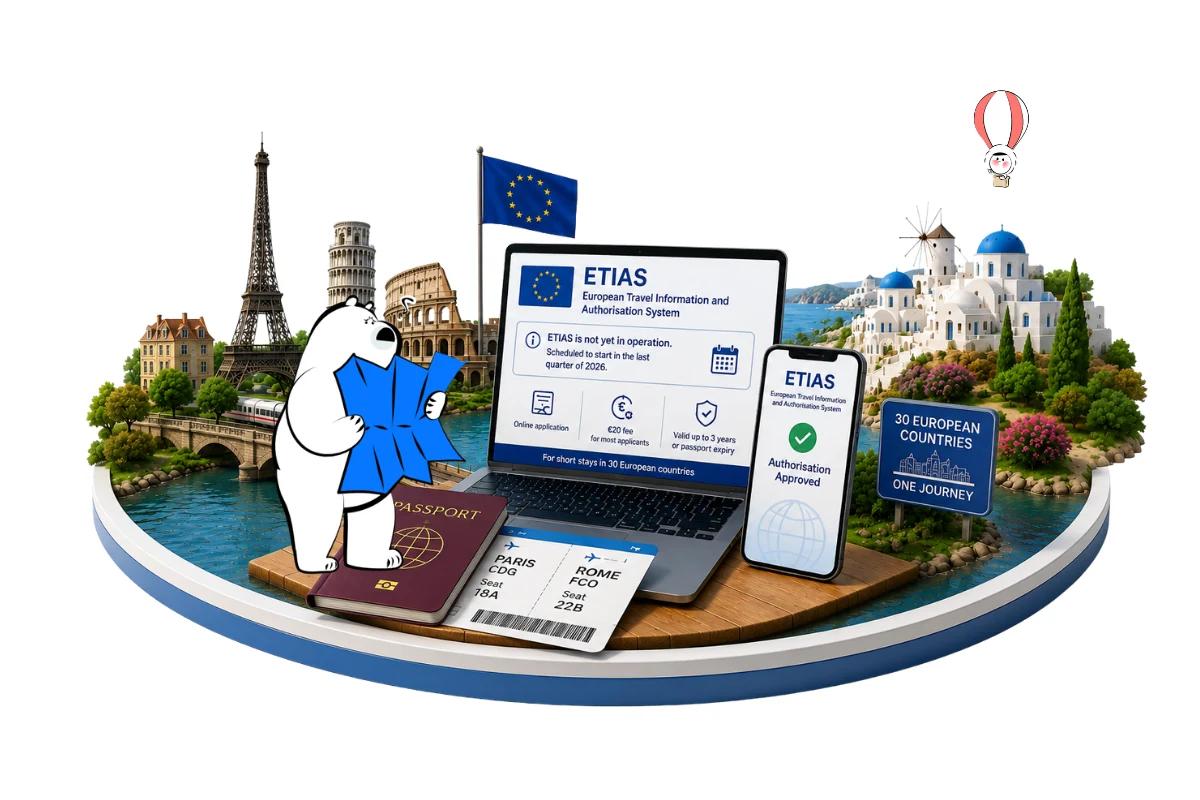
ETIAS is not yet in operation as of August 31, 2026, and applications are not currently being accepted. The European Travel Information and Authorisation System is scheduled to begin in the last quarter of 2026, but the European Union has not yet announced the exact launch date.
Once ETIAS starts, many visa-exempt non-EU travelers will need to obtain an online travel authorisation before visiting 30 European countries for a short stay. The application fee will be €20 for most applicants, and an approved authorisation will normally remain valid for up to three years or until the linked passport expires, whichever comes first.
If you are traveling before ETIAS officially launches, do not try to apply yet. The official EU portal states that no ETIAS applications are being collected at this time.
What Is ETIAS?
ETIAS stands for the European Travel Information and Authorisation System. It is an electronic pre-travel authorisation for eligible travelers who can visit participating European countries without obtaining a short-stay visa.
ETIAS is not a visa. It is intended for travelers who are already exempt from short-stay visa requirements and will add an online authorisation step before departure.
Once operational, travelers will apply through the official ETIAS website or official mobile application before beginning their journey. Approved ETIAS authorisations will be electronically linked to the travel document used in the application.
Who Will Need ETIAS?
ETIAS will mainly apply to visa-exempt non-EU nationals traveling to participating European countries for a short stay.
For example, eligible citizens of countries such as the United States and the United Kingdom will generally need ETIAS once the system becomes operational if they travel to one of the participating countries for a short visit. The official ETIAS information specifically confirms that UK nationals will generally require ETIAS for short stays of up to 90 days in any 180-day period, subject to certain exemptions.
Travelers who already need a Schengen or other relevant visa generally will not use ETIAS for that trip.
Some travelers are exempt, including certain:
- Nationals of countries participating in ETIAS
- Irish nationals
- Holders of uniform or national long-stay visas
- Holders of certain residence documents
- Diplomatic, service, or special passport holders
- UK nationals protected by the Withdrawal Agreement who meet the applicable conditions
Eligibility can depend on nationality, travel-document type, residence status, and the purpose of travel. Check the official ETIAS eligibility information before applying once the system launches.
Which Countries Will Require ETIAS?
ETIAS will apply to travel to 30 European countries:
- Austria
- Belgium
- Bulgaria
- Croatia
- Cyprus
- Czechia
- Denmark
- Estonia
- Finland
- France
- Germany
- Greece
- Hungary
- Iceland
- Italy
- Latvia
- Liechtenstein
- Lithuania
- Luxembourg
- Malta
- Netherlands
- Norway
- Poland
- Portugal
- Romania
- Slovakia
- Slovenia
- Spain
- Sweden
- Switzerland
The list includes the Schengen-area countries plus Cyprus. Ireland is not part of the ETIAS destination list.
This matters for multi-country trips. For example, a traveler visiting France, Switzerland, and Italy on the same European itinerary will be traveling within ETIAS-participating destinations.
If you are still deciding where to go, Eskimo’s Best European Countries for First-Time Visitors to Europe can help narrow down destinations before planning the entry requirements for each part of the trip.
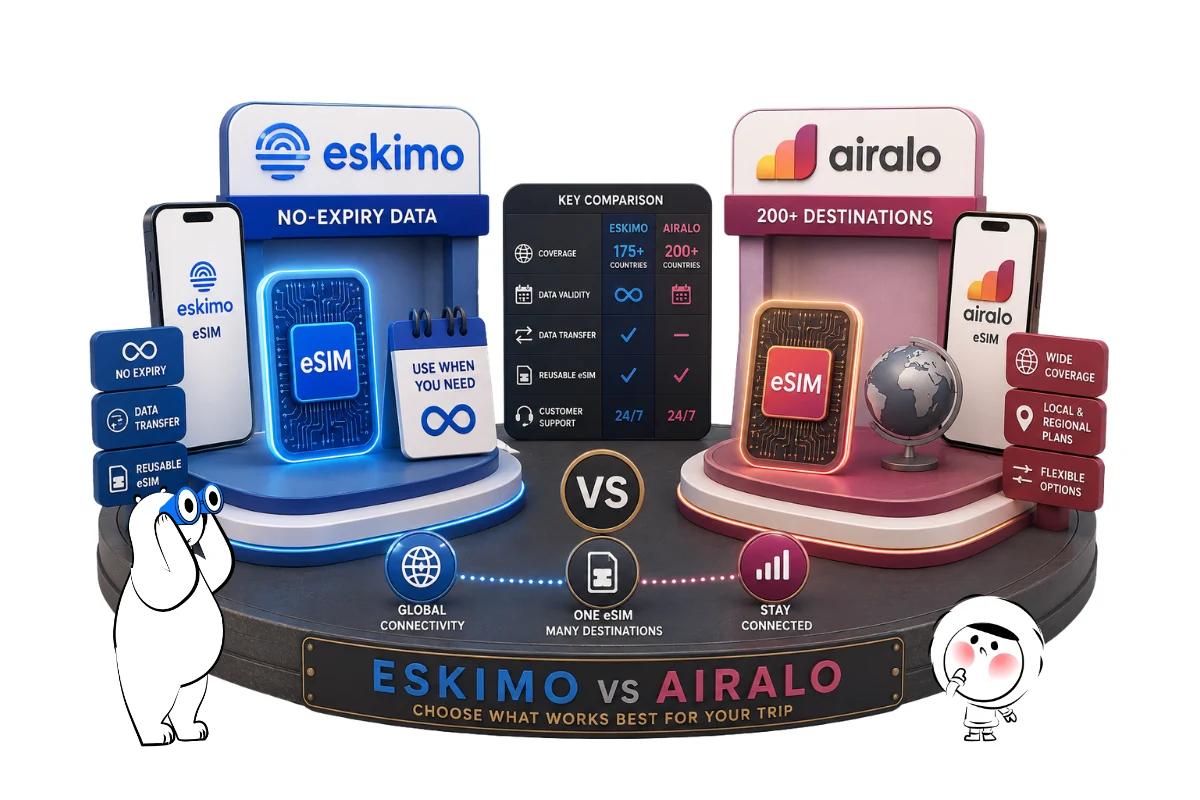
Get Eskimo eSIM to stay connected globally
Need internet while travelling? Here's what we recommend:

Fixed data plans
- No speed reduction
- No expiry, keep your data forever
- Transfer data to anyone
- Personal hotspot


ETIAS Requirements Before Applying
Once applications open, you will need a valid travel document and personal information to complete the ETIAS form.
The official EU guidance says applicants should have a travel document and a payment method available. The travel document should generally:
- Be valid for travel to participating countries
- Not expire in less than three months
- Not be more than 10 years old
Some special travel documents have different eligibility rules, so travelers using refugee documents, special passports, or documents issued by certain territories should verify their status separately.
The ETIAS application is expected to request information including:
- Full name
- Date and place of birth
- Nationality
- Home address
- Email address and phone number
- Passport or travel-document details
- Education level
- Current occupation
- Intended travel information
- Certain criminal-conviction information
- Previous travel to war or conflict zones
- Certain previous immigration decisions
Applications for travelers under 18 will need to be submitted by a parent, legal guardian, or another person exercising parental authority.
Having these details ready before starting should make the application process easier once ETIAS becomes operational.
How the ETIAS Application Will Work
You cannot submit an ETIAS application yet. The steps below describe the application process the European Union says travelers will use once ETIAS launches.
Use the official ETIAS website or app
Travelers will apply through the official ETIAS website or the official mobile application.
This is especially important because unofficial websites may charge additional service fees or collect personal information while presenting themselves as ETIAS application services. The European Commission advises travelers to use the official channels.
Complete the digital application
Enter your personal information, travel-document details, and the other requested information.
Check passport details carefully. An ETIAS authorisation will be linked electronically to the travel document used in the application.
Pay the application fee
Most applicants will pay a €20 application fee.
Applicants who are under 18 or over 70 are exempt from the fee. Certain qualifying family members of EU nationals are also exempt.
A fee exemption does not necessarily mean the traveler is exempt from completing the ETIAS application itself.
Wait for the decision
Most applications are expected to receive a decision within minutes, but travelers should not assume approval will always be immediate. The EU advises applying sufficiently in advance because some applications may require additional processing.
The decision will be sent electronically.
Travel with the same passport
Once approved, the ETIAS authorisation will be linked to your passport.
If you obtain a new passport later, you should expect to need a new ETIAS authorisation because the original authorisation is tied to the document used in the application.
ETIAS Cost, Processing Time and Validity
For most travelers, the ETIAS application fee will be €20 once the system begins accepting applications. Applicants under 18, applicants over 70, and certain qualifying family members of EU nationals are exempt from paying the fee.
Most applications are expected to be processed within minutes. However, additional checks can mean a decision takes longer, so completing the application immediately before departure would add unnecessary risk.
An approved ETIAS travel authorisation will generally remain valid for three years or until the linked travel document expires, whichever happens first.
That means one valid ETIAS may cover several separate European trips during its validity period, provided you continue to meet the applicable entry conditions and use the passport linked to the authorisation.
ETIAS Does Not Change the 90/180-Day Rule
ETIAS does not give travelers extra time in Europe.
For short stays, eligible travelers will generally continue to be subject to the 90 days in any 180-day period rule in the countries where that limit applies. ETIAS is an authorisation to travel, not permission to extend a short stay beyond the normal immigration limit.
A three-year ETIAS validity period therefore does not mean you can remain in Europe continuously for three years.
Travelers planning longer stays will need to follow the national or EU visa and residence rules that apply to their circumstances.
ETIAS vs EES
ETIAS and the Entry/Exit System, or EES, are different parts of Europe’s border-management system.
ETIAS is something eligible visa-exempt travelers will apply for before departure. EES records certain non-EU travelers when they cross an external border.
The European Commission says EES became fully operational on April 10, 2026, while ETIAS is scheduled to begin later, in the last quarter of 2026.
With EES, travelers do not submit the same type of travel-authorisation application in advance. Border procedures can include recording passport details, facial images, fingerprints, and entry or exit information.
Once ETIAS launches, some travelers may therefore interact with both systems during the same trip: ETIAS before departure and EES during the border-crossing process.
What Travelers Should Do Before ETIAS Launches
If your Europe trip is approaching, the most useful step is to check whether ETIAS has actually launched before doing anything else.
Until applications officially open:
- Do not pay for an ETIAS application
- Check the official European Union ETIAS portal for launch updates
- Confirm that your passport will remain valid for your planned trip
- Check whether your nationality requires a visa or will instead fall under ETIAS
- Be cautious with websites claiming they can already obtain ETIAS approval for you
The European Union says it will announce the specific launch date several months before ETIAS begins operating.
If you are planning your first multi-country trip, it can also help to map out your destinations before dealing with individual entry rules. Eskimo’s Most Famous Landmarks in Europe can help with the destination-planning side without mixing that information into the ETIAS process itself.
Mobile Data for a Multi-Country Europe Trip
Mobile data can be useful during a Europe trip for digital boarding passes, train tickets, flight changes, accommodation details, navigation, and checking updated entry information while crossing borders. Coverage is generally stronger in cities and along major transport routes, while reception may weaken in underground stations, railway tunnels, mountains, rural roads, and other less populated areas.
An Eskimo Europe Regional eSIM plan is the most relevant option for a trip across several eligible European destinations. Eskimo coverage extends across 175 countries and regions, which can also be useful for international stopovers or onward travel outside Europe. Eskimo’s Universal eSIM can reduce the need to install a separate eSIM each time your itinerary moves to another eligible country.
New users can also claim free 500MB of Global Data.
FAQs:
FAQs
Is ETIAS active now?
No. As of August 31, 2026, ETIAS is not yet operational and applications are not being collected. It is scheduled to start in the last quarter of 2026, with the exact launch date still to be announced.
Is ETIAS the same as a Schengen visa?
No. ETIAS is a travel authorisation for eligible visa-exempt travelers. Travelers who require a visa generally need to follow the relevant visa process instead.
Do UK citizens need ETIAS?
Most UK citizens traveling to one of the 30 ETIAS countries for a short stay will need ETIAS once the system begins operating. Certain UK nationals protected by the Withdrawal Agreement may be exempt if they meet the applicable conditions.
Do children need ETIAS?
Eligible children will need an ETIAS application once the system launches, but applicants under 18 are exempt from paying the €20 application fee. Applications for minors must be submitted by a parent, guardian, or another person with parental authority.
Do I need a new ETIAS for every trip to Europe?
Not normally. An approved ETIAS is generally valid for up to three years or until the linked passport expires, whichever comes first, so it may cover multiple trips during that period.